Rhijnauwen: A Historic Manor Estate in the Netherlands
Site at a Glance
- Popularity
- Medium
- Country
- Netherlands
- Primary era
- Early Modern
- Eras represented
- Medieval, Early Modern
- Civilizations
- Dutch, Habsburg, Holy Roman Empire
- Site type
- Domestic
- Remains
- Manor House
On this page10 sections
History
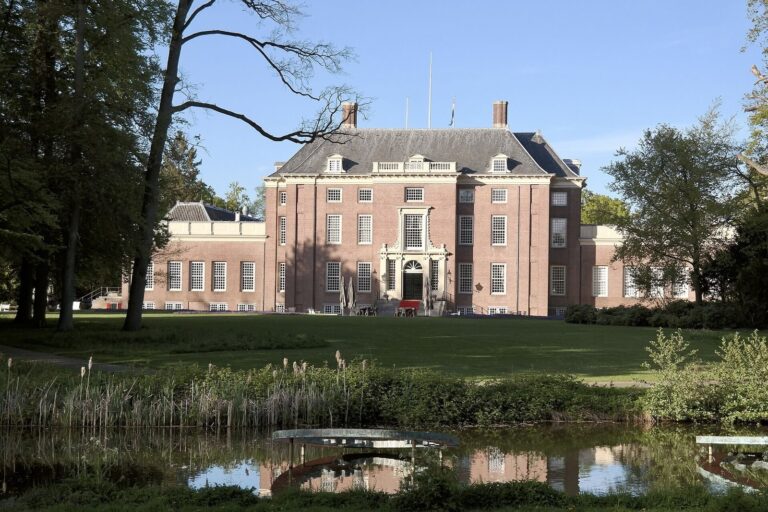
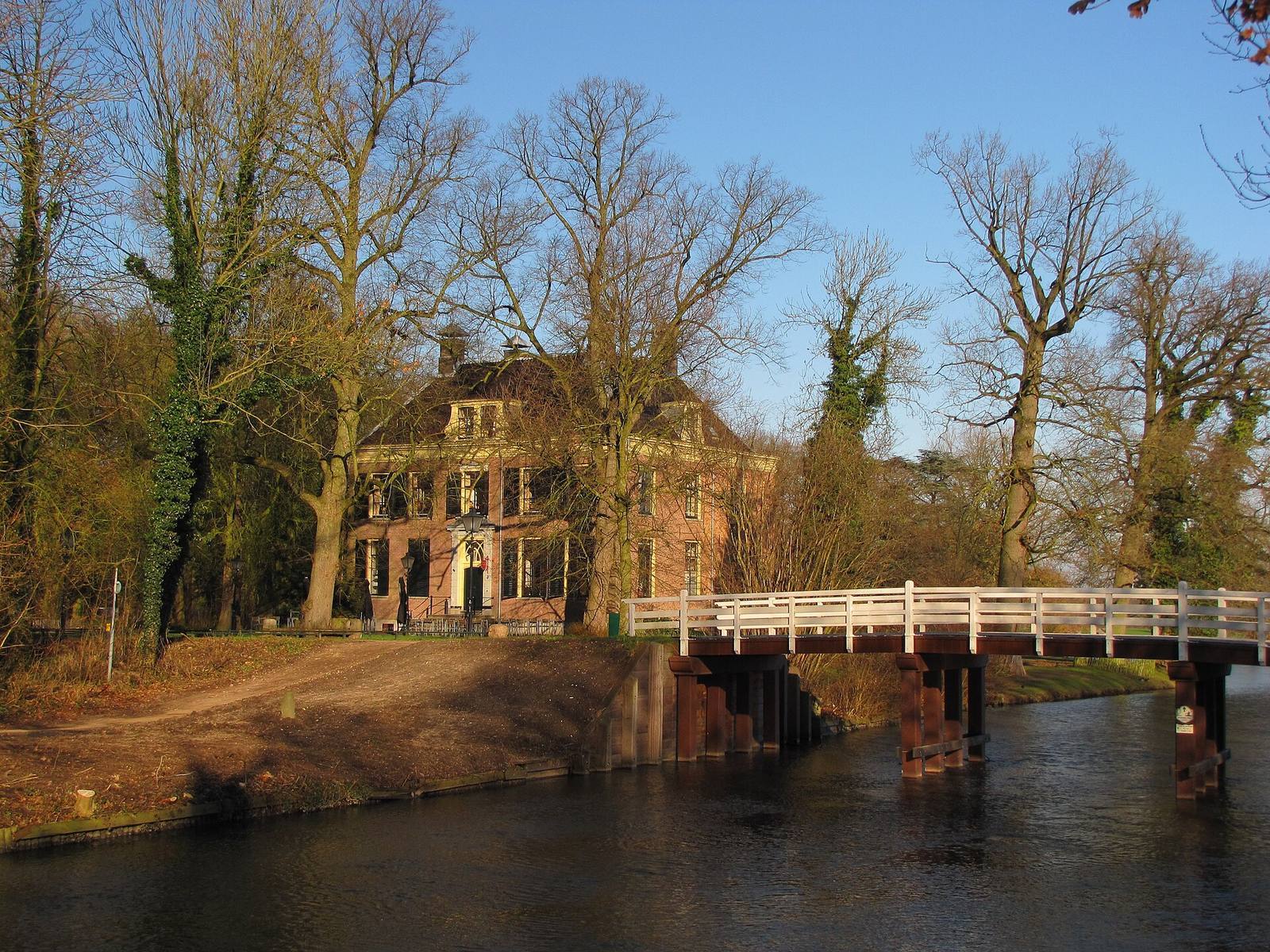
Rhijnauwen is an estate centered on a manor on the right bank of the Kromme Rijn, about two kilometres west of Bunnik in the Netherlands. The manor was first mentioned in 1212, and the estate probably dates to the 13th century. The present house belongs to the 18th century and follows Dutch Classicism, an architectural approach drawing on classical forms.
Medieval manor and conflict
During the first half of the 14th century, Rhijnauwen belonged to the Van Lichtenberg family, then one of Utrecht’s most powerful families. It passed to the Zeeland family of Renesse after Aleid van Lichtenberg married Jan IV van Renesse. By 1536, Rhijnauwen had been formally recognized as a ridderhofstad, a fortified manor designation in Utrecht associated with the standing of the provincial nobility.
In 1449, brothers Frederik and Johan van Renesse were banished after Bishop Rudolf van Diepholt defeated Zweder van Culemborg, a rival claimant to the bishopric. The following year, Utrecht’s city government ordered Rhijnauwen burned. The property later passed through several owners.
Estate and municipality
The Strick van Linschoten family, its final private owners, bought Rhijnauwen in 1773. From 1818 to 1857, Rhijnauwen was also a municipality. It included the former lordships of Amelisweerd and Rhijnauwen, territories where lords held local rights and authority, and had about 50 inhabitants around 1850. The municipality joined Bunnik in 1857.
The name Rhijnauwen probably comes from an old word for the wet meadows beside the Rhine. It is also the name of a small woodland between Bunnik and Utrecht.
Fortification and later use
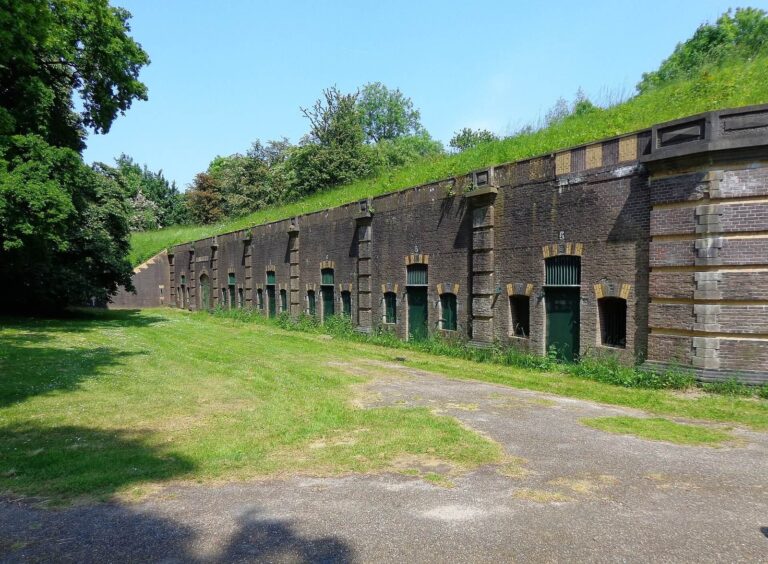
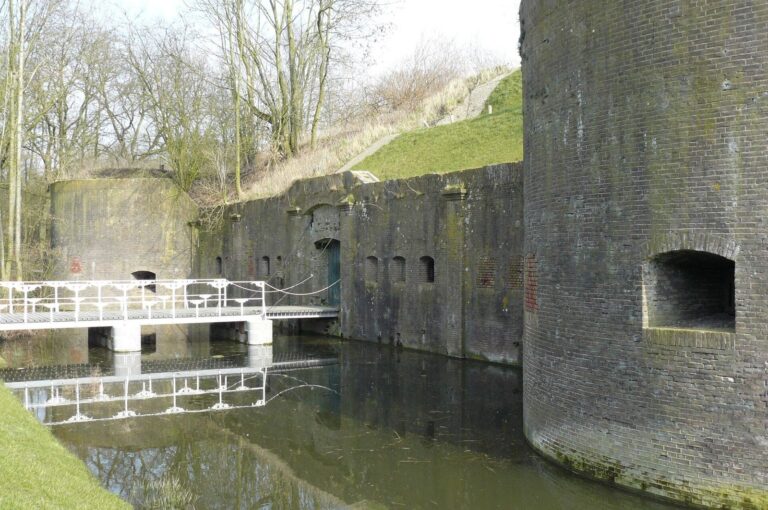
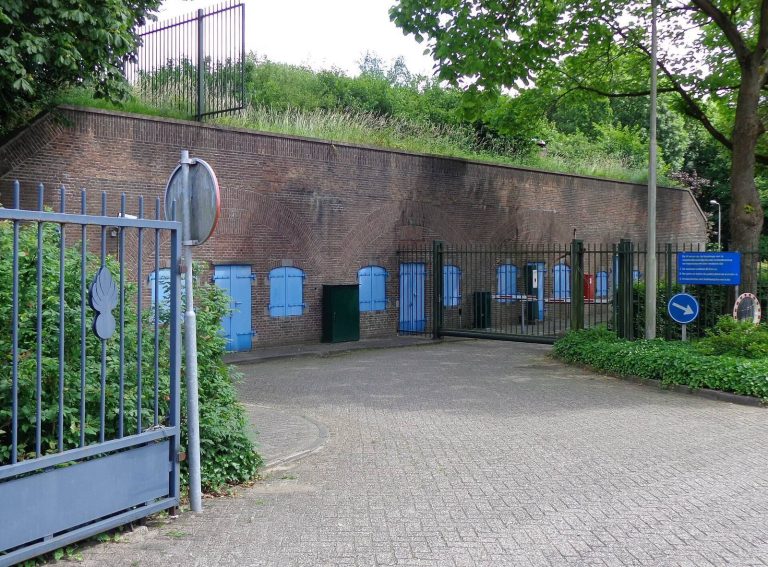
Fort at Rijnauwen was built between 1867 and 1869. Along with other forts around Utrecht, it defended the city and closed off the Houten Plain. It formed part of the New Dutch Waterline, a defensive system that relied on flooding as well as forts.
The municipality of Utrecht acquired the estate in 1919, allowing the dowager Strick van Linschoten to remain in the house for the rest of her life. On 1 April 1933, the estate was leased to a youth-hostel foundation, and the house became a hostel. It is the oldest youth hostel in the Netherlands. Renovations after 1950 removed most of the house’s 18th-century interior features. Rhijnauwen is listed as a Dutch national monument, number 11287.
Remains
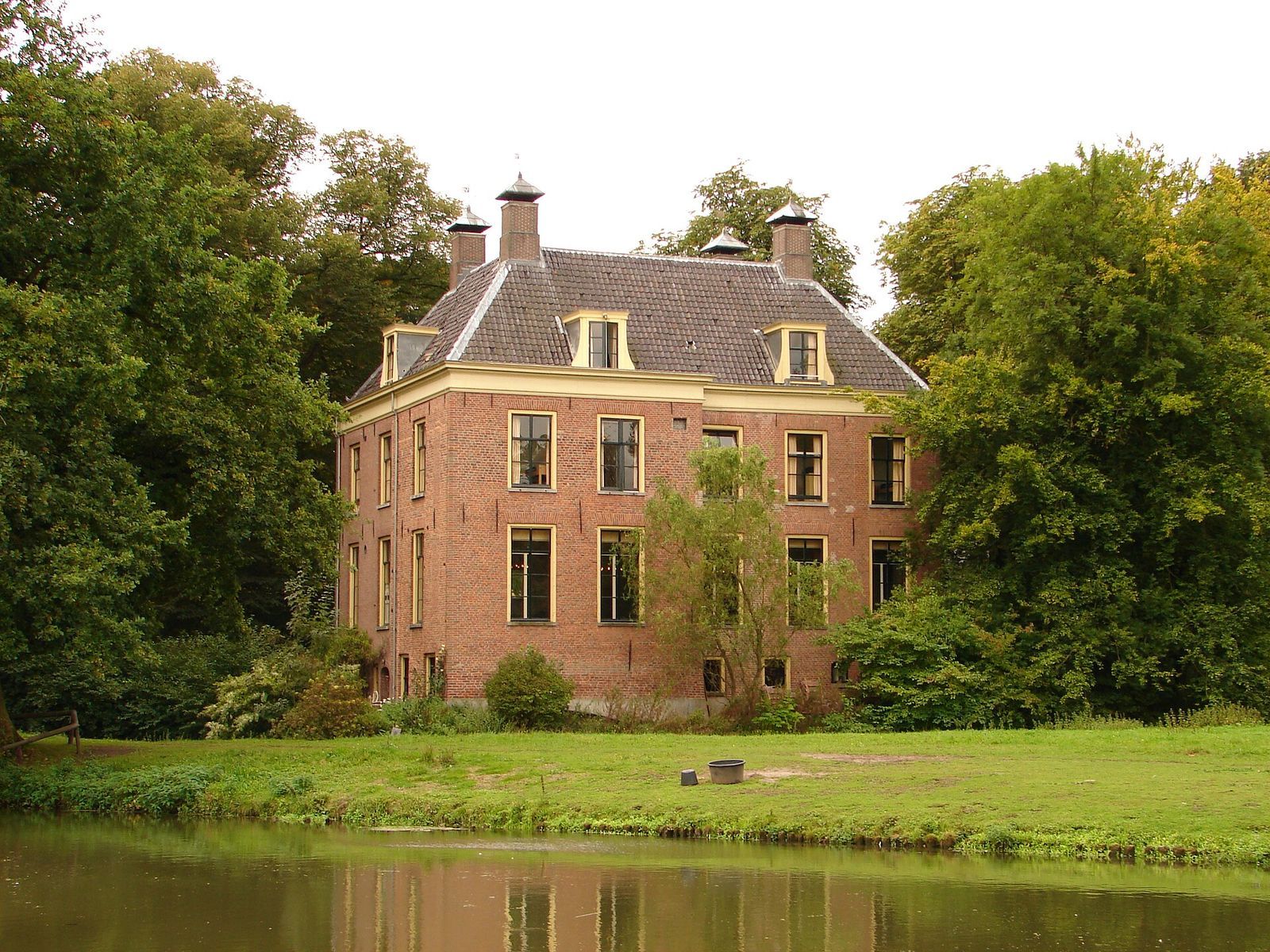
The estate occupies a raised sandy bank above marshy ground, providing firm building ground. Its manor is the central building, with Dutch Classicist form and visible fabric from earlier phases. The estate also includes a fort and associated farm and tea-house buildings.
Rhijnauwen House
Earlier building phases
The first house may have been a tower keep surrounded by a moat, with a farm nearby, though its original appearance is uncertain. A new house was built on its foundations during the 15th century. Parts of an earlier building remain visible at the rear and left side, while remains of the house burned in 1450 can be seen in the east and south facades. An extension on the north side in the mid-16th century gave the house an L-shaped plan. A south wing, probably added in 1596, formed a U-shaped plan, closed by a gatehouse. A bridge behind the gatehouse gave access to the forecourt.
Eighteenth-century manor
In the 18th century, changes to the house and grounds included removal of the garden wall, forecourt, and gatehouse, as well as construction of a west wing. Surviving original interior features include doors and their frames, and a staircase in the Louis XV style, an 18th-century French decorative style. A 1773 copper engraving by Dutch artist Hendrik Spilmann depicts Rhijnauwen as a fortified manor.
Fort at Rijnauwen
The fort is part of the estate and is the largest fort of the New Dutch Waterline.
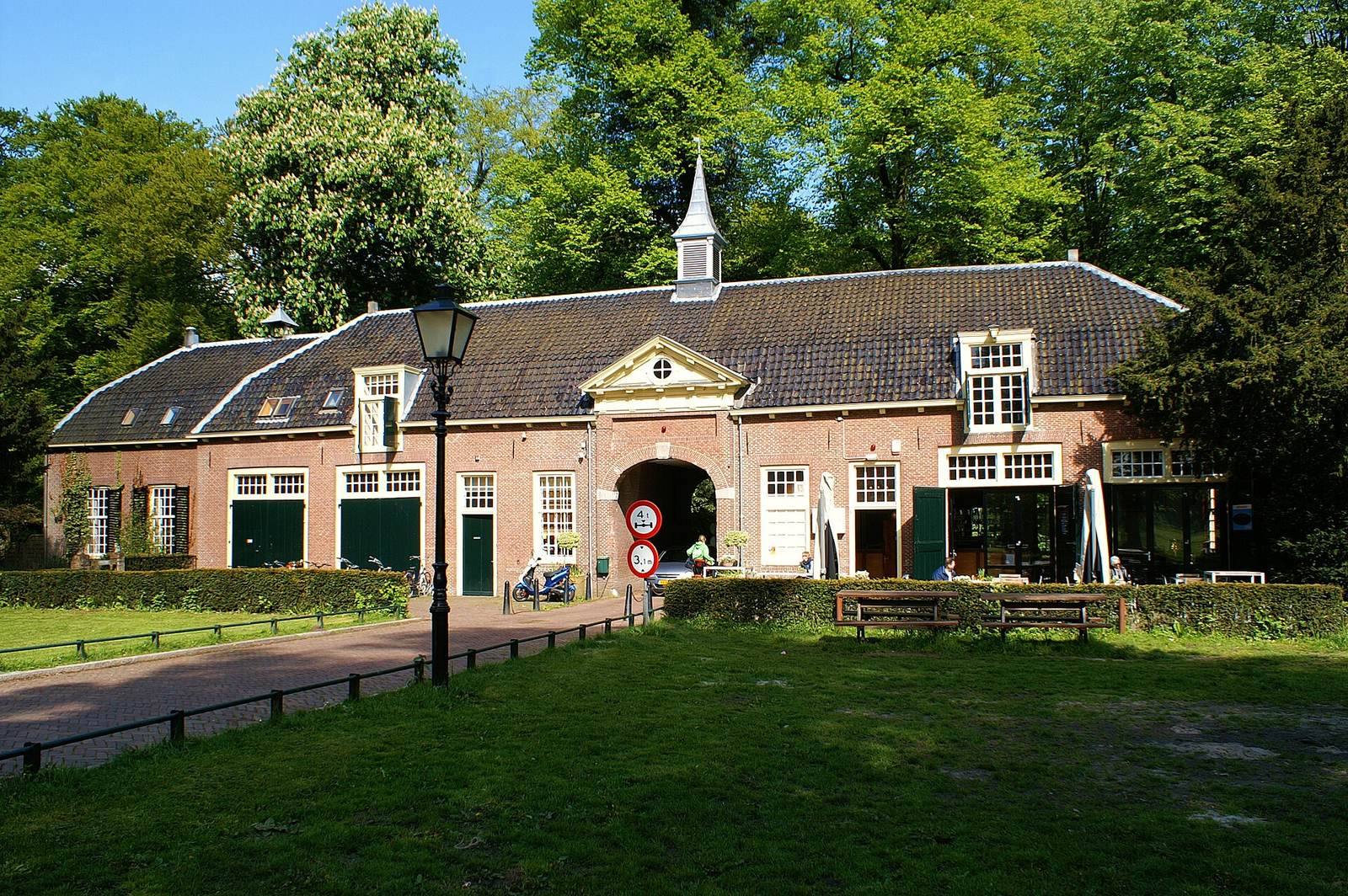
Associated estate buildings
Other buildings associated with the estate include the farm Goed ten Rijn, Rhijnauwen Farmstead, and Rhijnauwen Tea House. The tea house stands near the youth hostel.