Roman Fort Fectio: A Roman Frontier and River Base in the Netherlands



Site at a Glance
- Rating
- 4
- Popularity
- Very Low
- Country
- Netherlands
- Primary era
- Classical
- Eras represented
- Classical
- Civilizations
- Roman
- Site type
- Military
- Remains
- Fort
On this page17 sections
History
Roman Fort Fectio was a Roman military installation in the Netherlands, near modern Bunnik, established in Germania Inferior around AD 4–5 during the campaigns of Tiberius. Built beside the point where the Vecht branched from the Rhine, it controlled routes toward Lake Flevo, the Frisian region, and the territory of the Cananefates. Its position made it useful as a supply base and possibly as an operational base for infantry and naval forces, as well as a starting point for expeditions across the frontier.
From offensive base to frontier fort
The earliest installation passed through at least six building phases. In AD 47, the Rhine became the northern frontier of the Roman Empire, ending Fectio’s earlier offensive role. The site was reorganized for frontier defense, probably under the direction of Gnaeus Domitius Corbulo, a prominent Roman commander. Under Emperor Claudius, Fectio became part of the Lower Germanic Limes, the fortified frontier system along the Lower Rhine that included forts, roads, settlements, watchtowers, and river infrastructure.
During the Batavian Revolt of AD 69–70, a major uprising against Roman authority in the Rhine frontier provinces, Fectio was destroyed by fire. It was then rebuilt, probably as the base of an auxiliary cavalry unit. Auxiliary troops were non-legionary soldiers recruited from across the Roman Empire and stationed in frontier provinces. From the Flavian period, the reigns of Vespasian, Titus, and Domitian from AD 69 to 96, the fort housed several such formations.
Auxiliary garrison and imperial connections
The Cohors II Brittonum milliaria equitata was stationed at Fectio from approximately AD 70 to 78/80. This was a mixed auxiliary unit, with infantry and cavalry elements, whose nominal strength was twice that of a standard cohort. It was followed by the Cohors I Flavia Hispanorum equitata, present from approximately AD 78/80 until around AD 100. This unit may briefly have shared the fort with another cohort whose identity is unknown. The units occupying Fectio between approximately AD 100 and the middle of the second century have not been identified.
In the second century, the fort was occupied by the Ala I Thracum, an auxiliary cavalry unit previously stationed in Britain. A tombstone for Valens, son of Bititralis, identifies the unit’s presence at Fectio. The emperor Caligula also visited the site in AD 40 while travelling to Lugdunum Batavorum, a Roman settlement conventionally associated with the site known as Brittenburg. A wine barrel found at Fectio carries an inscription connected with Caligula’s imperial name and is associated with this visit.
Under Antoninus Pius, who ruled from AD 138 to 161, Fectio was rebuilt in brick and stone. By approximately AD 200, silting had made the adjacent river channel inaccessible to boats. This reduced the usefulness of the fort as a water-connected military station. A final destructive fire brought the site’s military occupation to an end around AD 270–275. The fort was not rebuilt, and Fectio was not reoccupied as a military settlement.
Settlement, reuse, and archaeological investigation
A civilian settlement developed east of the fort and probably became an important commercial center through its military, river, and transport connections. Flooding from the Vecht repeatedly affected the settlement, and a large cemetery lay nearby. In the medieval period, the former Roman site was used as a quarry. Roman building materials were reused in early medieval churches in Utrecht. In AD 723, Charles Martel, a Frankish political and military leader, donated the former Roman settlements of Fectio and Traiectum to the monastery at Utrecht, helping to facilitate this reuse.
Small-scale excavation and archaeological research began during the 1820s. Nineteenth-century military construction and later development damaged or obscured parts of the site, and about ten percent of the suspected archaeological area has been investigated. Larger investigations took place during the widening of the A12 motorway between 1988/1989 and 1996. In 2010, more than one hundred wooden writing tablets from the Fectio military archive became known. Two amateur archaeologists had found them in 1978, after which the tablets were stored underwater and in a freezer for several decades before their texts were examined.
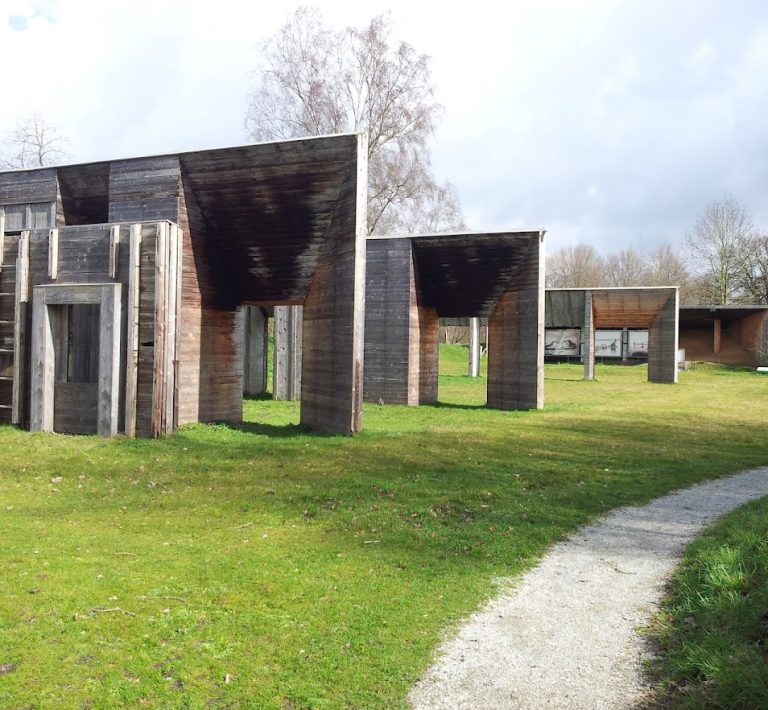
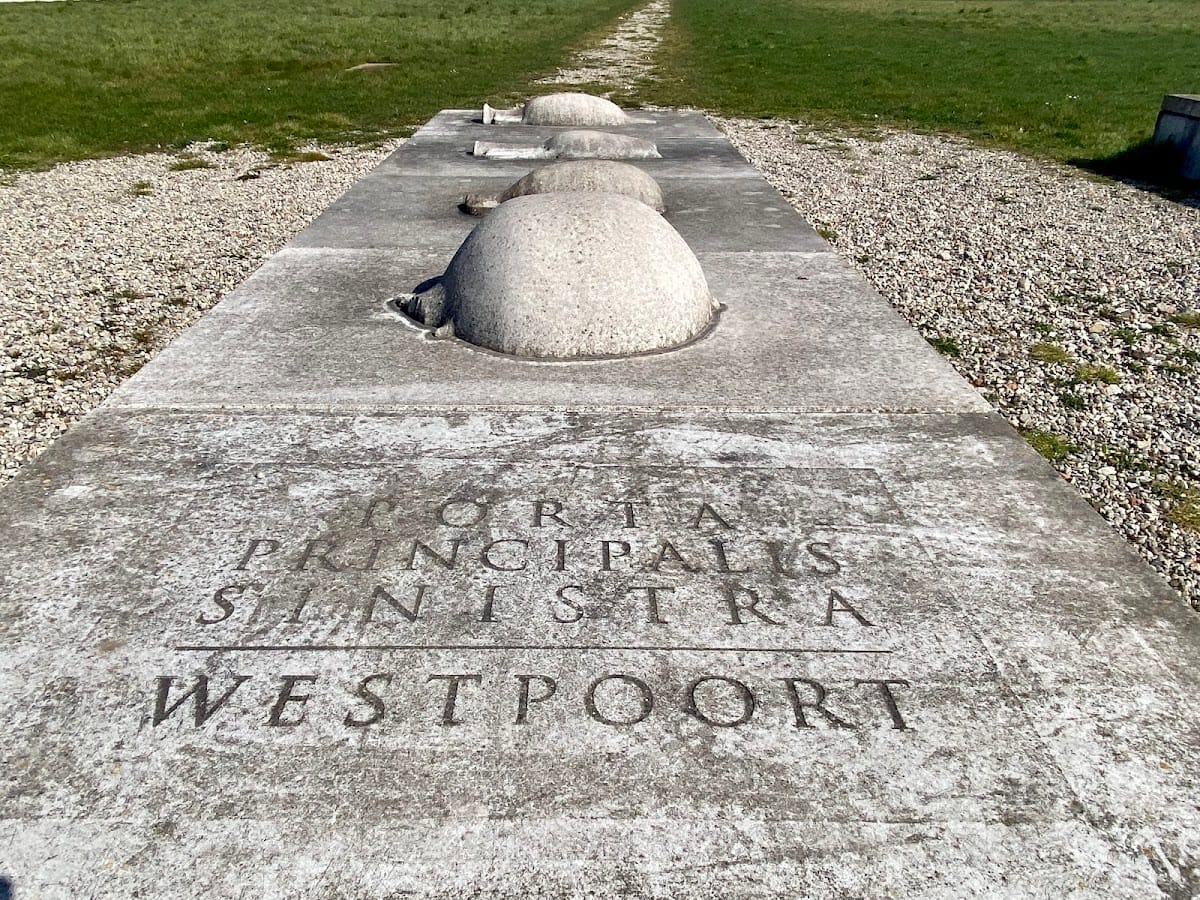
A three-storey wooden watchtower reconstruction was completed in 2004 and houses a permanent exhibition on Roman Vechten. In 2016, an artwork marked the contours of the latest fort in the landscape using Roman texts, images, and objects. Many finds are held by the Centraal Museum in Utrecht, with further material in the Rijksmuseum van Oudheden in Leiden. A nineteenth-century collection of more than 10,000 finds was transferred to the municipality of Utrecht in 1995 and added to the Centraal Museum collection. Since 2021, Fectio has formed part of the UNESCO World Heritage property Frontiers of the Roman Empire: the Lower Germanic Limes, which includes the fort, civilian settlement, cemeteries, Limes road, and Rhine waterway as an unusually complete military complex.
Remains
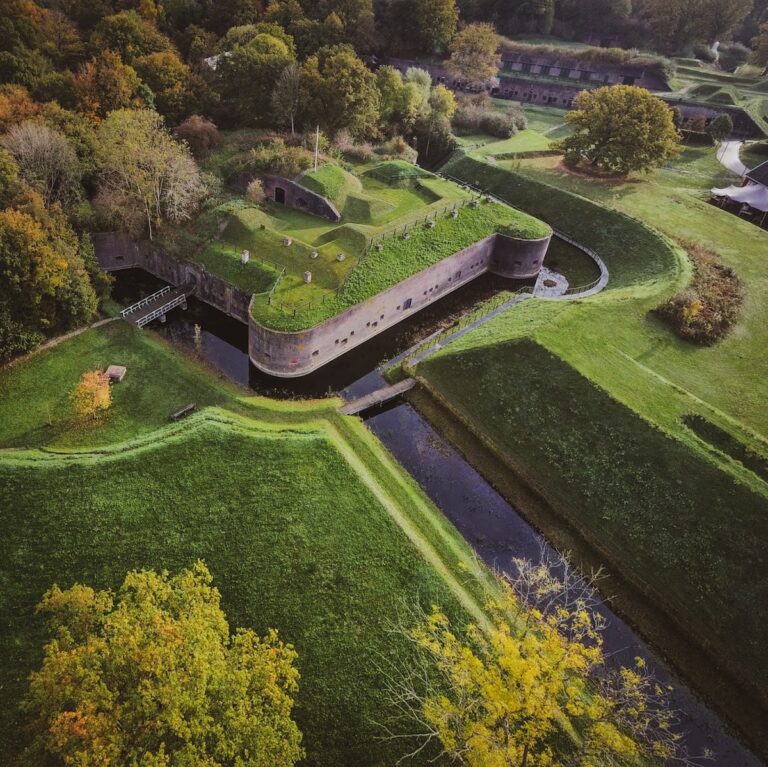
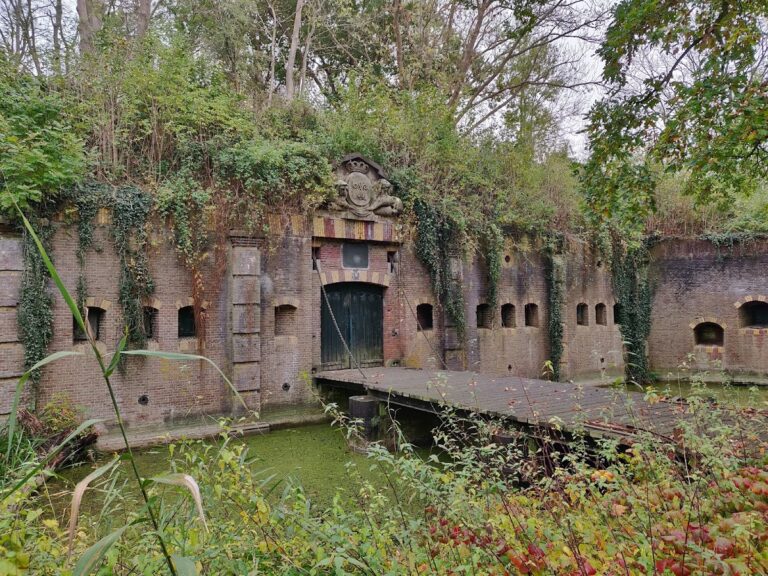
Fectio occupied a strategic riverside position near the bifurcation of the Rhine and Vecht. In Roman times, a river arm connected with the Rhine ran beside the fort, while the Vecht offered a route toward Lake Flevo and the Frisian region. The site included successive forts, a landing area, a civilian settlement, cemeteries, roads, and river installations. Much of the fort now lies buried beneath an orchard immediately west of the nineteenth-century Fort bij Vechten.
Early fort and river installations
First fort
The earliest fort, used approximately from AD 4/5 to 69/70, formed an irregular quadrilateral covering about 4.5 hectares. Its river-facing side was open, while a wooden-and-earth rampart and a V-shaped ditch approximately 5.40 metres wide protected the three landward sides. The early installation included three granaries and other wooden buildings, together with defenses along the riverbank, quays, and remains of ships. Numerous wells and extensive settlement traces outside the fort indicate large areas associated with the military community.
Rebuilt auxiliary fort
After the destruction of the first fort, the ground was raised by approximately two metres. A new wooden-and-earth auxiliary fort was then built over it. This installation had an irregular quadrilateral plan, covered about 2.6–2.7 hectares, and presented a broad front toward the Rhine. A rampart and ditch surrounded all four sides.
Stone fort
Defenses and headquarters
The later stone fort followed the plan of its wooden predecessor and measured approximately 150 by 180 metres, covering about 2.7 hectares. A stone wall enclosed the fort, and a broad external ditch measured approximately 9.40 metres across. The stone phase included a principia, the headquarters building of a Roman fort, and a stone praetorium, the commander’s residence or official headquarters. Additional wooden buildings also stood within the fort.
Civilian settlement and cemetery
Vicus and port
The vicus, the civilian settlement associated with the fort, extended eastward and may have covered as much as ten hectares. Much of it lies beneath the nineteenth-century military complex, whose construction destroyed or obscured archaeological evidence. A section of the settlement was excavated approximately one kilometre east of the fort in 1989. The site also included a port or landing area. Repeated flooding damaged the settlement during its occupation.
Cemetery
A cemetery lay near the settlement. A cremation urn found south of the Marsdijk in 1994, together with discoveries made during the nineteenth century, confirms its presence. The cemetery formed part of the wider settlement and military landscape around Fectio.
Inscriptions and recovered objects
Religious evidence
A limestone altar dedicated to Fortuna was found in the vicus and dates to the second century. Another inscription mentions a shrine dedicated to Viradecdis, a deity venerated at Fectio by the Tungri, a people associated with Germania Inferior and adjacent regions. A votive stone dedicated to the mother goddesses of Noricum was made by Anneus Maximus, a soldier of the First Legion Minervia.
Military and personal inscriptions
A dedication by Gaius Julius Bio identifies him as the captain of a Roman warship. The tombstone of Valens, son of Bititralis, records a member of the cavalry community, while a funerary inscription names Salvia Fledimella, whose name is Germanic. These inscriptions reveal the varied population connected with the fort and its surrounding settlement.
Writing tablets and trade goods
The military archive included at least 102 fragments of wooden writing tablets. Their survival reflects the low-oxygen conditions of the soil, which also preserved wooden and leather objects. Other finds include pottery from the kilns of the Twenty-second Legion Primigenia at Xanten, amphoras from Rhodes and Baetica, and the wine barrel associated with Caligula’s visit. Inscriptions and stamped marks occur on pottery and roof tiles, adding written evidence to the material remains of the fort and settlement.