Klusenstein Castle: A 14th-Century Border Castle in Hemer, Germany
Site at a Glance
- Popularity
- Medium
- Country
- Germany
- Primary era
- Medieval
- Eras represented
- Medieval, Early Modern
- Civilizations
- Holy Roman Empire, Kingdom of Prussia
- Site type
- Military
- Remains
- Castle
On this page7 sections
History
Construction and Border Conflict
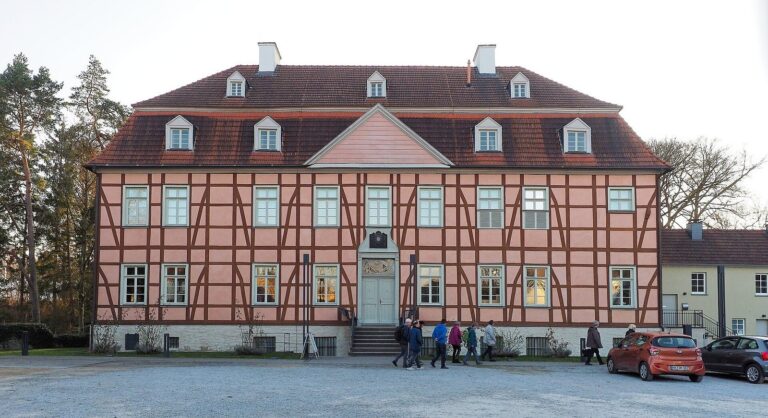
Klusenstein Castle is a hilltop border castle in Hemer, Germany, built in 1353 by Gerhard von Plettenberg for Count Engelbert III of the Mark. Gerhard served as a regional administrator. The castle was intended to defend the County of Mark, a medieval territory in Westphalia, along its borders with the County of Arnsberg, another medieval Westphalian territory, and the Electorate of Cologne, an ecclesiastical principality governed by Cologne’s archbishop-elector. The territories’ borders followed the Hönne.
The chronicler Levold of Northof recorded that Gerhard began the castle while the count was overseas. That year, Gerhard also began work on a castle and town at Neuenrade. In 1366, during a feud between Engelbert III and Gottfried IV of Arnsberg, Klusenstein Castle came under siege but was neither captured nor destroyed. After Gottfried, the last Count of Arnsberg, sold his county to the Bishop of Cologne, the castle no longer served its original strategic purpose.
Later Ownership and Modern History
The von Werminghausen family held the castle until the seventeenth century. During the Thirty Years’ War (1618–1648), a major European conflict, Swedish troops and troops from Hesse controlled it. The Brabeck family acquired the property in 1695, followed by the Löbbecke family in 1812. The Hoesch company bought it in 1904. It is now owned by Rheinkalk and leased, while the castle and surrounding buildings form the Klusenstein district of Hemer.
Monument protection was applied to the castle site and a group of its buildings and remains in 1990. Repairs to the castle and adjoining buildings were carried out in 2003 for its 650th anniversary; the half-timbered barn was renovated as part of the work.
Remains
Castle Complex
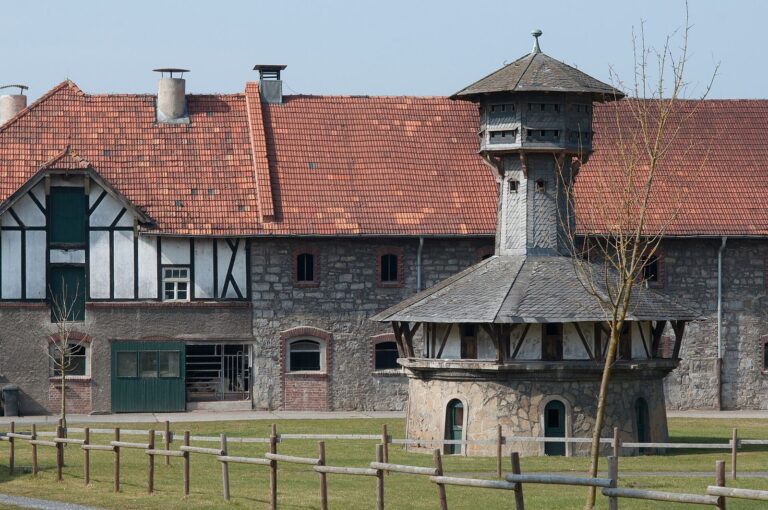
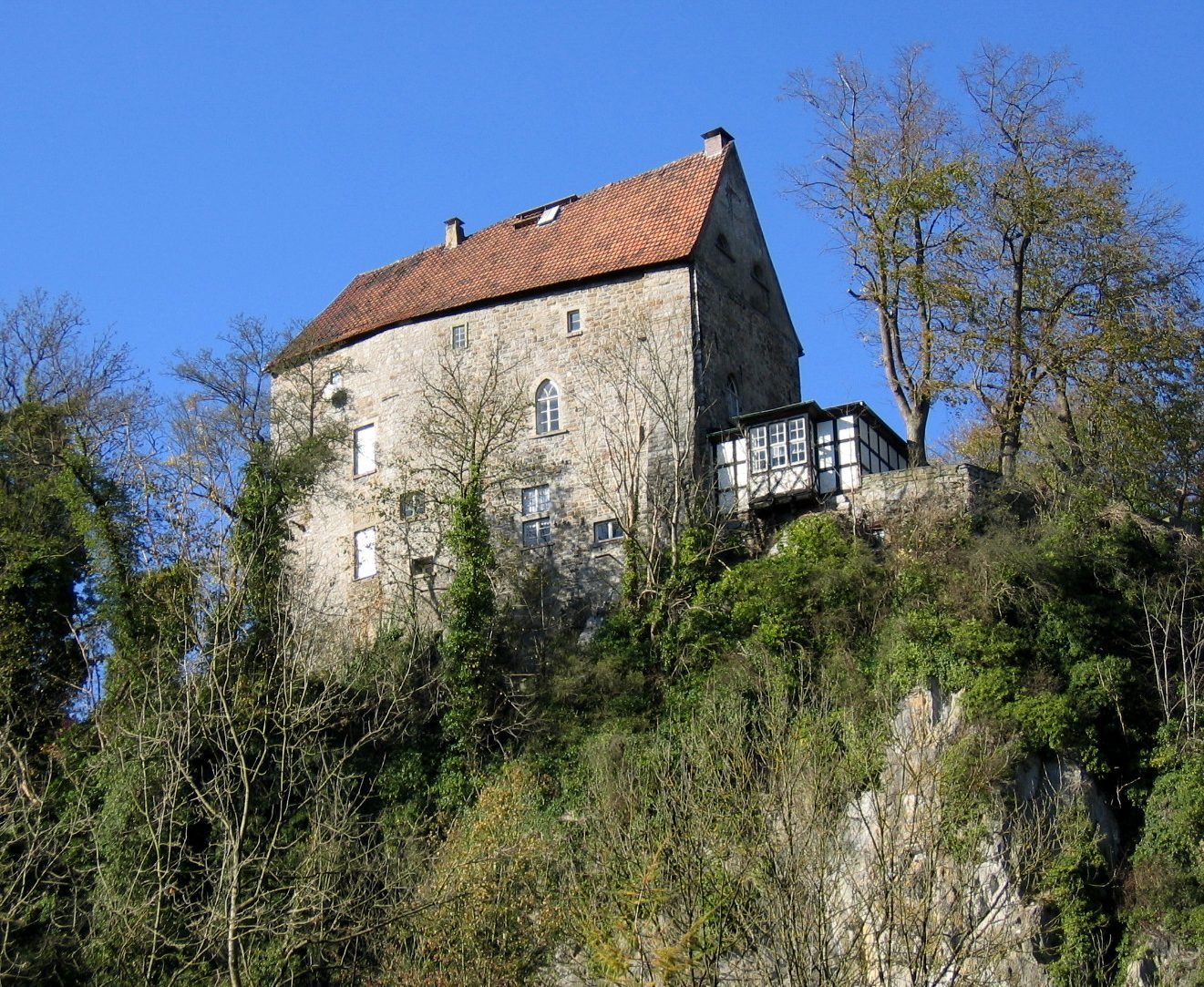
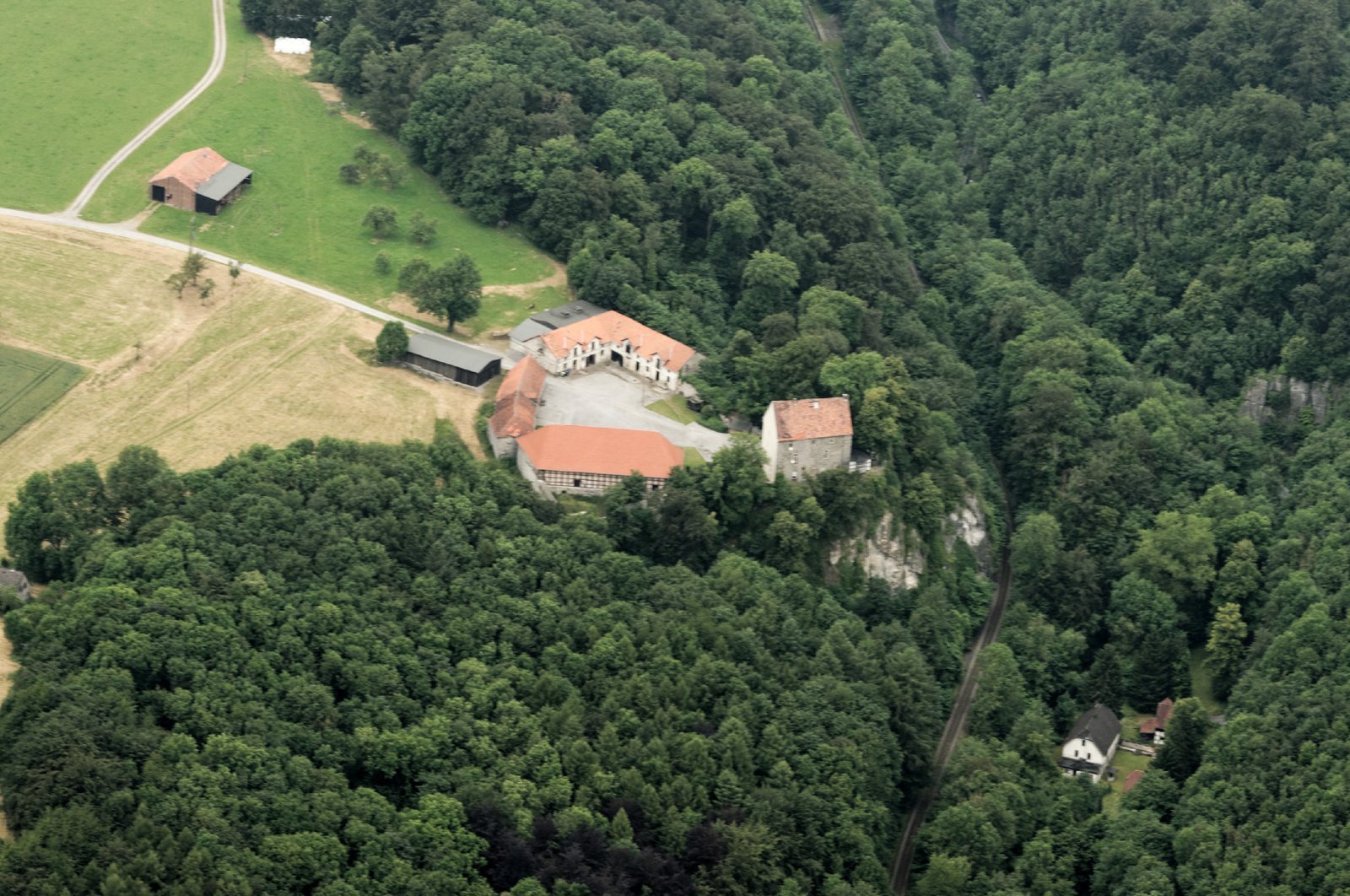
The complex stands on a cliff 60 metres high at the edge of the Hönne valley, at the valley’s narrowest point. The Hönne is a tributary of the Ruhr. The site includes the castle building, a half-timbered extension, two cellars, a half-timbered barn, stable buildings, and a farm building, as well as a raised defensive bank of earth and a moat. The barn was built in 1749/50 as a cattle house.
Cave Beneath the Cliff
A cave 51 metres long occupies the lower part of the cliff. An entrance beneath the castle’s eastern section, destroyed in 1840, was found in 2003. Stories of a secret escape route had circulated for a long time. One cellar room also has a sealed emergency exit that led through a chimney, or vertical passage, in the Great Castle Cave.
Hönne Valley Setting
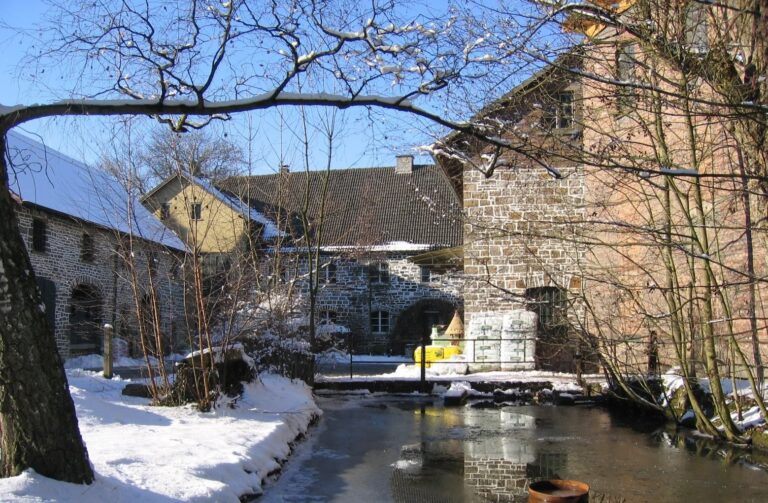
The Klusenstein Mill lies below the castle in the Hönne valley and is separate from the castle complex. Opposite the castle are the Seven Virgins, a group of rock formations. The Hönnetal nature reserve protects the valley’s plants, animals, and important landscape features.