Fröhstockheim Castle: A Noble Residence in Lower Franconia
Site at a Glance
- Popularity
- Medium
- Country
- Germany
- Primary era
- Early Modern
- Eras represented
- Medieval, Early Modern
- Civilizations
- Holy Roman Empire
- Site type
- Domestic
- Remains
- Castle
On this page5 sections
History
Fröhstockheim Castle is a noble residence in the southern part of Fröhstockheim, within the municipality of Rödelsee in Lower Franconia, Germany. A noble residence on the site is recorded from the thirteenth century, and its history was shaped by changing feudal ties and the von Crailsheim family’s rebuilding and ownership.
Medieval residence and destruction
Members of the Hohenlohe counts’ service class, known as ministeriales, lived in the village. They could hold fiefs, grants of land or rights in return for service, and could attain noble status. Albrecht Fuchs von Stockheim is named in 1220. In 1455, Karl von Heßberg acquired the Hohenlohe fief. During the German Peasants’ War, a widespread uprising in German-speaking lands over social and feudal grievances, insurgents burned the residence in 1525. Karl’s son then sold the ruined residence and its fief to the von Crailsheim family.
Rebuilding under the von Crailsheims
Wolf von Crailsheim took ownership in 1543 and began rebuilding the castle. He lived at another castle in Mainsondheim while the work continued. His son Ernst completed the new castle, and the family moved in. By then, the counts of Henneberg had become the fief-holders; thereafter, they granted the fief only to the von Crailsheims.
Later ownership and restoration
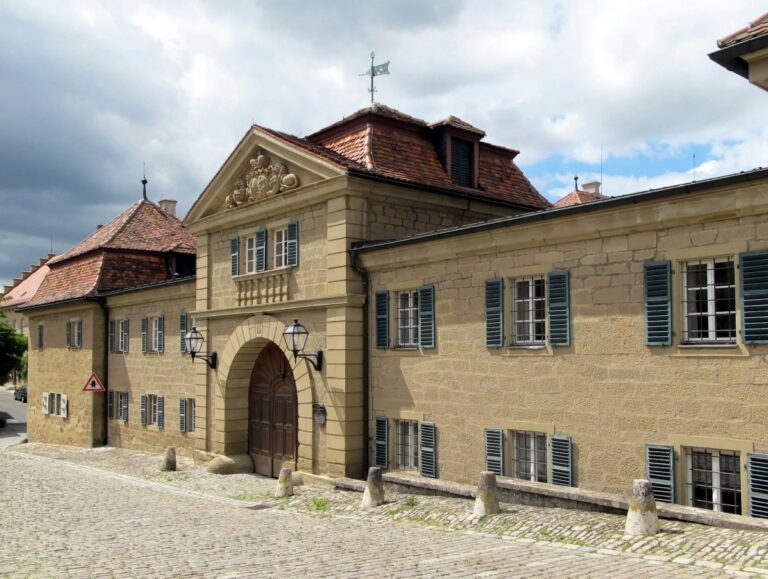
In the eighteenth century, the roofs were renewed in the Baroque style, an ornate European art and architecture style of the seventeenth and eighteenth centuries. At the beginning of the nineteenth century, the von Crailsheim family lost its secular authority over Fröhstockheim but kept ownership of the castle.
After the Second World War, an American military company occupied the castle, while the von Crailsheim family lived in the farm buildings. In the postwar years, the family sold its castle at Rödelsee and used the proceeds to renovate the buildings at Fröhstockheim; the farm buildings became a farm estate. The castle was renovated again in 1976. It is listed as an architectural monument by the Bavarian State Office for Monument Preservation, while the subterranean remains of predecessor buildings are designated an archaeological monument.
Remains
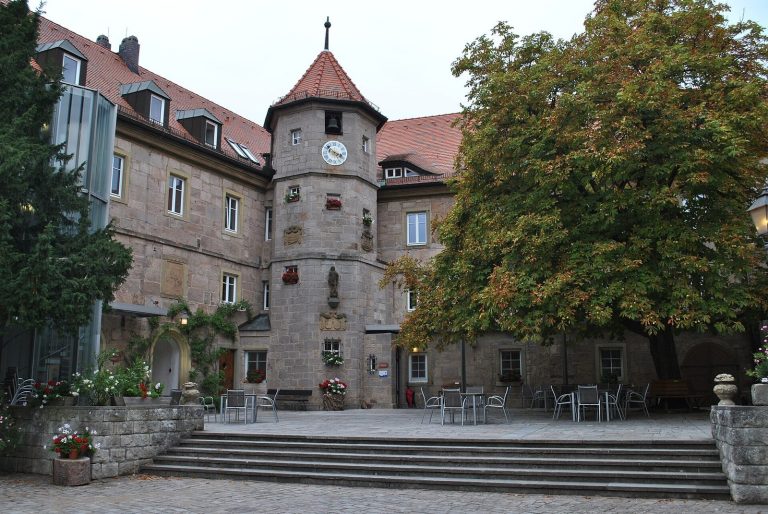
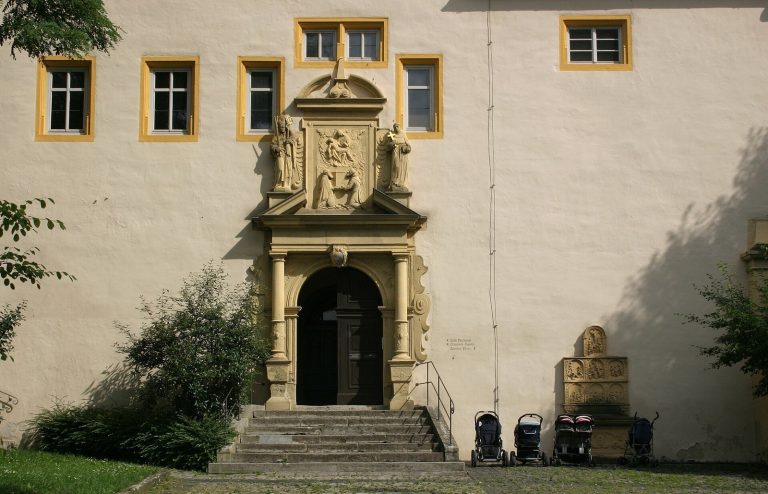
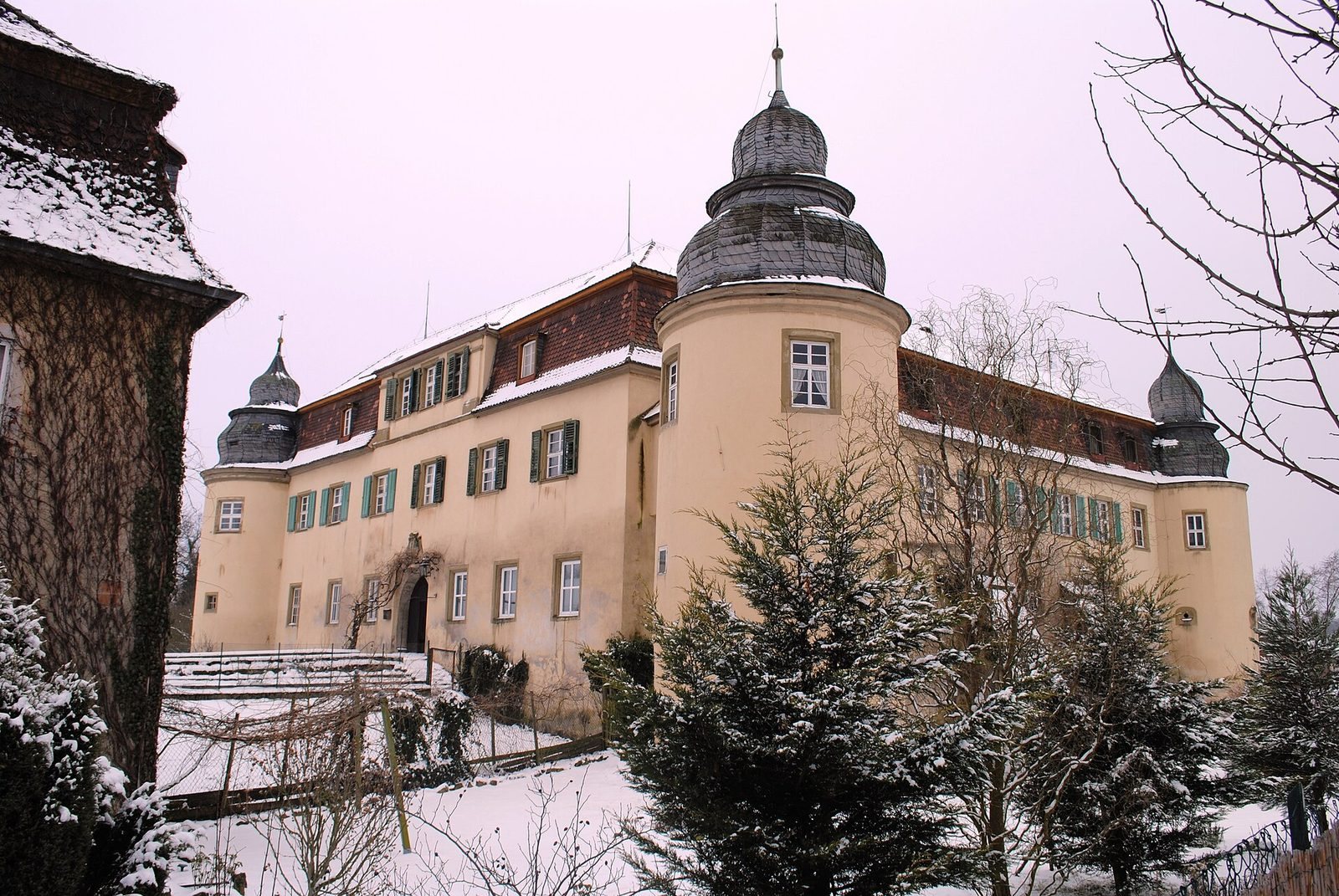
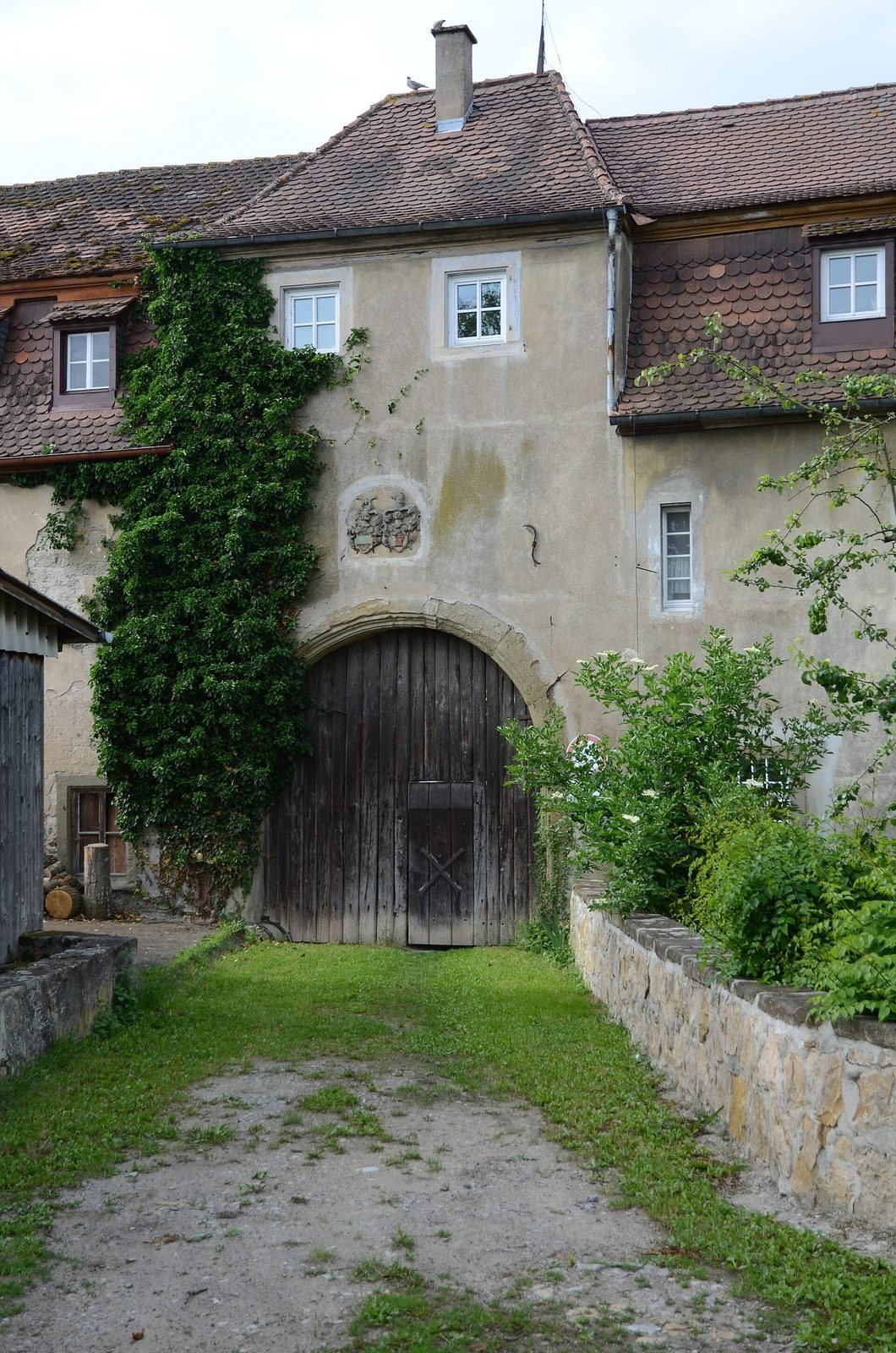
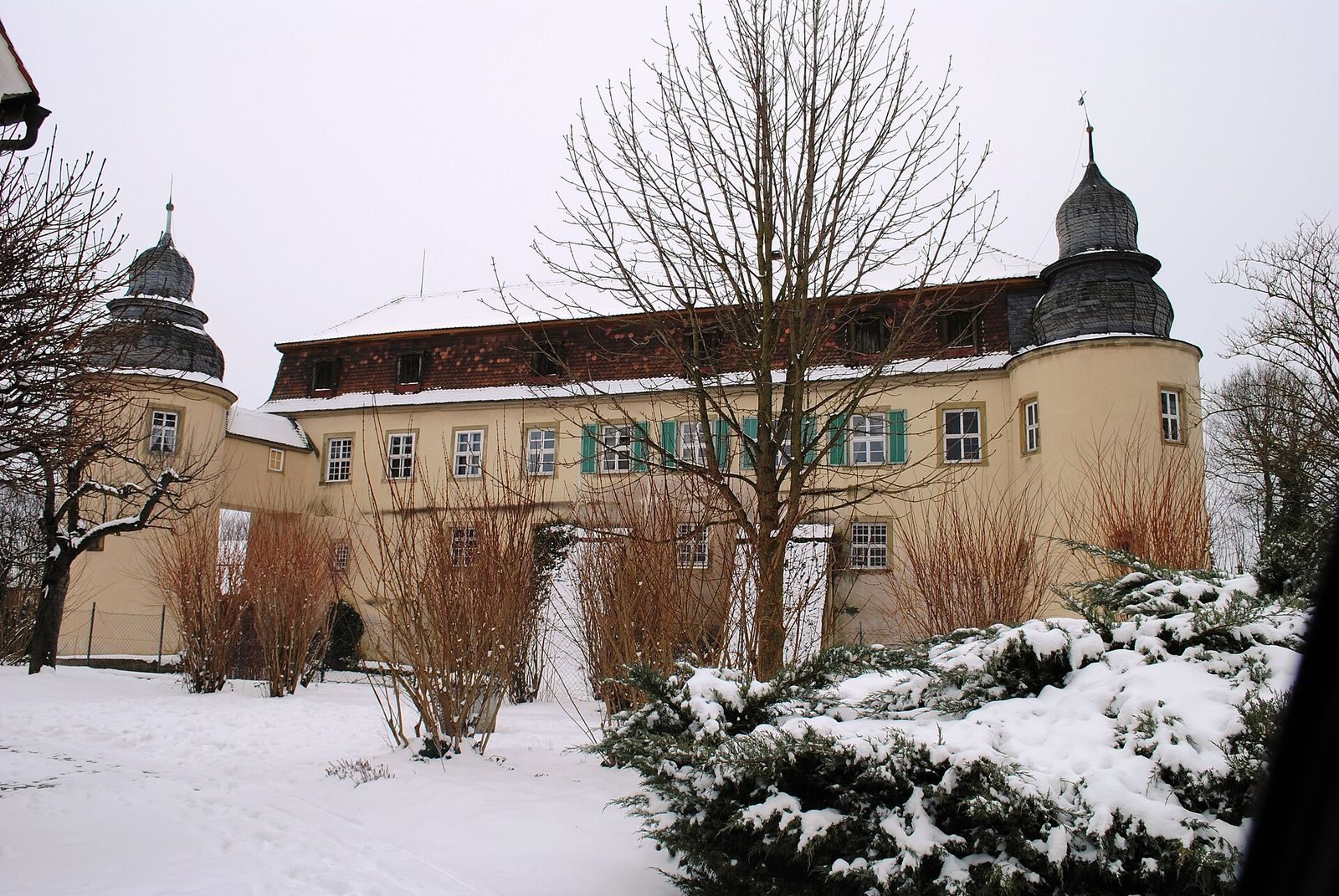
The surviving complex combines the moat of the former water castle with a two-storey building of four wings arranged around an inner courtyard. The building is topped by mansard roofs, with steep lower and shallow upper slopes on each side, and dormer windows. Three corners carry round towers whose caps rise in two inward-curving tiers and finish with two levels of projecting trim. A separate many-sided tower stands apart from the main block and connects to it by a covered passage. At the courtyard’s southeast corner, another many-sided tower contains a spiral staircase. Rectangular windows have simple shaped surrounds. The entrance has a round arch, above which a carved panel bears the combined coats of arms of the von Crailsheim and Zobel families.