Burg Hachen: A Medieval Hilltop Castle Ruin in Germany
Site at a Glance
- Rating
- 4.2
- Popularity
- Low
- Country
- Germany
- Primary era
- Medieval
- Eras represented
- Medieval
- Civilizations
- Holy Roman Empire
- Site type
- Military
- Remains
- Castle
On this page5 sections
History
Burg Hachen is a ruined medieval hilltop castle in Sundern, Germany, built around AD 1000 above the settlement of Hachen. Its ownership linked the site to powerful noble families and later to the archiepiscopal territory of Cologne, the secular domain ruled by the archbishop of Cologne alongside his ecclesiastical authority.
Early noble ownership
The castle was initially held by Count Ezzo. In 1060, Otto of Northeim, a prominent Saxon nobleman and Duke of Bavaria, received it from his wife, Countess Richenza, who belonged to the Ezzonian dynasty, a powerful noble family associated with the Rhineland and western Germany.
In 1080, Otto’s son, Count Kuno of Beichlingen, donated Burg Hachen to the Archbishop of Cologne. The archbishop then granted the castle as a fief, meaning land held from a superior in return for service, to the Counts of Dassel. In 1232, the Counts of Dassel sold it to the Counts of Arnsberg. When the County of Arnsberg was sold in 1368, possession returned to Cologne’s archiepiscopal territory.
Decline and later history
Around 1371, Burg Hachen served as the widow’s residence of Anna, the last Countess of Arnsberg. She later preferred Wildshausen Castle near Arnsberg. The importance of Burg Hachen declined from the fifteenth century onward, and the castle subsequently passed through the Wrede, Ketteler, von Thülen, von Ledebur, and von Fürstenberg families. In 1839, it came into the possession of the municipality of Hachen.
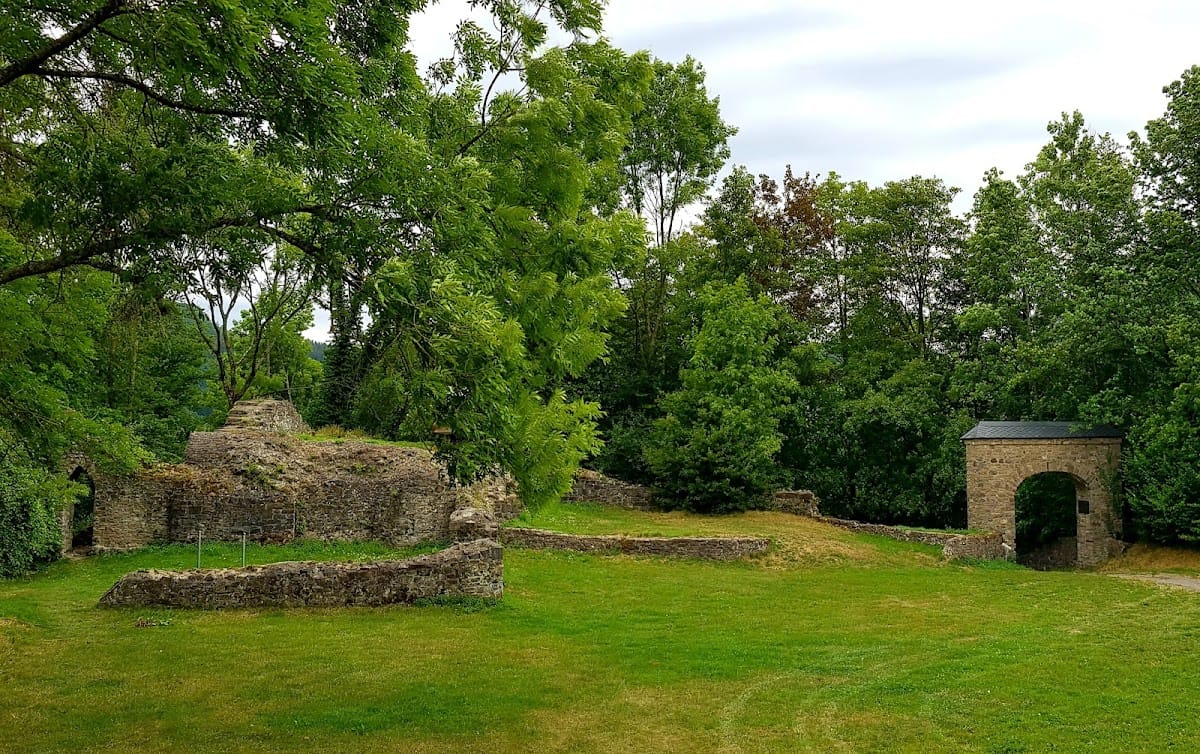
The castle’s building history remains insufficiently researched, although a small number of fifteenth-century documents concerning construction work survive. Drawings from the eighteenth and nineteenth centuries still show Burg Hachen as a tall and prominent ruin. The Westphalian monument-conservation authority investigated the site in 1923, and further investigations took place from 1978 to 1980. These works exposed the main castle area and advanced understanding of its construction history.
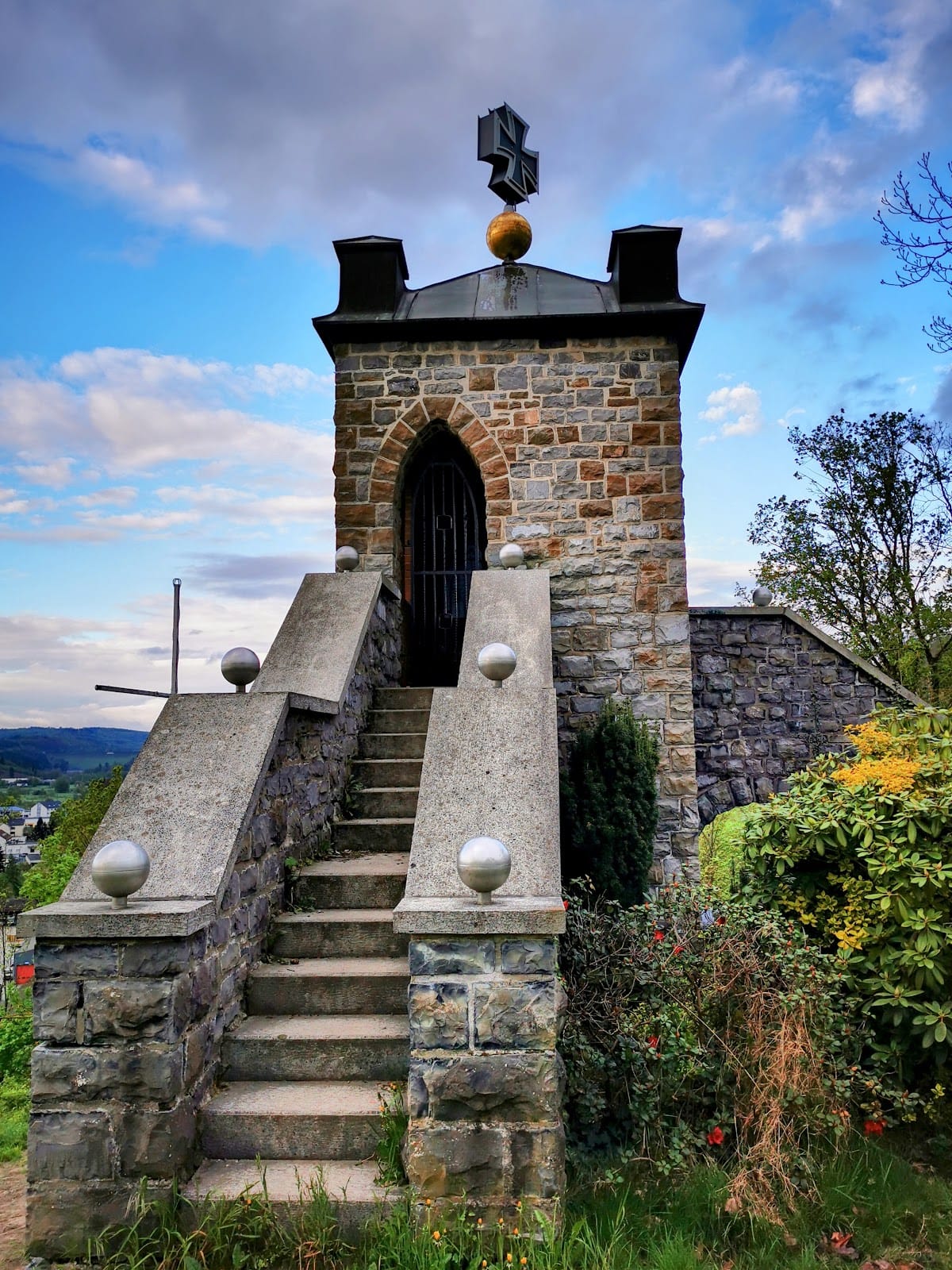
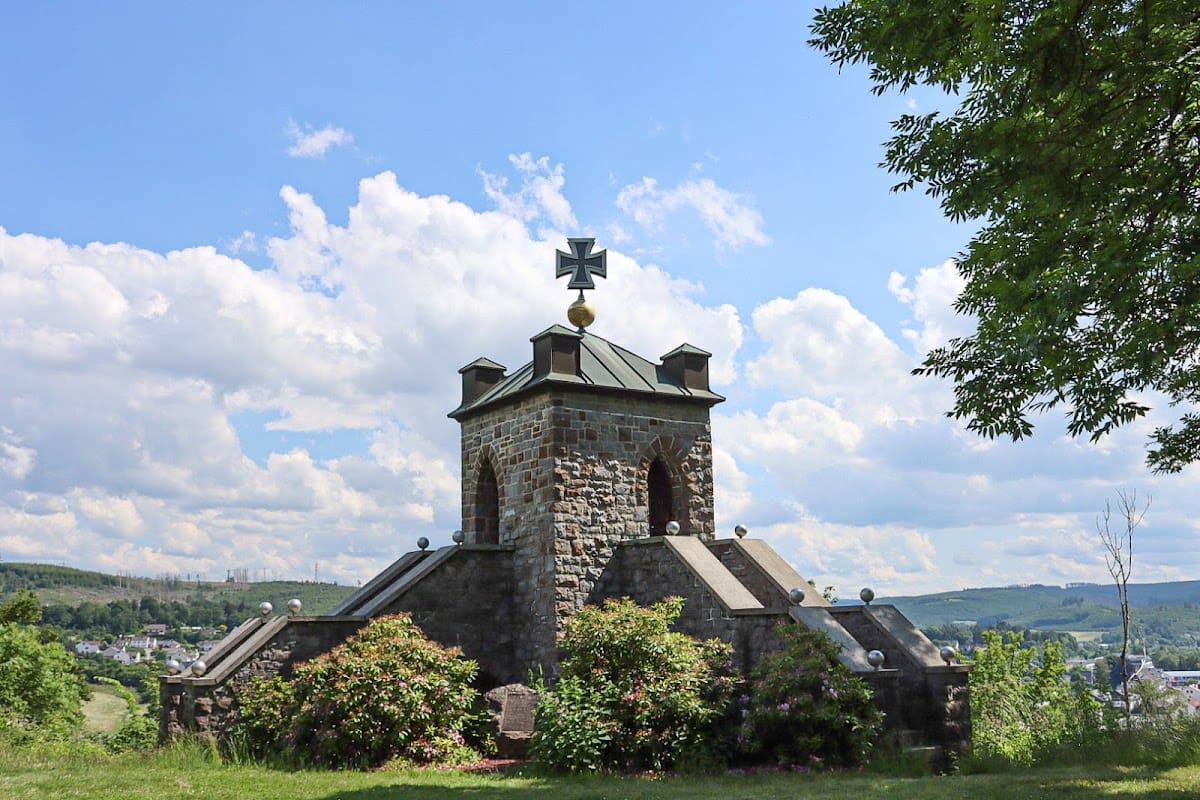
A war memorial beside the ruin was inaugurated on 3 August 1924. In 2019, the ruin and the surrounding mountain became the 2.5-hectare Burgberg Hachen nature reserve. The designation protects ecological communities associated with the ruin, particularly the area’s rich mollusc fauna. Restoration or maintenance work on the ruin walls requires the involvement of the Lower Nature Conservation Authority, while events are permitted when they do not conflict with the reserve’s conservation purpose.
Remains
Hilltop layout and defenses
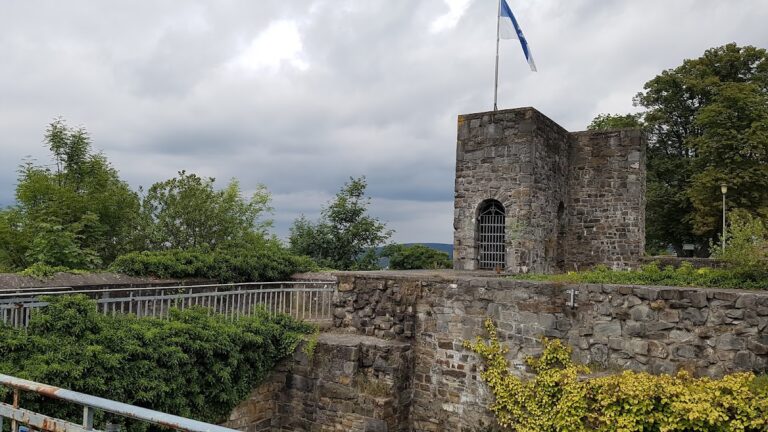
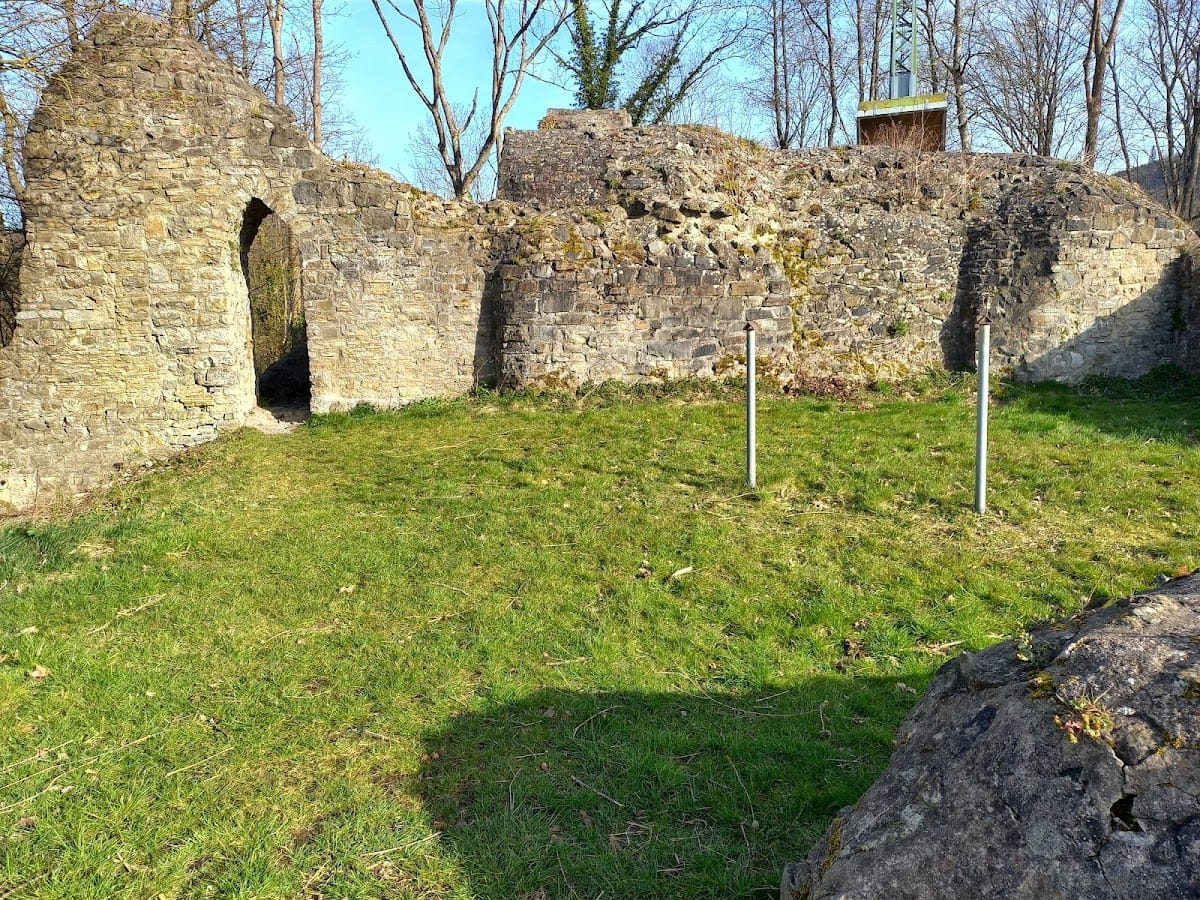
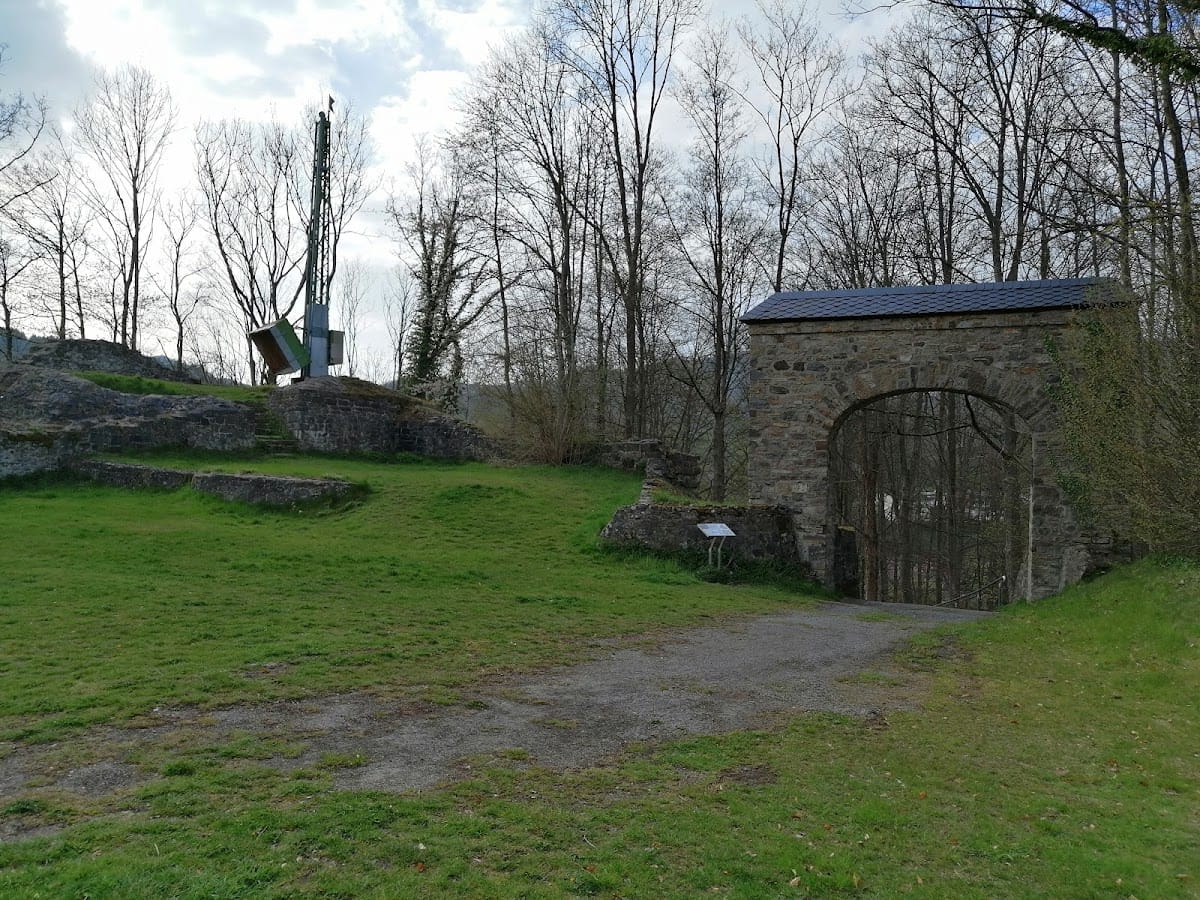
Burg Hachen occupies an elevated site above Hachen in the Hochsauerland district of North Rhine-Westphalia. The main castle area measures approximately 40 by 60 metres, while a lower bailey occupied a plateau below it. The vulnerable northern side was defended by a shield wall about 2 metres thick. Behind this wall stood a round tower approximately 8 metres in diameter, possibly the castle’s bergfried, the principal defensive and refuge tower of a medieval German castle.
The round tower was later replaced by a trapezoidal building with massive walls. Several additional buildings formed part of the castle complex. The surviving structures remain in a ruined condition within the protected Burgberg Hachen area, where the exposed remains contribute to the understanding of the castle’s changing construction history.