Schloss Allmannshausen: A Castle beside Lake Starnberg
Site at a Glance
- Popularity
- Medium
- Country
- Germany
- Primary era
- Early Modern
- Eras represented
- Early Modern, Modern
- Civilizations
- Electorate of Bavaria, German, Holy Roman Empire, Kingdom of Bavaria
- Site type
- Domestic
- Remains
- Castle
On this page7 sections
History
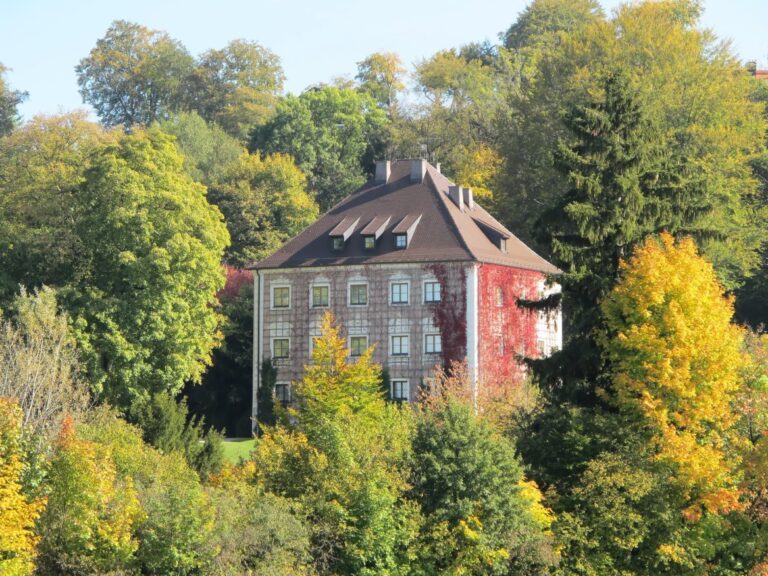
Schloss Allmannshausen is a castle in Allmannshausen, within the municipality of Berg, Germany. Built in 1696, it has a façade in the Italian Renaissance style, drawing on design principles from Renaissance Italy.
Hofmark and Hörwarth ownership
In 1517, a wooden manor house at the site was recorded as the seat of a Hofmark, a Bavarian estate whose lord held certain local jurisdictional rights. The Hörwarths, an Augsburg patrician family whose members held the rank of Imperial Count in the Holy Roman Empire, acquired the estate in 1611 and retained it until 1800. Master mason Caspar Feichtmayr the Elder, from Bernried, built the castle for Ferdinand Joseph von Hörwarth.
Ownership after 1800
After 1800, the property passed to the family of Karl von Rambaldi. Chemical entrepreneur Christoph Heinrich Boehringer acquired it in 1880. Through his daughter’s marriage, it returned to the Rambaldi family. After the male line died out, the Nagel zu Aichberg family inherited the estate and had to surrender it during the Nazi period.
State ownership and use
The Free State of Bavaria has owned the castle since 1948. It leased Schloss Allmannshausen, together with Schloss Seeburg to the south, to the Christian youth organization Wort des Lebens e.V., which uses the castle as a youth recreation facility. The castle and associated grounds are protected as listed monuments.
Remains
Castle
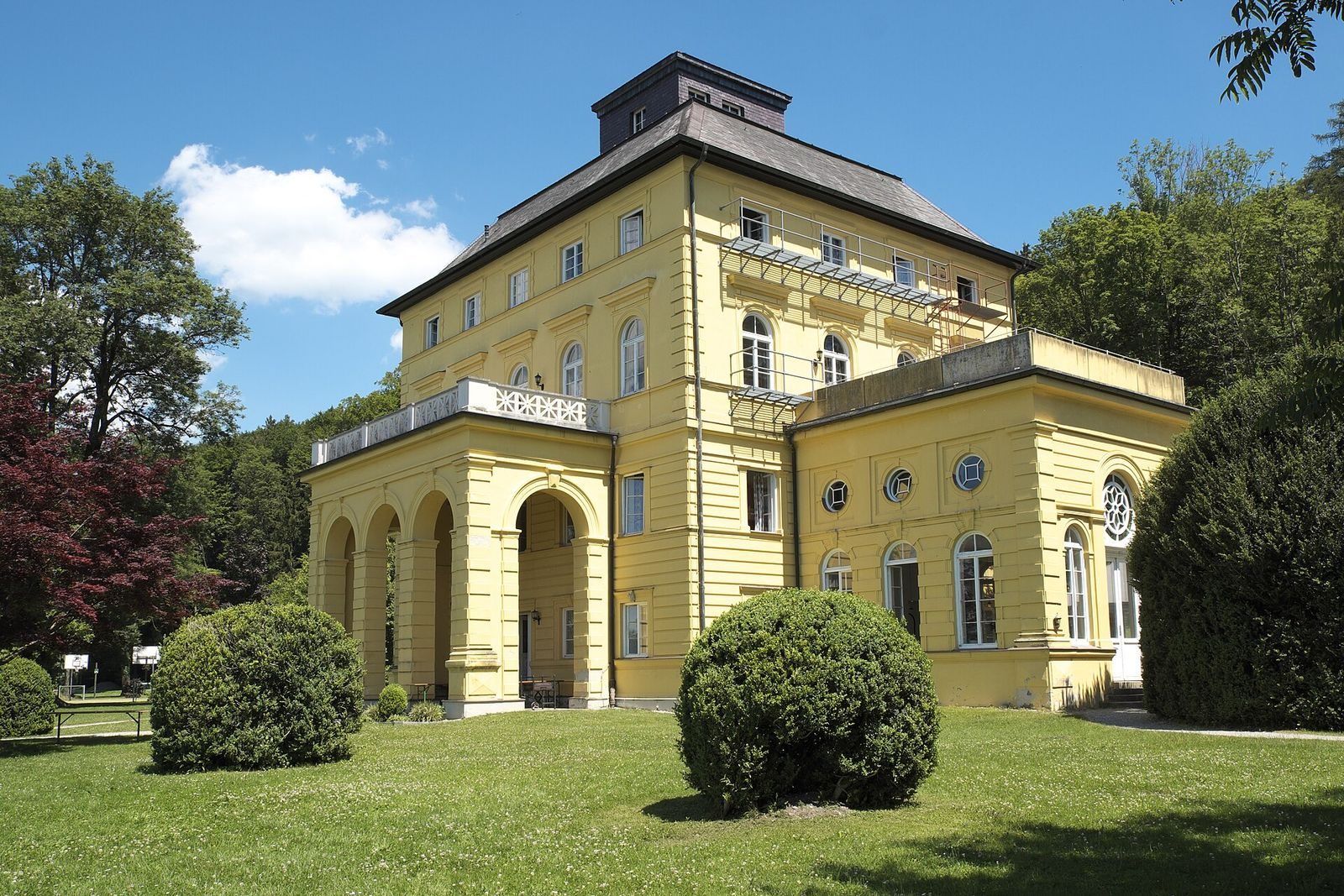
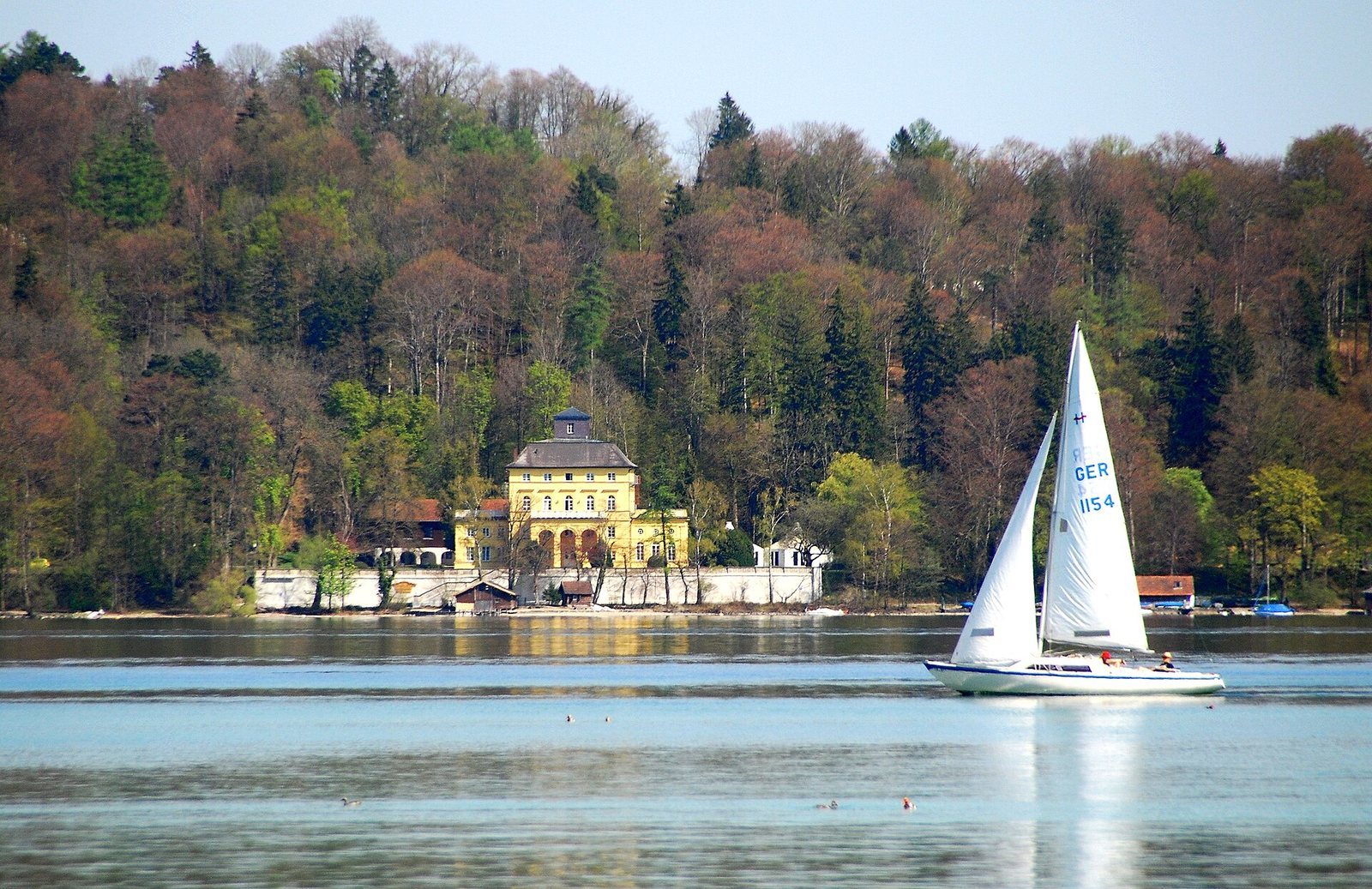
The castle stands beside Lake Starnberg, with a road separating it from the water. Its original form had three storeys and a gabled roof. An enlargement in 1881 raised the building to four storeys and added a hipped roof, a rooftop belvedere, a structure designed to provide a view, a portico, a roofed entrance porch, and a low wing. The exterior is elaborate, contrasting with the practical interior fittings.
Grounds and archaeological remains
A landscape park surrounds the castle. The grounds also include a villa garden and a bathhouse. Early-modern archaeological remains lie underground in the area of the Hofmark castle.