Cesvaine Palace: A Late-19th-Century Estate Residence in Latvia
Site at a Glance
- Popularity
- Medium
- Country
- Latvia
- Primary era
- Modern
- Eras represented
- Modern
- Civilizations
- Russian
- Site type
- Domestic
- Remains
- Castle
On this page6 sections
History
Construction and early upheaval
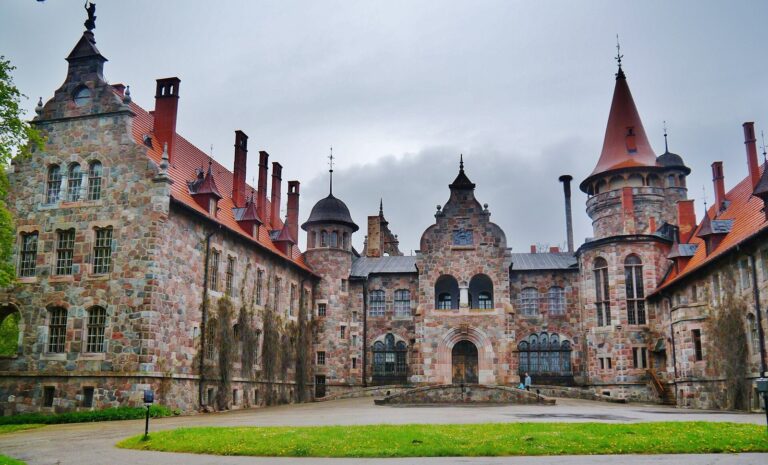
Cesvaine Palace is a late-19th-century residence in Cesvaine, Latvia, built from 1890 to 1896 for German Baltic baron Adolf Gerhard von Wulf. Designed by Berlin architects Hans Grisebach and August Dinklage, it combined German Renaissance, late Tudor forms that retained Gothic features, English Gothic, and later Neo-Gothic influences, with Jugendstil, the German form of Art Nouveau. Cesvaine then lay in the Livonia Governorate, an administrative province of the Russian Empire. The palace’s English-influenced design was unusual in Livonia, where nobles generally favored neoclassical manor houses.
During the Russian Revolution and the civil war that followed, the owners were expelled early in the conflict. In 1920, Latvia’s land reform nationalized the palace and transferred it to the Ministry of Education, which established a secondary school there.
School, war, and restoration
During the Second World War, the Wehrmacht, the armed forces of Nazi Germany, used the palace as its headquarters. The interior was preserved during the Soviet period. After the war, the building again served as a school, which remained there until 2002.
A fire broke out on December 5, 2002, when the building had numerous fire-safety violations. Restoration began in 2003 as part of a Latvian-Russian cross-border cultural heritage project and was completed in 2022. The wider estate also includes a historical museum and a high school with 500 pupils.
Remains
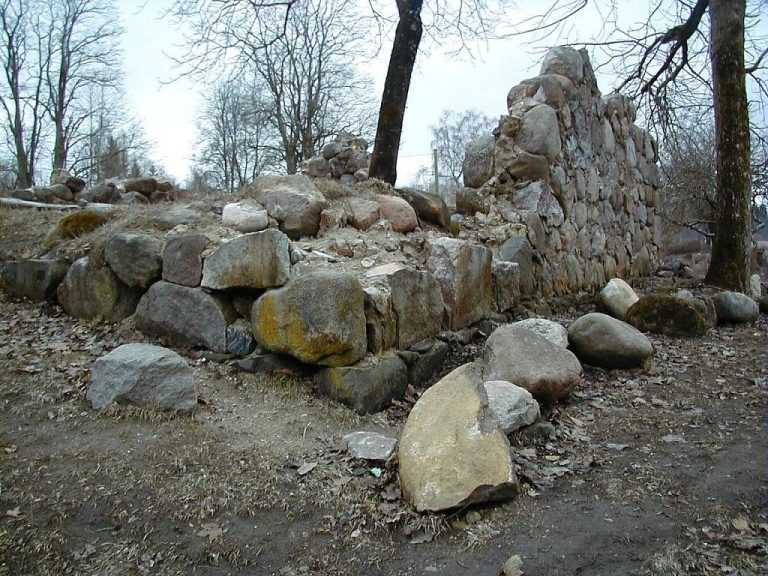
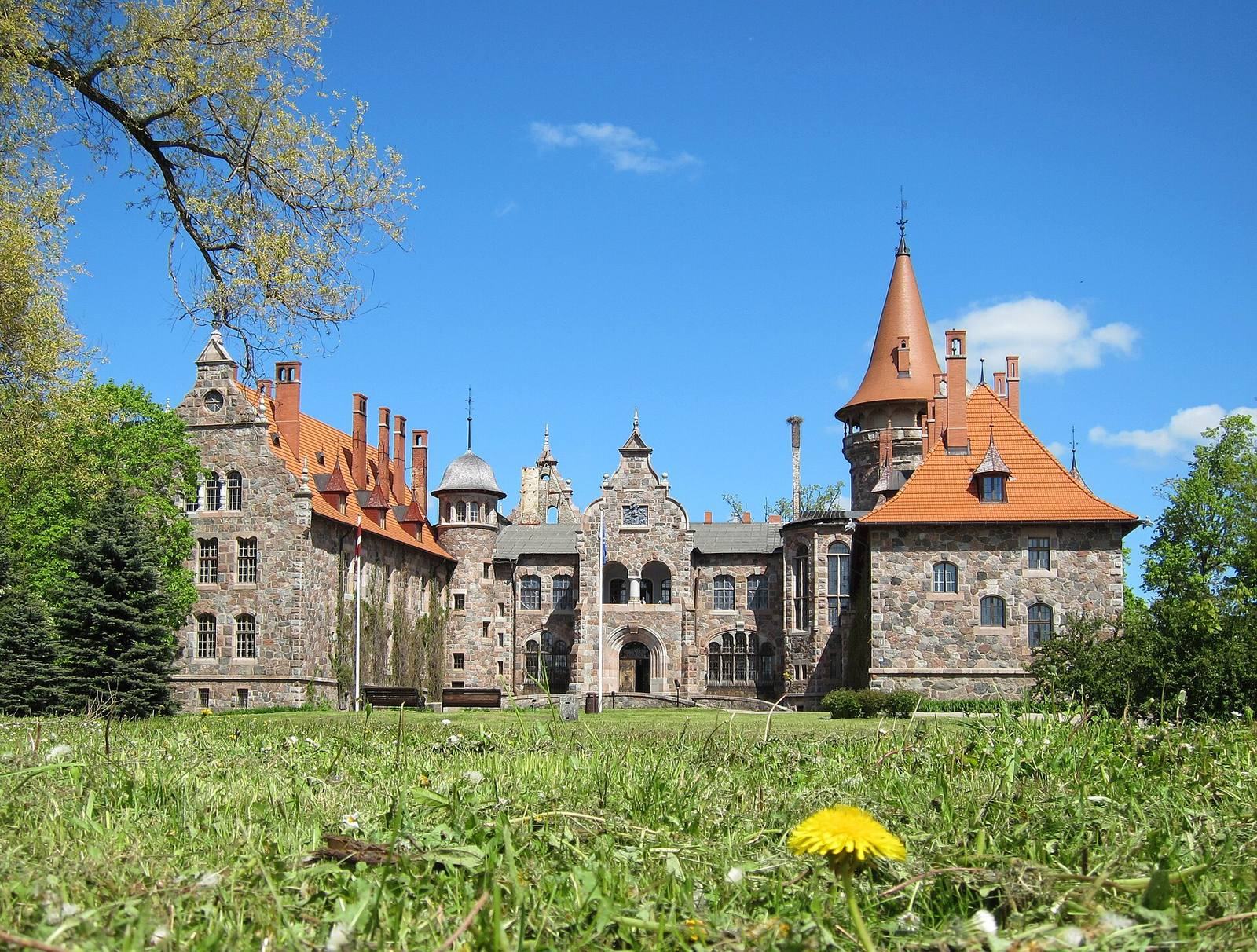
The estate includes the palace, a 33-hectare English-style park, outbuildings, stables, and former agricultural buildings. The palace, built of stone and polished granite, stands beside the remains of a medieval bishop’s castle built by bishops of the Livonian Order, a medieval military-religious organization active in the region that includes present-day Latvia and Estonia.
Palace exterior
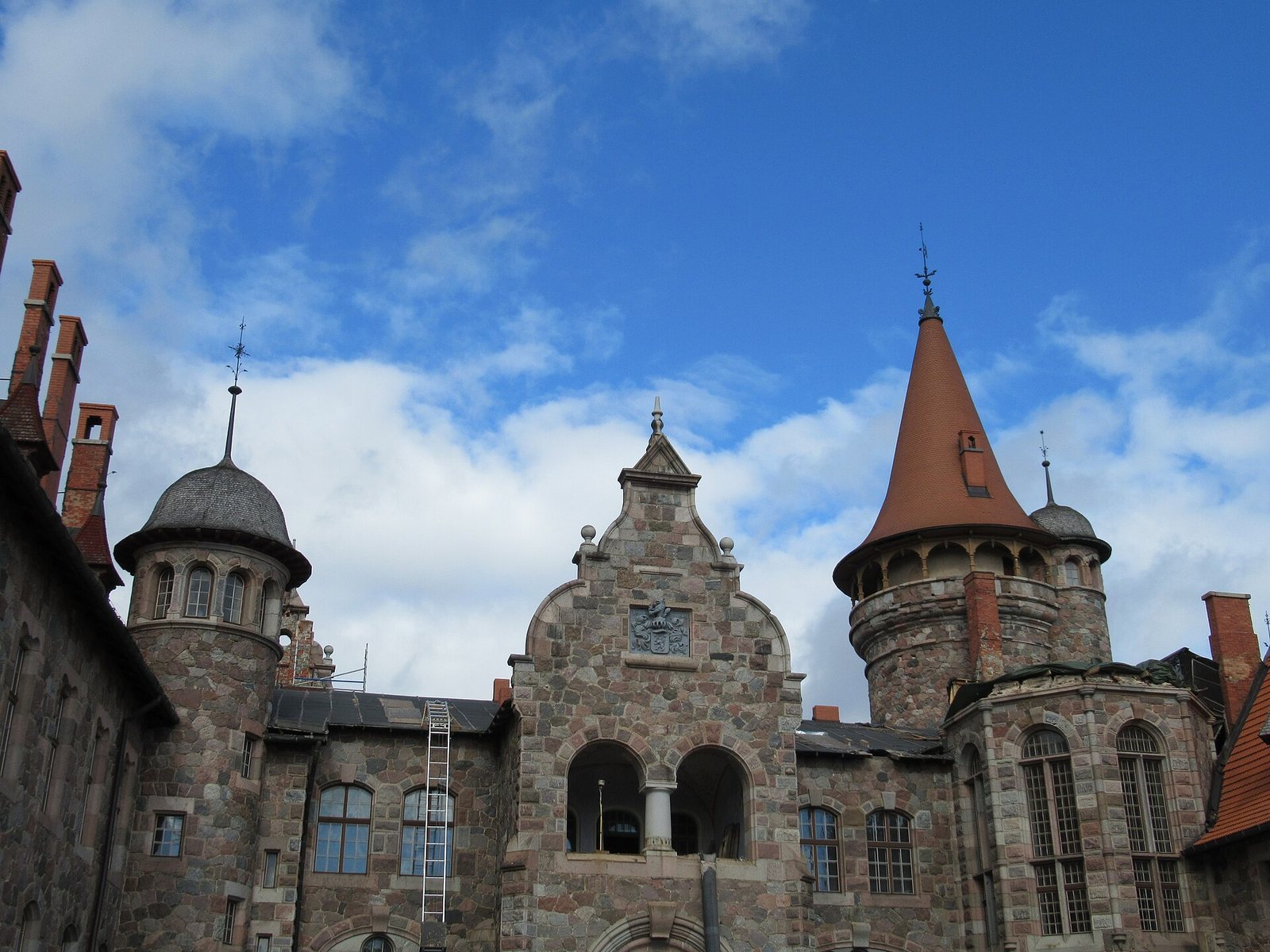
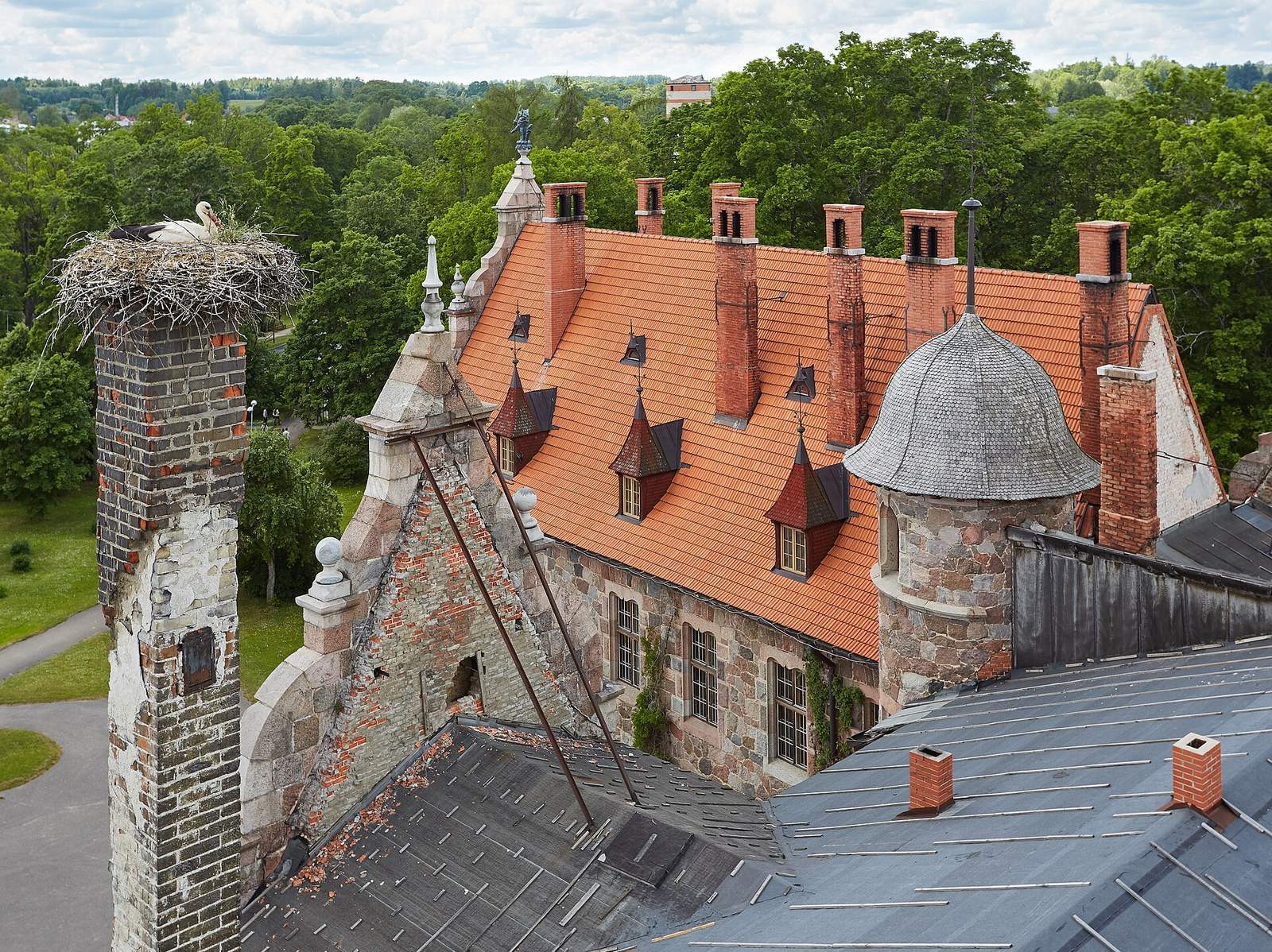
The facades use the color and texture of the stone and granite, and give the building a medieval appearance. Exterior features include balconies, prominent pediments, a round tower with a helmet-shaped roof, and smaller towers of varied shapes and sizes. Decorative chimneys, steep roofs, windows divided by narrow bars, and English-style gables complete the varied roofline and facade.
Interior and fire damage
Before the fire, the interior included a statue of Diana, the Roman goddess associated with hunting, as well as hunting trophies and floral Jugendstil decoration. Wood paneling and a grand wooden staircase were among its notable features. The fire destroyed the roof, parts of the second floor, and formal rooms on the first floor.