Schloss Schenkendorf: A Mosse Family Summer Residence
Site at a Glance
- Popularity
- Medium
- Country
- Germany
- Primary era
- Modern
- Eras represented
- Modern
- Civilizations
- German
- Site type
- Domestic
- Remains
- Elite Residence
On this page8 sections
History
The Mosse family residence
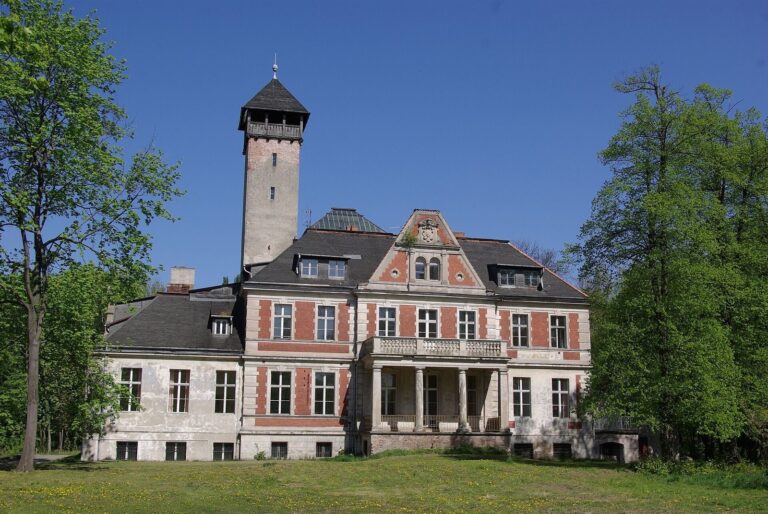
Schloss Schenkendorf is a representative villa in Schenkendorf, a district of Mittenwalde, Germany, commissioned by publisher Rudolf Mosse in 1896. Its main house drew on Italian country-house design and Neoclassicism. The estate served as the summer residence of the wealthy Berlin publishing family Mosse until 1932.
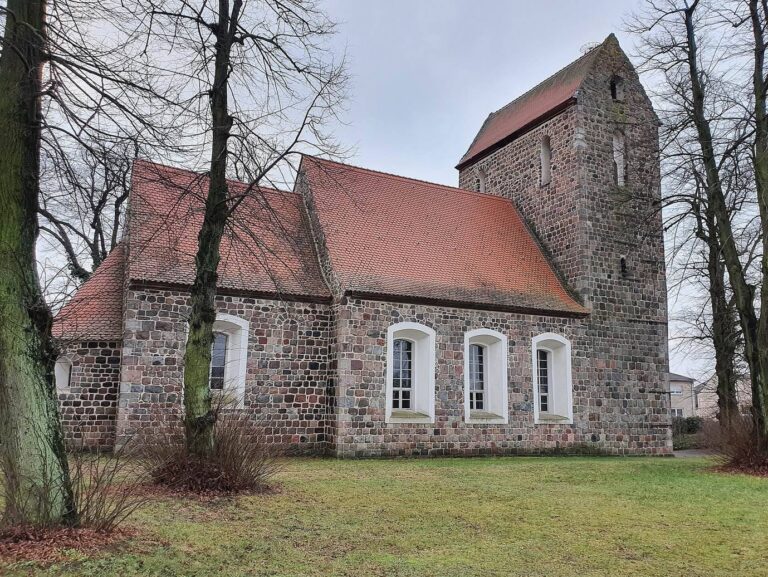
Rudolf Mosse died at the castle in 1920. After his death, the main house became a meeting place for intellectuals, politicians, and scientists. Frequent guests included Georgi Wassiljewitsch Tschitscherin, a Soviet diplomat who held the early Soviet government’s senior foreign-affairs post. Rudolf’s heir, Hans Lachmann-Mosse, donated church bells to the local community and was regarded in Schenkendorf as a kind of estate lord. Hans’s son George L. Mosse spent summer holidays at the castle, where a whole wing was made available to him. He attended the German boarding school Schloss Salem until 1933.
Administration and later ownership
Following the Mosse publishing concern’s economic collapse in 1932, Cautio Treuhand GmbH, a German trust company, took the estate into forced administration. This arrangement continued until the end of the Second World War. After 1945, the National People’s Army, the armed force of the former East German state, used the estate.
After German reunification, ownership passed to George L. Mosse’s heirs. Ottomar Rodolphe Vlad Dracula Prince Kretzulesco acquired the property in 1995. The castle later entered forced administration and was auctioned in 2009 for €268,000, compared with a stated market value of €535,000. A fire broke out at the castle on 28 April 2014.
Remains
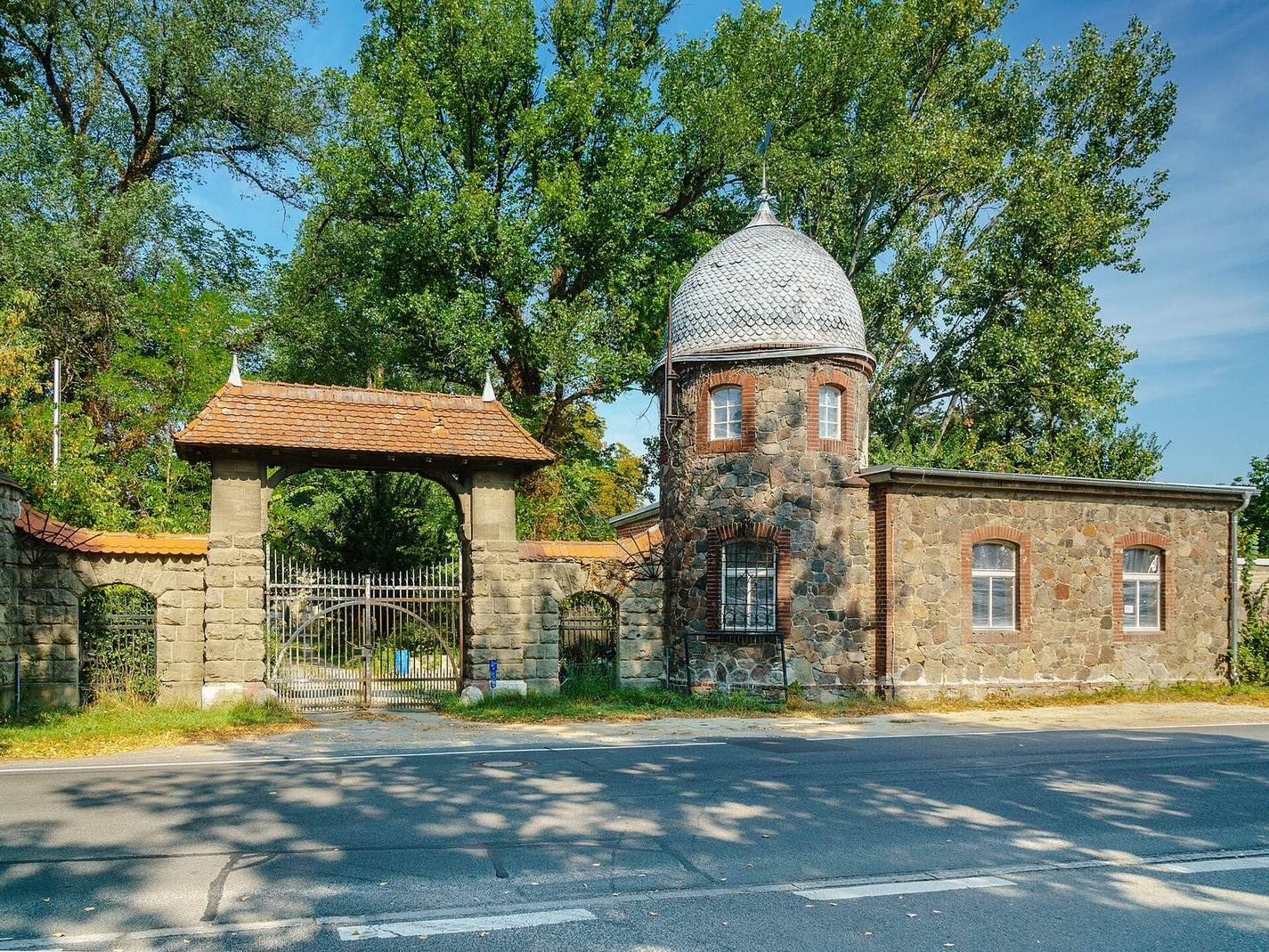
The estate is an ensemble of thirteen buildings within a park of roughly 16 hectares. Its principal building is a two-storey villa, while the grounds retain a largely natural character.
Buildings
Main house
The main house has a hipped roof, which slopes down on all four sides. Its exterior combines clinker brick, a hard-fired building brick, with plaster.
Orangery
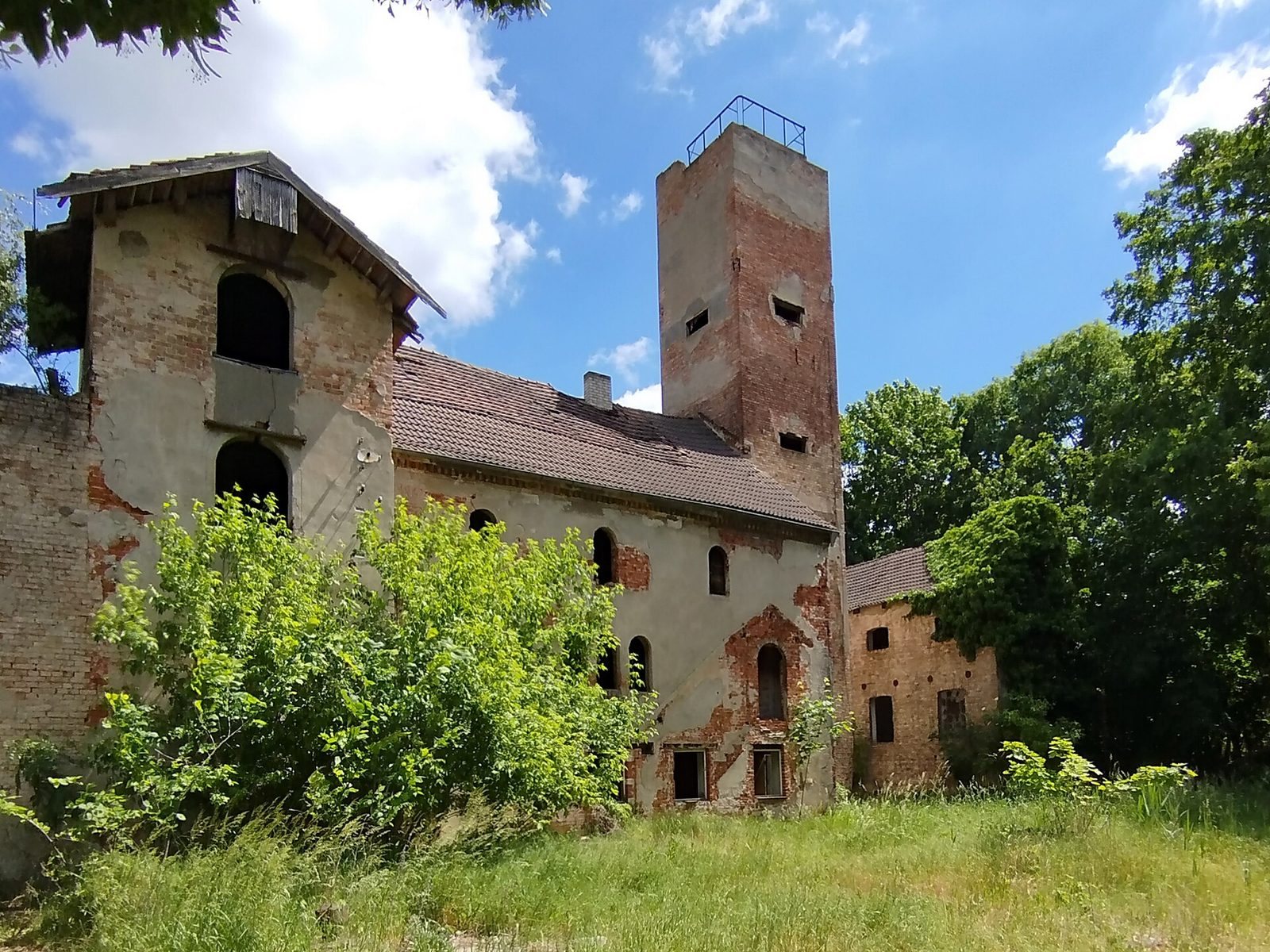
The orangery is one of the estate’s buildings. It served as a restaurant and exhibition space until 2006. Since the 2014 fire, the castle has remained dilapidated and has continued to decay.
Park
The park is maintained in a largely natural state and contains blue, yellow, and white spring anemones.