Spinola Palace: A Baroque Residence in St. Julian’s, Malta
Site at a Glance
- Popularity
- Medium
- Country
- Malta
- Primary era
- Early Modern
- Eras represented
- Early Modern
- Civilizations
- Crusader, Knights Hospitaller
- Site type
- Domestic
- Remains
- Elite Residence
On this page14 sections
History
Spinola Palace is a Baroque palace in St. Julian’s, Malta, built in 1688 by Fra Paolo Raffaele Spinola, a knight of the Catholic religious and military Order of St. John. The honorific Fra was used for knights of the Order. Spinola was also Grand Prior of Lombardy, a regional leader within the Order. The palace hosted cultural activities and sometimes served as a summer residence for the Order’s Grand Master, its head, especially during Ta’ Lapsi, the Feast of the Ascension. This practice continued until the Order was expelled from Malta.
Foundation and use under the Order
The palace passed to Spinola’s nephew, Fra Giovanni Battista Spinola. In 1733, he enlarged and embellished it under the direction of architect Romano Fortunato Carapecchia, who was associated with Malta’s Baroque architecture.
French occupation and later use
During the French occupation of Malta in 1798, the palace was damaged. The crown above its clock was destroyed as a symbolic expression of the Order’s expulsion from the island. The building was restored in 1826 and later acquired by the Church. In the 1830s, artist Charles Allingham made it his residence.
Hospital use, 1860–1922
In 1860, the British military leased the palace and adapted it as a hospital. Forrest Hospital opened that October; it was also known as Forrest House, after Dr. John Forrest, then the Inspector for Hospitals. It usually treated soldiers with venereal diseases, though it also received other patients. It had nine wards on different floors, with a usual capacity of 42 beds and at least 20 patients at a time. During crises, it could accommodate as many as 186.
A cholera epidemic in 1865 caused three patient deaths, after which a sanitary report judged the historic residence unsuitable for hospital use. Drainage and ventilation remained serious problems through at least the end of the nineteenth century. Around 1900, tents in the gardens provided extra accommodation, and sewage-system improvements were completed in 1906. The hospital remained in use during the First World War and closed in August 1922, after a military hospital opened at Mtarfa.
Wartime shelter and institutional use
Malta placed the palace on its Antiquities List in 1935, a register of historically important antiquities. During the 1940s, it sheltered people whose homes had been destroyed by aerial bombardment in the Second World War. After a period of disrepair, the government took it over in 1975 and restored it in 1984–1986. A Museum of Modern Art opened on the upper floors, but it did not attract enough visitors to succeed.
Plans to convert the palace for the Ministry for Tourism were made in 1996. The ministry began operating there on 9 November 1998 and moved to Auberge d’Italie in Valletta on 18 March 2002. The Malta Tourism Authority’s Enforcement Directorate then used the building as its operations centre until 2007.
Further restoration took place in stages from 2006 through 2013, and the clock’s destroyed crown was reconstructed in 2012. The Parliamentary Assembly of the Mediterranean, an interparliamentary organization known as PAM, established its headquarters in the palace after its principal rooms were adapted for parliamentary use. The headquarters were inaugurated and formally handed over by Prime Minister Edward Fenech Adami on 22 November 2007, when a commemorative plaque was unveiled. PAM remained there until 2021. Intruders damaged the premises and stole PAM equipment during the night of 12–13 March 2009; an agreement for continued use of the palace was renewed in December 2014. The Maltese government owns the palace.
Remains
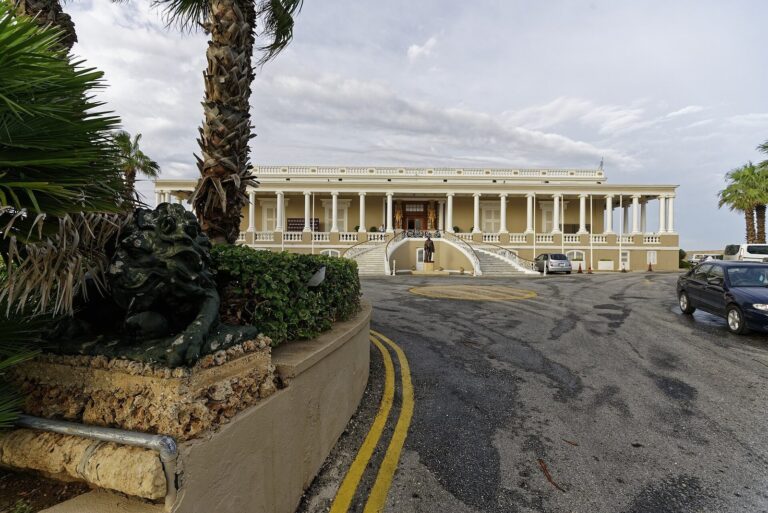
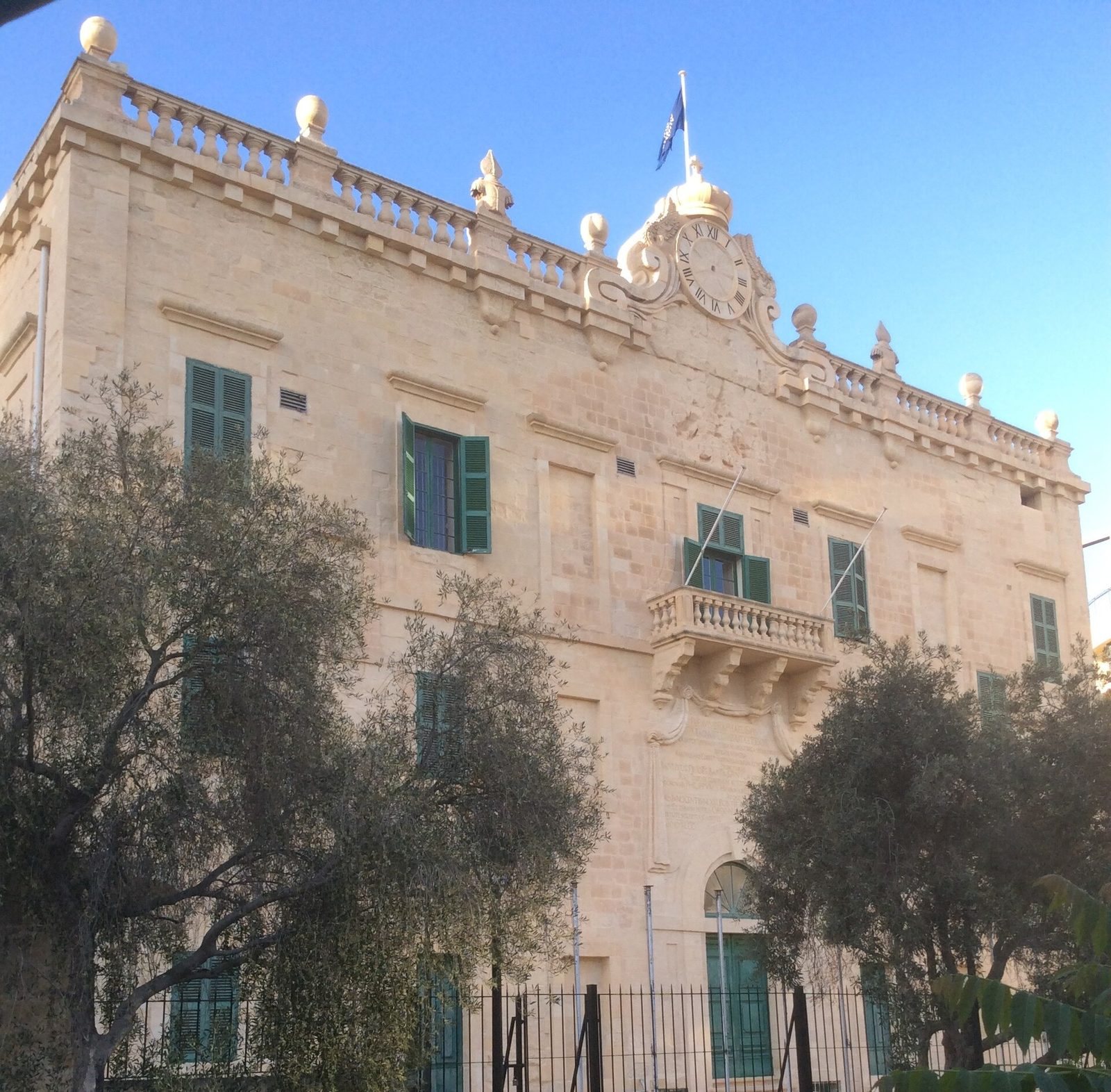
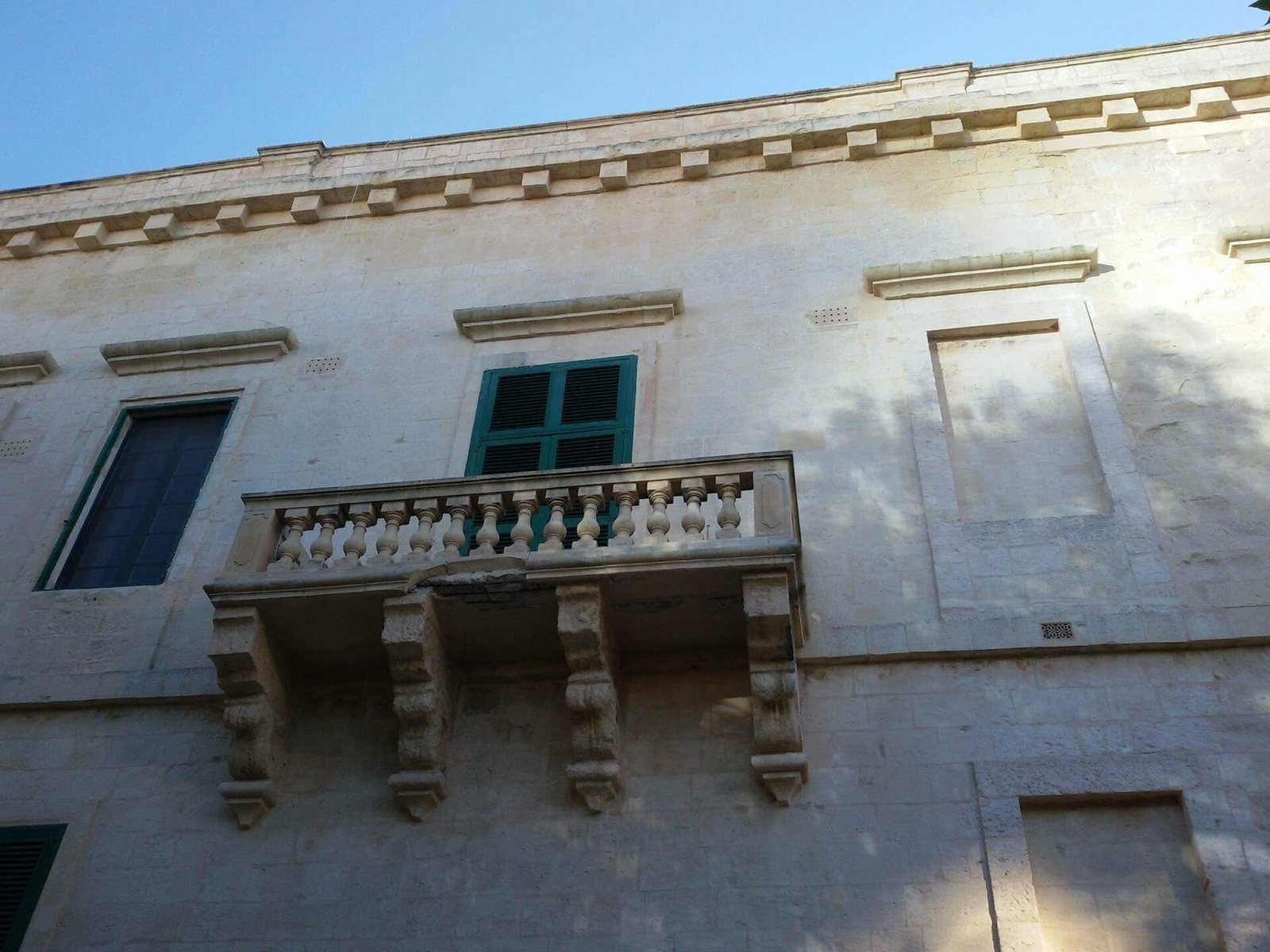
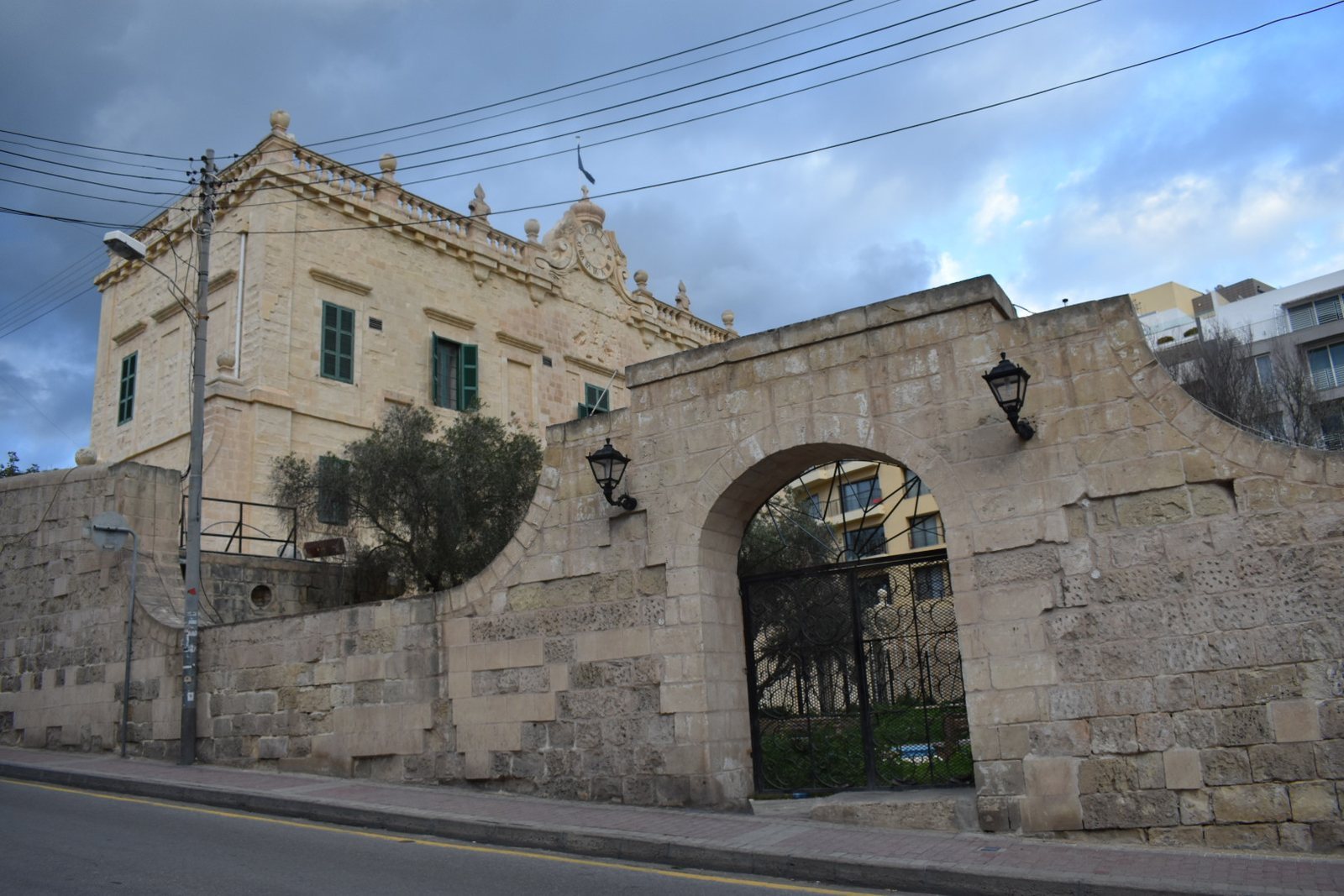
The estate centers on a large, three-storey limestone palace in the Baroque style, with surviving garden areas and several associated buildings. The palace stands on a hill that once offered extensive views. It originally looked over Spinola Bay, formerly known as St. Julian’s Bay, and gave the bay its present name. Twentieth-century development around the estate has left the building barely visible from the bay.
Palace and grounds
Main building and cellars
The palace’s clock-bearing façade was originally its front, facing the bay, but is now at the rear. A large sculpted clock sits beneath a crown on the façade. Art historian Giovanni Bonello described the palace as Malta’s first building with a clock as its central feature, and as the island’s only secular Baroque façade with such a feature. It is regarded as a masterpiece of Maltese architecture. During the Order of St. John’s period, the cellars held large quantities of wine; they now house the L-Għonnella restaurant.
Gardens
The original estate included extensive Baroque gardens and vineyards, intended for public recreation. A Latin inscription above the main entrance states that the palace and gardens were built for that purpose. Two garden areas survive, generally known as Spinola Gardens. The public garden is at the building’s present front, which was originally the rear. A private garden enclosed by high walls lies at the rear, toward the bay, where the original front stood. The public garden was renovated in 2006–2007, retaining its Baroque character while incorporating modern elements.
Associated buildings and structures
Church of the Immaculate Conception
A church near the palace is dedicated to the Immaculate Conception, the Catholic belief that Mary was conceived without original sin. Its foundation stone was laid on 16 June 1687, and it was consecrated on 10 September 1688. The church was enlarged and its façade rebuilt in 1914.
Boathouses
Two plain boathouses were built on the rocky shore of Spinola Bay when the palace was constructed. Each has two arched entrances opening into a wide interior. They now house the San Giuliano and Raffael restaurants, respectively.
Spinola Belvedere
Spinola Belvedere is a structure designed to provide a view. A busy road and modern development separate it from the palace’s original garden, and roads and housing have since built up the surrounding area. The structure once housed Malta’s first theatre, where an abbot staged performances for villagers.
Stables
The palace stables stand near the church. Restored in the 1990s for Sardinella Restaurant, the building has housed Malta’s first Pizza Hut since 1993. A 2006 refurbishment gave the restaurant an interior combining older and modern design.