Kasteln Castle: From Medieval Fortress to Baroque Palace
Site at a Glance
- Popularity
- Medium
- Country
- Switzerland
- Primary era
- Medieval
- Eras represented
- Medieval, Early Modern
- Civilizations
- Holy Roman Empire, Swiss
- Site type
- Domestic
- Remains
- Castle
On this page6 sections
History
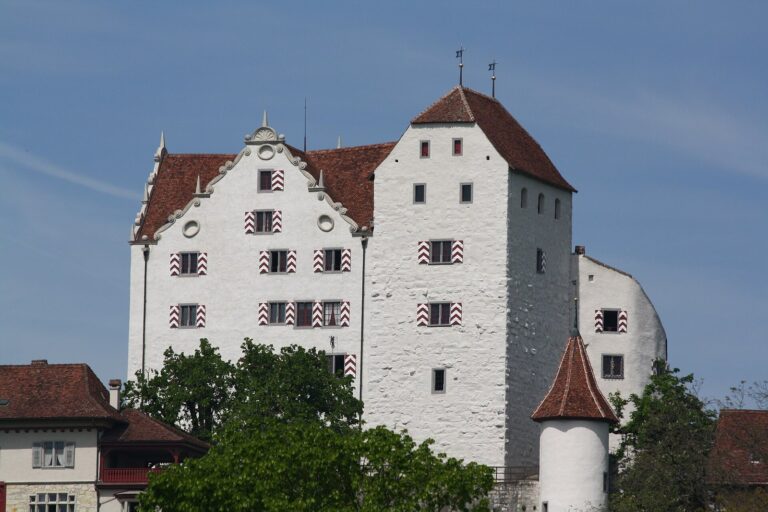
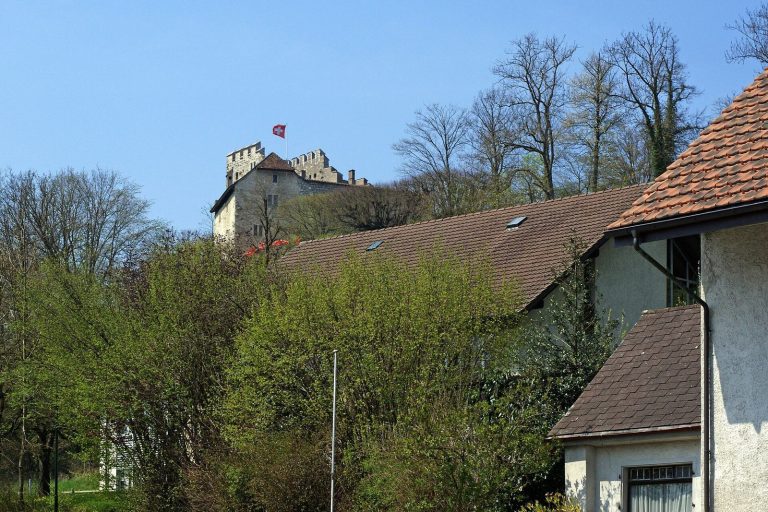
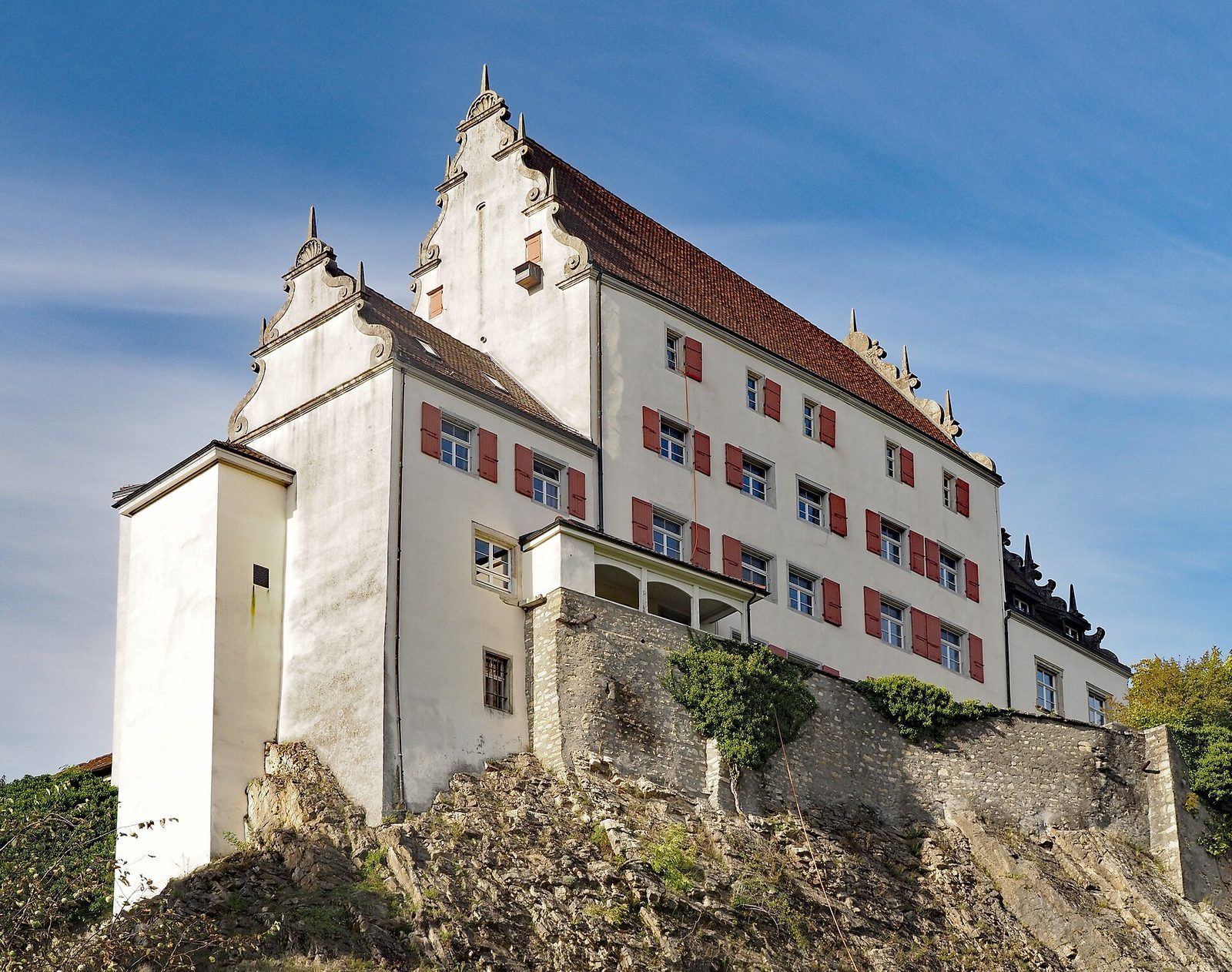
Kasteln Castle stands west of Oberflachs in Switzerland. It originated as a fortress around 1200 and was later rebuilt as a Baroque palace, in the early modern European artistic and architectural style. The resulting castle is the only uniformly Baroque castle building in Aargau.
Medieval foundations
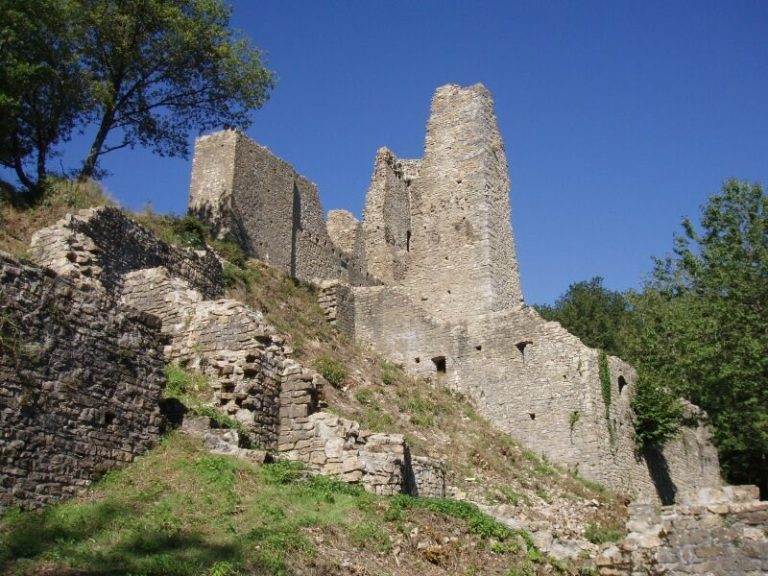
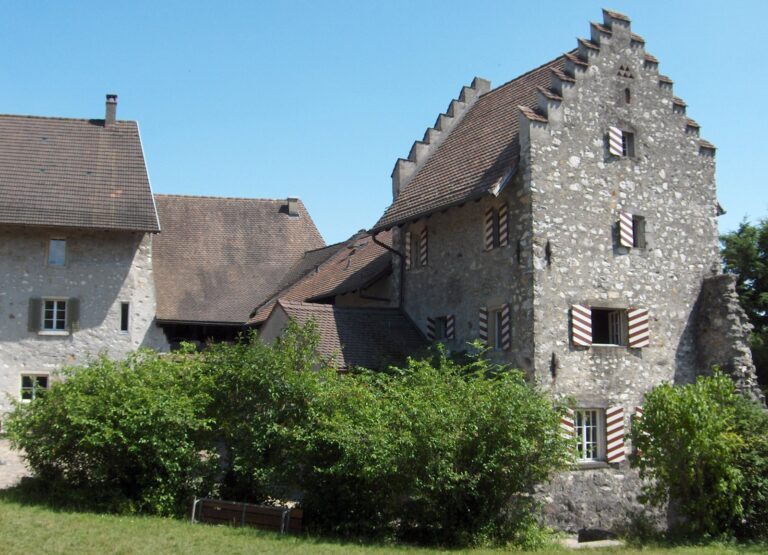
The castle was first mentioned in 1238, when the Schenken of Kasteln, who were dependent on the Kyburg dynasty, lived there. Ruchenstein Castle was built in 1262 on the cliff immediately behind Kasteln for the Knights of Ruchenstein, who came from the March region near the upper part of Lake Zurich. When the Kyburg line died out in 1264, regional authority passed to the Habsburgs. The Ruchenstein family line ended in 1301 and the Schenken line in 1311. The Lords of Mülinen of Brugg then acquired both castles and ruled a small territory on the southern edge of the Jura.
Conversion into a palace
In 1631, the Bernese patrician and general Johann Ludwig von Erlach bought both castles. He commissioned the conversion of Kasteln into a representative palace in 1642. The costly work continued until 1650. It began without prior expert assessments, and von Erlach was often away. Ruchenstein Castle was demolished in 1643, and its stone was reused in the rebuilding of Kasteln.
From lordship to educational institution
After about a century in the von Erlach family, the lordship was sold to the city of Bern in 1732. Kasteln became the smallest bailiwick in the Bernese Aargau, an administrative territory governed for its ruling authority by a bailiff. It included Auenstein, Oberflachs, Schinznach, now Schinznach-Bad and Schinznach-Dorf, and Villnachern. After the Ancien Régime, the political and social order before the major changes of the late 18th century, ended, the Bernese state domain passed to the newly established Canton of Aargau in 1803. The canton sold the castle to private owners in 1836. A separate building known as Bärenschloss had been constructed southeast of the castle during the palace rebuilding; its owner demolished it in 1840.
In 1855, Friedrich and Louis Schmutziger of Aarau acquired the property and opened a Reformed institution, belonging to the Protestant tradition associated with the Swiss Reformation, for orphaned and neglected children. In 1867, the institution housed 18 boys and 11 girls. On 24 August 1907, a pupil set fire to the castle and the adjacent barn. Both buildings were badly damaged and rebuilt, and the institution resumed its work at Kasteln in 1909. The fire also destroyed the castle’s richly furnished interior. The institution became a foundation in 1923 and, in 1955, was converted into a boarding school for students of average ability with behavioral difficulties. Kasteln continues to serve as a boarding school. Extensive interior and exterior renovation in 2009 adapted the castle to contemporary educational and social-support needs.
Remains
Castle and school grounds
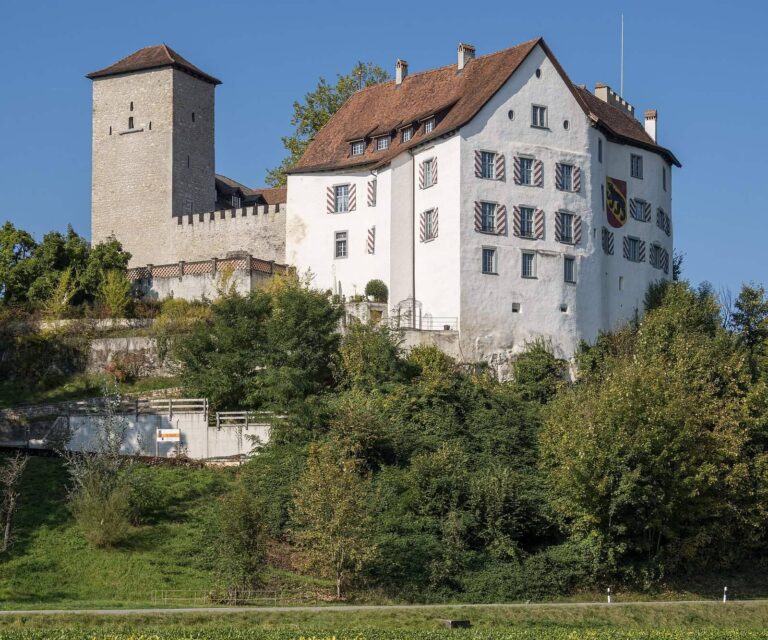
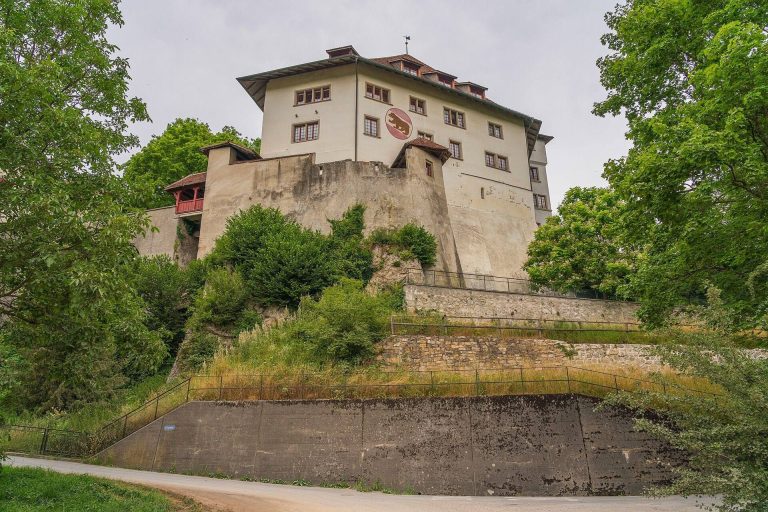
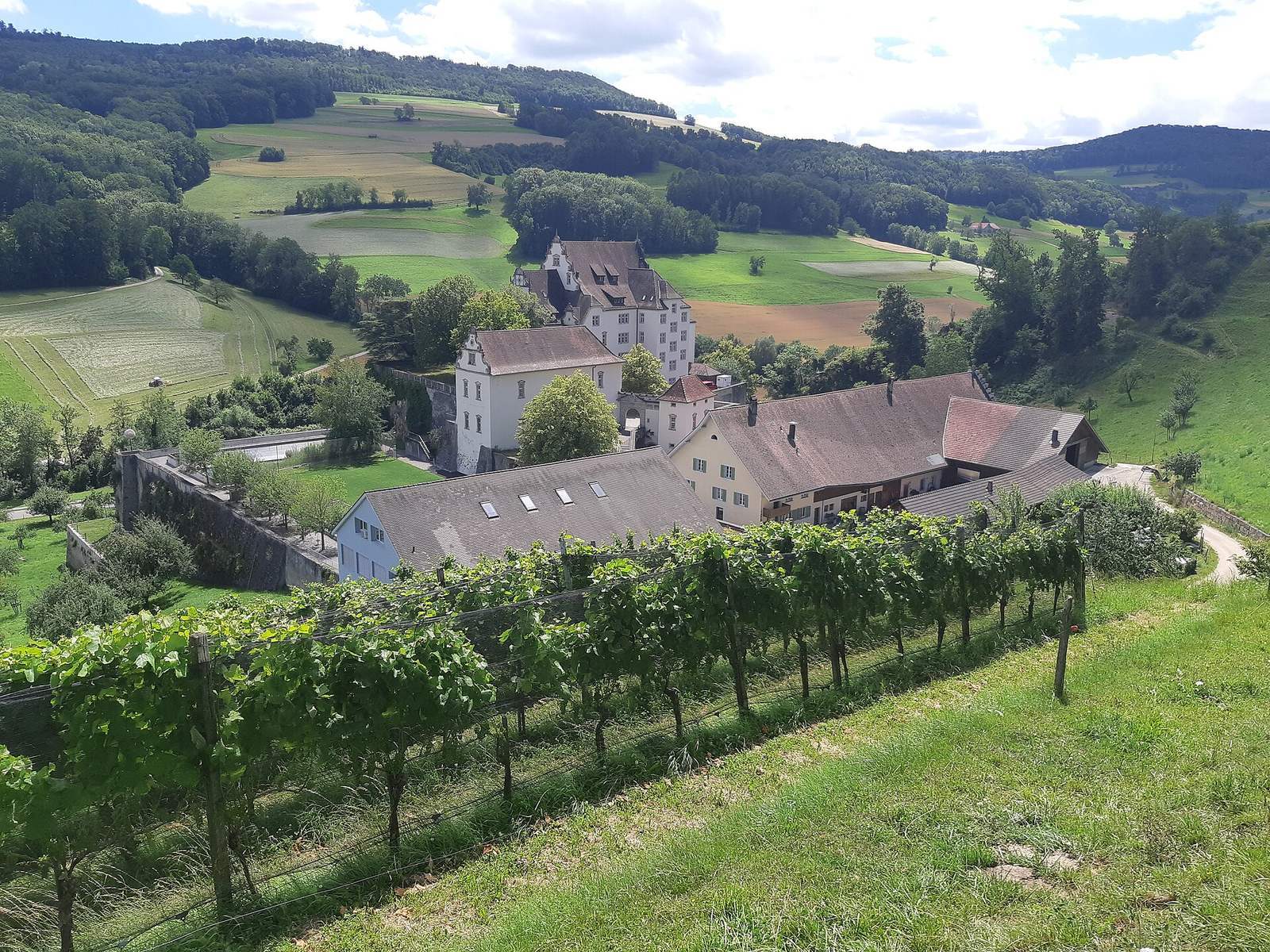
The castle occupies a rocky spur among vineyards and woods west of Oberflachs. Its four-storey medieval core is flanked by two-storey wings to the east and west, added during the rebuilding from 1642 to 1650. The wings incorporate material from Ruchenstein, while the castle is built mainly of shell limestone from Mägenwil. A second school building, a swimming pool, and a staff house were constructed beside the castle in 1969.