Theobalds House: An Elizabethan Palace and Royal Residence
Site at a Glance
- Popularity
- Very High
- Country
- United Kingdom
- Primary era
- Early Modern
- Eras represented
- Early Modern
- Civilizations
- British, English
- Site type
- Domestic
- Remains
- Palace
On this page17 sections
History
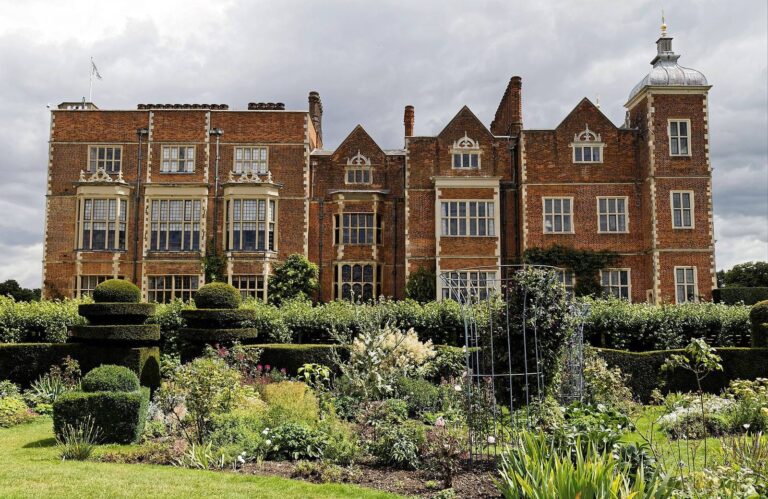
Theobalds House was an Elizabethan palace in the United Kingdom, built for William Cecil between 1564 and 1585. Cecil, a leading adviser to Elizabeth I, created a showy country residence intended to host the monarch and express its owner’s standing at court. The house became a regular royal destination before passing to Cecil’s son Robert and, in 1607, to James I.
Manor and Elizabethan palace
The estate was first known as Cullynges and later as Tongs, after William de Tongge. From 1440, its name appeared in forms such as Thebaudes and Tibbolds, before settling into Theobalds. Cecil bought the manor in 1563 and commissioned a new palace the following year. Elizabeth I visited eight times between 1572 and 1596. Lists of rooms and lodgings prepared for her visits in 1572 and 1583 preserve details of the arrangements made for the Queen.
During a week-long stay in May 1583, Elizabeth was reconciled with Edward de Vere, Earl of Oxford. At another visit, in May 1591, a court entertainment titled The Hermit’s Welcome at Theobalds was performed. In September 1597, thieves broke into the Queen’s private chambers and took an inkstand and two silver bowls. They were caught and executed, while Cecil engaged London goldsmith Richard Martin to recover the silver.
A royal residence under James I
Robert Cecil inherited the house. After Elizabeth’s death in 1603, he arranged for James VI of Scotland, newly crowned James I of England, to stay there on his journey to London and receive the homage of the Privy Council, the monarch’s senior advisers. James disliked the dust on the entrance drive, so an alternative approach was laid out through Cheshunt Park and Peryours.
James requested stags for hunting in the woods and park in 1604. Two years later, Robert Cecil hosted James and Christian IV of Denmark for five days. Their visit included plans for an allegorical stage entertainment about Solomon and Sheba, though details of its performance are uncertain. Cecil paid the architect and stage designer Inigo Jones £23 for scenery. The visit cost £1,180 in all, including £284 spent on gifts.
In 1607, James exchanged Hatfield Palace for Theobalds with Robert Cecil, gave the estate to his queen, Anne of Denmark, and ordered improvements. Hunting, tournaments, and other festivities accompanied the transfer. James also enlarged the park by acquiring neighboring land, and Theobalds became his favored country residence. Its royal use included hunts, although contemporaries remarked on limits to the estate’s sporting resources. In 1613, Anne accidentally killed James’s dog Jewel with a crossbow while deer hunting there. Five years later, James ordered two tobacco shops used by courtiers to be demolished and directed the garden keeper to build a house for silkworms.
In January 1622, James fell into the icy New River while riding from Theobalds to see it. Sir Richard Young rescued him. The park also received two camels and a breeding pair of asses sent from Spain. James died at Theobalds on 27 March 1625, and the Knight Marshal proclaimed Charles I at the gate. Charles altered the house and continued to hunt on the estate. In 1633, Henry Cary, Viscount Falkland, fell from a seasonal shooting platform; his leg was amputated, but he died from his injuries.
Demolition and the later estate
After Charles I’s execution, the Commonwealth, England’s republican government, placed Theobalds among royal properties marked for disposal and demolition. Most of the palace had been demolished by the end of 1650. Following the Restoration, the return of the monarchy in 1660, the estate went to George Monck, Duke of Albemarle. It reverted to the Crown after the second duke died without an heir. William III later granted it to William Bentinck, Earl of Portland; the estate remained with Bentinck’s family until the third Duke of Portland sold it to merchant and MP George Prescott in 1762.
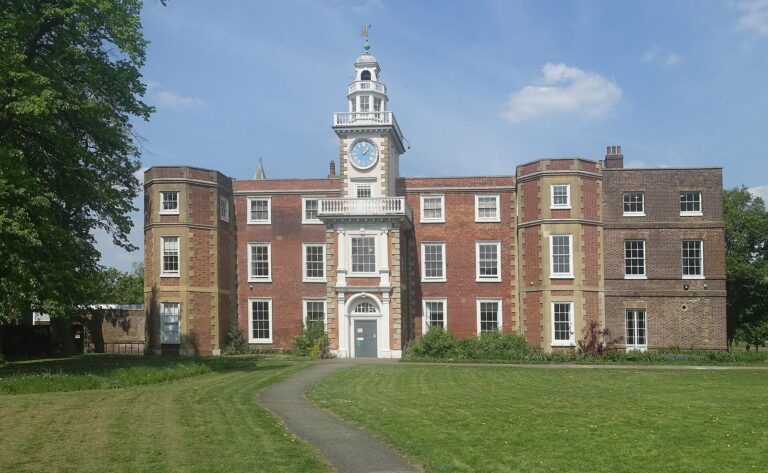
In 1763, Prescott built a Georgian-style mansion called Theobalds Park about a mile west of the original palace. Around the same time, four smaller country houses, collectively known as Theobalds Square, were established around the old palace site. They included Old Palace House, The Cedars, and Grove House. The Prescott mansion passed to the Meux family around 1820, who extended and altered it during the nineteenth century.
One major change came through Temple Bar Gate, a London gateway designed by Christopher Wren and erected between 1669 and 1672. After it was dismantled in London in 1878, Sir Henry Meux bought it from the City in 1888 at the urging of his wife, Valerie Susan Meux, known as Lady Meux. It was re-erected at Theobalds in 1889 as an entrance between the mansion and its park. Lady Meux hosted guests in its upper chamber, including Edward VII and Winston Churchill. Following her death in 1910, her principal beneficiary, Sir Hedworth Lambton, changed his surname to Meux under a Royal Warrant and inherited the Hertfordshire estate.
Twentieth-century changes
In 1921, Sir Hedworth Meux gave the site of The Cedars to Cheshunt as a public park commemorating the end of the First World War. Cedars Park was later enlarged to include the sites of Grove House and Old Palace House. The Cedars had been partly destroyed by fire in 1912, Grove House was demolished that year, and Old Palace House was destroyed by fire in 1968.
After Sir Hedworth Meux died in 1929, Theobalds Park served as a hotel for a period before Middlesex County Council bought it in 1938. During the Second World War, the mansion was used by the Royal Artillery and then by the Metropolitan Police as a riding school. It became a secondary school in 1951, an adult education centre after 1969, and a commercial conference centre after refurbishment in the 1990s. By 2009 it had become a hotel.
Temple Bar Gate was excluded from the 1938 sale and remained with Meux family trustees. The Temple Bar Trust bought it in 1984, and it was dismantled and returned to the City of London in the early 2000s. A commemorative plaque was placed at Theobalds Park in 2004. Palace remains in Cedars Park are Grade II listed, Theobalds Park mansion is Grade II* listed, and Temple Bar Gate held Scheduled Ancient Monument status while at the estate.
Remains
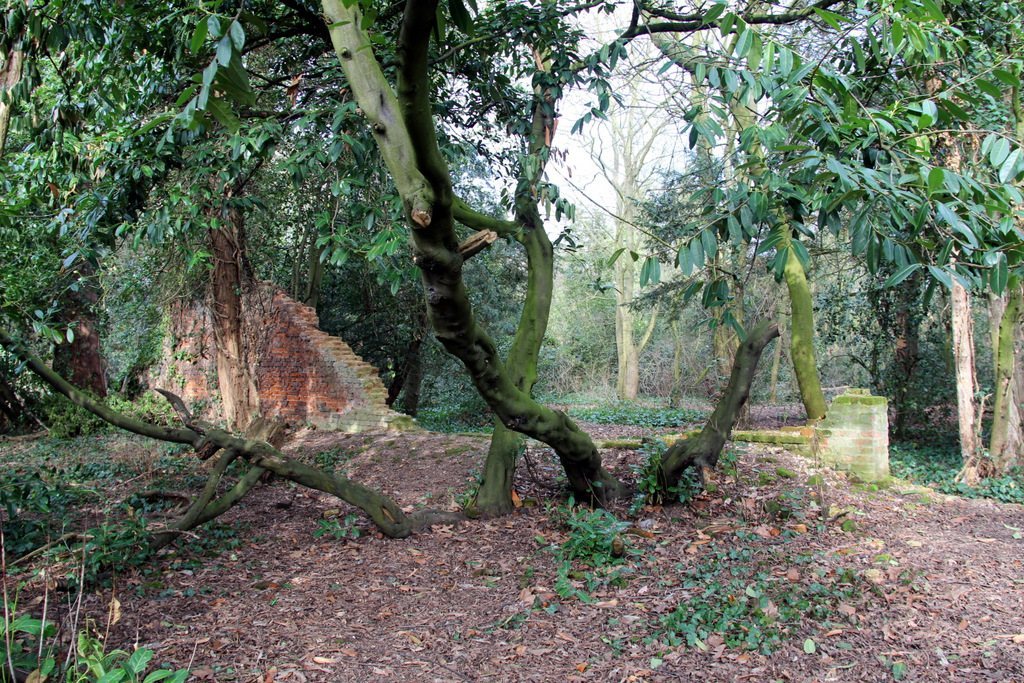
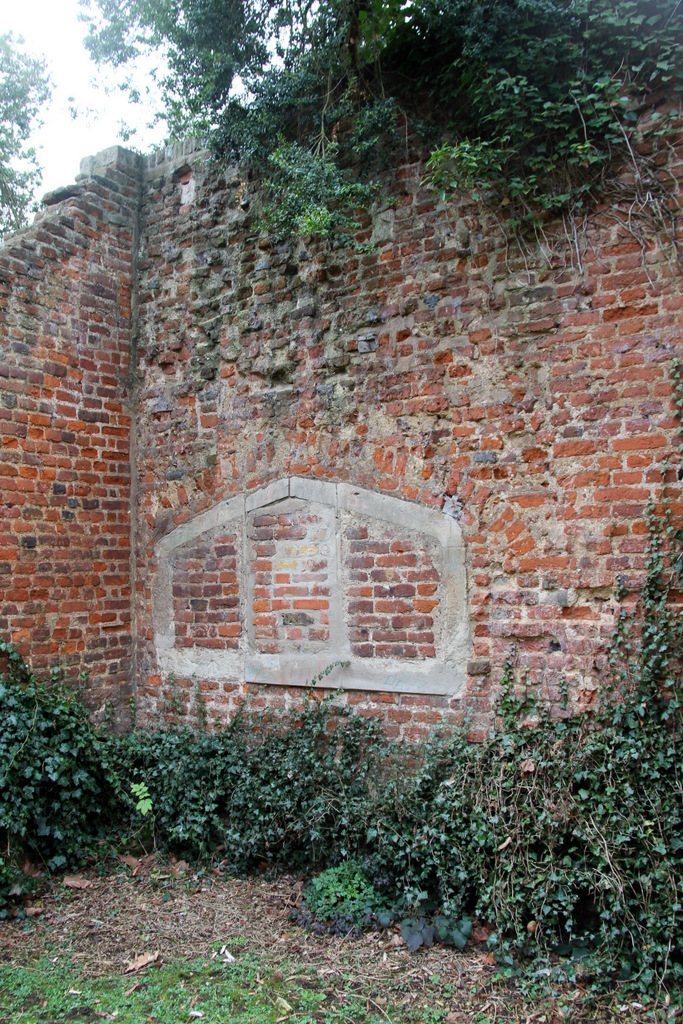
The original palace stood within extensive grounds, while the present Cedars Park occupies its site. The surviving evidence includes fragments of the Elizabethan buildings, remains of later houses, and the separate mansion of Theobalds Park, built west of the palace.
The palace and its rooms
The moated manor
The earlier manor house was surrounded by a moat. Cecil’s later palace replaced it and formed the principal residence on the estate.
The Great Hall
The Great Hall rose two storeys and had oak paneling and a minstrels’ gallery, an upper level for musicians. Its arched ceiling used carefully worked curved timber, and a blue-marble chimneypiece stood within the hall. In 1585, a painter named Jenings decorated a wall with the arms of England’s peers and framed a map of England.
The Painted Gallery and Great Chamber
The Painted Gallery, also called the Green Gallery, was completed in 1574 above a wing of lodgings and bedchambers. Its painted scheme showed England through 52 trees, one for each county, with the arms of earls and barons hung among them and images of regional produce. In 1582, the Great Chamber’s fireplace received brass figures called terms, sculpted figures used as architectural ornaments. Its windows bore heraldic designs, and its ceiling carried the signs of the zodiac. A drawing by John Smythson records the chamber’s paneling, with walnut-colored graining and black-and-gold moldings.
The Great Gallery was paneled under James I. Charles I later added carved and painted stag heads. A large oak staircase with carved decoration was salvaged from the palace and eventually installed at Herstmonceux Castle.
Gardens and park
Formal gardens and water features
The formal gardens drew on the design of the gardens at the Château de Fontainebleau in France. Botanist John Gerard supervised them, and Henry Hawthorne prepared a 1572 plan for rebuilding the inner conduit court, a courtyard associated with a water supply. The gardens included a water feature and six artificial trees. A canal ran through shrubbery where visitors could row boats, while the wider park included a lake and islands. In 1622, a new pool, barge, and barge house were added to the gardens.
Park structures
Seasonal shooting platforms, known as stands, were erected in the park for shooting game. The estate’s wooded grounds also supported royal hunts during James I’s and Charles I’s reigns.
Later buildings and surviving fabric
Theobalds Park mansion
Theobalds Park, built in 1763 about a mile west of the palace site, is a Georgian-style mansion. Nineteenth-century work extended the building and remodeled its entrance to incorporate Temple Bar Gate. The mansion remains in use, following its successive roles as a hotel, wartime accommodation, school, adult education centre, and conference centre.
Temple Bar Gate
The stone gateway comprised about 2,700 blocks, and approximately 400 tons of stone were moved to Theobalds. There it formed a monumental entrance between the mansion and park. The gate has since been reassembled beside St Paul’s Cathedral in London.
Cedars Park
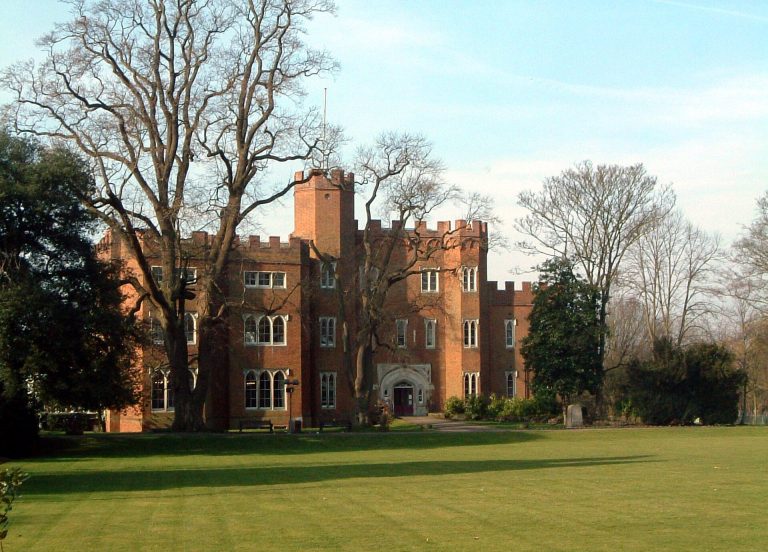
Cedars Park preserves visible fragments of the palace, including a ruined wall. The park also contains remains of Old Palace House and an eighteenth-century grotto. Part of The Cedars survives near the centre of the park and remains in use.