Kildare Castle: A Norman Fortress in Ireland
Site at a Glance
- Popularity
- Medium
- Country
- Ireland
- Primary era
- Medieval
- Eras represented
- Medieval, Early Modern
- Civilizations
- English, Norman
- Site type
- Military
- Remains
- Castle
On this page9 sections
History
Christian origins and Norman arrival
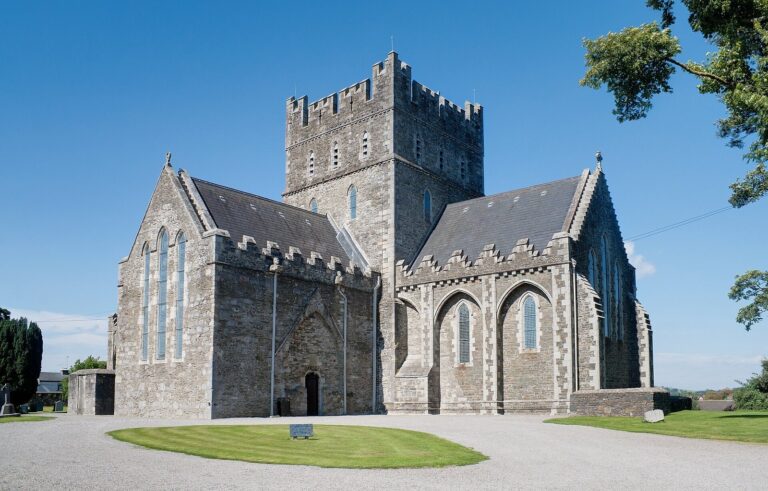
Kildare Castle is a twelfth-century Norman fortress in Ireland, established as the settlement around it was fortified. A Christian center stood at the site from the fifth century, when a monastery associated with Saint Brigid, an early Irish Christian saint, and the Church of the Oak occupied the area. Local tradition says Brigid and church leaders founded a religious community after meeting beneath an ancient oak. Another story tells that a king of Leinster offered Brigid as much land as her cloak could cover; it spread across the hill, making the ground monastic land. The king’s nearby stronghold was Dún Ailinne.
Norman leaders, from Normandy in northern France, began establishing lordships in Ireland in 1169. Richard de Clare, an Anglo-Norman lord known as Strongbow and the 2nd Earl of Pembroke, arrived the following year with a larger force. He married Aoife, daughter of Dermot MacMurrough, king of Leinster, and after Dermot’s death in 1171 became king through his wife. Kildare’s religious and economic importance led de Clare to establish his headquarters there, while the settlement was fortified to protect incoming settlers.
Castle and town under Norman lords
The castle was established in the twelfth century and is traditionally attributed to de Clare; it may also have served as his residence for a time. A castle at Kildare is first mentioned in 1185. A record made in 1302 says William Marshal had built a castle on the foundations of the town’s old church. Marshal died in 1219, so the work described must have taken place earlier.
The castle passed to the De Vesci family in 1290, when Kildare was a prosperous, expanding town. A nearby cathedral is attributed to Ralph of Bristol, Bishop of Kildare from 1223 to 1232. A Franciscan monastery was built in 1254–1260, followed by a Carmelite monastery in 1290. The Church of St Mary Magdalene and an associated hospital followed in 1307. During the thirteenth century, Kildare Castle ranked among the most important strongholds held by Norman lords in Ireland.
Raids, siege, and FitzGerald rule
In 1294, amid resistance to Norman rule, raiders from the Ui Failge attacked and burned the castle. The group, a branch of the O’Connor kin group, held lands west of Kildare and had its center at Rathangan. The O’Dempseys of Clanmalier, from the Slieve Bloom area, were among its subdivisions. Led by William Donin, the attackers took livestock, grain, malt, gold, and cloth valued at about £1,000.
In 1316, Edward Bruce, a Scottish prince proclaimed High King, unsuccessfully besieged the castle. The title claimed paramount authority over Ireland’s kings. An English force came to the castle’s relief. That year, the English king granted the fortress and the title Earl of Kildare to John FitzThomas FitzGerald for his service in the war, beginning the FitzGerald family’s tenure there. The family later moved its principal residence to Maynooth.
Rebellion and abandonment
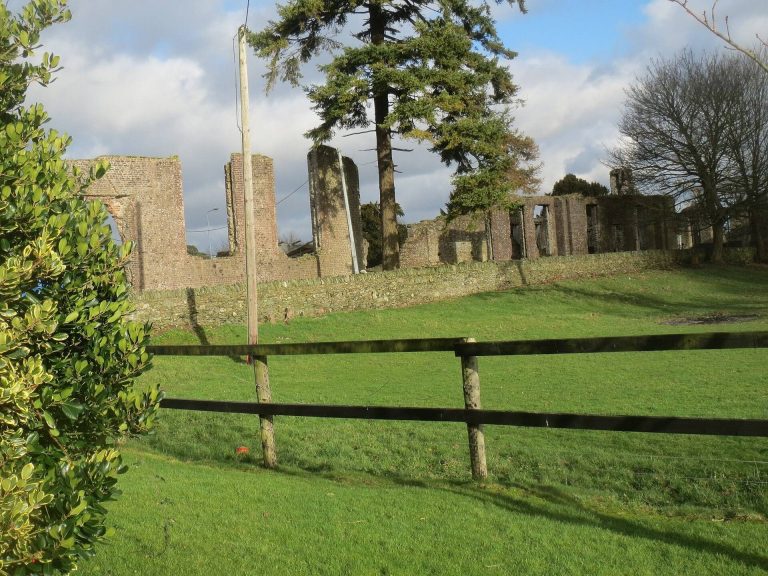
Lord Edward FitzGerald, an Irish aristocrat associated with the 1798 rebellion, lived at the castle that year. The Irish rebellion brought renewed fighting at the site, and the castle was badly damaged. It was abandoned and never rebuilt.
Remains
Fortification and surviving structures
Kildare was a lowland motte-and-bailey fortress, combining a raised earth mound, or motte, with an enclosed yard, or bailey. Its early defenses were probably wooden; stone construction in the Norman style followed, using rubble. A map from 1757 shows the castle beside a mound that may preserve part of the original motte.
Tower
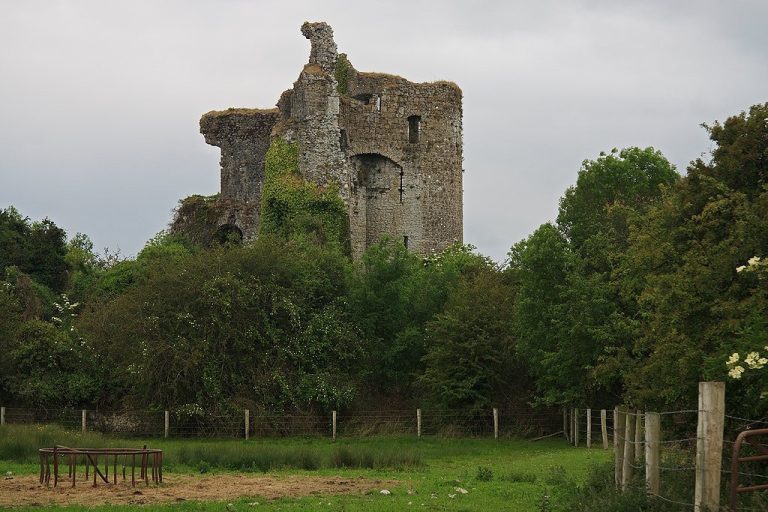
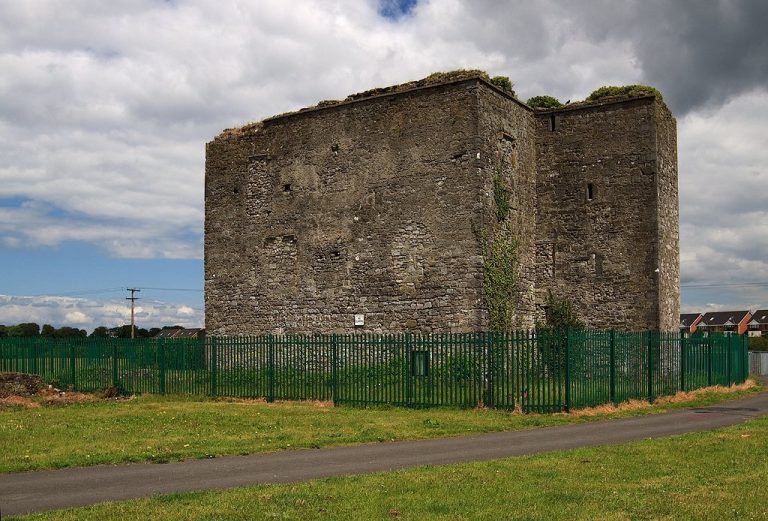
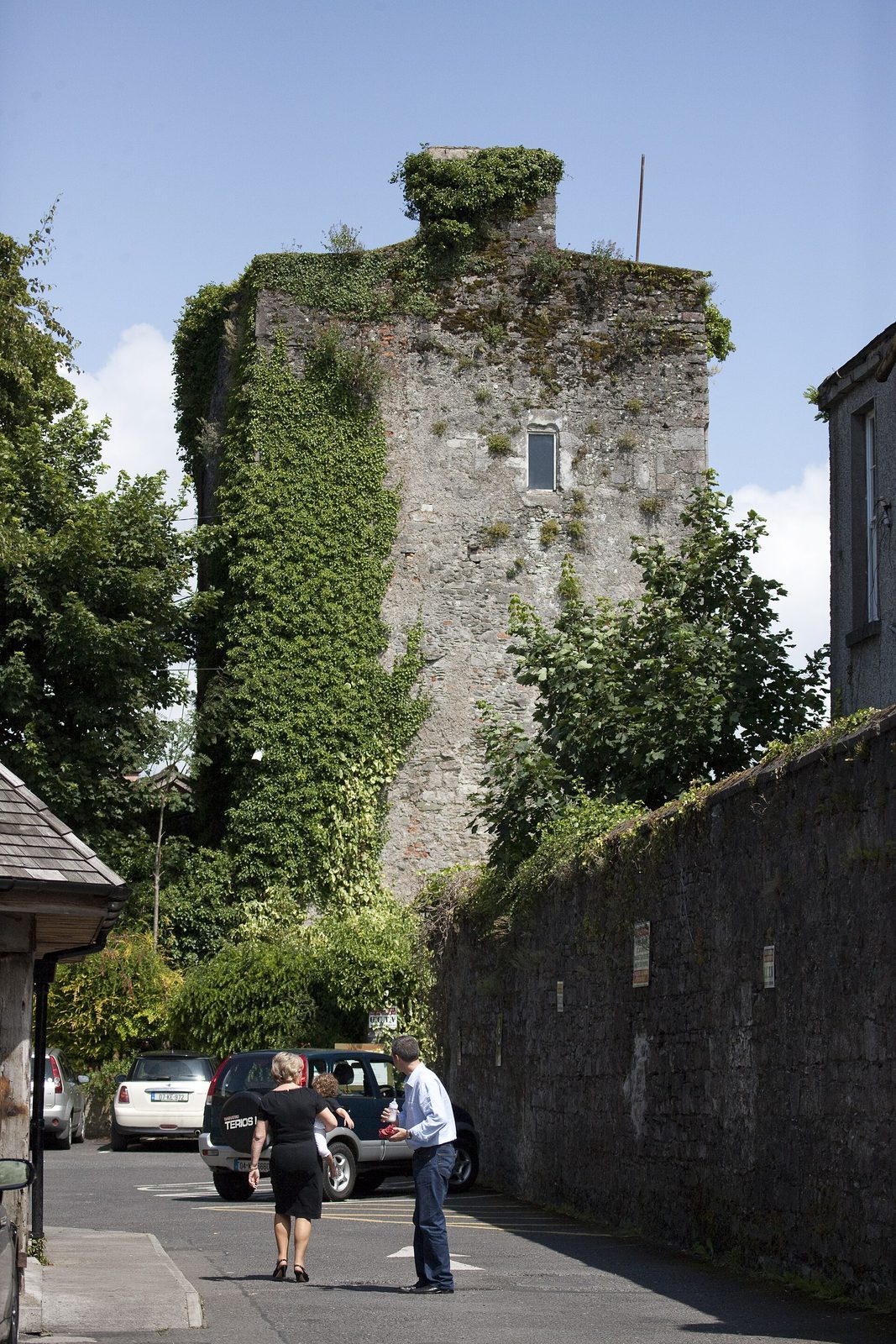
The castle had four towers by 1331. One tower survives above ground. It dates to the thirteenth century and was probably adapted into a residential tower in the fifteenth century.
Defensive wall
Part of the defensive wall also survives. Its visible sections date from the fifteenth to seventeenth centuries and rest on foundations from the thirteenth century.