Anebos Castle: A Medieval Rock Castle and Ancestral Seat
Site at a Glance
- Popularity
- Medium
- Country
- Germany
- Primary era
- Medieval
- Eras represented
- Medieval
- Civilizations
- Holy Roman Empire
- Site type
- Military
- Remains
- Castle
On this page7 sections
History
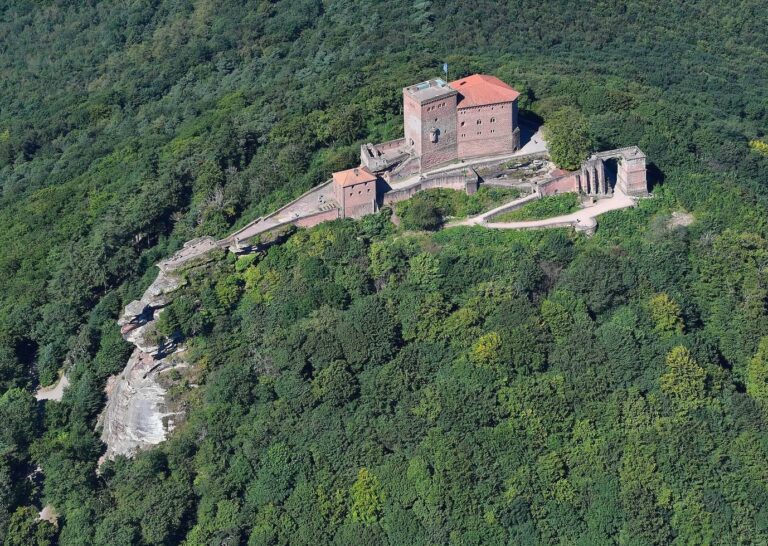
Anebos Castle is a medieval hilltop rock castle in the woodland area of Leinsweiler, Germany, built at the beginning of the 12th century, probably to defend Trifels Castle. It later served as the ancestral seat of the Lords of Anebos.
Foundation and the Lords of Anebos
The Lords of Anebos were officials in the service of the medieval German ruler, who could hold offices and fiefs. They held feudal rights to the castle, and the family appears in written records from the final decade of the 12th century to the mid-13th century. In 1194, Eberhard of Anebos accompanied Holy Roman Emperor Henry VI of the Hohenstaufen dynasty on his campaign in Italy. Eberhard’s brother Henry held the marshal’s office from 1196, a senior court or military post.
Eliza of Anebos appears in records from 1234, 1250, and 1252; the last describes her as a marshal’s widow. The male line of the family seems to have ended by the middle of the 13th century.
Transfer and abandonment
The castle’s feudal rights probably passed by inheritance to the family of Philip I of Falkenstein, an imperial seneschal, or senior court official. In 1246, Philip’s wife Isengard transferred Anebos to King Conrad IV, a Hohenstaufen king of Germany. The transfer suggests that the fief had returned to the crown after the male line of the Lords of Anebos ended. The castle’s last known written mention is in a document of 1266.
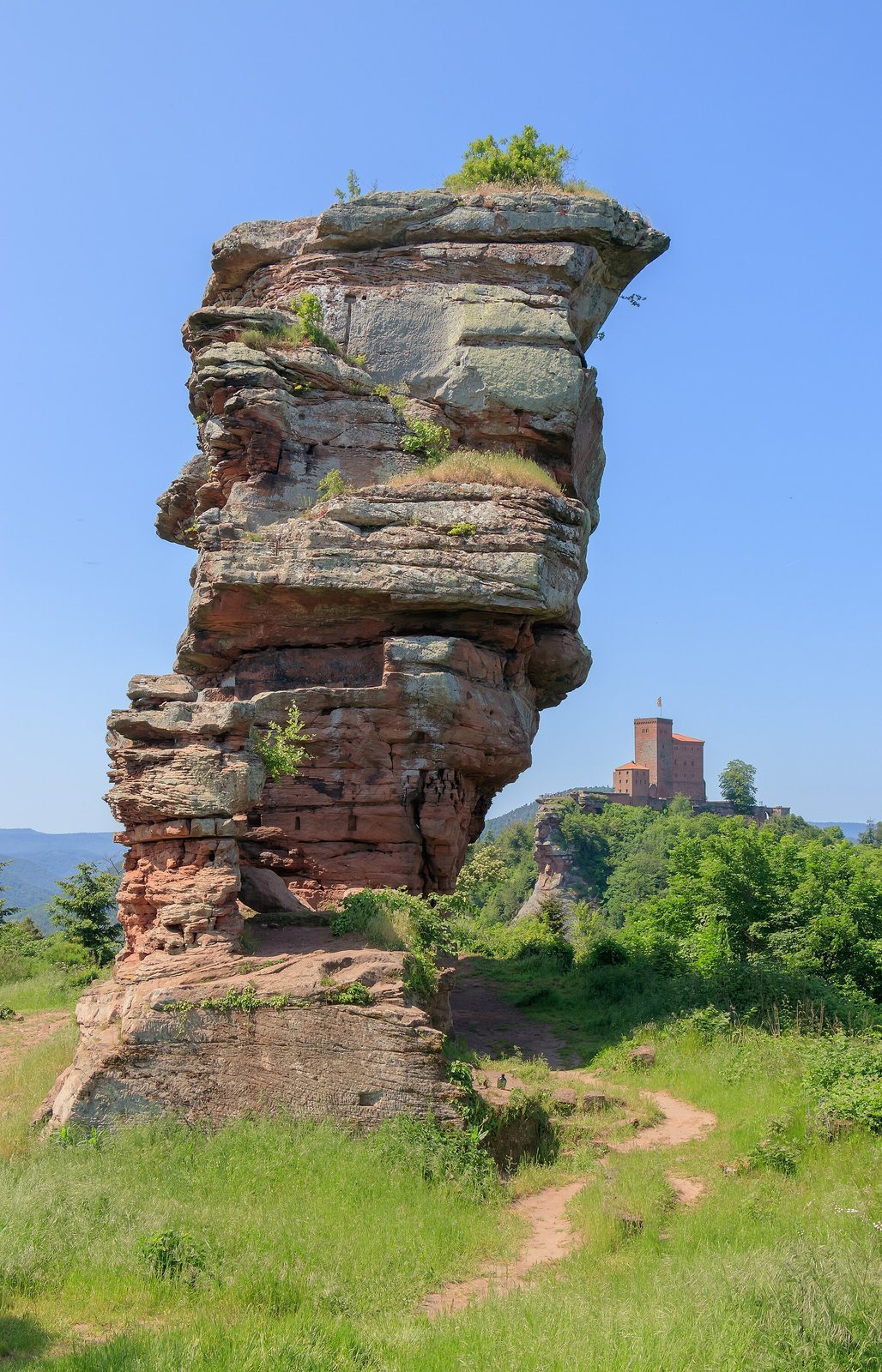
Archaeological evidence places activity at Anebos from the 11th to the 13th centuries, while excavations begun in 2000 indicate that people continued to live there into the 14th century. The castle was then abandoned. Its name may derive from the German word for “anvil,” perhaps referring to the shape of the rock.
Remains
Summit layout
Anebos occupied the rocky northwestern summit of Scharfenberg, a rounded, two-peaked hill in the Palatinate Forest. The castle stood 463 metres above sea level, and its original complex extended about 60 metres. Along with Trifels and Scharfenberg, it formed the Trifels group, a landmark of Annweiler in the Queich valley below.
Walls, cistern, and rockworking
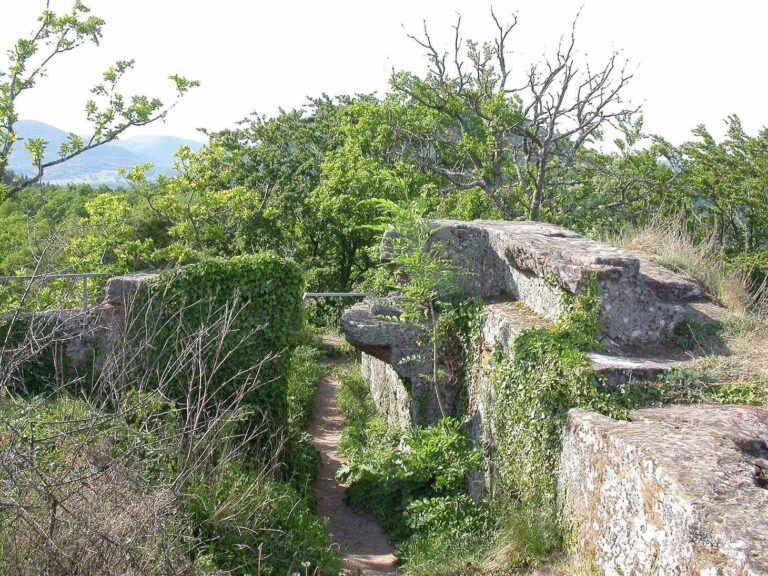
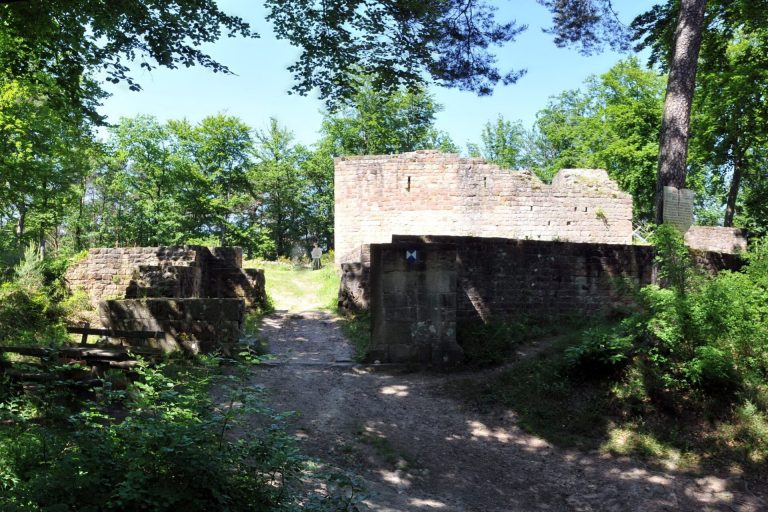
Only a few wall remains survive, alongside traces of stoneworking on the castle rock. The site also retains a filter cistern, a water-storage structure that filtered water. It was once mistaken for a rock cellar, but excavations identified its function.
Tower and southern moat
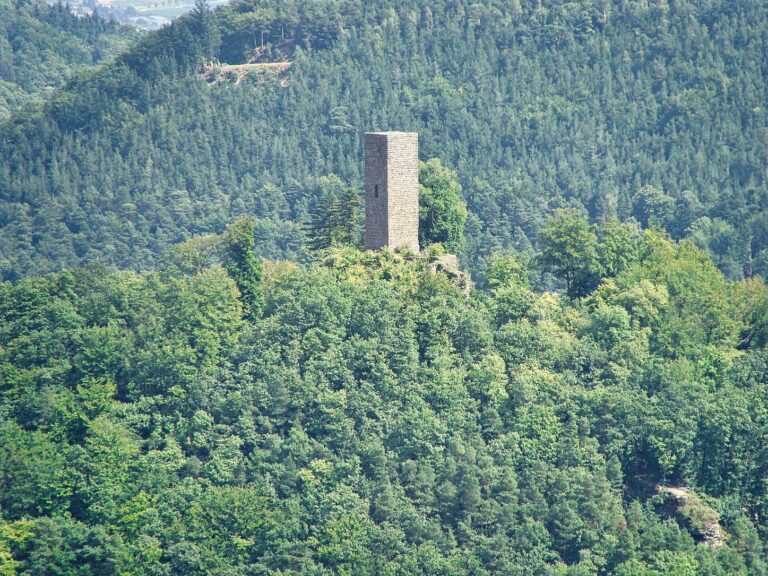
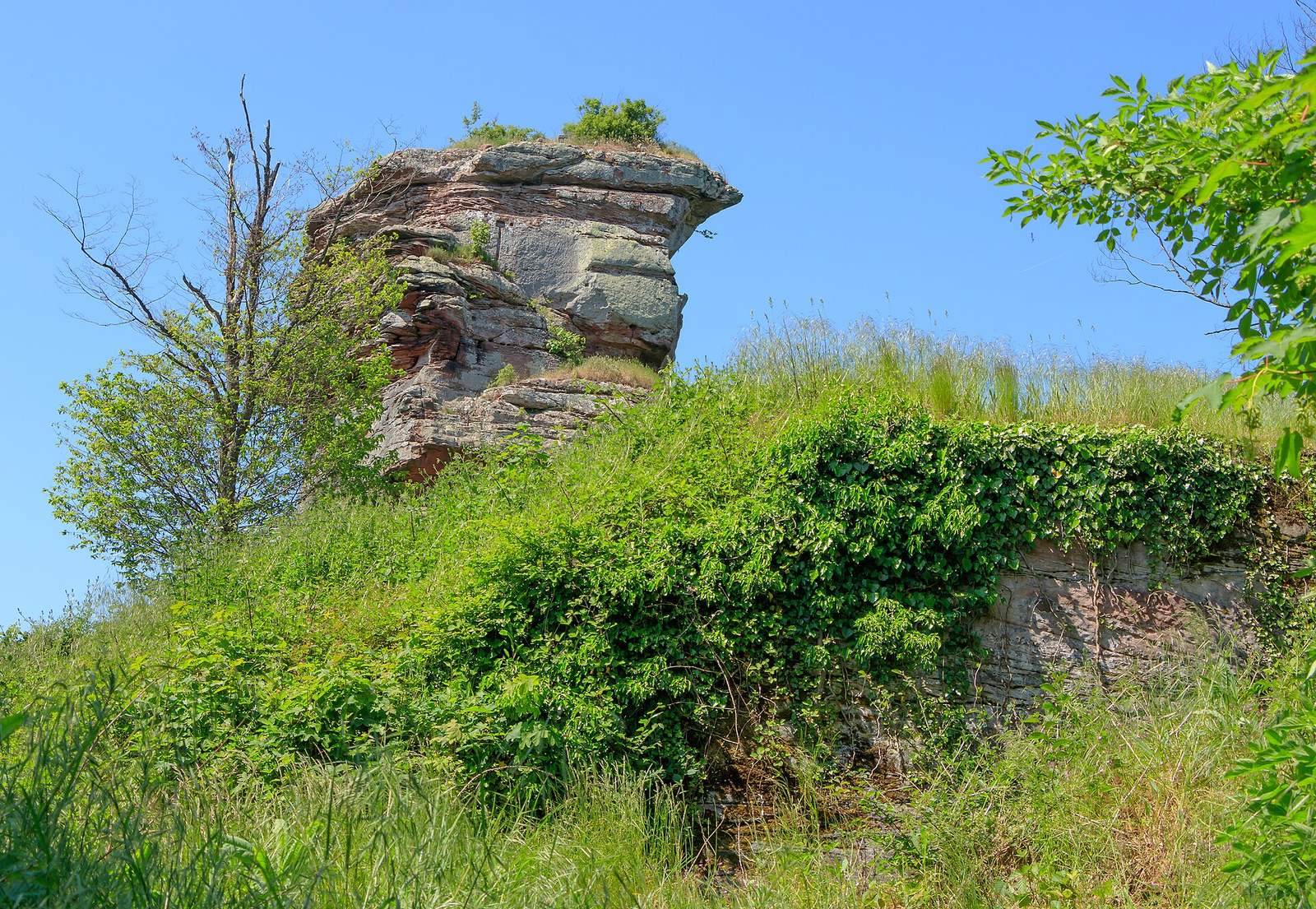
A castle tower stood on a heavily weathered sandstone outcrop. A moat on the south side defended the castle against the presumed direction of attack.