Castle Königsbrück: A Border Fortress and Noble Estate
Site at a Glance
- Popularity
- Medium
- Country
- Germany
- Primary era
- Early Modern
- Eras represented
- Medieval, Early Modern, Modern
- Civilizations
- Electorate of Saxony, Holy Roman Empire, Kingdom of Bohemia
- Site type
- Domestic
- Remains
- Castle
On this page9 sections
History
Castle Königsbrück is a historic castle in Germany whose earliest form was a wooden border fortress. It guarded the boundary between the Saxon Margraviate of Meissen and the Bohemian Margraviate of Upper Lusatia, border territories governed by margraves. At the time, the Pulsnitz River marked the boundary with the Kingdom of Bohemia.
Border fortress and medieval settlement
Later, the old Frankfurter Geleis route crossed the Via Regia, a major European long-distance trade route, at Königsbrück. Tolls for crossing the bridge and for an escort were collected at a place known as the ‘royal bridge’, an origin associated with the town’s name. A craft settlement serving trade wagons grew under the fortress’s protection. A 65 × 75 m area where travelers rested and changed horses eventually became the marketplace.
Medieval records and royal jurisdiction
In the early 13th century, Königsbrück was held under the Lords of Kamenz. A charter of the Monastery of St. Marienstern dated 13 October 1248 mentions the local toll and provides the first recorded reference to Königsbrück. On 8 September 1298, Heinricus de Konigesbruck appeared as a witness in a charter issued by a Margrave of Meissen. He held land under the Lords of Kamenz, but was not yet lord of Königsbrück.
In 1351, King Charles IV, the Bohemian ruler who later became Holy Roman Emperor, declared that the town and castle must remain attached to the Crown of Bohemia, the monarchy and lands associated with it, and the Bailiwick of Budissin. A bailiwick was an administrative district; Budissin is the historical name for Bautzen.
The Dohna family and Bohemian rule
After the lordship of Kamenz dissolved in 1438, Hawlatsch, also known as Hlaváč, von Dohna gained control of Königsbrück. In 1454, King Ladislaus Postumus of Bohemia granted Hawlatsch’s sons the seat their father had built outside the town. The family expanded its authority over villages on the Upper Lusatian side that had previously belonged to Kamenz. Dohna burgraves, noble officials associated with governing castles or their territories, held Königsbrück from 1439 to 1579. Their possessions were described as a lordship, a noble territory with administrative rights, in 1527 and 1551.
Christoph von Dohna died of a stroke while preaching in Bautzen in 1560, bringing his family line to an end. The territory returned to the Bohemian Crown. In 1562, King Ferdinand I, a Habsburg ruler and Holy Roman Emperor, sold it to Caspar von Dohna of Straupitz. That year, the estate became Upper Lusatia’s fourth territorial lordship.
Estate rebuilding and decline
The estate underwent major building work in the early 18th century under Baron Maximilian von Schellendorff. The territorial lordship passed to Count Heinrich Friedrich von Friesen in 1726, and Count Peter Karl Wilhelm von Hohenthal acquired the castle and estate in 1803. After the Hohenthal family went bankrupt in 1852, the property passed first to Ernst and then to August Wilding. Under Wilding’s ownership, the building deteriorated until it was nearly uninhabitable.
Twentieth-century uses
Dresden entrepreneur Bruno Naumann, founder and majority shareholder of the precision-engineering firm Seidel & Naumann, bought the lordship and castle in 1893. After extensive renovation, his son, Naumann’s sole heir, and his family were able to live there from April 1917. They had to leave Königsbrück in April 1945. In 1945–46, the Soviet Military Administration in Germany, the Soviet authority governing its occupation zone after the Second World War, used the castle as a hospital.
In 1948, 32 families made homeless by bombing in Dresden were living in the castle, while proposals were also made to demolish it. On 13 July, the Kamenz district decided initially to demolish only the castle tower. Following extensive building work, the castle became a recreation home from 1952 to 1966. On 1 November 1966, it opened as a branch of the district hospital for neurology and psychiatry in Arnsdorf, first with 180 beds and later with 220.
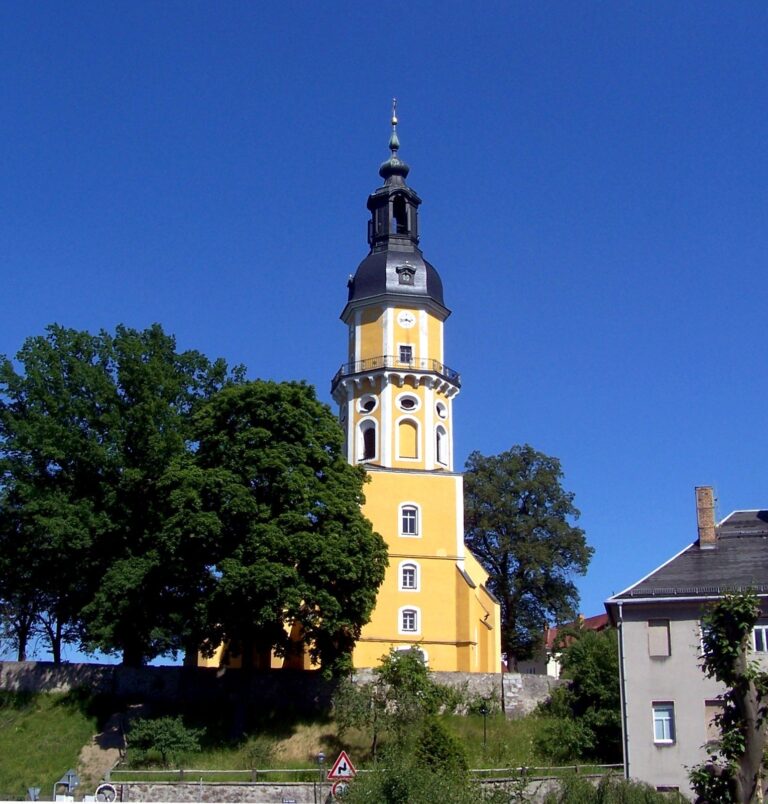
Renovation of the exterior façades began in 1985. The Workers’ Samaritan Federation, a German social-welfare and emergency-aid organization, took over operation of the psychiatric care home in 1994. At the initiative of the Königsbrück and Surroundings Local History Association, work to reconstruct the castle tower began in 1997. The tower was handed over on 24 June 1998 during celebrations for the town’s 750th anniversary.
The castle ceased to serve as a care home in January 2001, after new homes for older people had been built at Königsbrück Castle Park and in Bernsdorf. Following a change of ownership and an extended period of vacancy, the property was sold at auction on 30 August 2016.
Remains
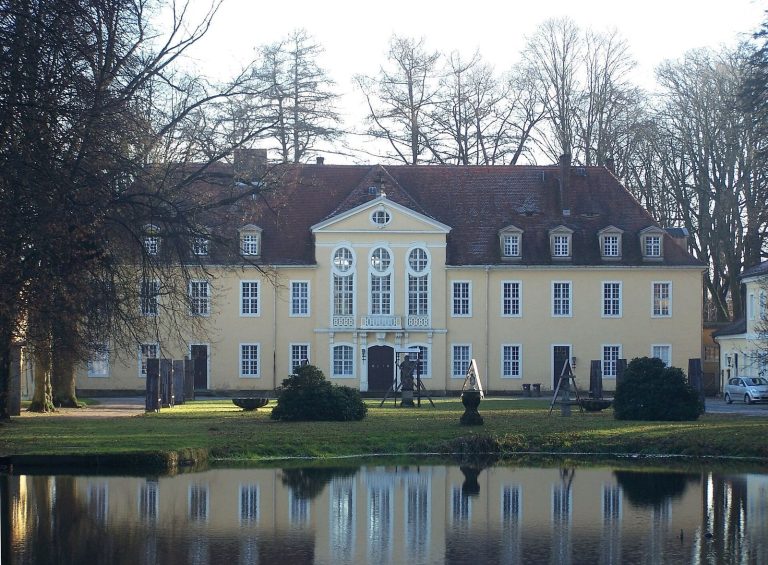
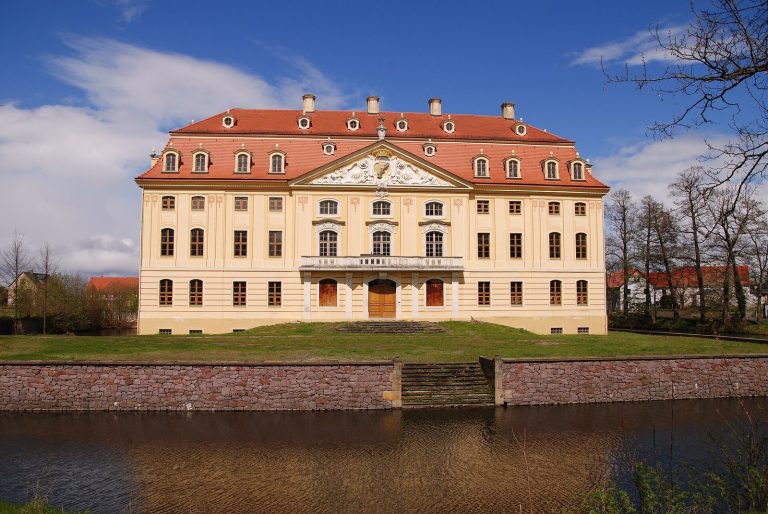
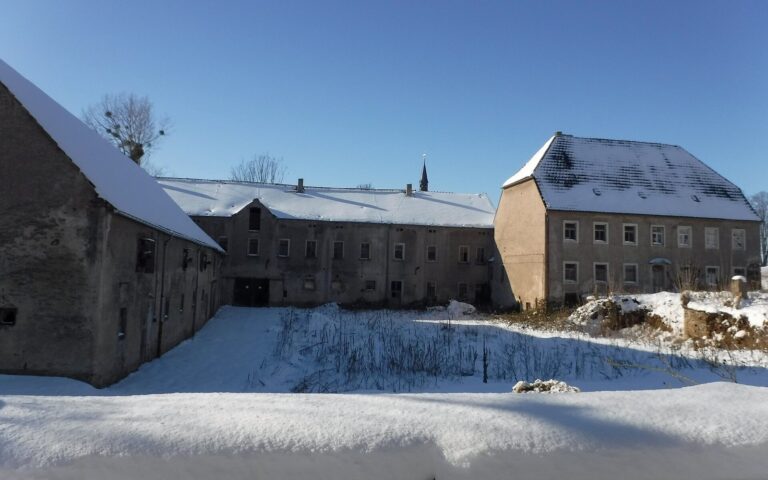
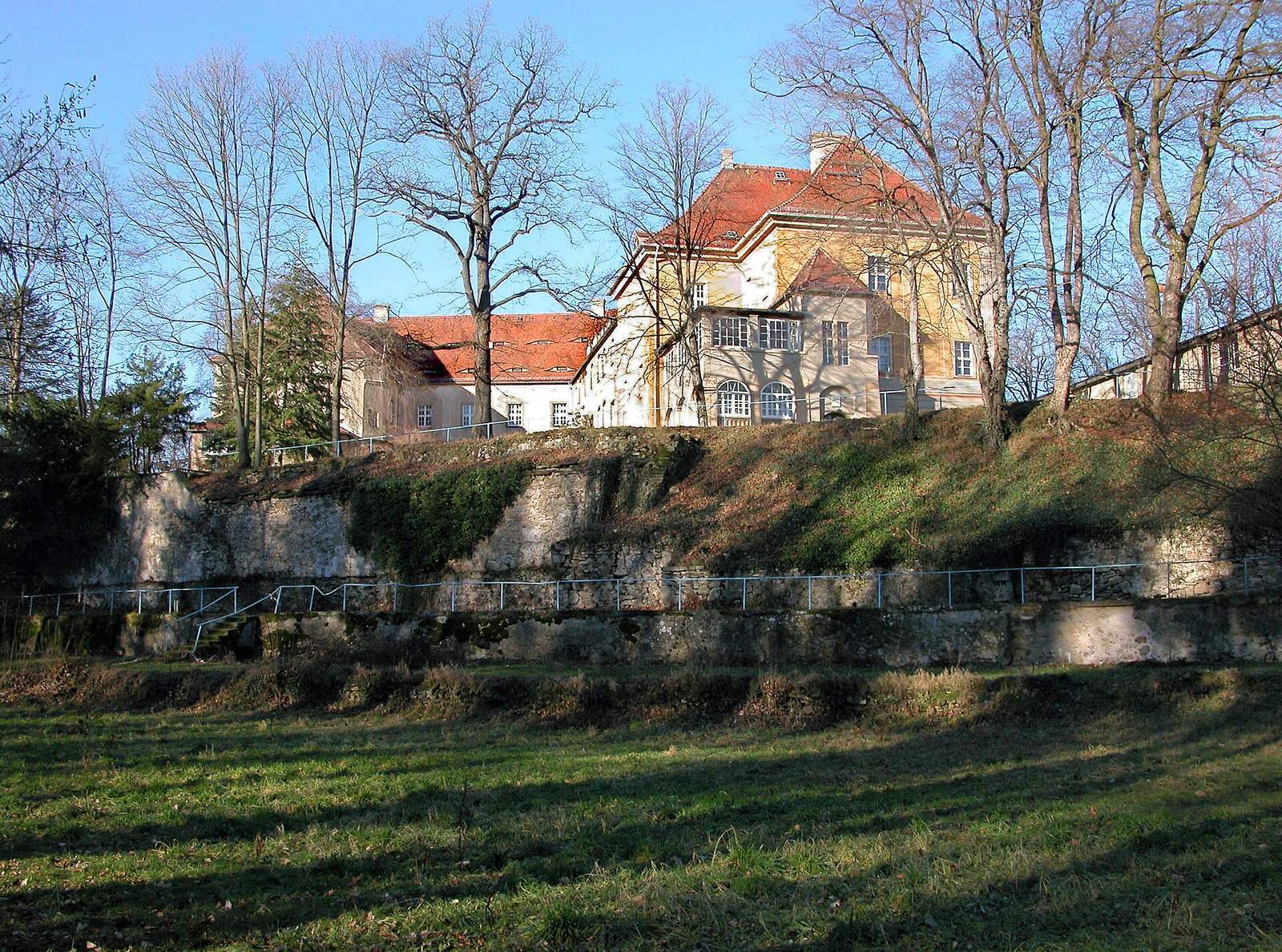
The castle occupies a rocky spur above a valley near Königsbrück, with the Pulsnitz partly flowing around it. The complex brings together an older castle section, a main palace and service buildings, a garden nursery, and terraced grounds.
Older castle fabric
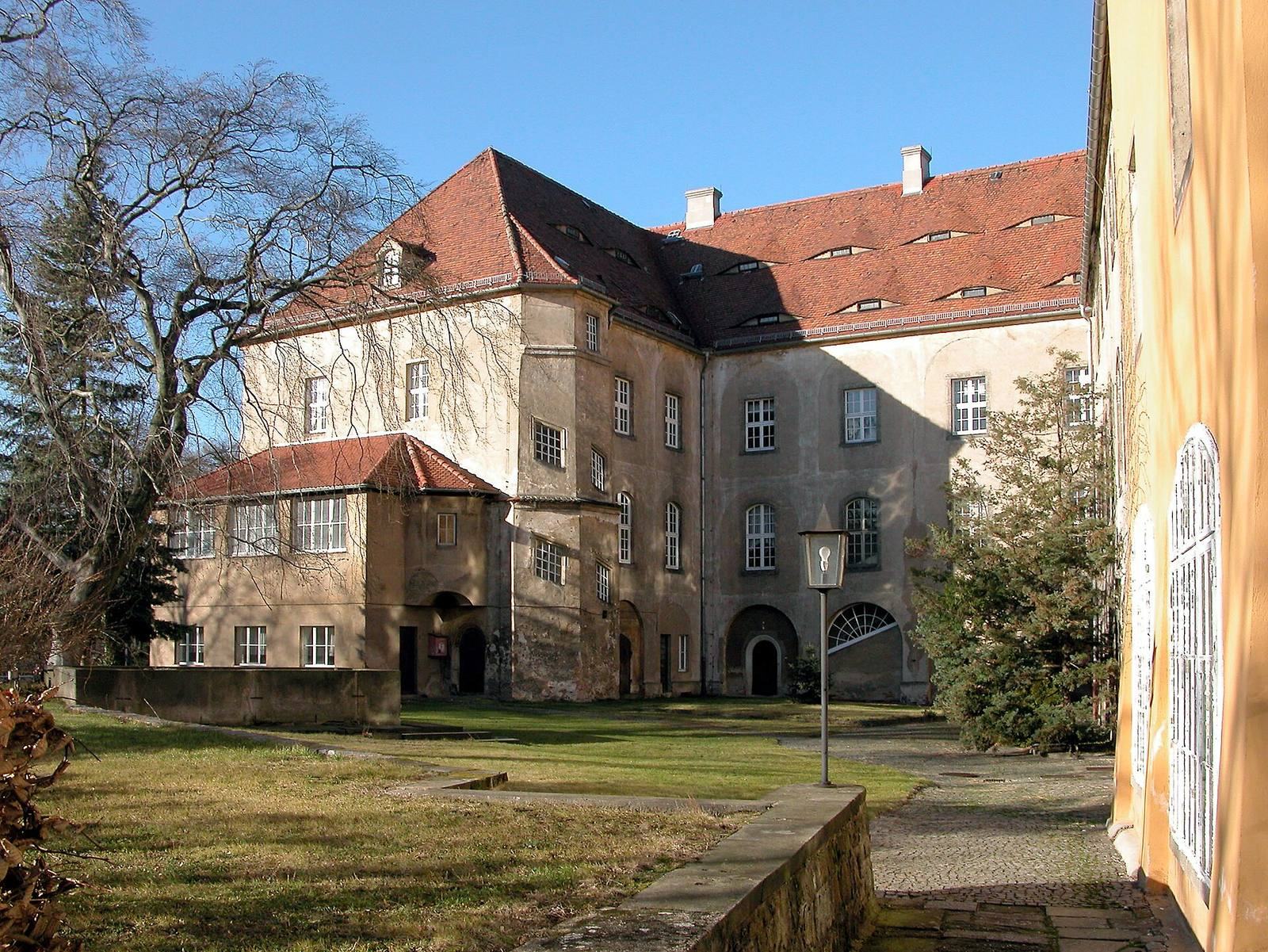
The older section was altered during the Dohna period. Its spiral stair tower has coats of arms set into the exterior plaster.
Palace and garden complex
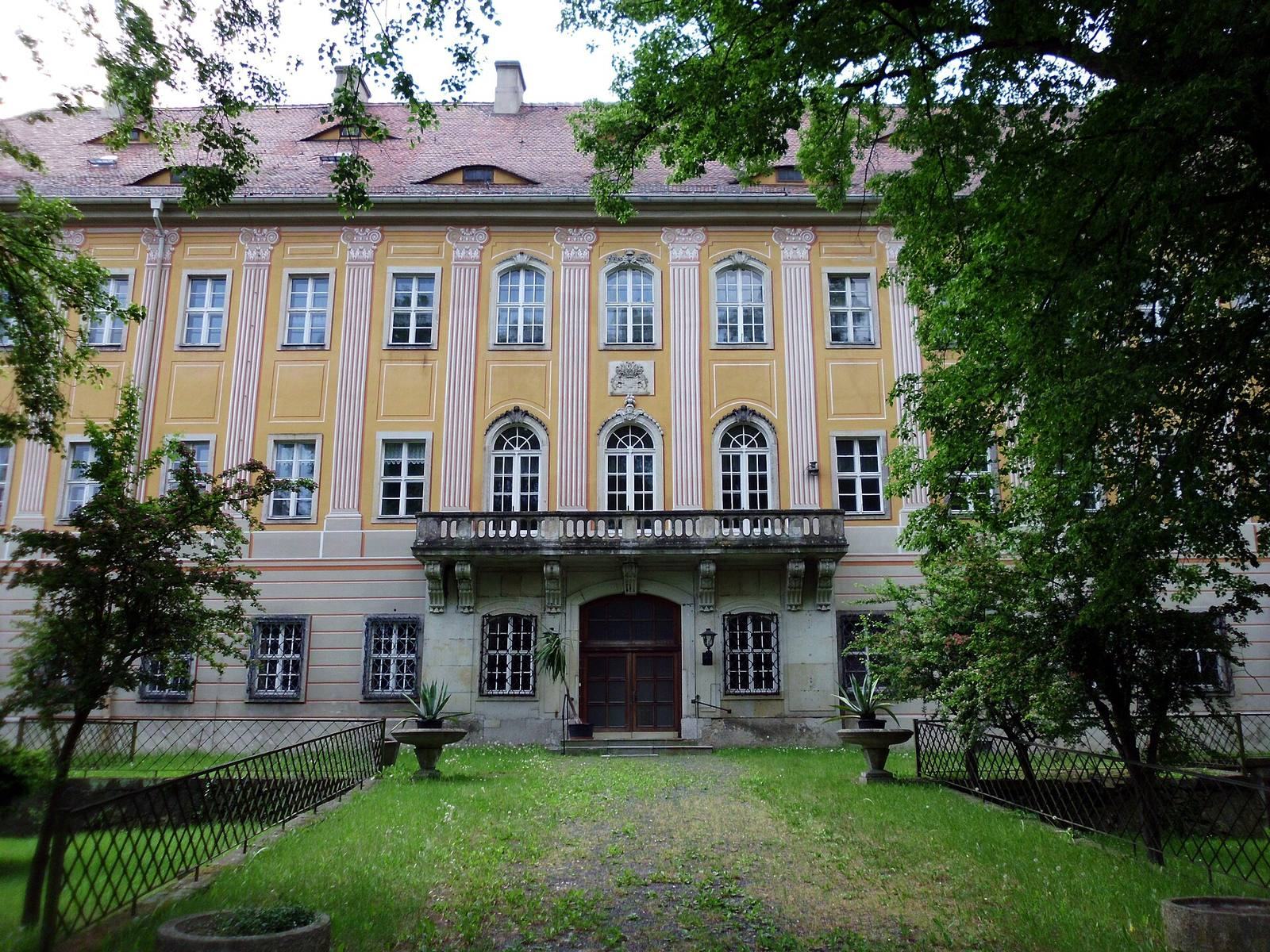
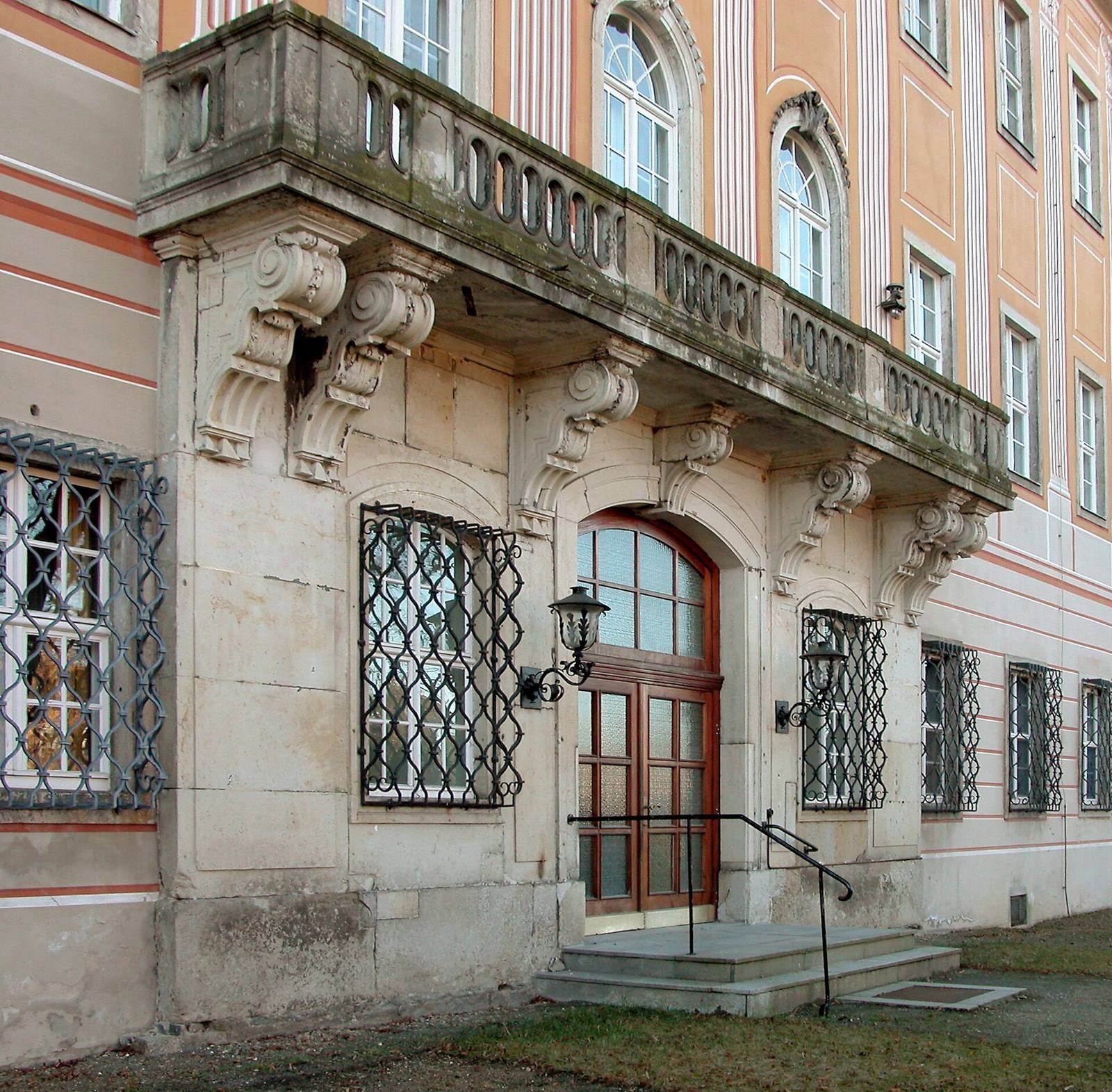
Large terrace walls were built in 1703. The main palace and service buildings, along with a garden nursery, were erected in 1704. An open staircase was added after the lordship passed to Count Heinrich Friedrich von Friesen in 1726 and was later enclosed. Large greenhouses were added in 1752. During the Hohenthal period, the old castle’s orangery was demolished, and painted, column-like decoration was applied to the principal façade. A greenhouse belonging to the castle nursery contains camellias regarded as among the oldest in Europe.