Kirche Seifersdorf: An Evangelical Lutheran Church in Saxony
Site at a Glance
- Popularity
- Very Low
- Country
- Germany
- Primary era
- Early Modern
- Eras represented
- Early Modern, Modern
- Civilizations
- Electorate of Saxony, German, Holy Roman Empire, Kingdom of Saxony
- Site type
- Religious
- Remains
- Church
On this page13 sections
History
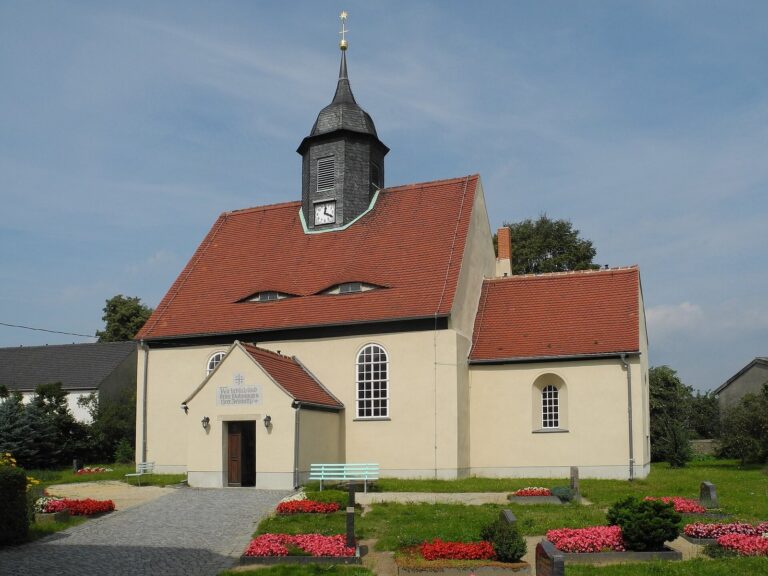
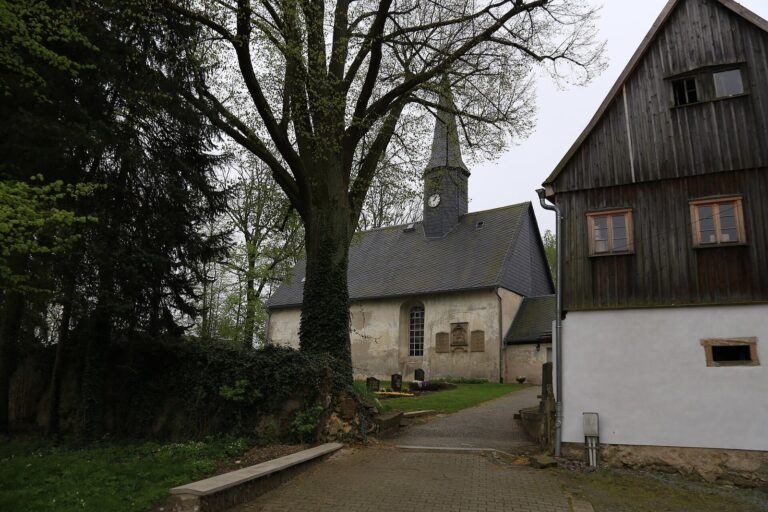
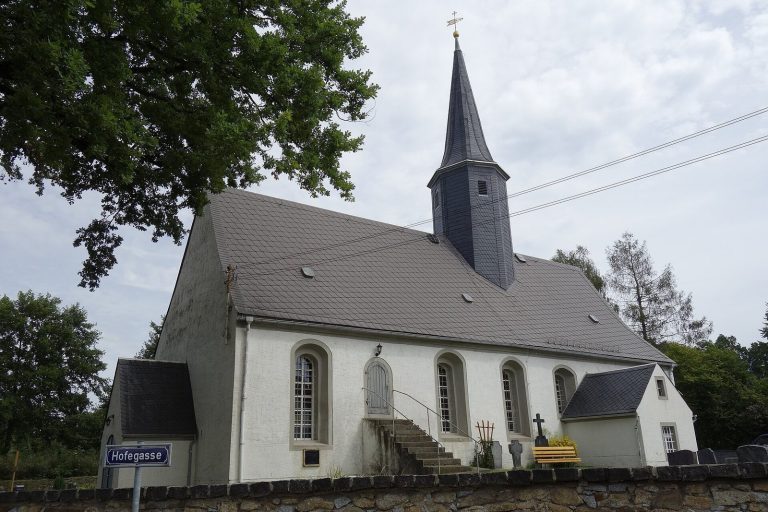
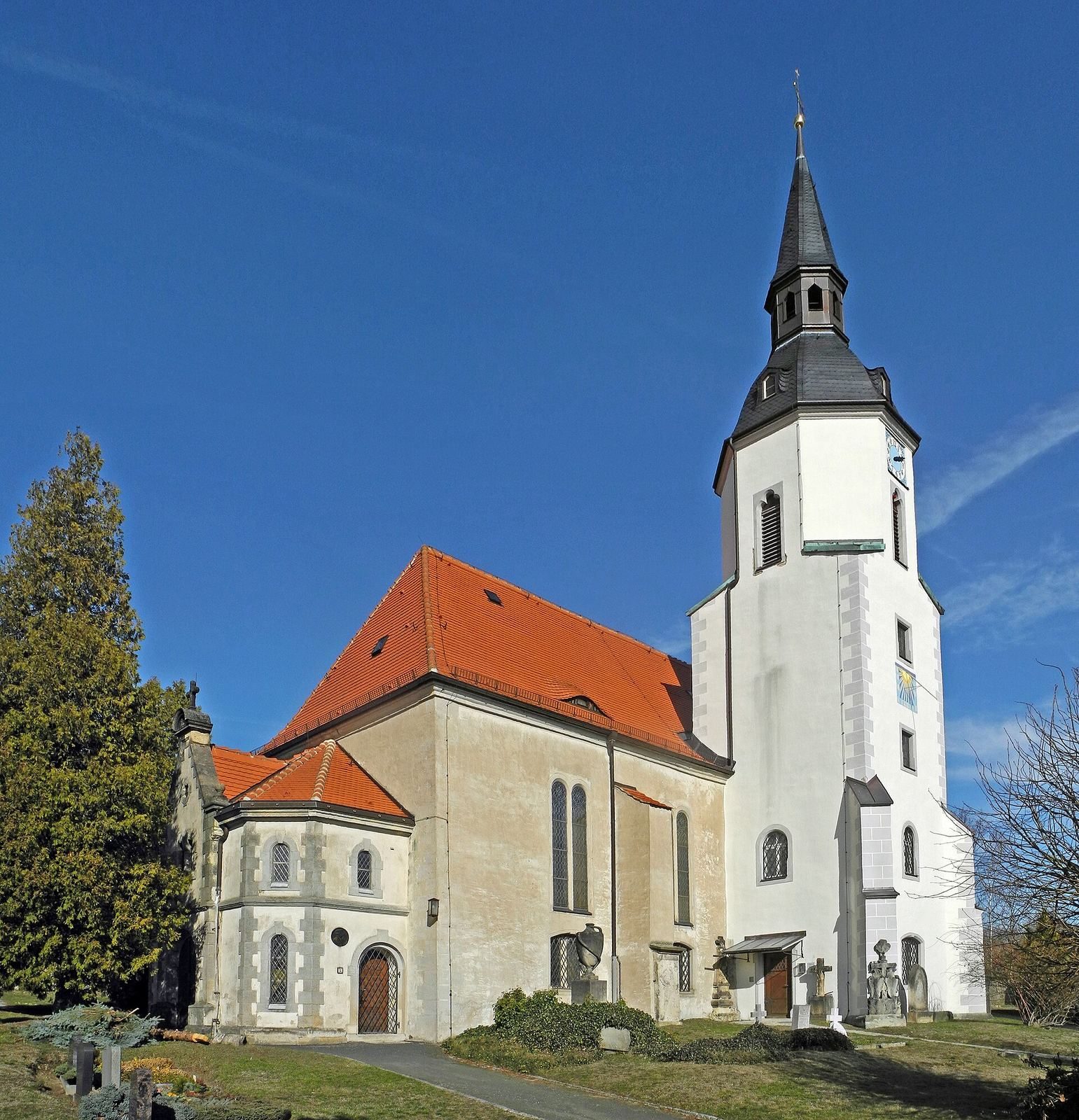
Kirche Seifersdorf is an Evangelical Lutheran church in Seifersdorf, part of Wachau in Saxony, Germany. Built as a unified structure in 1604–05, it follows post-Gothic forms, which continued or adapted Gothic traditions after the Gothic period. The church belongs to the Radeberger Land parish, within the Dresden North church district of the Evangelical Lutheran Church of Saxony.
Construction and restoration
The church was restored in 1892 by Christian Gottfried Schramm. Its construction as a single, unified building dates to 1604–05, rather than to a series of separate building phases.
Commemoration and later changes
The church’s memorials connect it with several generations of the von Grünrod family, as well as members of the von Brühl family. Hans Moritz von Brühl and his wife Christina, née Schleierweber, are commemorated here. Christina founded Seifersdorf Valley. Their son Carl Friedrich Moritz von Brühl became general director of the Prussian theaters and of the museums established in Berlin in 1830.
Three bells cast by Johann Gotthelf Große in 1850 once formed the church’s peal, a set of bells sounded together. During the First World War, the two largest were surrendered for Germany’s wartime metal collection. Two replacement bells cast by C. Albert Bierling in 1919, with pitches and weights of A-flat 4 (460 kg) and C5 (221 kg), were melted down during the Second World War. Eule Orgelbau made the organ in 1892, and Ekkehart Groß of Waditz restored it in 2006.
Remains
Building and interior
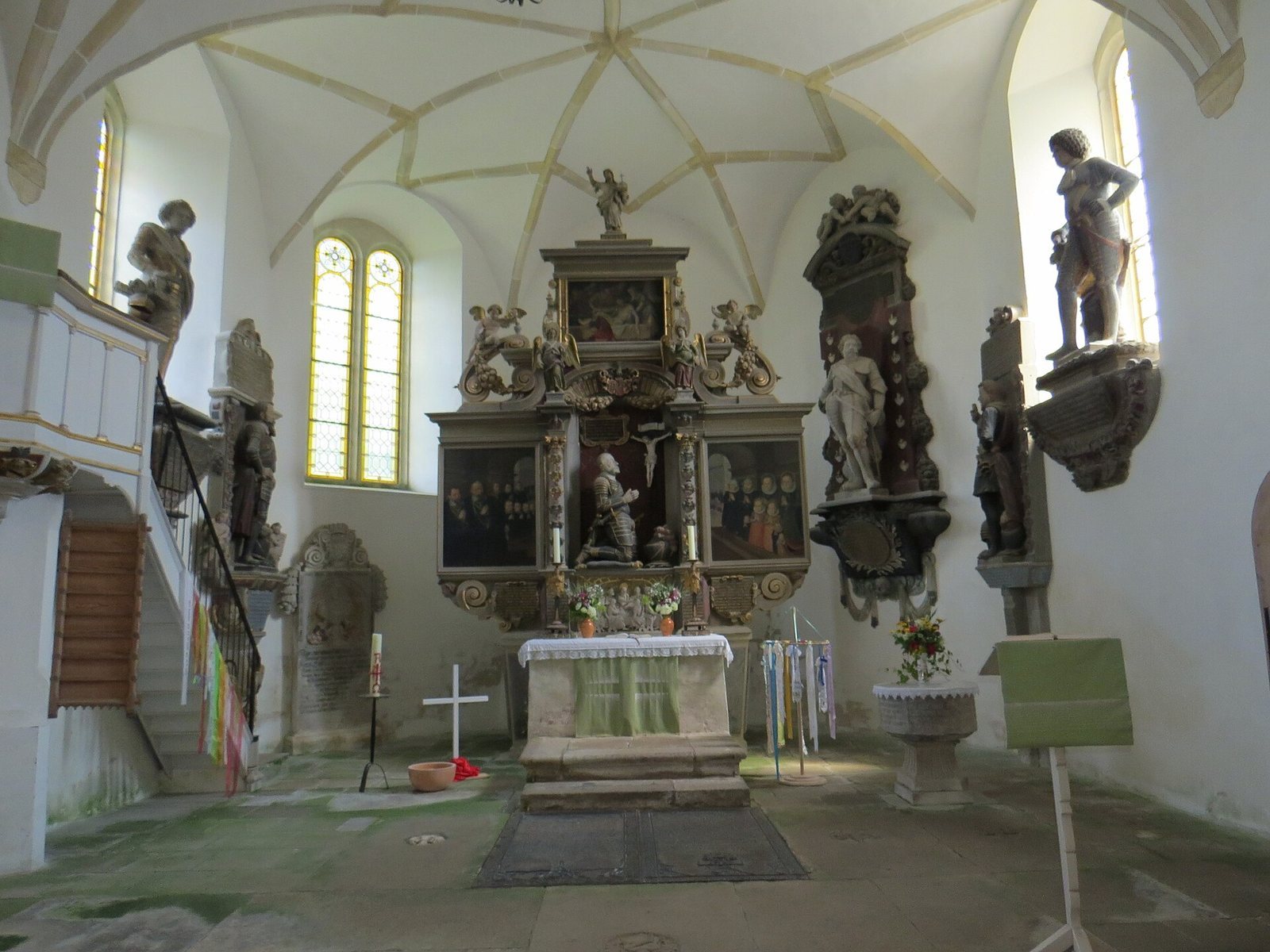
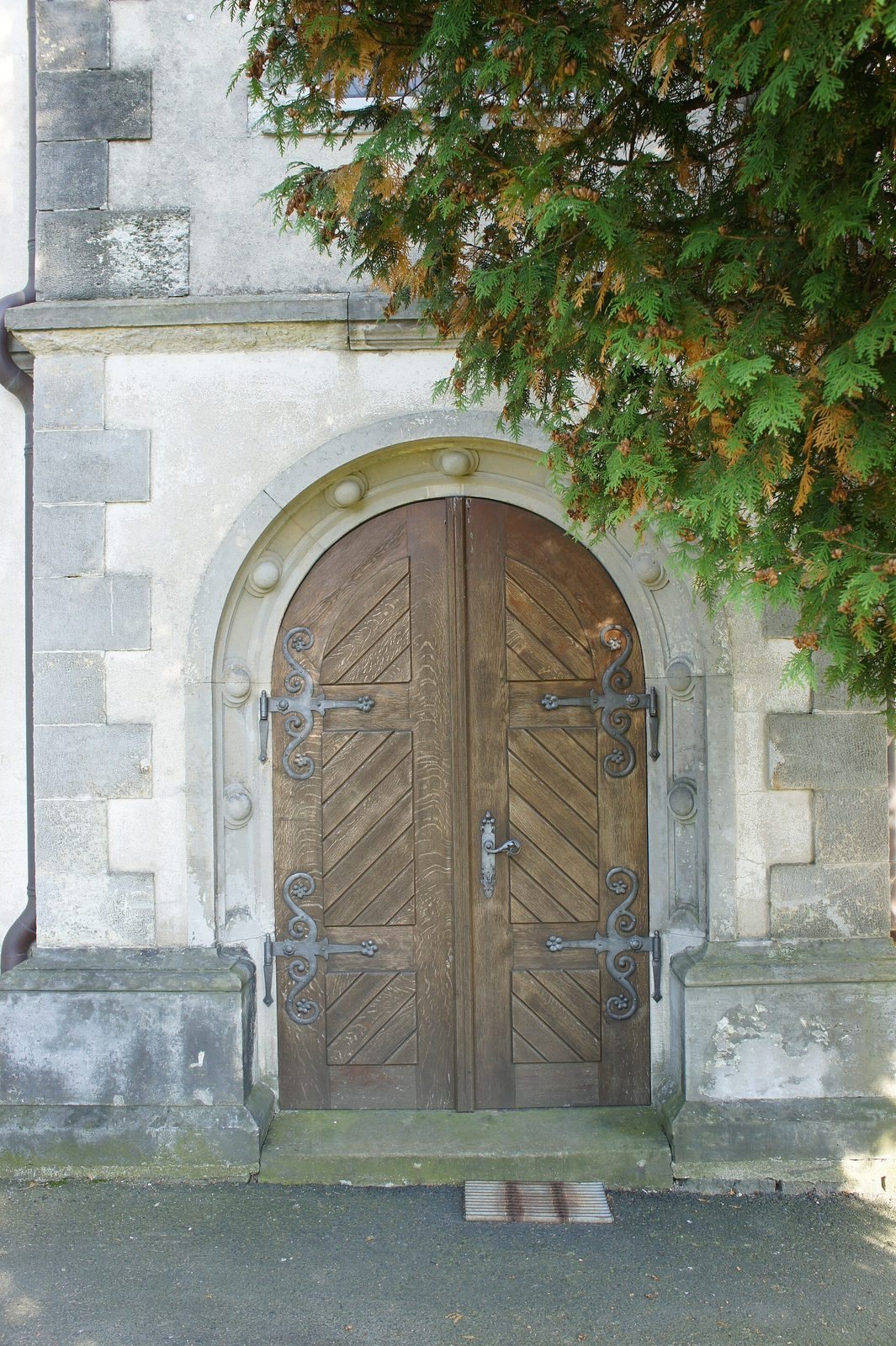
The church is an elongated, plastered hall with a five-eighths polygonal end, a shape made from five sides of an imagined eight-sided figure. Buttresses support the walls. A square-plan tower attached to the south side rises into an octagonal upper stage, topped by a curved hood and lantern; its ground floor contains the sacristy. The nave and chancel have plastered ribs forming network-patterned net vaults. A patron’s box in the chancel and a single-level gallery in the nave both date from the nineteenth century.
Altarpiece
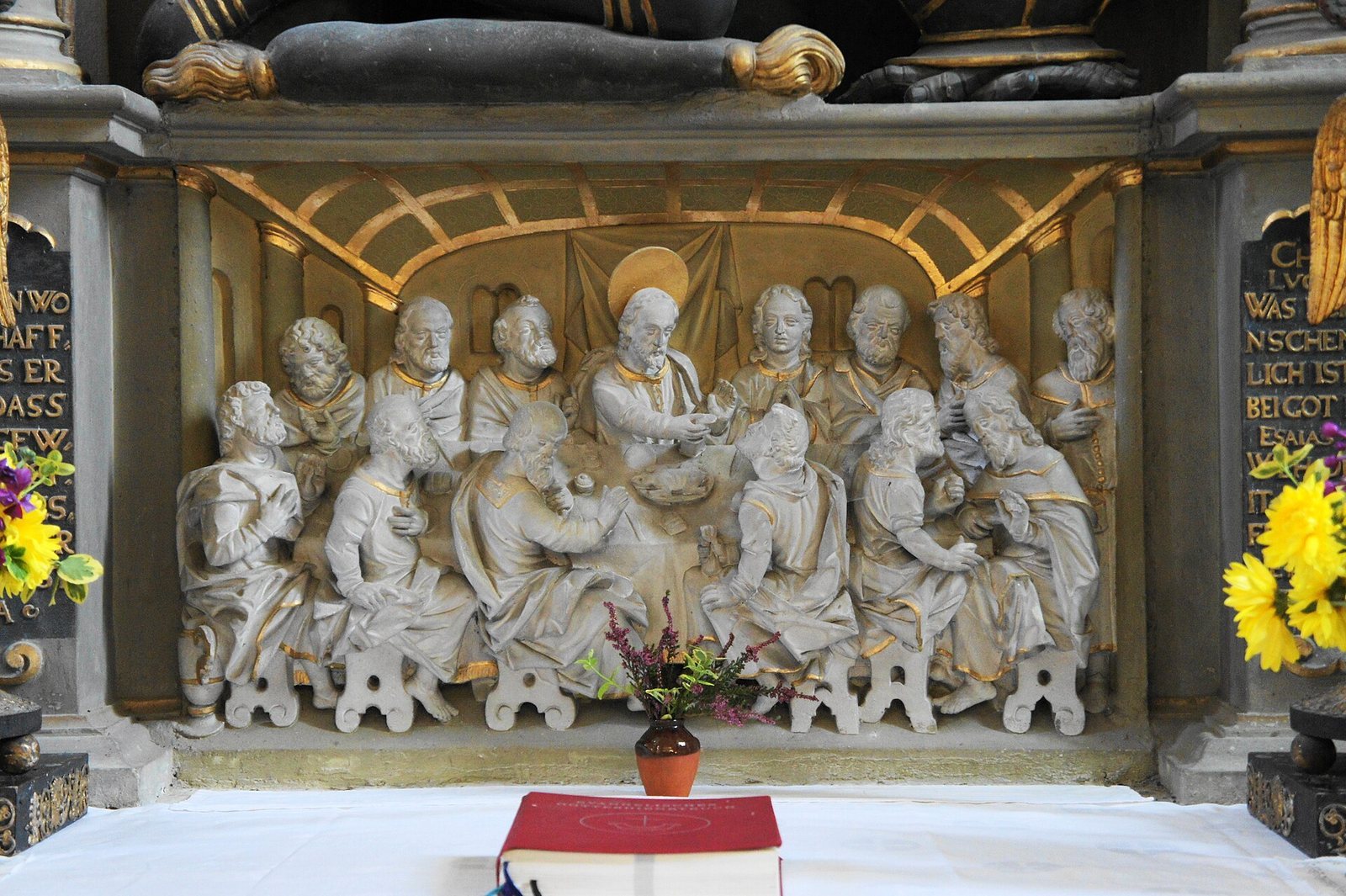
The main furnishing is a sandstone altarpiece made in 1604–05. It was probably first planned as a memorial to Dietrich von Grünrod, who died in 1603, then expanded into an epitaph altar, combining a memorial with an altar. A fully modeled sandstone figure of Dietrich kneels in a niche. An alabaster crucifix sits high on its right, balanced by an inscription tablet on the left. The side wings show kneeling family members between columns bearing coats of arms and composite capitals, which combine features of classical column designs. The lower panel, or predella, carries a finely carved Last Supper relief. Above the niche is an oil painting of the Entombment; angels decorate the curled forms and capitals, and a fully modeled figure of the Savior crowns the work.
Other furnishings
The pulpit has a base dating to 1605 and a later renewed wooden basket. A plain, round font made of shell limestone bears 1605 inscriptions naming its donors, Sibilla von Grünrod and Sabina von Schönfeld. The pews date from the nineteenth century. The organ has 13 stops, sets of pipes with distinct sounds, two manuals played by hand, and a pedal played by foot.
Bells
In 2024, the peal consisted of two bronze bells. The larger bell received a wooden frame in 2013. A clock bell dated to around 1500 bore the inscription "O rex glorie veni cum pace ave maria" and was noted in 1904.
Memorials
Early chancel memorials
A sandstone relief plaque on the chancel’s northeast wall, dating to around 1570, portrays Jobst von Haugwitz, a German nobleman who lived about 1442–1501, and his wife. In the chancel, a plain grave slab commemorates Dietrich von Grünrod, who died in 1603; his sculpted likeness also appears in the altarpiece.
Standing figures
On the south side of the chancel stands a painted, fully modeled sandstone figure of Joachim von Grünrod, who died in 1604. A similar figure on the northeast wall, probably by the same sculptor, depicts Wolff Dietrich von Grünrod, who died in 1606, wearing black armor.
Later family memorials
On the chancel’s southeast side, an over-life-size sandstone figure of Wolff Dietrich von Grünrod (1602–1655) stands on a projecting support before an elaborately decorated memorial panel. The monument may be the work of sculptor Johann Heinrich Böhme the Elder. Full-length, over-life-size figures of Casper Heinrich von Grünrod, who died in 1675, and Hans Ulrich von Grünrod (1627–1682) stand on supports before the polygonal chancel’s window niches, to either side of the altar. An epitaph for Hans Wollf von Ponickau (1657–1676) displays the arms of the von Ponickau and von Grünrod families.
Brühl family and churchyard graves
A plain bronze slab set into the floor before the altar commemorates Hans Moritz von Brühl, Christina née Schleierweber, and Carl Friedrich Moritz von Brühl. In the churchyard, a classical-style vase entwined by a snake sits on a pedestal marking the grave of Margaretha von Schleierweber, who died in 1790. Beside the chancel is the grave monument of Jenny von Brühl, née Pourtales, wife of Carl Friedrich Moritz, who died in 1884.