Dusit Palace: A Royal Residence in Bangkok
Site at a Glance
- Popularity
- Very High
- Country
- Thailand
- Primary era
- Modern
- Eras represented
- Modern
- Civilizations
- Unclassified
- Site type
- Domestic
- Remains
- Palace
On this page19 sections
History
Dusit Palace is a royal residential complex in Bangkok, Thailand, developed under King Chulalongkorn of the Chakri dynasty, Thailand’s ruling royal house, chiefly between 1897 and 1901. Its buildings combine Thai, Italian Renaissance, Western, and other influences. It became Chulalongkorn’s principal, though unofficial, residence and remained a royal home under several succeeding kings.
From the Grand Palace to a garden residence
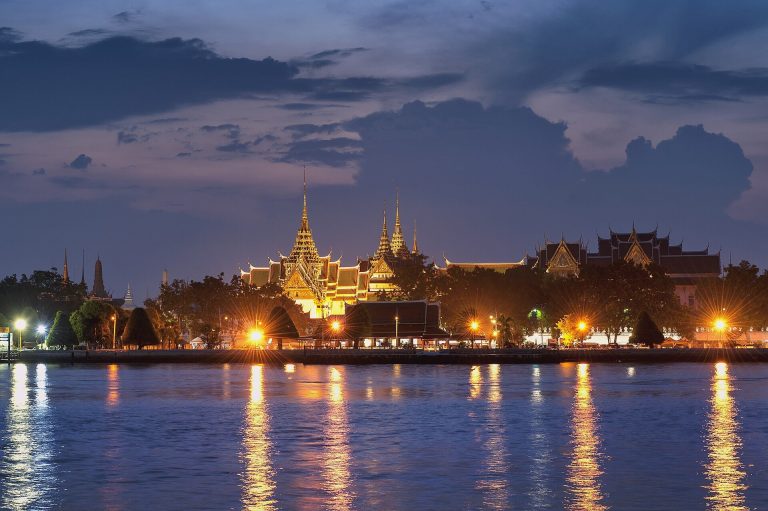
When Bangkok became Siam’s capital in 1782, the Chakri monarchs lived at the Grand Palace, which also held the royal government and court. During Chulalongkorn’s reign, additions and a growing household made its Inner Court crowded and hot, with epidemics a concern. The king enjoyed long walks and would leave the palace for the countryside when he felt unwell.
After a European tour in 1897, Chulalongkorn sought a more spacious residence beyond the crowded center. He used his private funds to acquire farmland and orchards between the Padung Krung Kasem and Samsen canals, naming the grounds Suan Dusit, or “celestial garden.” A single-storey wooden building first provided an occasional retreat for the king, his consorts, meaning spouses and partners in the royal household, and their children. Permanent residences followed, with development continuing through the 1910s.
The complex was first known as Wang Suan Dusit, or Dusit Garden Palace. As Chulalongkorn increasingly lived there and visited the Grand Palace mainly for state and royal ceremonies, its name was shortened to Wang Dusit, meaning “celestial dwelling.” He also commissioned nearby Wat Benchamabophit as the palace’s official Buddhist temple.
The route Chulalongkorn and his entourage cycled between Dusit and the Grand Palace later became Ratchadamnoen Avenue. Connecting the new royal grounds with the old center of Bangkok, the avenue helped the city expand beyond its walls and the traditional limits of Rattanakosin, Bangkok’s historic central area.
Expansion and royal use
After returning from a second European tour in 1908, Chulalongkorn enlarged the grounds and established Suan Sunandha in memory of his first consort, Queen Sunandha Kumariratana, who had died in 1880. The garden included homes for consorts and children, and construction began on 32 residences. Chulalongkorn lived at Dusit until his death from kidney disease on 23 October 1910 at Amphorn Sathan Residential Hall.
His successor, Vajiravudh, added Suan Chitralada garden and a residential villa in 1913. In 1925, Prajadhipok ordered the garden incorporated into Dusit Palace. At its greatest extent, the palace grounds covered more than 768,902 square metres.
Constitutional government and later changes
Thailand’s move from absolute monarchy to constitutional government in 1932 reduced the palace grounds, with part transferred to the new government. Ananta Samakhom Throne Hall became the National Assembly’s permanent meeting place and served as parliament until 1974. In 1938, King Ananda Mahidol gave Khao Din Wana, east of the palace, to Bangkok municipality for a public park that later became Dusit Zoo.
In 1970, the National Assembly sought a larger site because Ananta Samakhom could no longer accommodate its members and secretariat. Bhumibol Adulyadej granted land immediately north of the hall for a new parliamentary building. After the legislature moved there, Ananta Samakhom returned to the palace. In 2019, the National Assembly moved to Sappaya-Sapasathan; the former parliamentary building on the palace grounds was returned to the king and demolished, and its site became part of the palace again.
After returning to Thailand in 1952, Bhumibol made Chitralada Royal Villa his main home and had it renovated. During the work, he and his family stayed at Amphorn Sathan. Chitralada served as his primary residence from 1957 to 2016. Vajiralongkorn retained Amphorn Sathan as his residence, having lived there before Bhumibol’s death. Several palace buildings now serve as museums and exhibition spaces.
Remains
Plan and architectural character
Courts and gardens
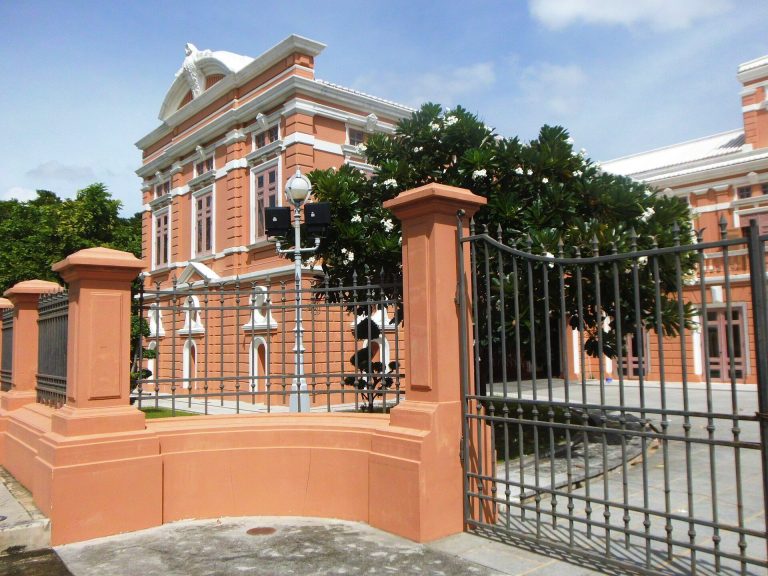
The palace occupies more than 64,749 square metres and includes gardens and lawns. Its three courts, outer, middle, and inner, are divided by canals and gardens rather than walls. Residences and garden areas were assigned to the king’s consorts and children. Gates take their names from human or animal figures on blue-and-white Chinese porcelain chosen by Chulalongkorn, while paths are named for flowers.
Buildings and styles
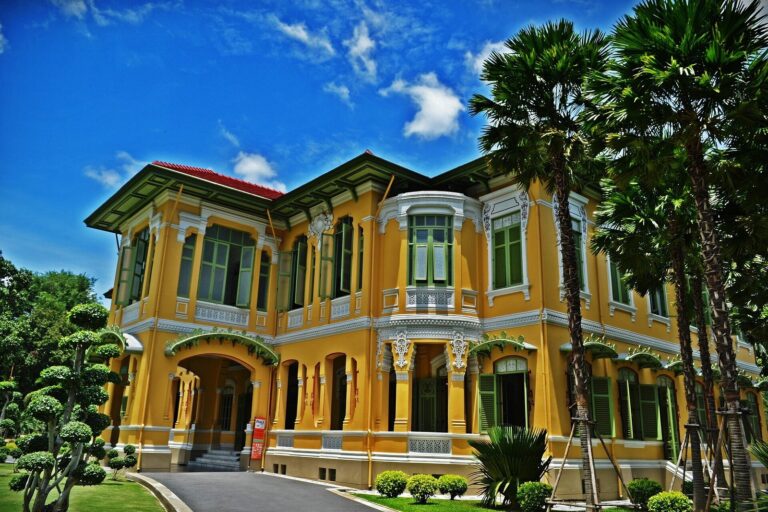
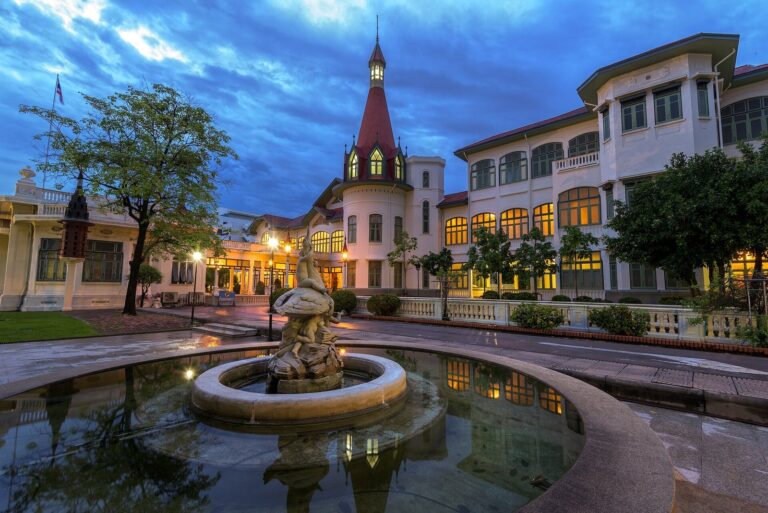
The complex contains twenty buildings of different kinds, including palaces, mansions, museums, and private residences, with thirteen royal residences. Their designs bring together Thai, Italian Renaissance, Western, and other influences. The named buildings include Suan Si Rueadu, Suan Nok Mai, and Suan Bua Royal Villas; Suan Bua Plew Presentation Hall; residences associated with Princess Bussaban Bua-Phan, Princess Arun-Wadi, Princess Puang Soi Sa-ang, Princess Orathai Thep Kanya, and Krom Luang Worased Thasuda; Tamnak Suan Farang Kangsai, Tamnak Suan Phudtan, Tamnak Hor, Parusakawan Palace, Suan Kularb Mansion, and a hall for royal regalia.
Royal residences and halls
Vimanmek Mansion
Originally built on Koh Sri Chang in 1868, Vimanmek Mansion was moved to Dusit in 1900. Made entirely of teak and assembled without metal nails, it has 31 rooms and is described as the world’s largest wooden building. Its Western-influenced design and early twentieth-century interiors include royal personal objects, silverware, ceramics, glassware, and ivory. Chulalongkorn lived there from 1901 to 1906; it later housed Queen Indharasaksaji before falling out of use. Queen Sirikit restored it as a museum in 1982 in Chulalongkorn’s memory.
Ananta Samakhom Throne Hall
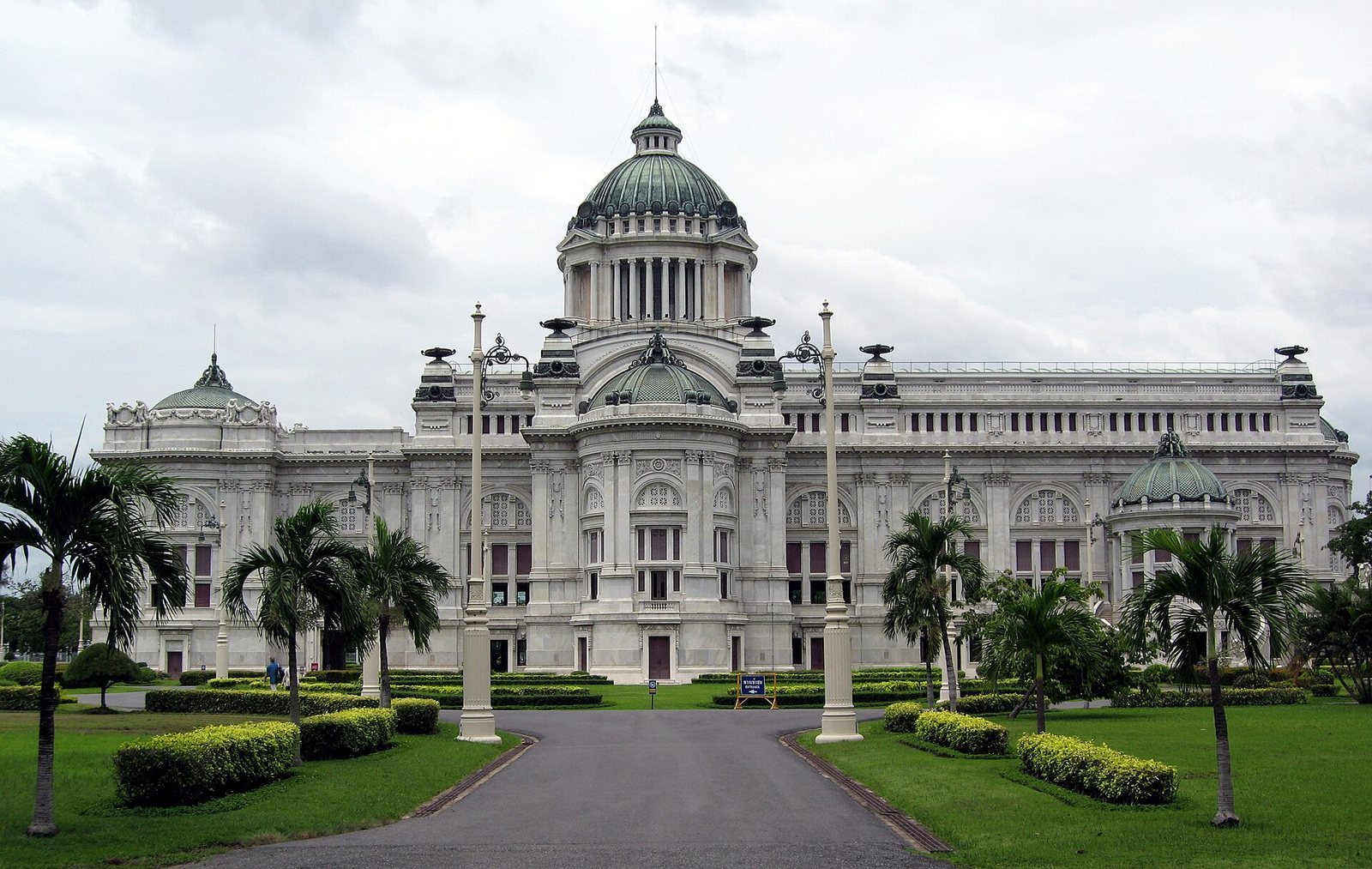
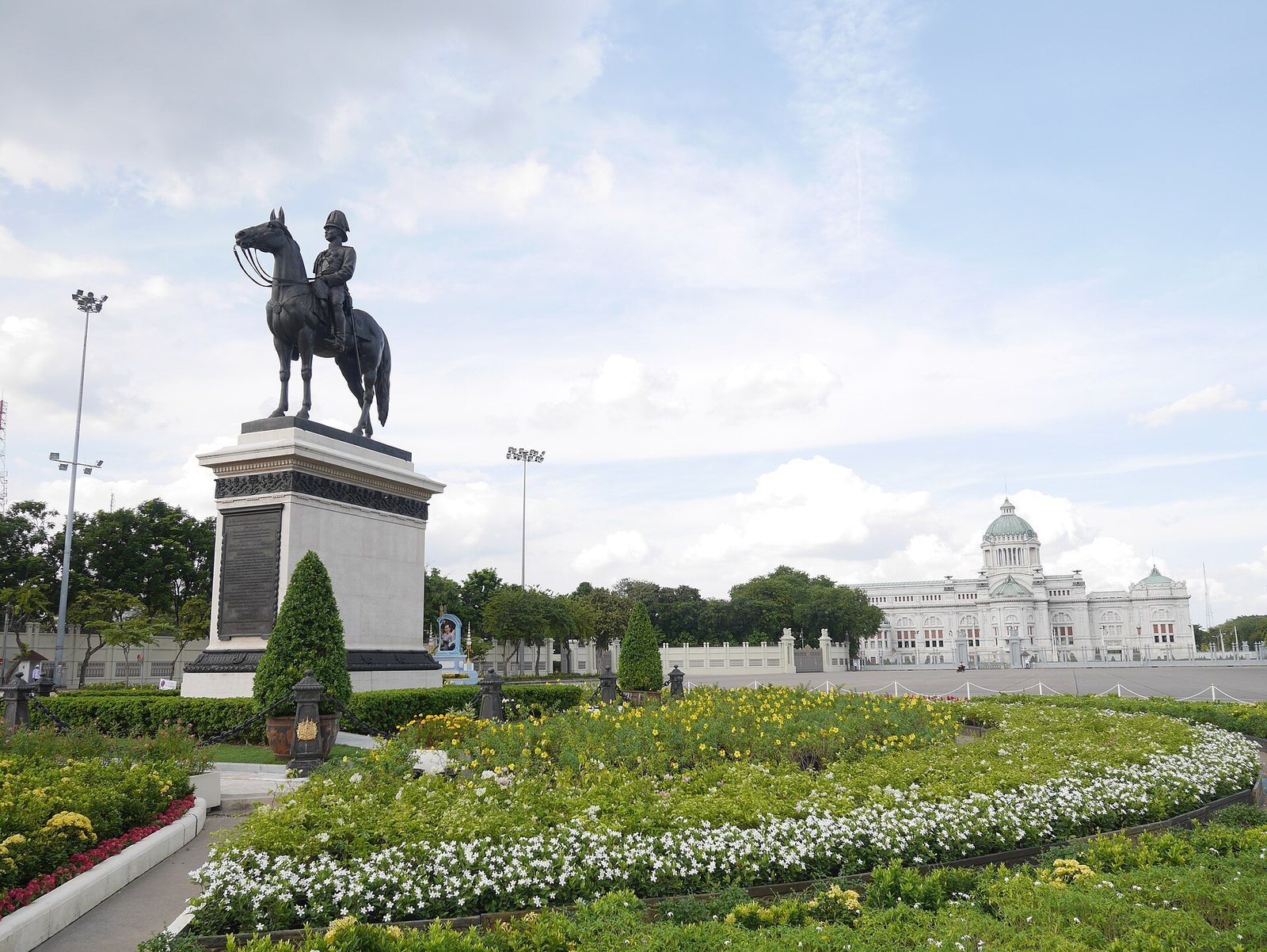
Built between 1906 and 1915 in the Italian Renaissance style, the two-storey hall is made of white marble and crowned by a large dome. It is now reserved for important royal ceremonies.
Abhisek Dusit Throne Hall
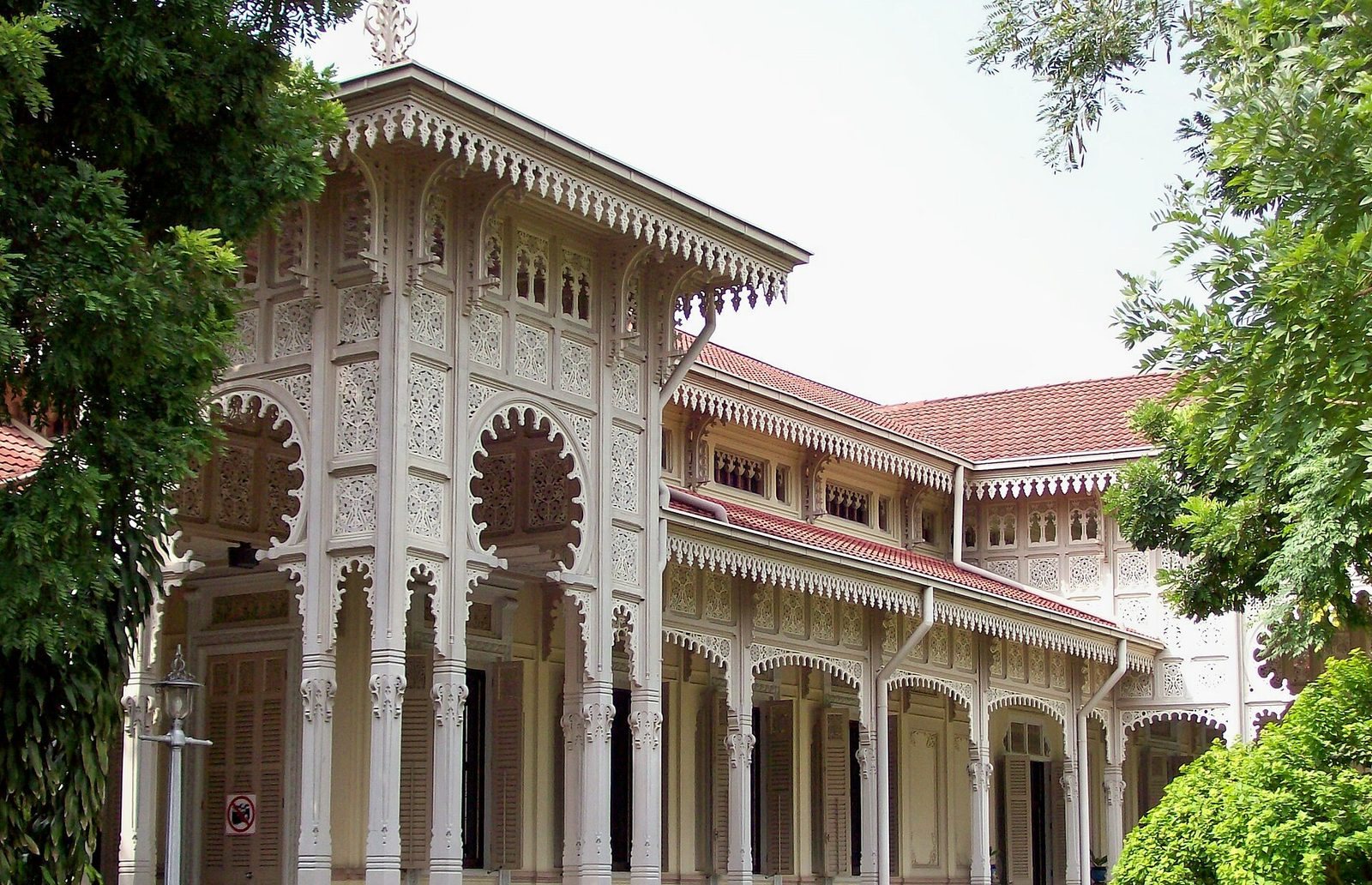
Built in 1903–1904, this hall stands across the Rong Maihom Canal from Vimanmek Mansion. Its design combines Victorian influences with Arab-style porticos. First used as the complex’s throne hall, it also served as the principal dining room and hosted an annual ball for royalty and civil servants. Queen Sirikit restored it for museum use, and it opened in 1993. It now houses a Thai handicrafts museum, including work made by members of SUPPORT, a foundation that supports vocational and craft work.
Amphorn Sathan Residential Hall
Dated to 1906, Amphorn Sathan is the palace’s main residential building and the residence of King Vajiralongkorn.
Chitralada Royal Villa
Built in 1913, Chitralada has grounds covering four square kilometres, much of them devoted to agriculture. Chitralada School, founded in 1957, is also within the grounds.
Tamnak Ho
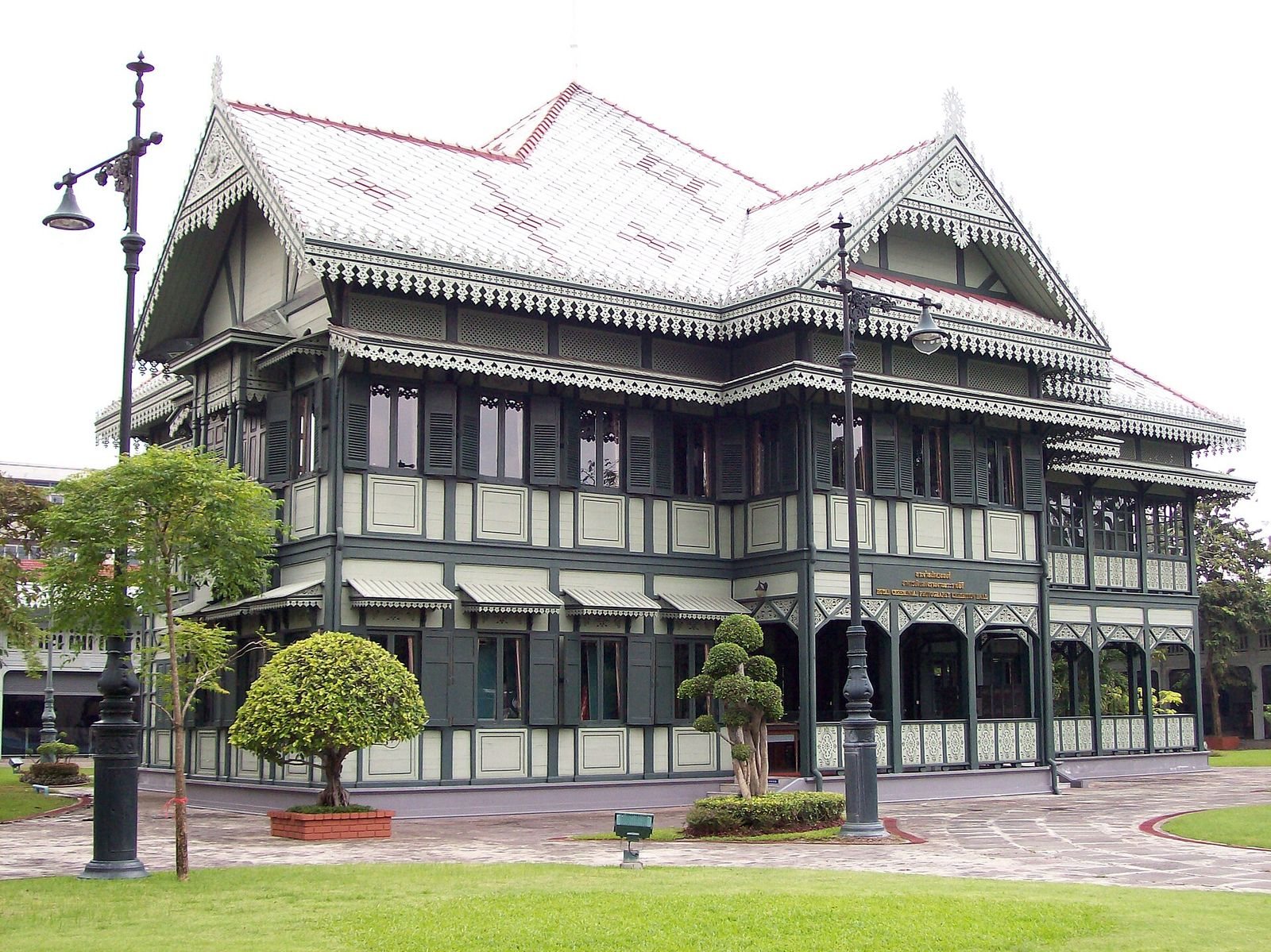
Also called the Newlyweds’ Mansion, Tamnak Ho was part of Bang Khun Phrom Palace, where Prince Paribatra Sukhumbhand’s wedding took place in 1903. The residence was dismantled and reassembled at Dusit in 1998. It contains personal belongings of Queen Rambhai Barni and ceramics from the Sukhothai period, named for an early Thai kingdom.
Suan Hong Residential Hall
Also known as the Swan Garden, Suan Hong was a residence of Savang Vadhana. Its photographic exhibition includes images of royal barge processions and other official celebrations.
Museums and collections
Royal Elephant Museum
Two former white-elephant stables now form the Royal Elephant Museum. Its displays cover the animals’ place in Thai history and include related objects and photographs. In Thai royal tradition, white elephants are auspicious animals associated with kingship, and they were presented to the royal family.
Other collections
The Royal Carriage Museum displays early twentieth-century carriages used by Chulalongkorn. Other collections include an Antique Clock Museum, a Museum of Clothing and Silk, and a Ban Chiang Pottery Museum. Ban Chiang is a prehistoric archaeological site in northeastern Thailand known for its pottery.