Chitralada Royal Villa: A Royal Residence and Agricultural Estate
Site at a Glance
- Rating
- 4.4
- Popularity
- Medium
- Country
- Thailand
- Primary era
- Modern
- External website
- Open
- Eras represented
- Modern
- Civilizations
- Unclassified
- Site type
- Domestic
- Remains
- Palace
On this page8 sections
History
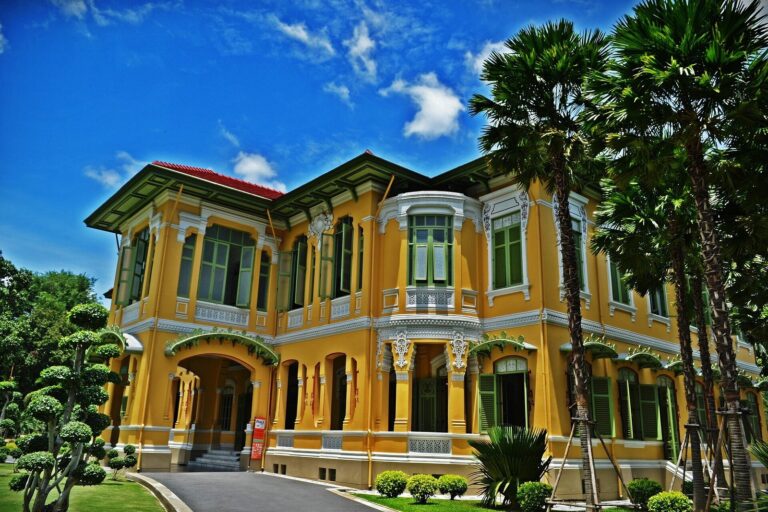
Chitralada Royal Villa, known as Chitralada Palace, is a royal residence in Bangkok, Thailand. Construction began in 1913 under King Vajiravudh (Rama VI), and the palace and its garden were inaugurated that year. It later became the permanent home of King Bhumibol Adulyadej (Rama IX), the first monarch of the Chakri dynasty, Thailand’s royal house, to live there.
From pavilion to palace
The area was once called Na Sompoi, or “Sompoi Field.” King Vajiravudh wrote literary works in a pavilion there and named it Chitralada-Rahothan Palace. The new palace stood near Dusit Palace, commissioned by King Chulalongkorn (Rama V) as a royal residence around the turn of the twentieth century. In 1925, King Prajadhipok (Rama VII) incorporated Chitralada into the Dusit Palace complex.
Before Bhumibol made Chitralada his home, Chakri monarchs lived mainly at nearby Amporn Sathan Villa. The Grand Palace remained the official royal residence; King Rama I founded it in 1782.
From Ananda Mahidol to Bhumibol
After Rama VII abdicated in 1935, his ten-year-old nephew Ananda Mahidol (Rama VIII) became king. Ananda returned to Bangkok with the royal family for his investiture ceremony and stayed temporarily at Chitralada before going back to Switzerland to continue his studies. During a later visit in December 1945, the royal family stayed at Bormmapiman Palace within the Grand Palace. Ananda died there on 9 June 1946, in circumstances that remain unclear.
Bhumibol, aged nineteen, succeeded his brother in 1946 and returned to Switzerland that August to continue his studies. He came back to Thailand in 1950, lived at Amporn Sathan, married Sirikit, and was crowned king. After another stay in Switzerland for health reasons, he returned permanently to Thailand in December 1951 and moved to Chitralada. He ordered restoration work and lived at Amporn Sathan while it was underway. On 31 October 1957, the royal family moved permanently to Chitralada. Bhumibol lived there until his death on 13 October 2016, though his later years included frequent, lengthy hospital stays. King Vajiralongkorn (Rama X) chose Amporn Sathan as his permanent residence. Chitralada is also a residence of Queen Mother Sirikit, Bhumibol’s queen consort.
Agricultural work and education
Bhumibol established agricultural and animal-husbandry experiments at Chitralada to support the modernization of Thai agriculture. Fish-breeding experiments began in 1952, with aims that included developing fish suited to Thai waters and improving diets. Rice cultivation and crop-rotation experiments followed in 1961. Other work included raising livestock and producing biogas.
The Chitralada School was founded in 1958 to educate royal children. Admission later expanded to include children of palace staff and members of the public, although the school remained selective.
Remains
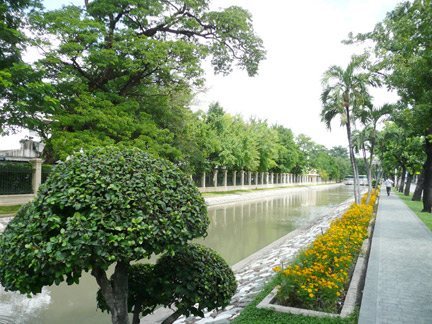
The palace occupies Suan Chitralada, a garden of approximately four square kilometres enclosed by an iron fence and a moat. The grounds border the Dusit Zoo, Ramathibodi Hospital, the Ministry of Foreign Affairs, Vajiravudh College, and the Nang Loeng racecourse.
Residence and palace buildings
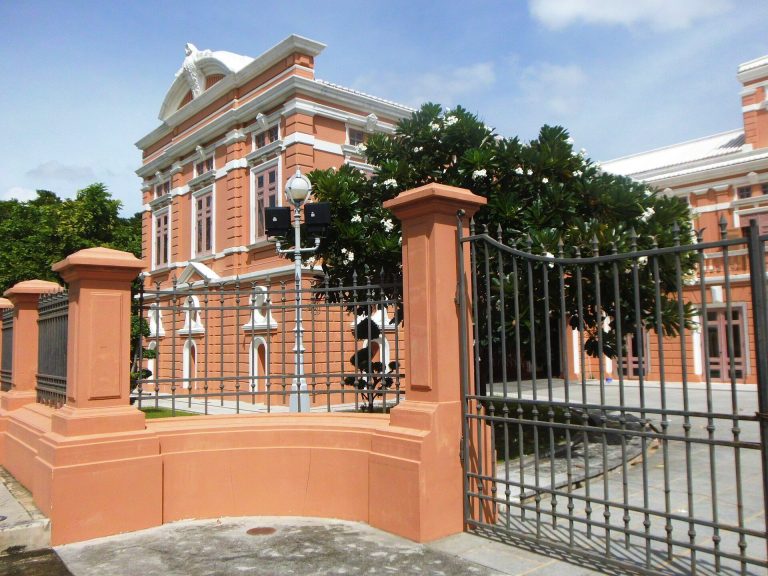
The principal residence is a two-storey building. A separate palace building houses the Chitralada School, which teaches pupils from kindergarten through grade 12. The Dusitalai Pavilion is used by members of the royal family for audiences.
Agricultural and research grounds
The grounds include rice fields, animal farms, windmills, and a rice mill, as well as fish and dairy farms. The dairy farm was established in 1962. Other facilities include candle production and a glasshouse laboratory for cultivating threatened plant species native to Thailand. A forest of tree species found in Thailand was planted in 1960 for research into environmental conservation.
Royal railway station
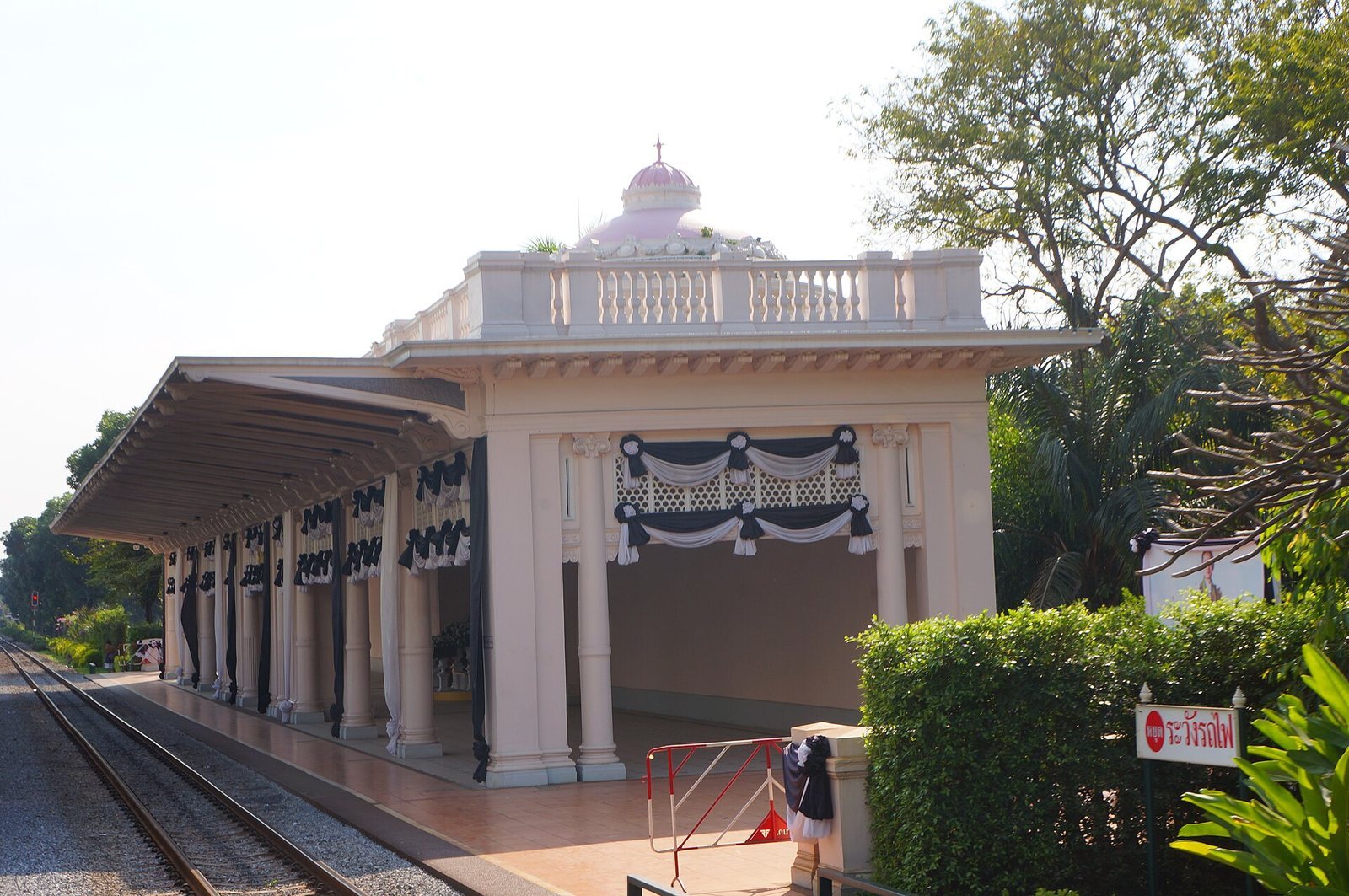
A royal railway station stands outside the eastern side of the garden, opposite the palace. Its building is on the west side of the track, along the State Railway of Thailand’s northeastern line running north from Hua Lamphong. The station is reserved for the king’s use and is rarely used by royalty, while scheduled trains pass through.