Emina Ilhamy Palace: A Royal Residence and Hotel in Helwan
Site at a Glance
- Popularity
- Medium
- Country
- Egypt
- Primary era
- Modern
- Eras represented
- Modern
- Civilizations
- Ottoman
- Site type
- Domestic
- Remains
- Palace
On this page13 sections
History
Emina Ilhamy Palace is a royal residence in Helwan, Egypt, built in 1886 for Princess Amina Ilhamy, wife of Khedive Tewfik. Khedive was the title used by Egypt’s rulers, and Tewfik held it from 1879 to 1892. Amina was an Egyptian royal consort and philanthropist, known as the Mother of Benefactors. The palace later served as a seat of government and became a hotel. The land cost 6,000 gold pounds, while the buildings cost 150 gold pounds.
Royal residence and seat of government
After a fire damaged Abdin Palace in 1891, Tewfik moved to Helwan and used his wife’s palace as both his residence and the seat of Egypt’s government while Abdin was repaired. The Council of Ministers met there. Tewfik died at the palace in January 1892. His body was carried by train to Abdin Palace, then buried at the Afandina mausoleum on the Autostrade road.
Tewfik visited Helwan twice a month, and on Fridays he sent the royal music band to perform in gardens and outside the hotels. His development of the town included a hotel beside the palace, another hotel for people seeking treatment, and a casino for local residents.
Hotel conversion
The palace stood unused after Tewfik’s death until Dr. Bentley, a physician associated with the Mena House Hotel, purchased it and converted it into a hotel. Opened in the late nineteenth century, the establishment was known as Tawfiq Palace Hotel, as well as Khedive Tewfik Palace and Amina Hanem Palace. In 1911, ownership passed to the Life Company, founded by Russian nobleman Johan von Knob. The hotel then shared management with the Life Hotel and the Zander Institute, a facility for exercise-based treatment.
Renovations allowed the hotel to operate throughout the year rather than only in winter. It gained central heating and a bus for guests, and became one of Helwan’s four major hotels, alongside the Baths Hotel, Grand Hotel, and Life Hotel.
Later institutional uses
The building later housed Helwan’s first boys’ secondary school, until Salah Salem Secondary School was built. It also served as the headquarters of Helwan district and later as a cultural center. It is now identified as a girls’ commercial secondary school.
A small building on Abdullah Street housed a school associated with Reverend Mas al-Ishaqi during the 1960s. After the building was demolished, the school moved to Sharif Street.
Remains
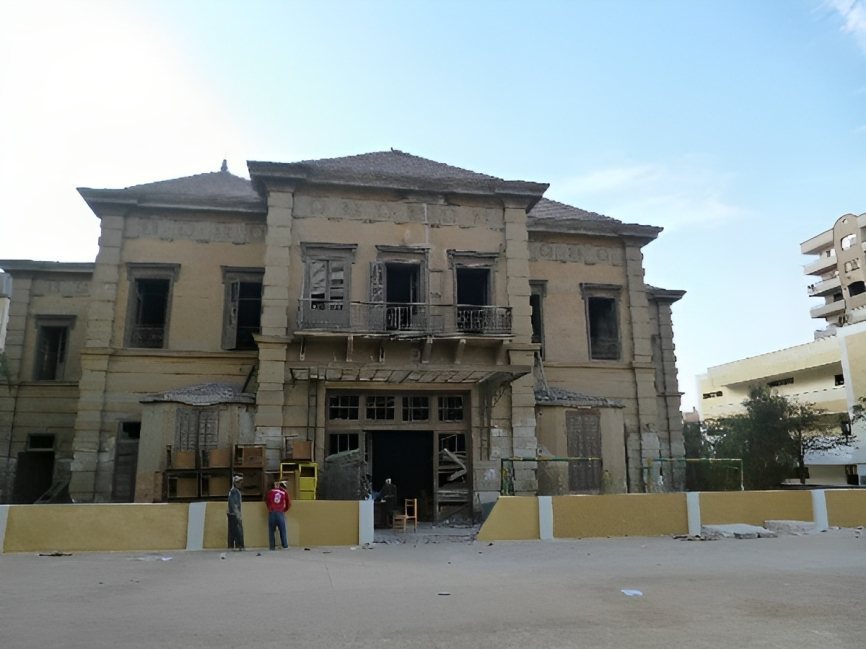
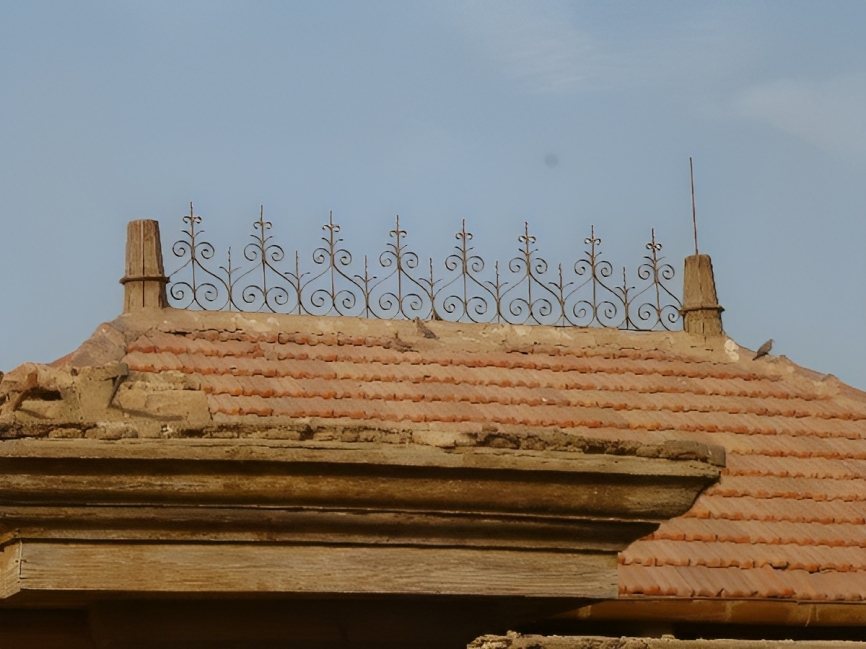
The palace grounds covered 9,838 square metres, with buildings occupying 1,448 square metres and the rest laid out as garden. In northern Helwan, the site was bounded by Azzam Mosque Street to the north, Ismail Kamel Street to the south, Ragheb Pasha Street to the east, and Abdullah Pasha Street to the west. A stone perimeter wall topped with wrought iron enclosed the grounds and had three entrances. The main entrance faced east onto Ragheb Pasha Street. Within the enclosure stood two principal palace buildings, with the surrounding grounds also containing service and transport structures.
Principal palace buildings
Women’s residential quarters
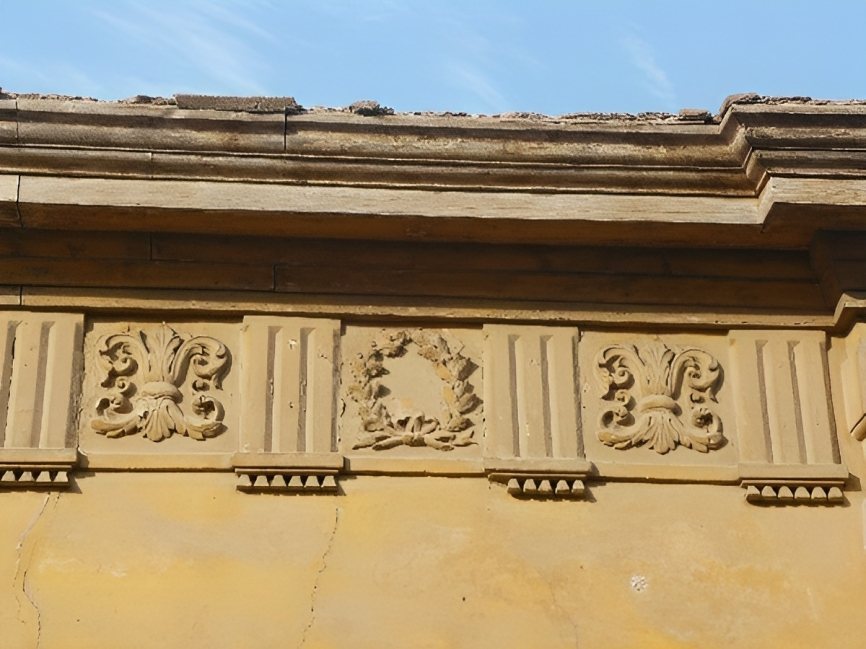
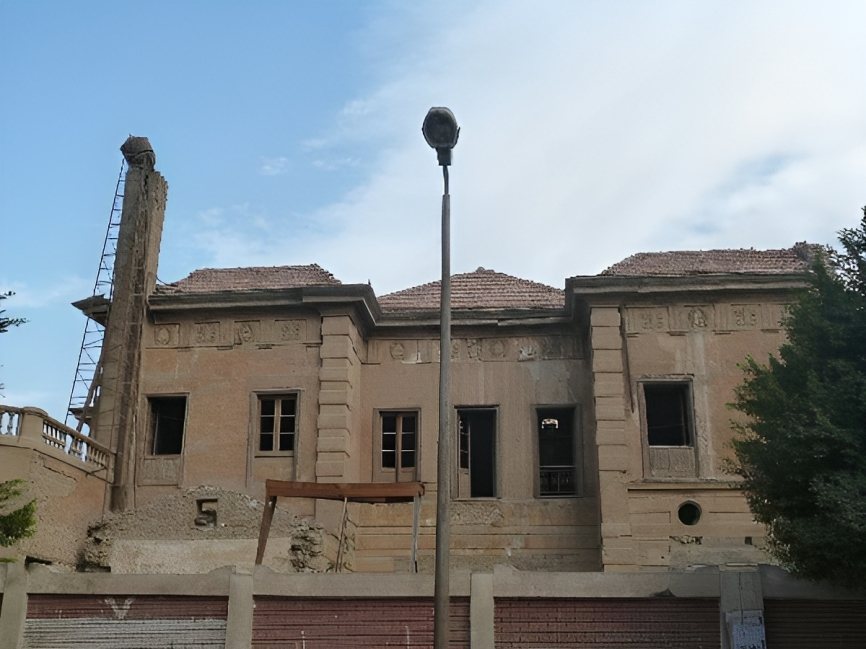
The private residential building had two storeys above a basement and a gabled roof. Its classical design drew on European Renaissance architecture. Parts of the building survive.
Men’s reception quarters
Used to receive male guests, this building stood in the southeast corner of the grounds. It had one storey above ground and a basement. Parts of it also survive.
Service and transport structures
Service buildings
South of the palace, staff accommodation, a kitchen, and a carriage house or stable formed a service complex enclosed by a wall of rubble stone. The complex has disappeared, and its former site is occupied by a mechanical secondary school.
Horse and carriage building
A building for the khedival horses and carriages stood beside Ismail Kamel Street and connected to the palace by a tunnel. It later housed Helwan Industrial Secondary School for Boys.
Private railway station
A private station served the palace, with a railway connection to Helwan station and another line to the palace of Tewfik’s grandmother. These links enabled travel between the residences.
Hotel additions
The hotel conversion added a three-storey building in the southwest corner of the courtyard and a tennis court. The added building has since disappeared.