Reichenbach Castle: A Medieval Fort and Baroque Residence in Switzerland
Site at a Glance
- Popularity
- Medium
- Country
- Switzerland
- Primary era
- Early Modern
- Eras represented
- Classical, Medieval, Early Modern
- Civilizations
- Holy Roman Empire, Roman, Swiss
- Site type
- Domestic
- Remains
- Castle
On this page16 sections
History
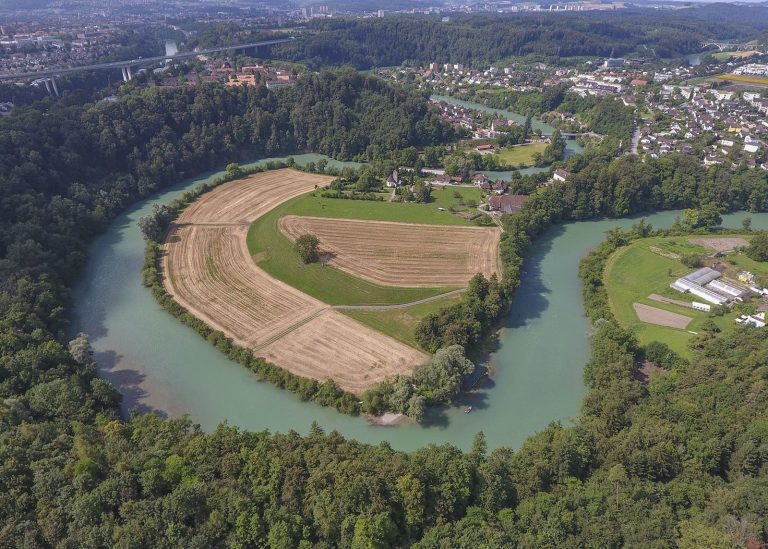
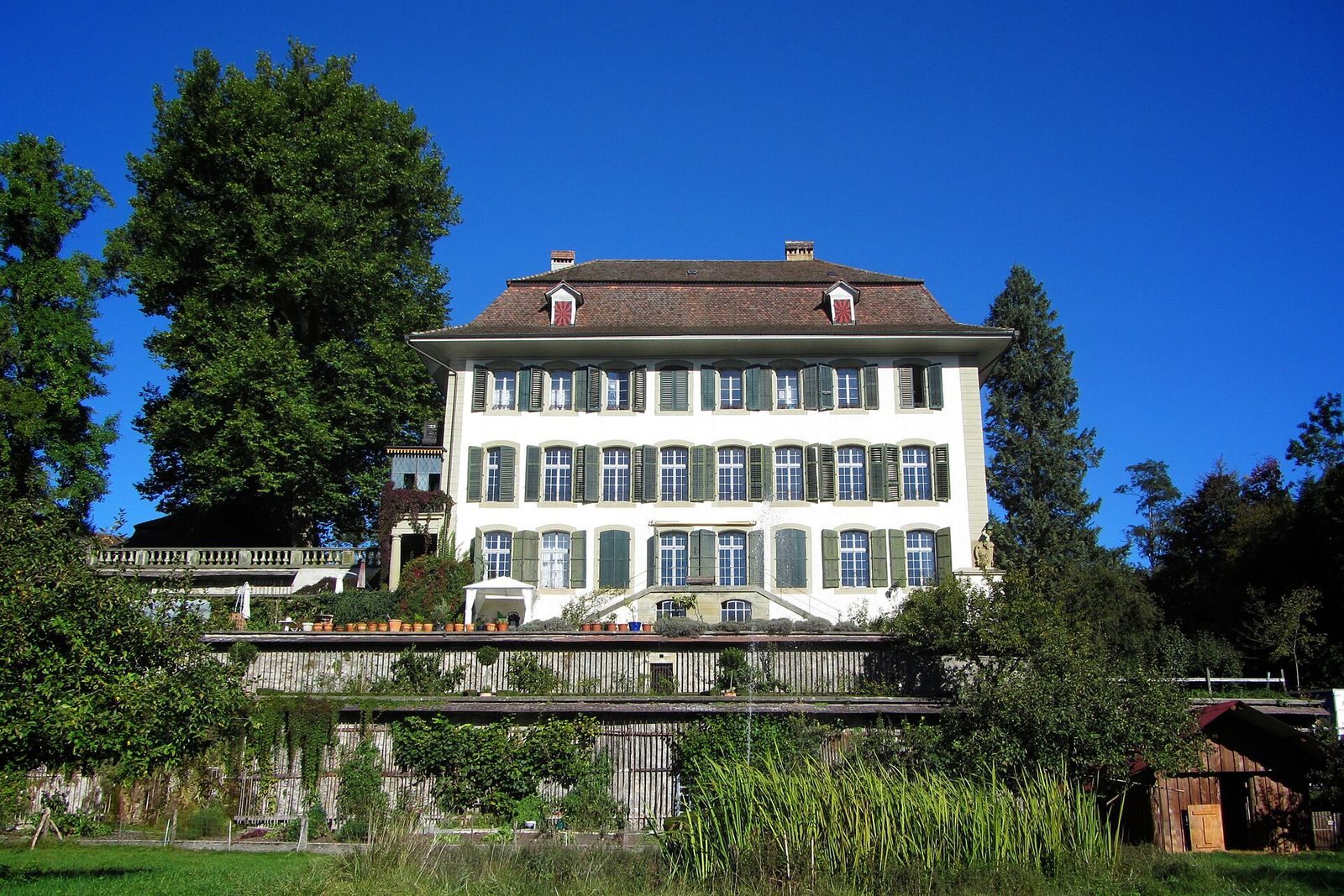
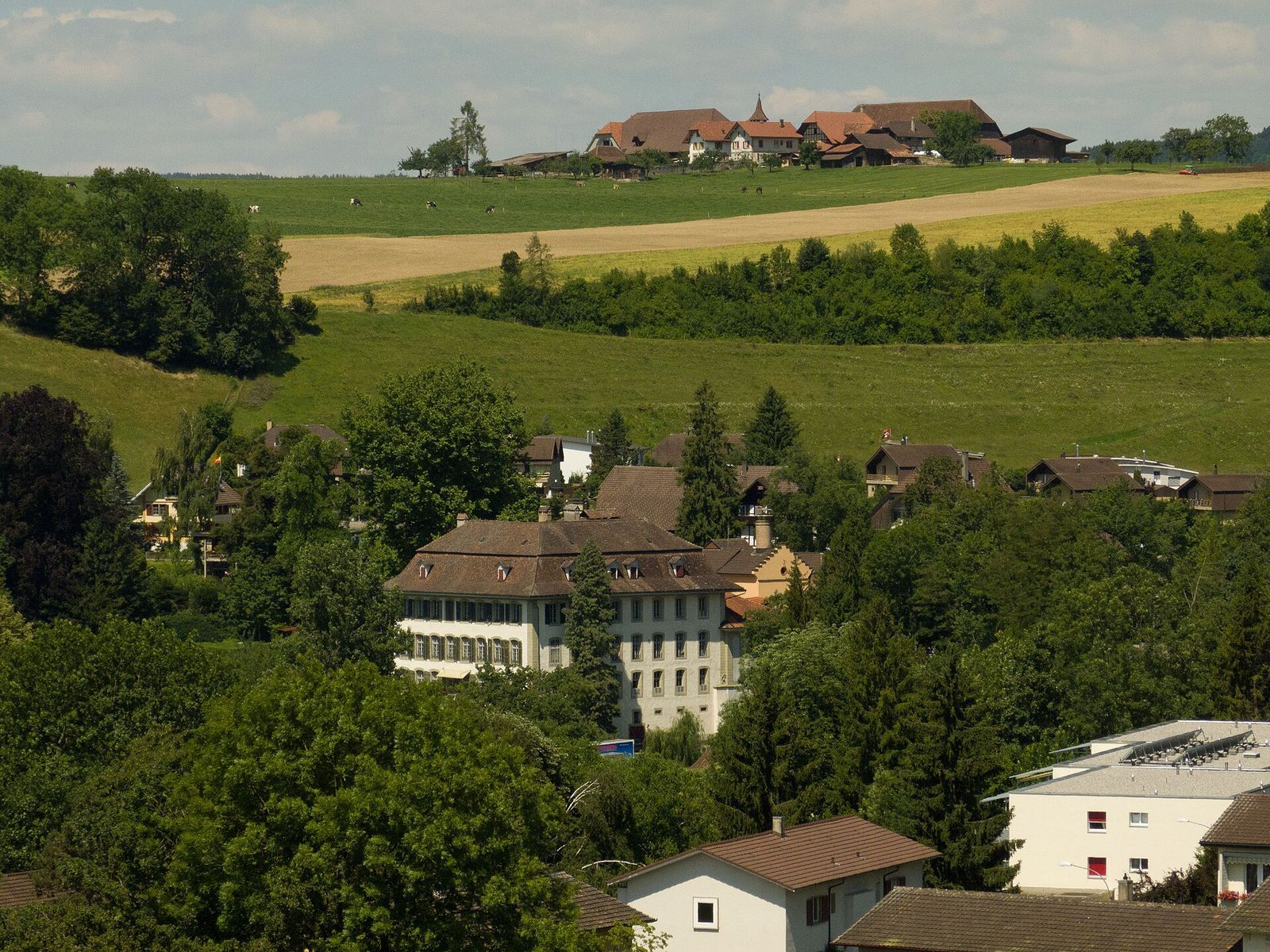
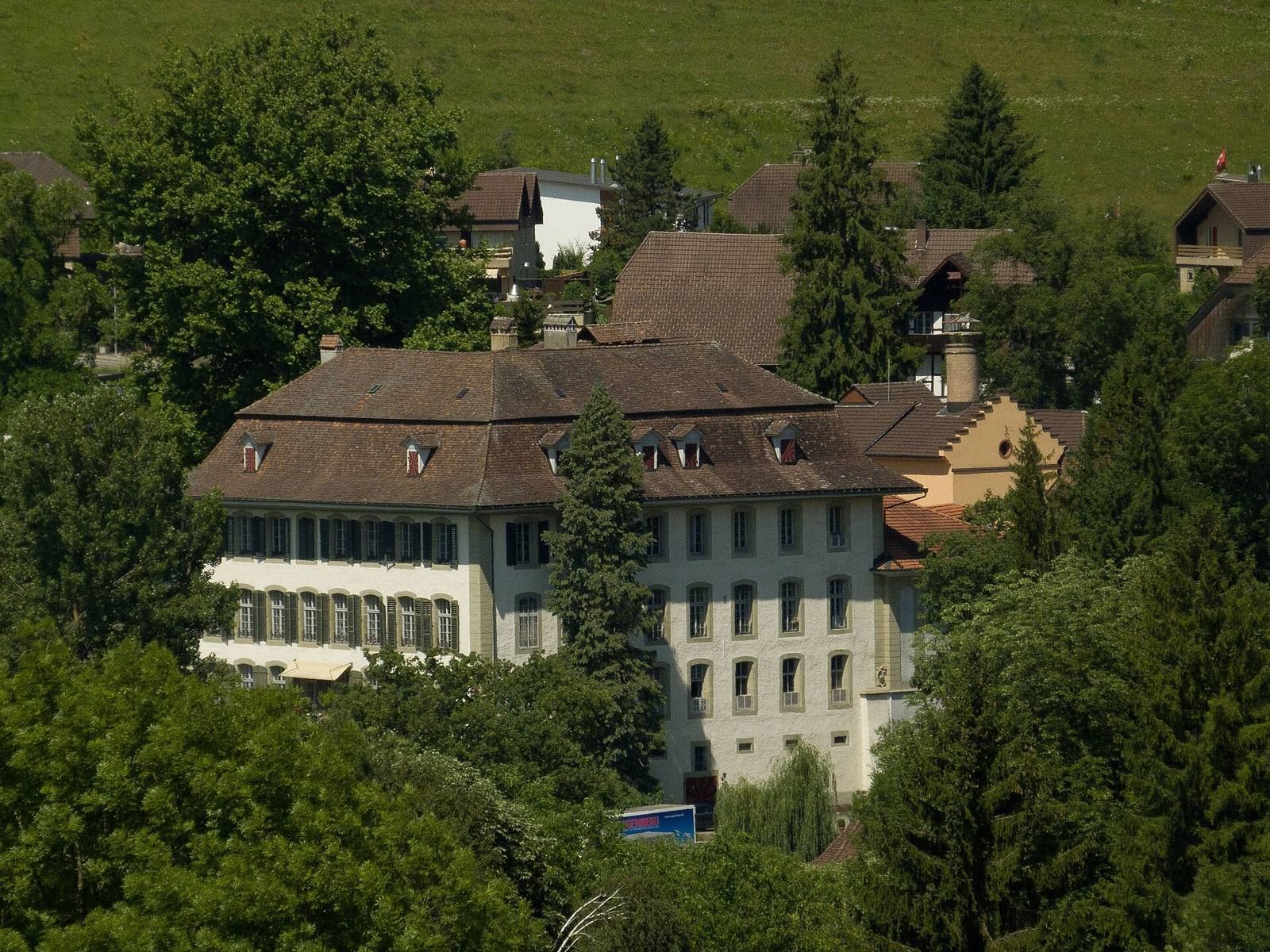
Reichenbach Castle is a medieval fort beside the Aar in Zollikofen, Switzerland, about five kilometres north of Bern. It was probably built on the site of an earlier Roman river fort. In the 1680s, the castle was enlarged and remodeled as a Baroque residence, an ornate European style that flourished in the seventeenth and eighteenth centuries.
Early settlement and Roman occupation
People lived in the Zollikofen area and on the nearby Enge peninsula by around 1300 BC, during the Bronze Age, the prehistoric period before iron became widespread. A large Celtic settlement developed on the peninsula, which the Aar helped defend. After the Roman conquest, Roman settlement either replaced or expanded the Celtic one.
The castle site was probably first occupied by a Roman river fort, perhaps linked to the Roman fort on the Enge peninsula. The nature of any connection between them is uncertain. Roman soldiers had left by the middle of the fifth century, and little of the fortress remained. It is unclear whether the Alamanni, a confederation of Germanic peoples, maintained it or let it decay. Later inhabitants built mainly in wood. The name Zollikofen probably comes from the Alemannic form Cholinchove.
Medieval castle and lordship
The castle is first mentioned in the early fourteenth century, when Rudolf von Erlach, a Bernese nobleman, bought it and governed the surrounding area from there. He was celebrated as the victor of the Battle of Laupen, although his personal leadership of the Bernese forces remains disputed. The von Erlach family held the castle until 1530, when the lordship passed to the Tscharner family.
After several changes of ownership, the lordship passed to Beat Fischer in 1683. Its territory, corresponding to today’s municipality of Zollikofen, included forests, waters, boundaries, and inhabited places. The lordship, a territory governed by a lord, continued until 1830.
Fischer residence and postal service
Before acquiring the castle, Fischer had founded Bern’s first postal service in 1675 and secured a monopoly over it. Known as the Fischerpost, the service operated until 1832. Leopold I, ruler of the Holy Roman Empire, a central European political entity, knighted Fischer for establishing postal services between Germany and Spain.
After Fischer acquired Reichenbach Castle, it was extensively enlarged and remodeled during the 1680s. He later became known as Beat Fischer von Reichenbach. The castle estate passed to Bavarian master brewer Joseph Hofweber in 1890. In 1892, Hofweber acquired the holdings of a Bavarian brewery in Interlaken; that business developed into today’s Rugenbräu AG, which remains the castle’s owner.
Later changes and heritage status
The castle façade was renovated in 1983–84. Reichenbach Castle is classified as a Swiss heritage site of national significance.
Remains
The castle stands on slightly elevated ground beside a sharp bend in the Aar. The complex includes the residence and associated service buildings, with grounds extending toward the river. Its architectural features include Baroque interior decoration and additions from the early eighteenth century.
River landscape and Roman remains
Terrain
The Aar has eroded the surrounding sandstone and limestone, carving loops in the terrain and changing course over time. At the end of the Ice Age, around 14,000 years ago, ice up to 350 metres thick covered the area.
Roman road
A Roman paved road led to a bridge across the Aar. Its remains provide evidence of Roman activity in the area.
Gardens and terraces
A painting by the Bernese artist Albrecht Kauw from 1669 shows a small garden and agricultural fields outside the castle walls. After the castle was remodeled in the 1680s, a larger formal garden in the French style extended toward the Aar. Supporting walls held its terraces, and another retaining wall marked the garden’s boundary with the river. By the nineteenth century, the garden had dense ivy, semi-tropical trees, and climbing vines.
Interior decoration
Courtroom
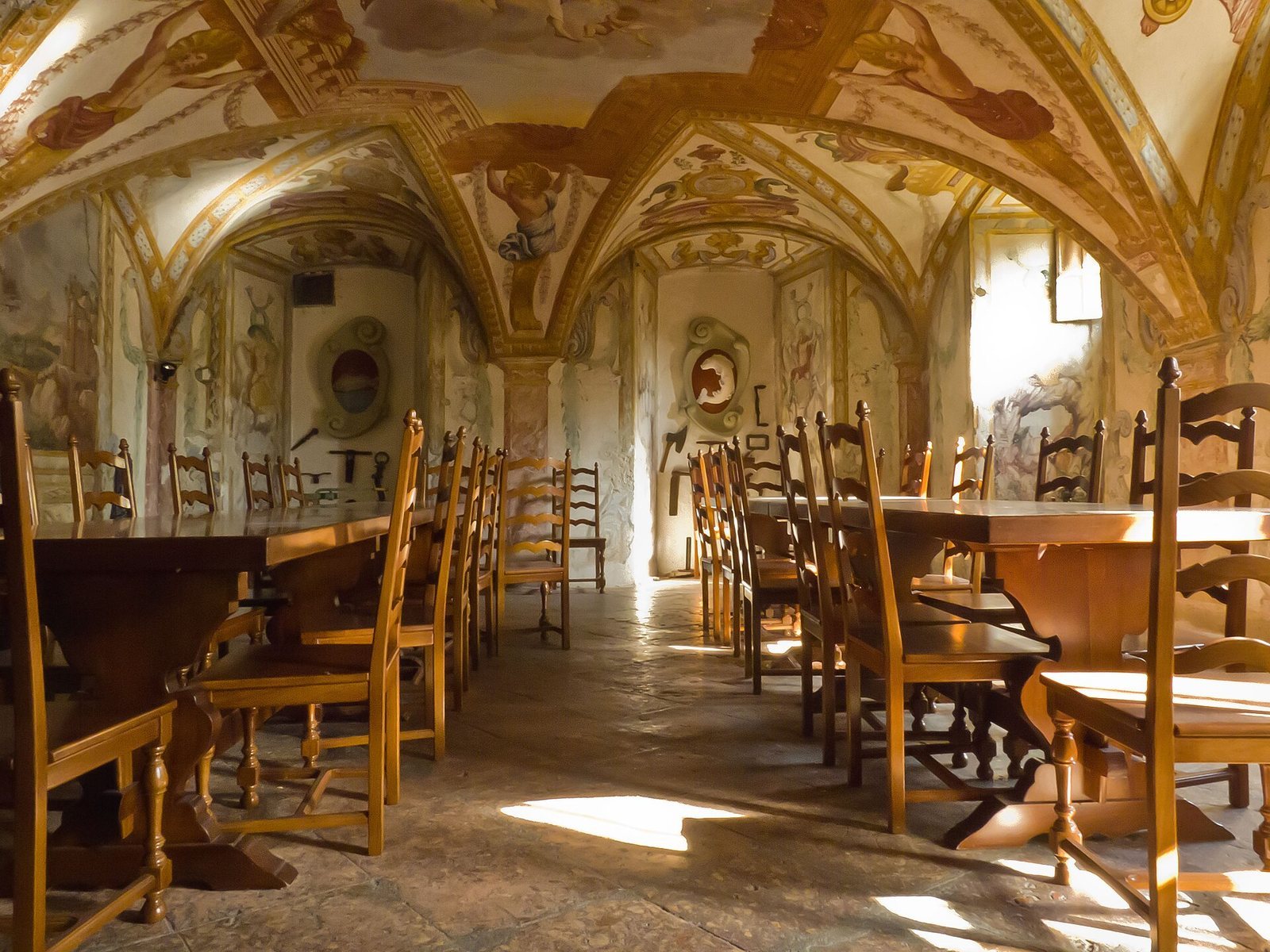
The Baroque courtroom has painted decoration dating to 1688.
Staircase and upper floor
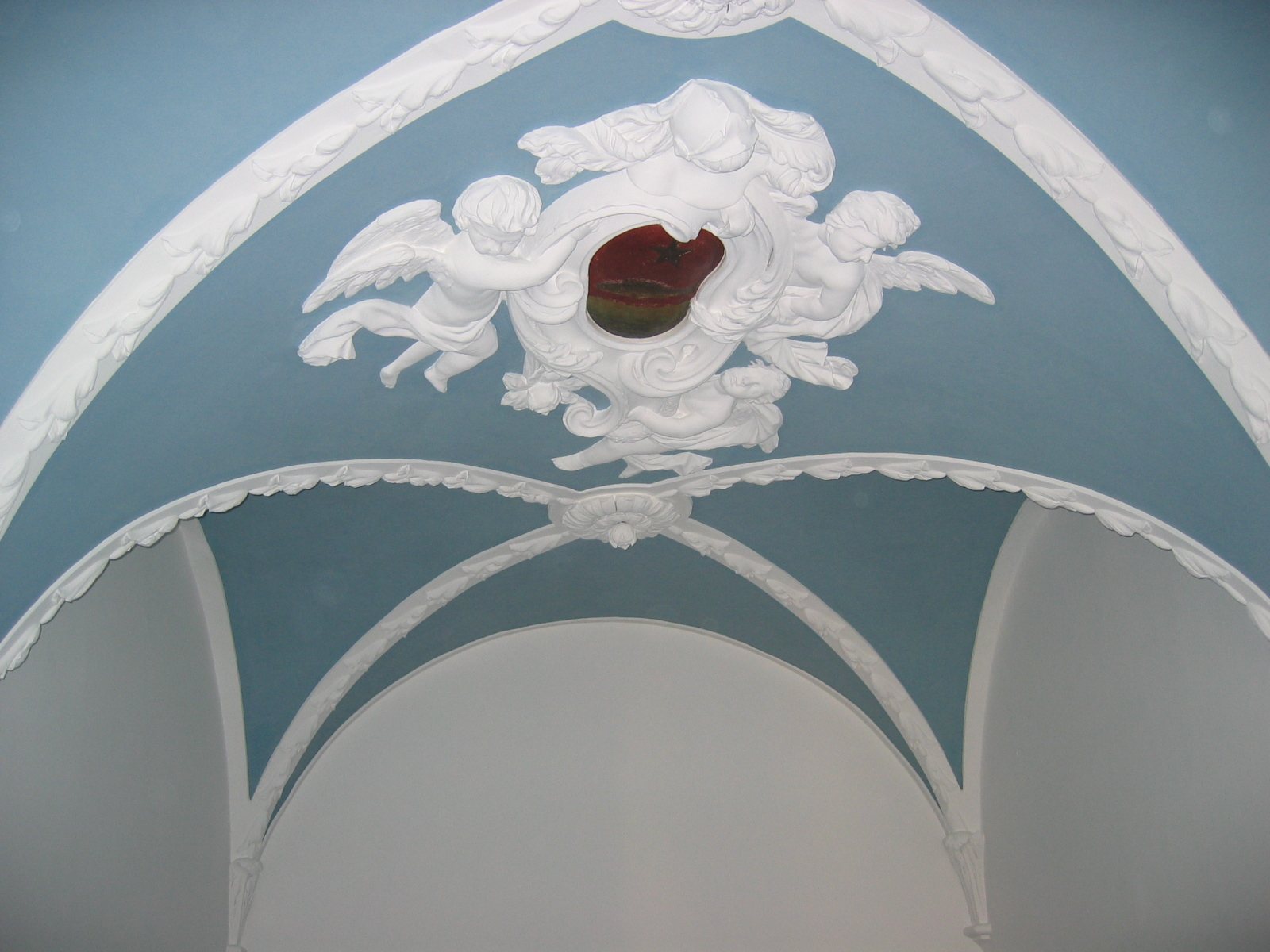
Decorative plasterwork on the staircase and upper floor dates to the castle’s 1719 extension.
Service buildings and river landing
Brewery
The brewery north of the castle was built to serve the mostly Bavarian post coachmen. Its former building now serves as a depot for the Bern region.
Orangery and ferry landing
The former orangery, built around 1719, now houses Restaurant Schloss Reichenbach. The right-bank landing for the Reichenbach–Enge peninsula ferry is also at the orangery. The ferry connects Zollikofen with the Enge peninsula.