Lenbrunnen: Bern’s Medieval Tower Fountain
Site at a Glance
- Popularity
- Low
- Country
- Switzerland
- Primary era
- Medieval
- Eras represented
- Medieval
- Civilizations
- Holy Roman Empire
- Site type
- Infrastructure
- Remains
- Well
On this page8 sections
History
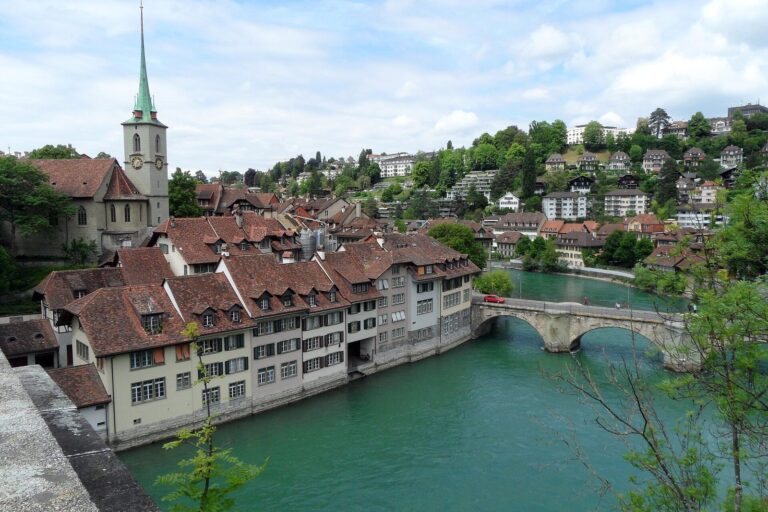
Lenbrunnen is a medieval tower-like fountain in Bern, Switzerland, probably built around or shortly after 1252. Tree-ring dating of reused oak from the tower’s lowest part and original door lintel supports that estimate. It may therefore be regarded as Bern’s oldest surviving building. The fountain served the early Zähringer settlement, Bern’s founding urban area, associated with a medieval ducal dynasty that helped found and develop towns in the region.
The early settlement and its water
The settlement extended as far as Kreuzgasse, and Lenbrunnen supplied its residents from a groundwater spring. After the exceptionally hot summer of 1393, Bernese chronicler Conrad Justinger recorded five spring catchments along the groundwater flow, including Lenbrunnen, as sources of drinking water.
As the city grew, the supply from draw wells proved inadequate. Bern decided to supplement them with public fountains fed by water brought in from outside the city.
Municipal use and rediscovery
Lenbrunnen appears in Bern’s earliest surviving city accounts and remained associated with the municipal building office into the early 17th century. By 1789 at the latest, the well had disappeared as the Rathaus terrace was raised; the spring was captured and channelled.
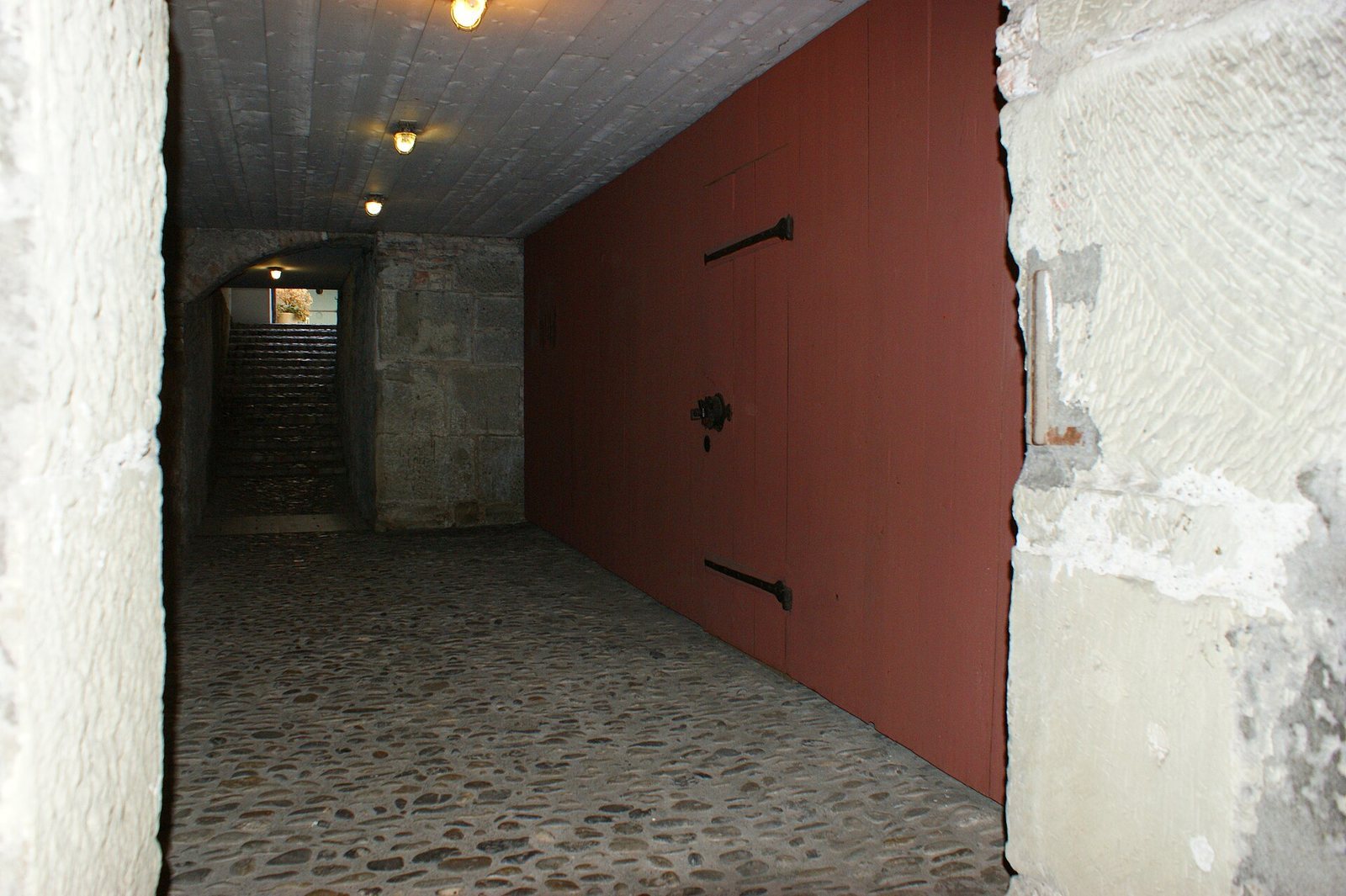
Renovation work at Bern’s State Chancellery led to the fountain’s rediscovery in 1992. After a decision by the Bern cantonal government in 1995, the remains were conserved and made accessible for public viewing.
Remains
The fountain and its surroundings
Water system and form
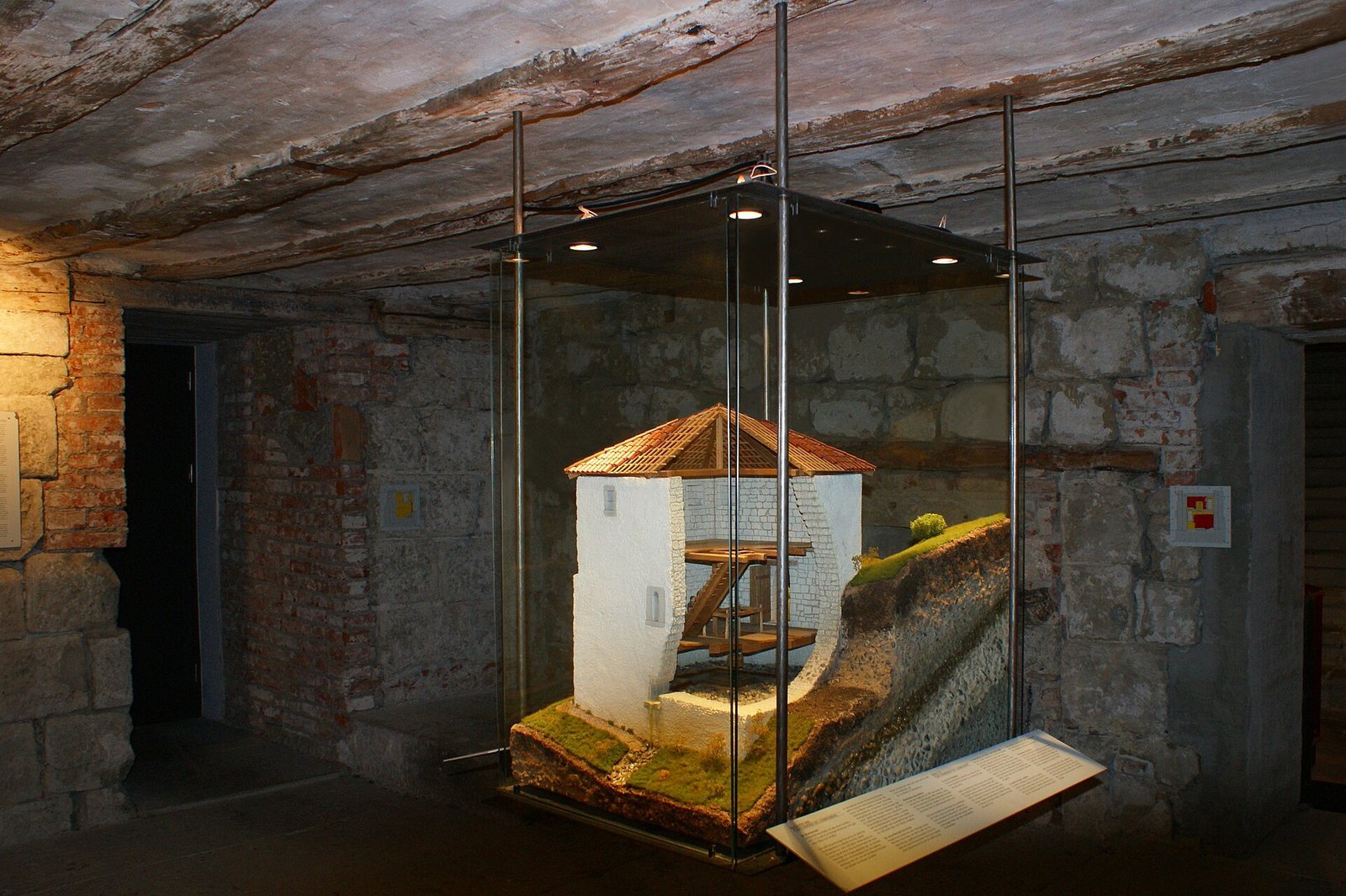
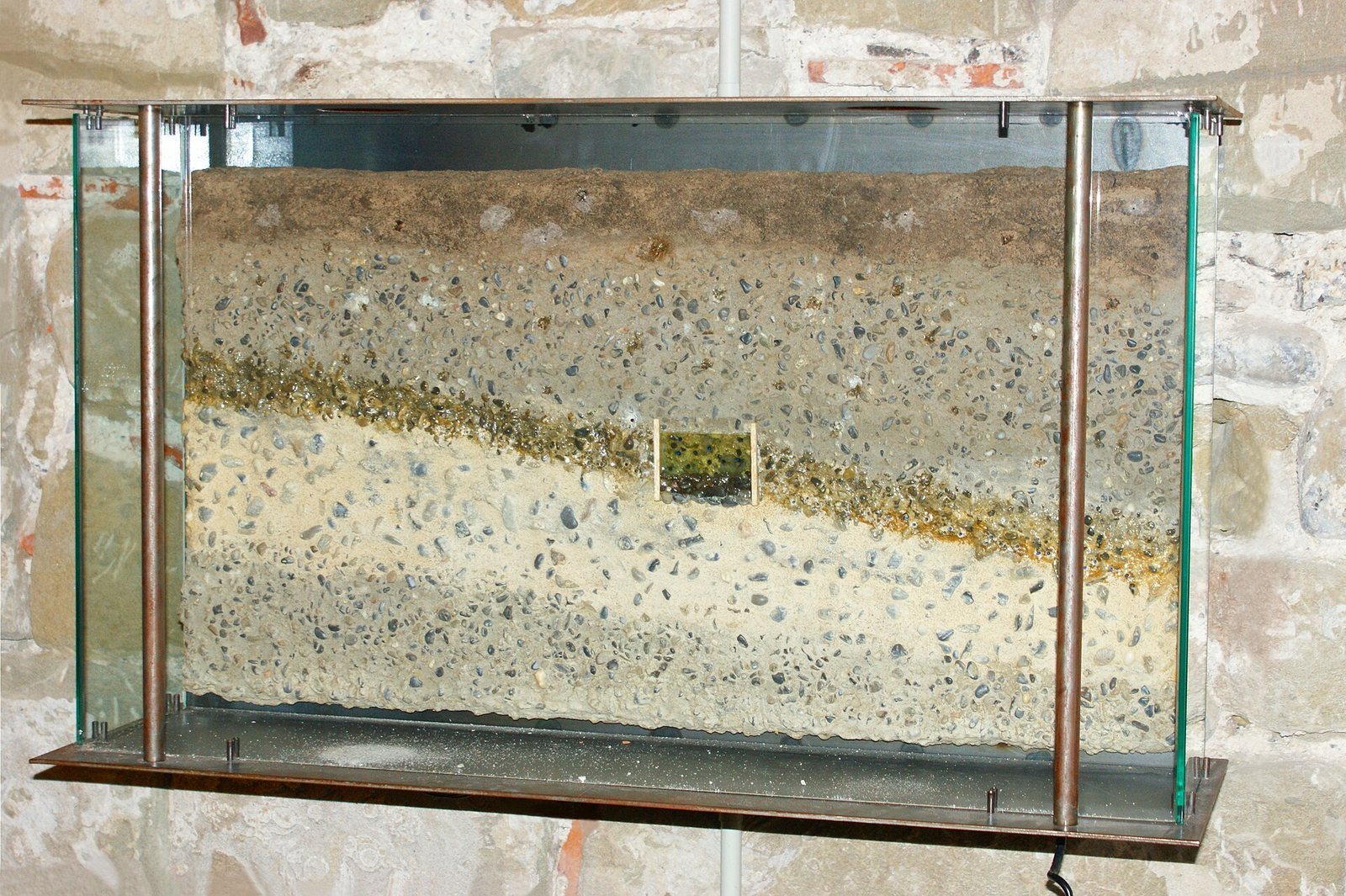
Lenbrunnen was a square draw well enclosed within a stone tower, with an estimated footprint of about 7 by 7 metres and probably three storeys. A substantial gravel bed formed the base. At its centre, a likely wooden permeable shaft collected water filtered through the gravel beneath the foundation. People drew water from the middle level, reached from street level through a round-arched doorway. Overflow drained down the north slope towards the Aare.
Setting and urban context
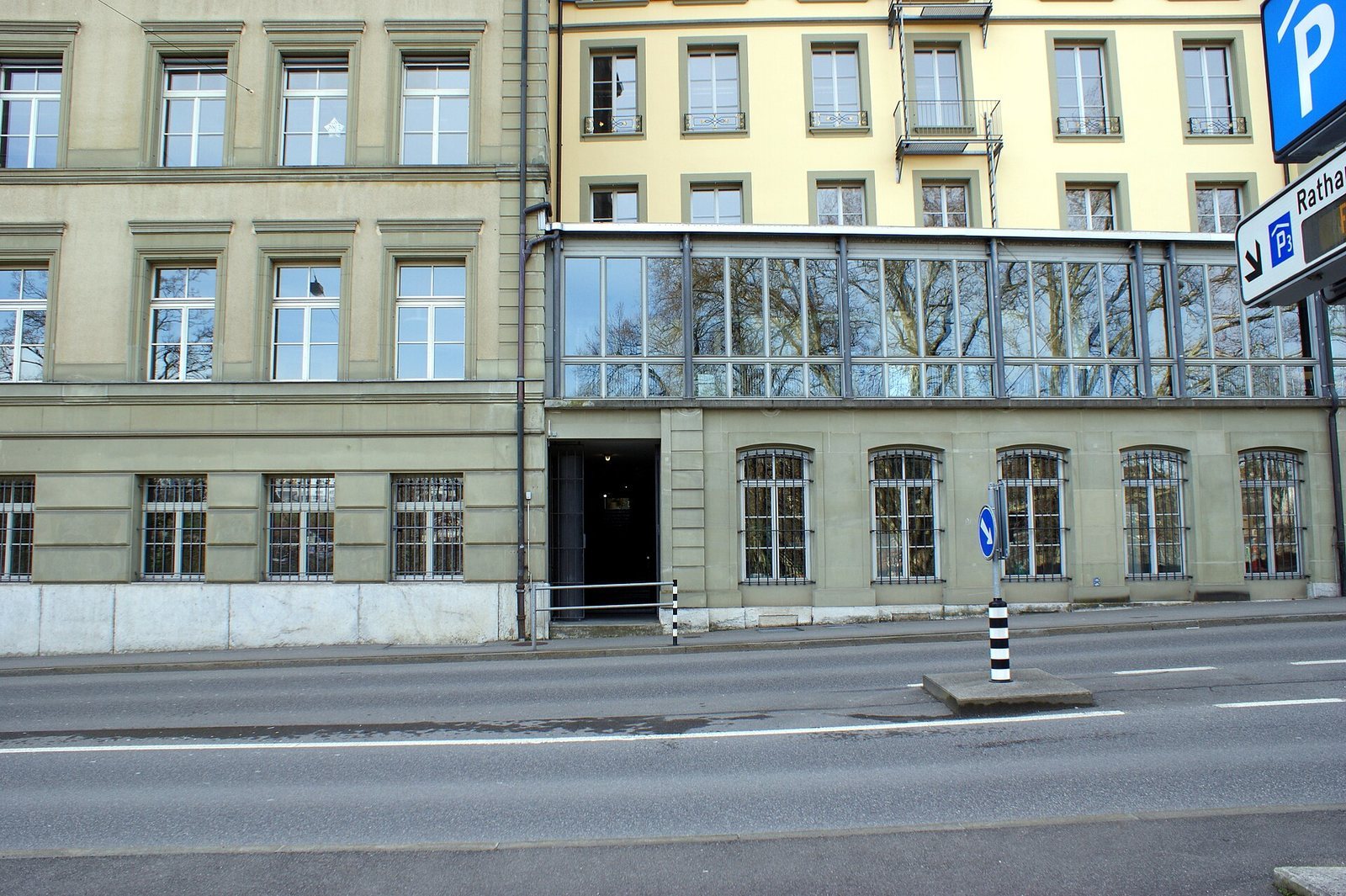
The tower stood more than four metres deep in water-bearing gravel on the north side of Bern’s peninsula. The ground there has a permeable silt layer above gravel deposited by glaciers. The fountain was behind the northern slope edge, at the rear of what is now Postgasse 68, and could be reached by a narrow lane between buildings. The surrounding area was a work yard rather than a continuous row of houses. Pits there provide the earliest evidence of human settlement in Bern, dating to the 13th century. Post-built structures already followed the street line, with walls in positions later occupied by walls. A 1549 city view by Hans Rudolf Manuel, included in Sebastian Münster’s Cosmographia, depicts the well’s location.
Surviving masonry
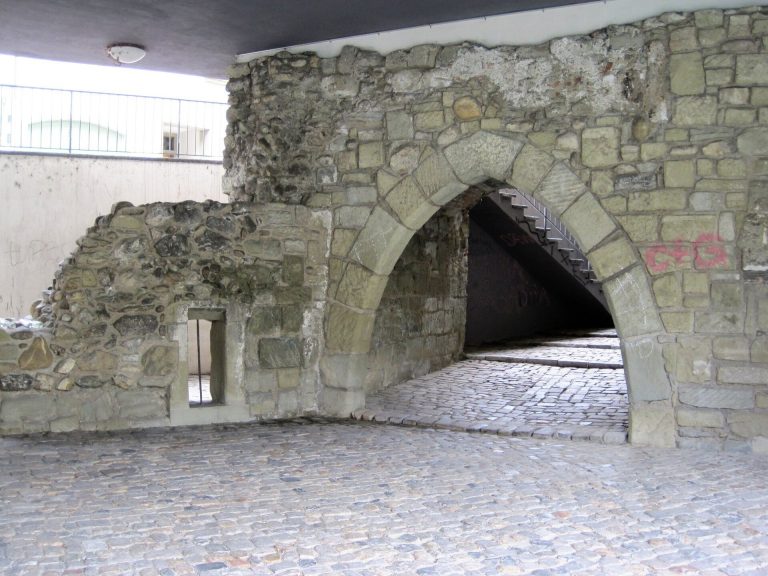
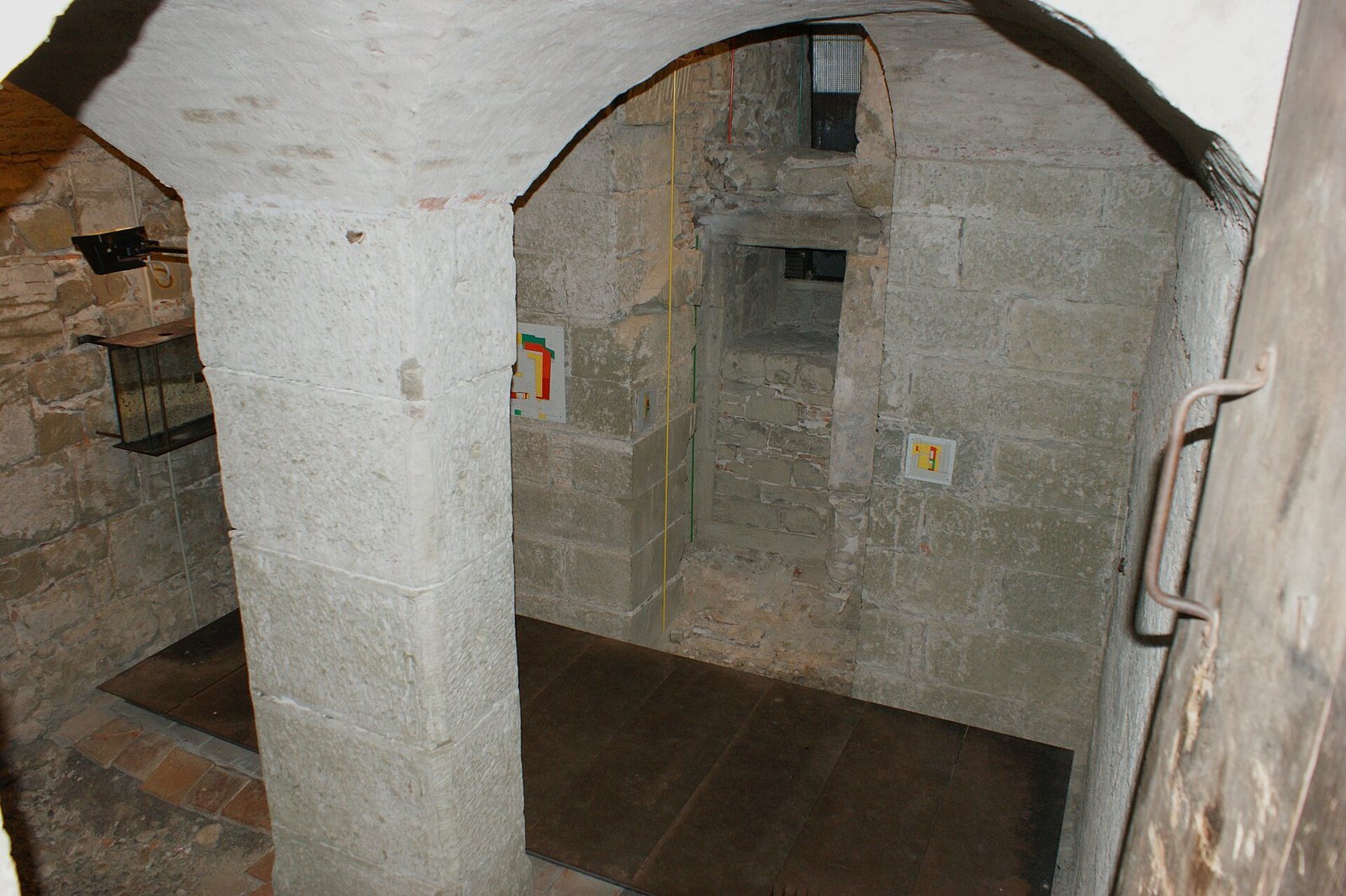
Parts of the west and south walls survive to a height of seven metres. The walls are 70 to 110 centimetres thick, built with sandstone blocks and pebbles around 30 centimetres across around a fine-grained gravel core. In the water-bearing lower level, the stones are set in coarse clay mortar containing little lime, which was probably permeable. The conserved remains include the tower’s south side and interior. Interpretive panels, a construction model and a hydrological model are also displayed there.