Warblington Castle: A Moated Tudor Manor in Hampshire
Site at a Glance
- Popularity
- Very High
- Country
- United Kingdom
- Primary era
- Early Modern
- Eras represented
- Early Modern
- Civilizations
- English
- Site type
- Military
- Remains
- Castle
On this page6 sections
History
Warblington Castle, also known as Warblington Manor, is the ruin of a moated manor in Hampshire, United Kingdom. Margaret Pole, Countess of Salisbury, had the manor built between 1515 and 1525, during the Tudor period. It later received royal visitors and became a defended position in the English Civil War.
Early settlement and medieval ownership
A settlement near Langstone was established by Saxons, Germanic peoples who settled parts of Britain, in the seventh century. It appears in the Domesday Book of 1086, William the Conqueror’s survey of English landholding and resources, with a population of about 120. Roger, Earl of Shrewsbury, held the property. After his death in 1094, it passed to his second son, Hugh, and William de Courci owned it in 1186.
After changing hands, the property came to Richard Neville, 16th Earl of Warwick, in the fifteenth century. The villagers were removed, and Neville made the land his private deer park.
Margaret Pole and the Tudor manor
After Henry VII ordered the execution of Edward Plantagenet, 17th Earl of Warwick, the manor passed to the Crown. Henry VIII granted it to Margaret Pole in 1513, and she had a new moated manor built between 1515 and 1525. After Margaret was attainted for treason, a legal penalty that could forfeit rights and property, temporary grants went to William FitzWilliam and Thomas Wriothesley, both 1st Earls of Southampton. Henry VIII later granted the manor to Sir Richard Cotton.
Mary of Guise, widow of James V of Scotland, spent the night there as Cotton’s guest on 28 October 1551. Edward VI visited in August 1552. Elizabeth I may also have stayed for two days in 1586.
The Cotton family and the English Civil War
The Cotton family held the manor until the English Civil War, the conflict between Parliament and supporters of King Charles I. George Cotton was a Catholic recusant, meaning he refused to conform to the Church of England. Priests, including Thomas Lister, also known as Butler, visited him in 1603. In 1613, a reliquary, a container for a religious relic, associated with the Catholic martyr Mark Barkworth was found in John Cotton’s study.
In January 1643, Parliamentarian forces under Colonel Richard Norton garrisoned the house with between 40 and 80 men. Royalist troops led by Ralph Hopton, 1st Baron Hopton, besieged and captured it, although Norton escaped. Because the Cotton family supported the Royalists, Parliamentarian forces later demolished most of the manor. One turret was left to help ships navigate Langstone Channel.
After the Civil War
Following the Stuart Restoration, the return of the monarchy in 1660, the property was restored to the Cotton family, who built a farmhouse near the ruins. The remains are a Grade II* listed building, a category for particularly important listed buildings, and a scheduled monument, a legally protected historic or archaeological site.
Remains
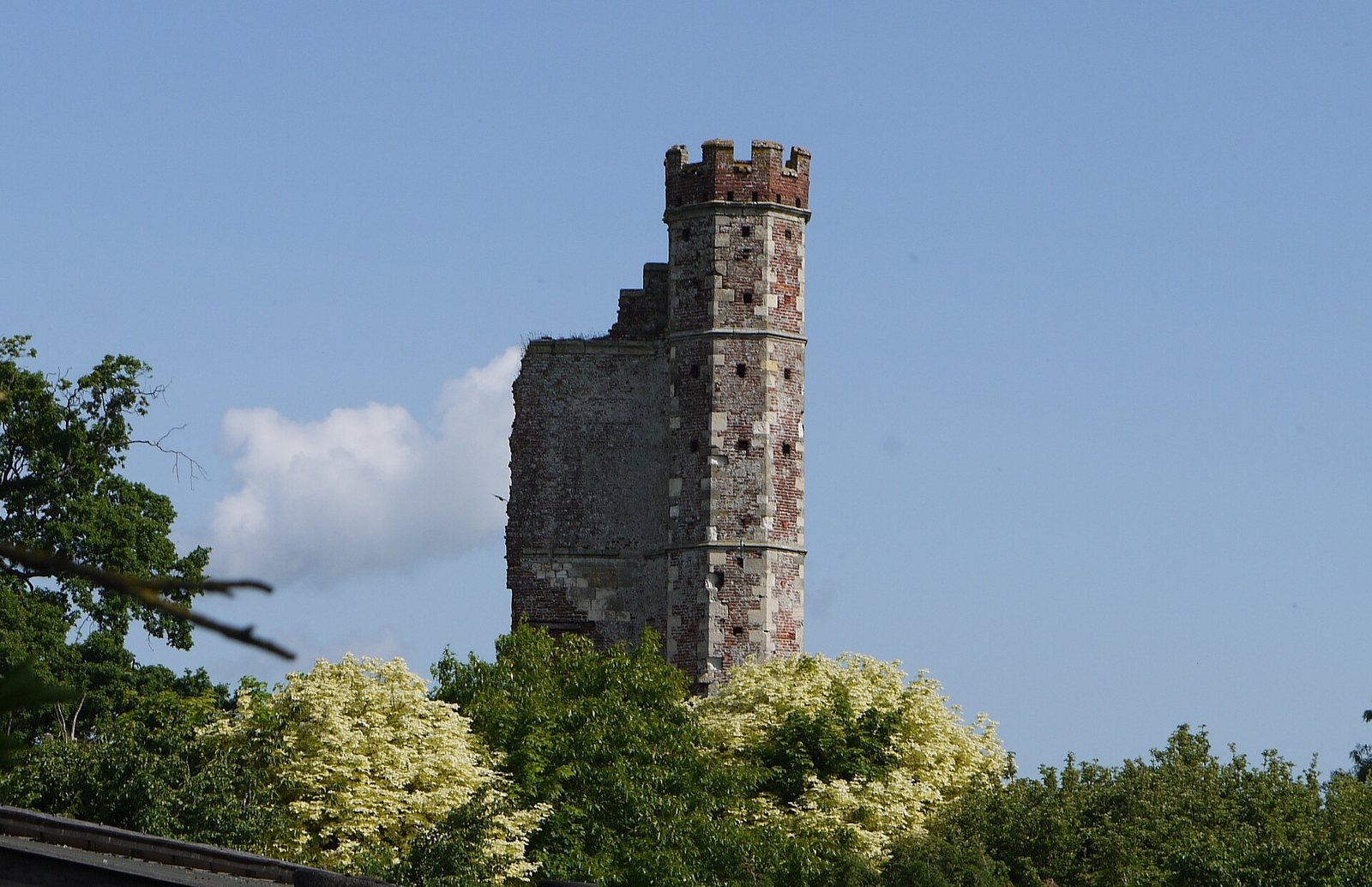
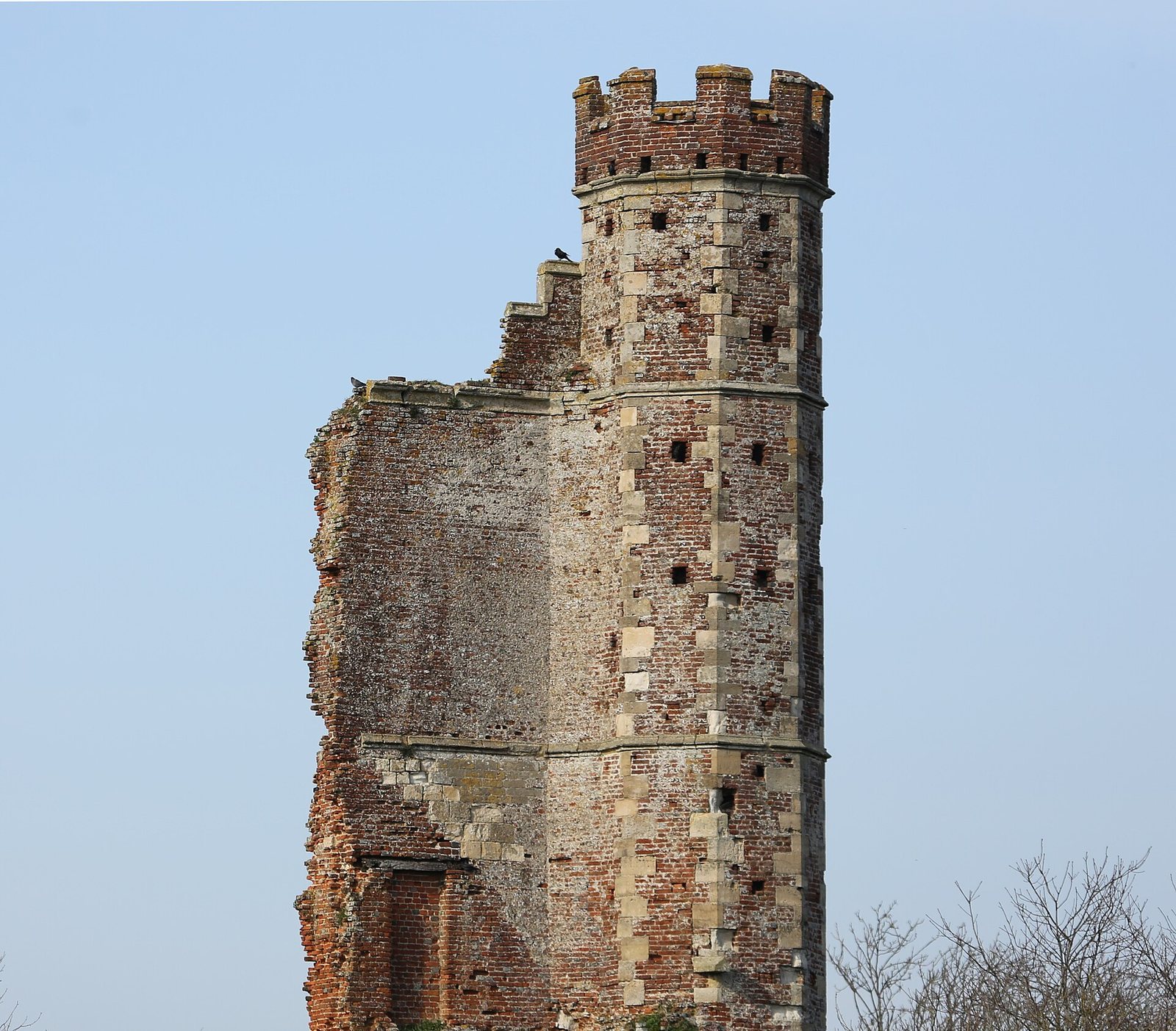
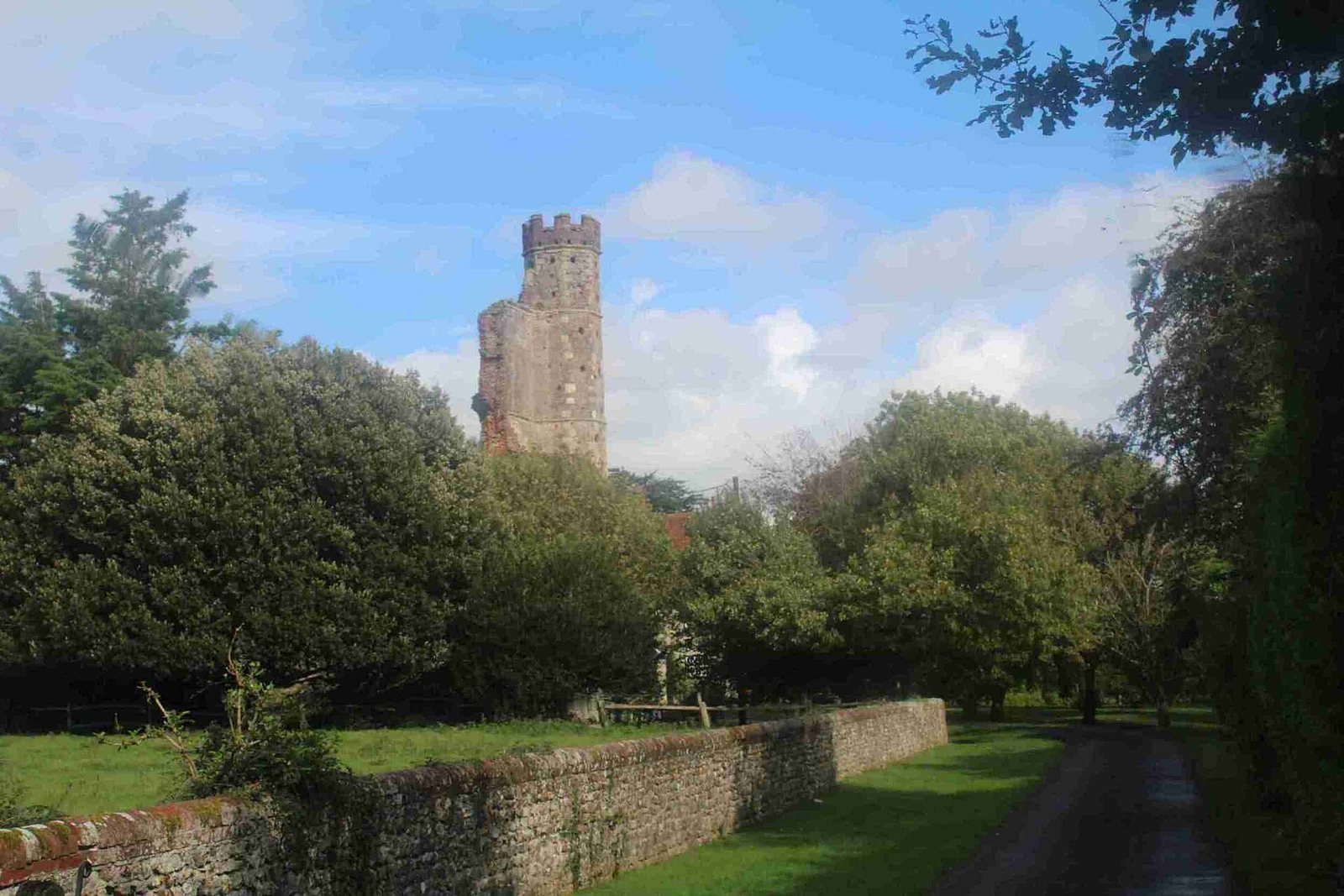
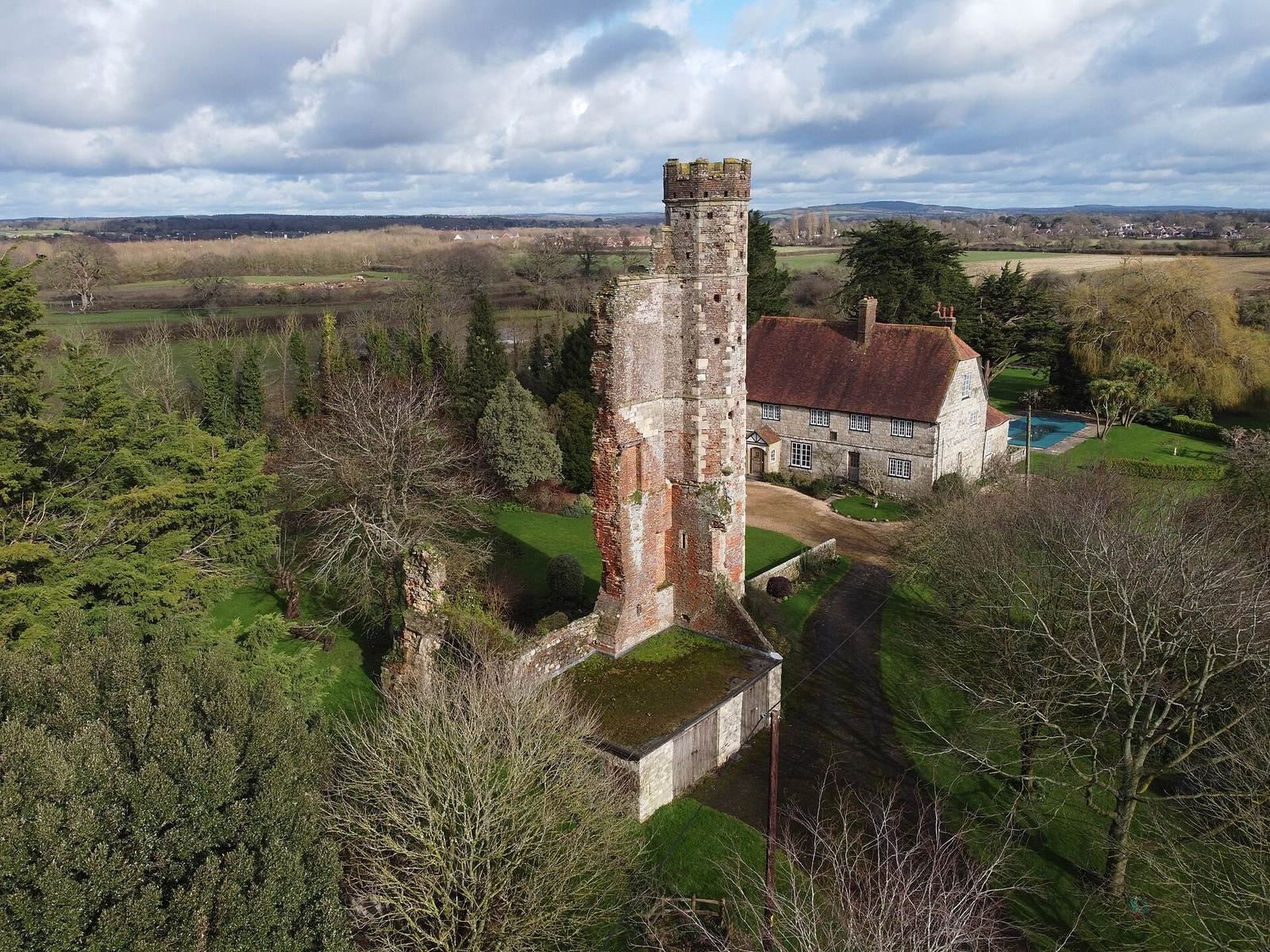
The moated manor survives in fragments that include a gatehouse tower, part of a wall, the gate arch, and supports for the drawbridge in the moat. The gatehouse has an octagonal turret several storeys high, built mainly of brick with stone dressings and battlements. Its south-east stair turret remains complete, while parts of the tower’s south wall and courtyard-facing east wall also survive.