Palace of Omurtag: An Early Medieval Bulgarian Fort and Archaeological Site
Site at a Glance
- Popularity
- Medium
- Country
- Bulgaria
- Primary era
- Medieval
- Eras represented
- Classical, Medieval
- Civilizations
- First Bulgarian Empire, Roman
- Site type
- Military
- Remains
- Fort
On this page17 sections
History
The Palace of Omurtag is an archaeological site near Han Krum in northeastern Bulgaria, with remains from Late Antiquity, the transition from the ancient world to the medieval era, and the early Middle Ages. Its early ninth-century fortification belongs to the First Bulgarian Empire, a medieval Bulgarian state, and an inscription connects the site with its ruler Omurtag.
Gothic settlement in Late Antiquity
The earlier remains have been linked to a community of Gothic foederati, groups settled within Roman territory under treaty arrangements. They appear to have followed Arianism, an early Christian tradition that differed from the Nicene doctrine that later became orthodox in much of the Christian world. The site has also been identified as an Arian bishop’s seat and area of authority.
A proposed association with the fourth-century Gothic bishop Ulfilas remains an interpretation. Ulfilas is known to have moved with followers to northern Bulgaria and to have translated the Bible into Gothic at Nicopolis ad Istrum, a Roman city in what is now northern Bulgaria. The four early churches may have been destroyed in successive Hunnic raids.
Omurtag and the medieval fort
The Chatalar Inscription, written in medieval Greek on a column found at Han Krum around 1900, records that Omurtag built a structure near the Ticha River. It describes four columns topped by two lion sculptures. Omurtag ruled from 815 to 831. The structure was once located at Preslav in some interpretations, but is now identified with Han Krum, nearer the inscription’s findspot. The Greek term for it could mean a palace or court, or a fortified steppe centre of rule, so its precise character remains uncertain.
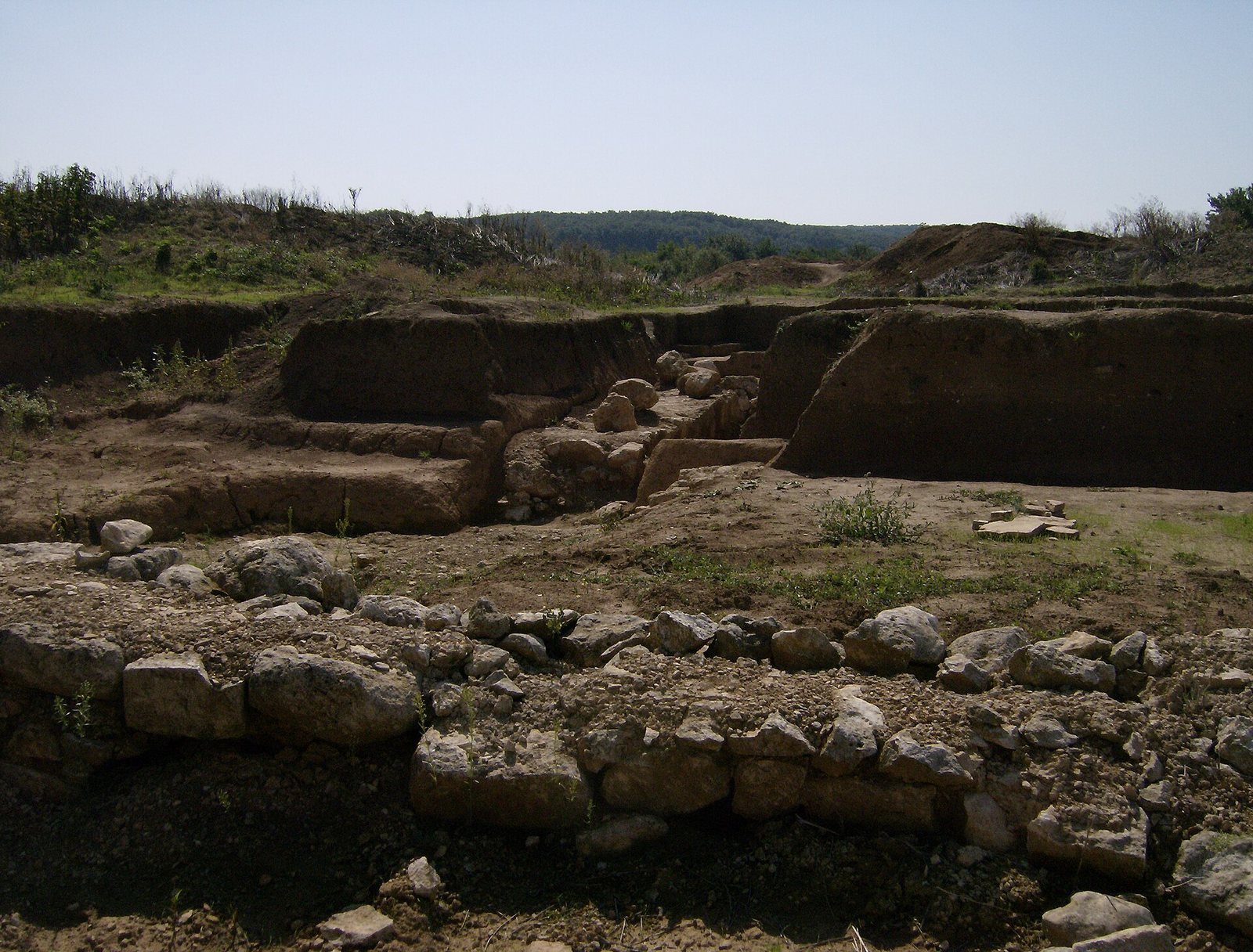
The medieval site was inhabited from 822 until the fort was razed in the late tenth century, a span of more than 150 years. Construction continued over the ruins, so the fort’s destruction did not bring settlement to an end. Excavation began in 1957 and remained incomplete; Bulgarian and German archaeologists carried out extensive work from 2000 onward. Investigations in the 2000s uncovered Gothic graves, and Kremena Stoeva discovered a fifth church in 2009.
Remains
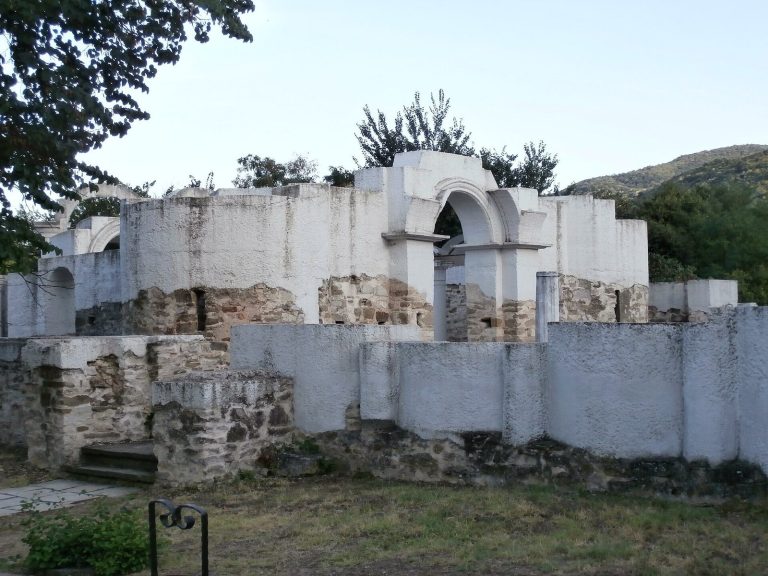
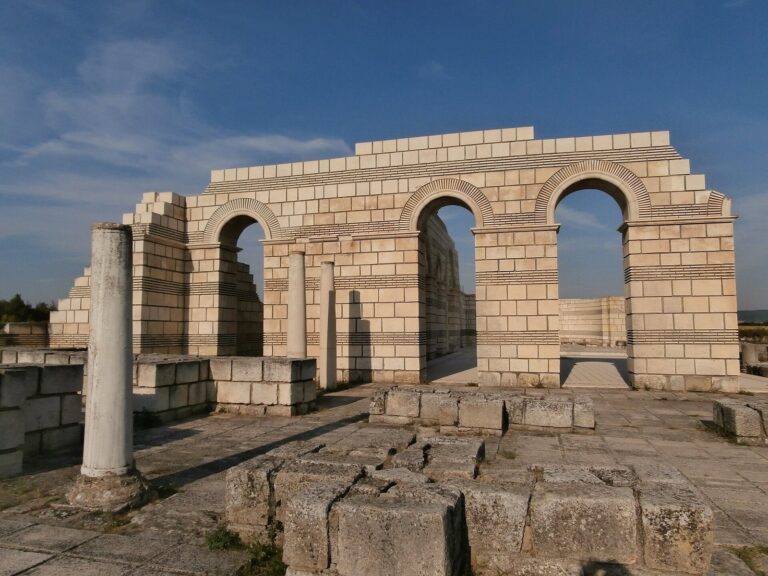
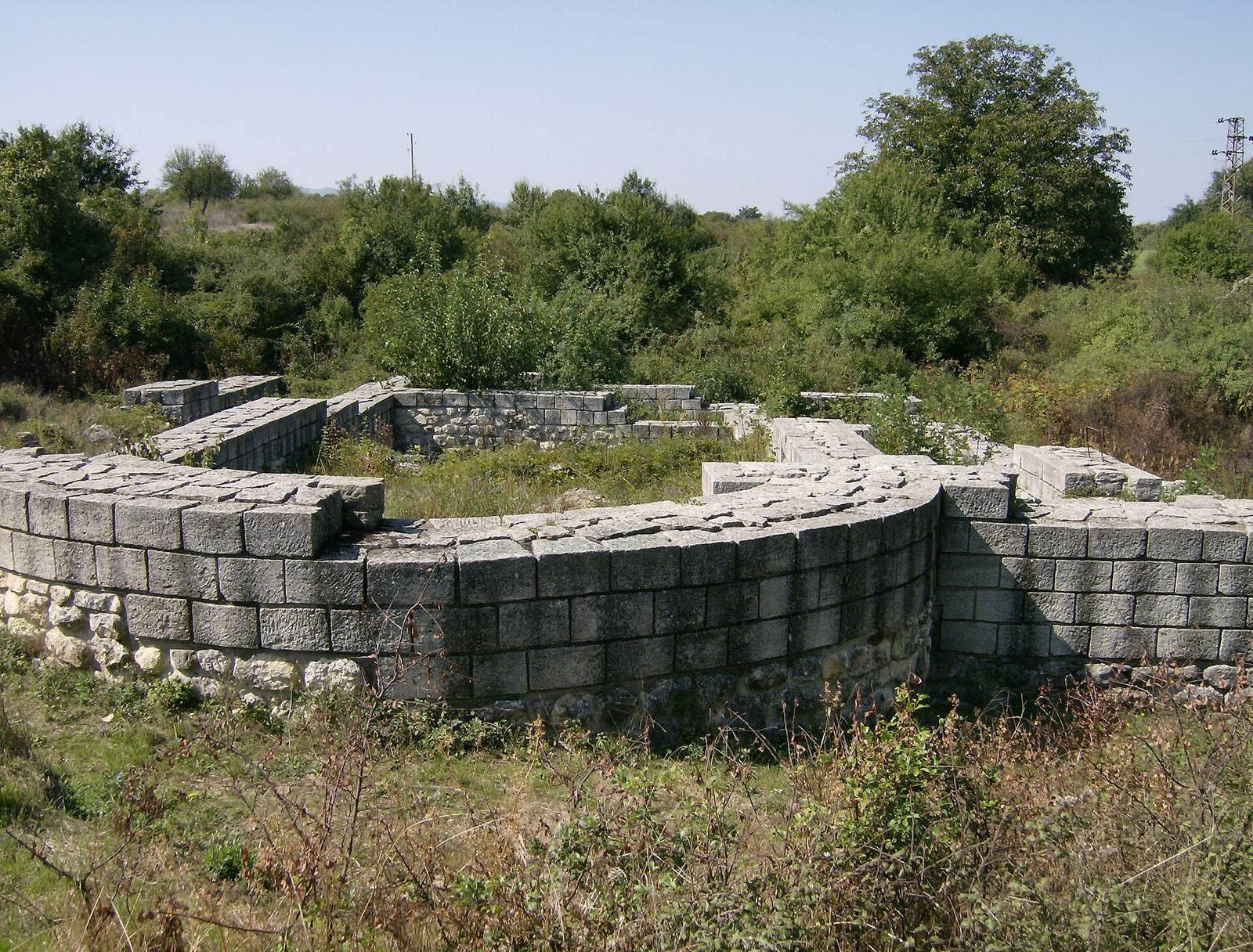
The layout brings Late Antique church and bath remains together with an early ninth-century Bulgarian fortification and its smaller inner enclosure. Three of the four early churches and a bath lie outside the medieval defenses; one church and traces of ancient walls were found within them. A fifth church, from the tenth century, is also part of the site.
Late Antique religious buildings
Churches and basilica
Two of the four early churches were built one above the other. A small church excavated in 1976 survives in scant form, including fragments of Christian frescoes considered possibly the oldest in Bulgaria. Excavation consultant Todor Balabanov suggested that it may have served as the private church of a high-ranking Goth, perhaps Ulfilas. A larger basilica was built beside it. Nearly square, the basilica measures 29.7 by 26 metres and had three naves, the main lengthwise spaces of a church, and a two-winged apse, its projecting end.
Octagonal building
An octagonal building stood above the basilica’s ruins, with an apse on its northern side. Balabanov interpreted it as a mausoleum, or tomb building, and compared it with the Mausoleum of Theodoric in Ravenna, an early medieval funerary monument associated with the Ostrogothic king Theodoric.
Tenth-century church
The fifth church has three naves and three apses. Its tenth-century date, after Bulgaria adopted Christianity, is supported by its architecture and the pottery around it.
Bath
A bath is among the Late Antique remains outside the medieval fortification.
Bulgarian fortifications and buildings
Outer rampart
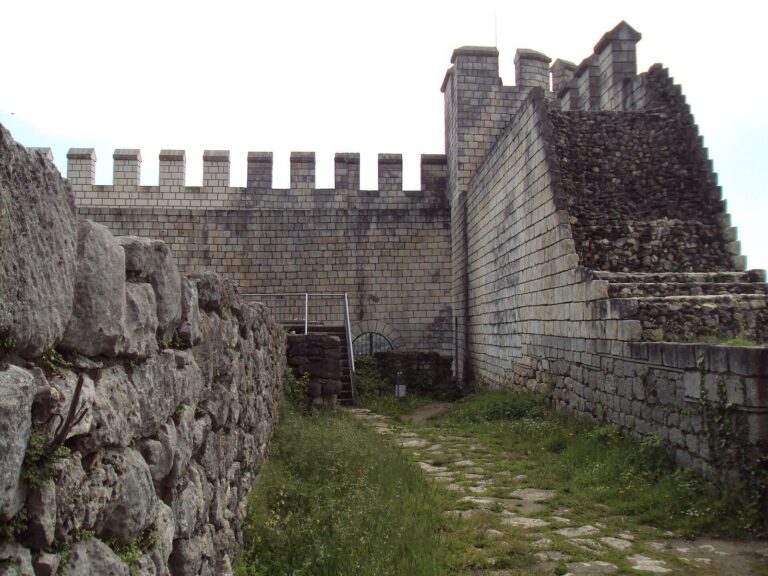
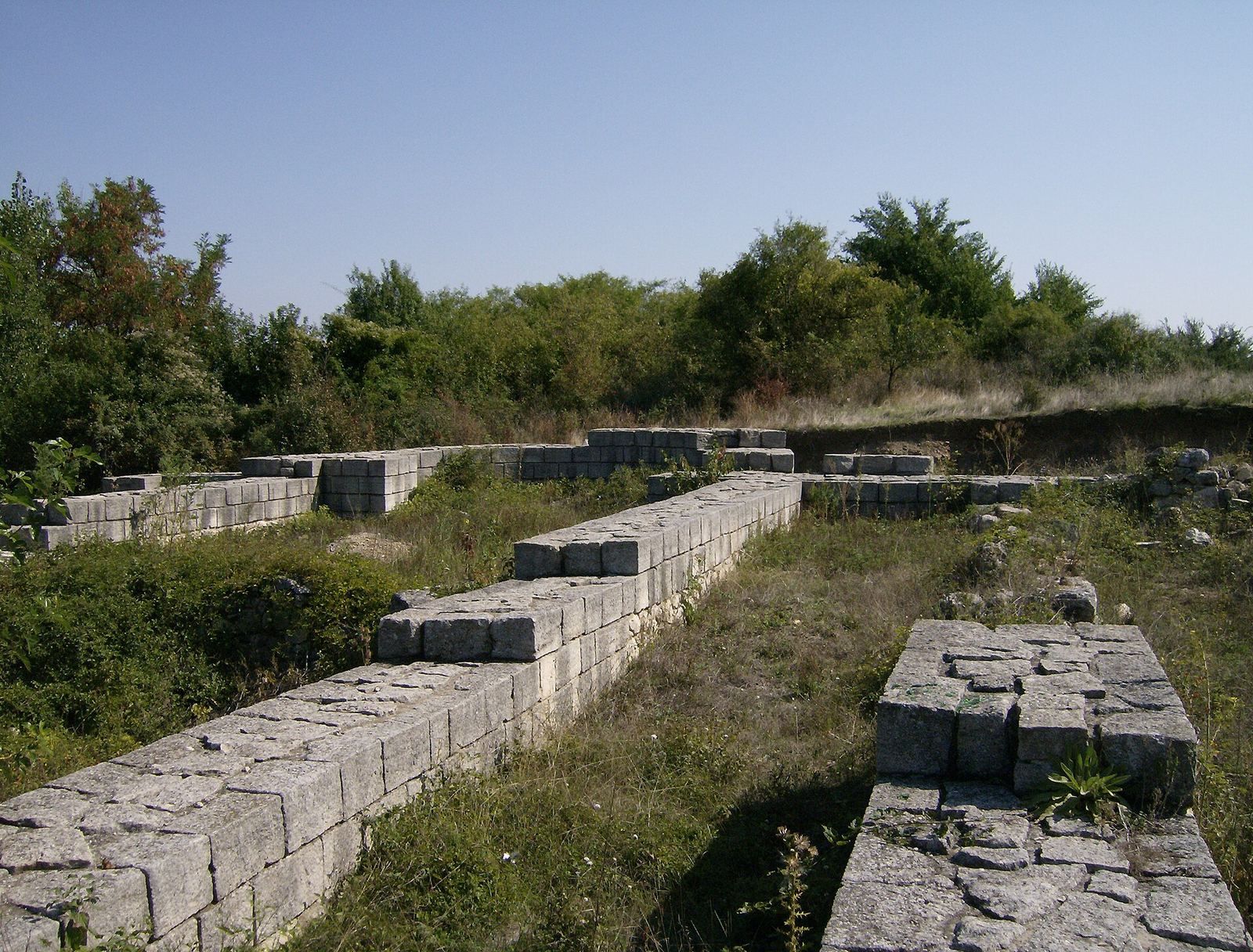
The early ninth-century fortification’s rampart enclosed the palace area. Known locally as Hisar Kale, a Turkish name meaning fortress, the enclosure measures 405 by 515 metres and covers 0.2084 square kilometres. It is smaller than the fortifications at nearby Pliska, but its defensive walls closely resemble those of that former Bulgarian capital.
Inner fortification
A second, inner enclosure measured 92.5 by 113.6 metres, with its main entrance on the eastern side.
Stone buildings
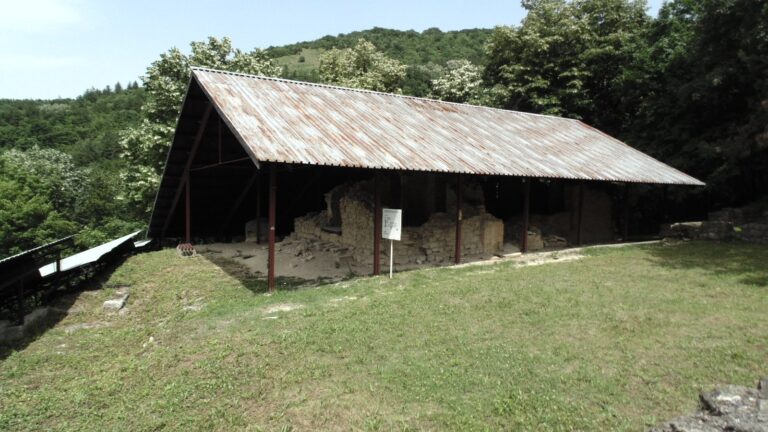
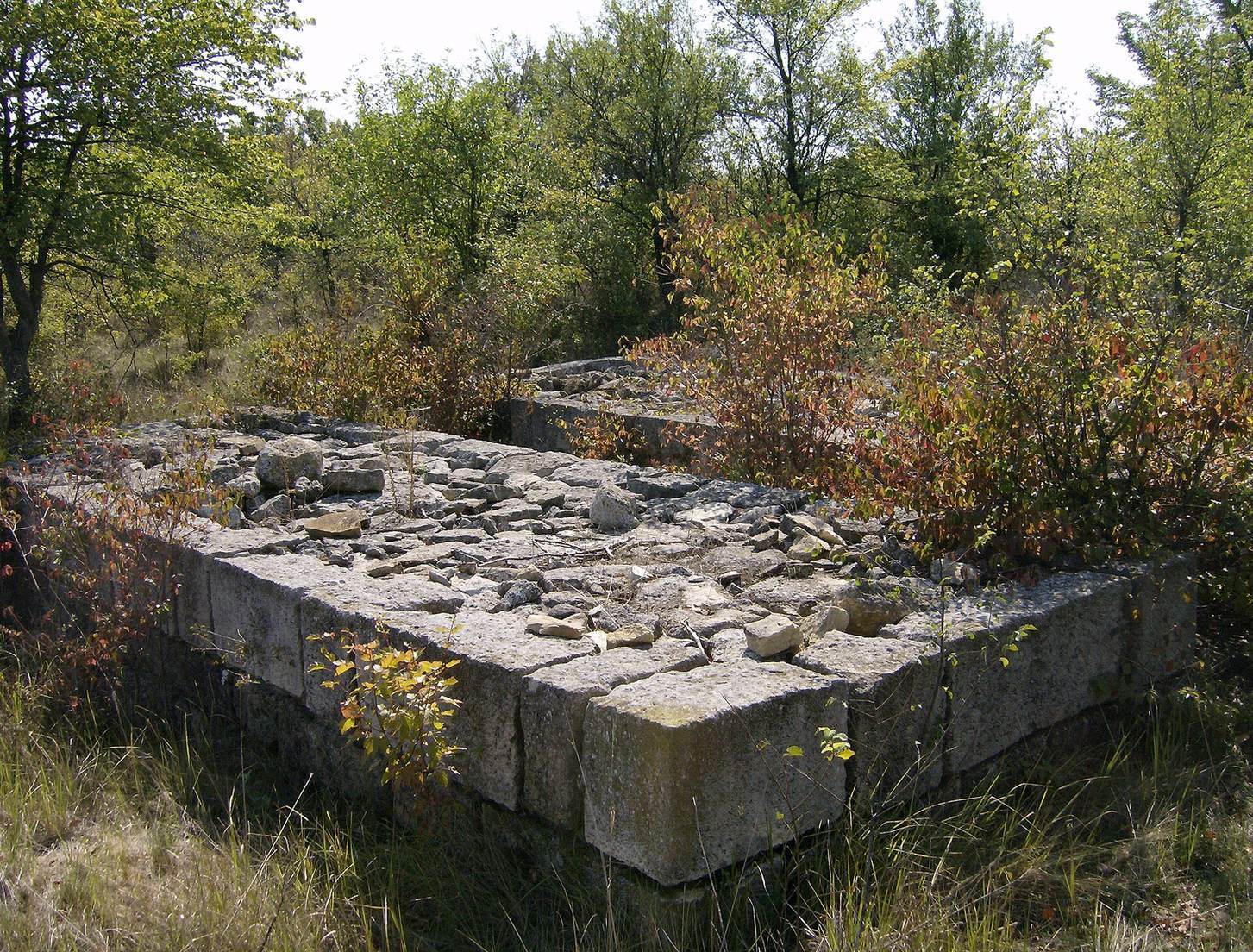
Several stone buildings of differing complexity stood within the fort, including a three-room bath. The group has been interpreted as a noble residence or palace, although it is uncertain whether the buildings date to Omurtag’s reign or a later period.
Lion sculpture
Fragments of a lion sculpture, originally about a metre high, were found inside the fort. They may belong to one of the two lions described in the Chatalar Inscription.
Burials and sacrificial activity
Gothic graves
The Gothic graves uncovered in the 2000s contained medical kits, chain mail, and Germanic-style jewellery. Belt buckles and brooches were decorated with gold, gemstones, and animal motifs. One grave held a woman whose skull had been artificially reshaped, a practice associated with noble Goths, Sarmatians, and Bulgars.
Pagan sanctuary
Animal remains, including buried dogs and rabbits, medieval vessels, and a plastered stone feature with channels leading blood toward a pit point to a pagan sanctuary where animal sacrifice took place.