Avon Tyrrell House: An Arts and Crafts Country House in Hampshire
Site at a Glance
- Popularity
- Medium
- Country
- United Kingdom
- Primary era
- Modern
- Eras represented
- Modern
- Civilizations
- British
- Site type
- Domestic
- Remains
- Elite Residence
On this page8 sections
History
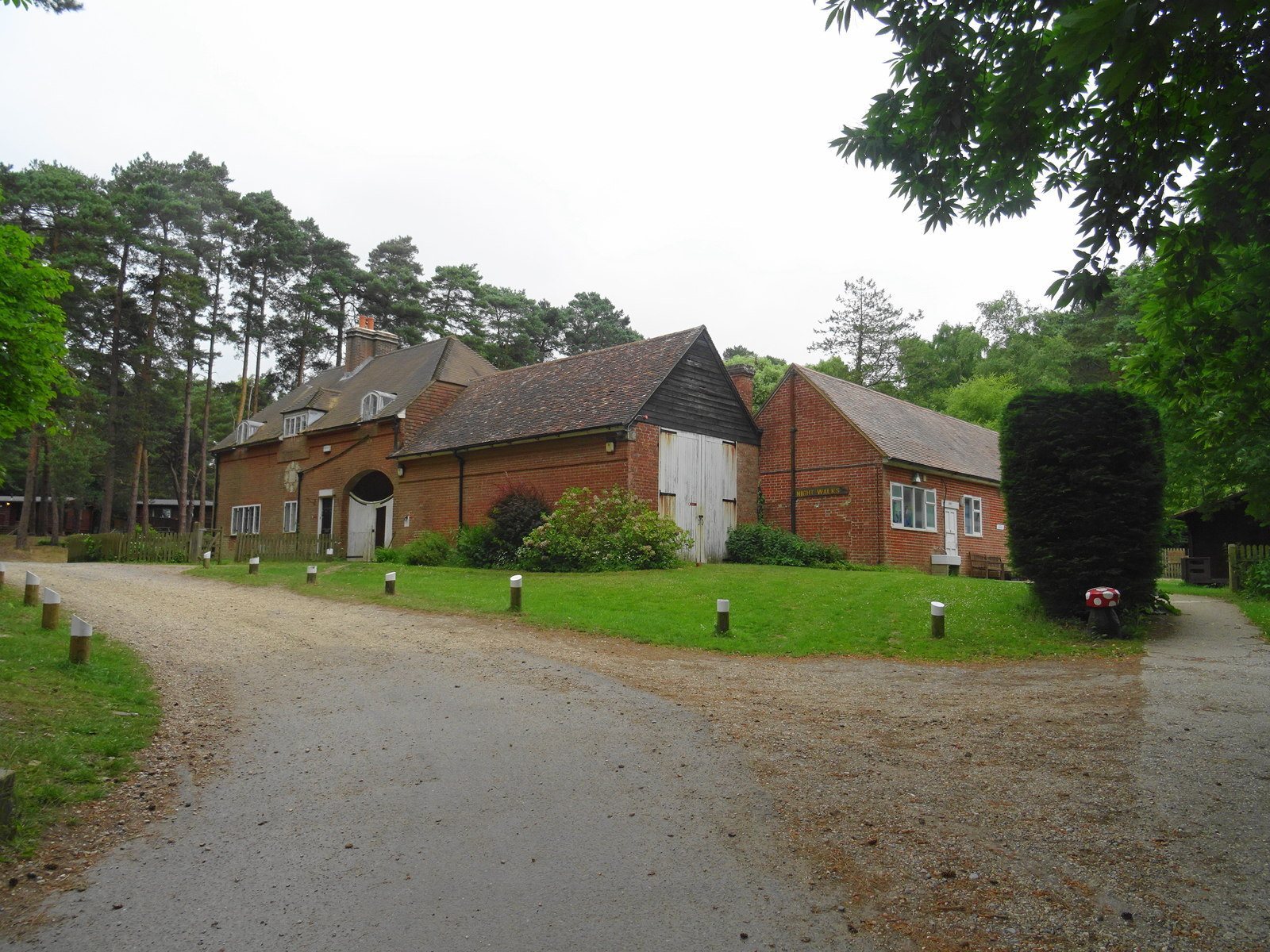
Avon Tyrrell House is a country house in the parish of Sopley, Hampshire, United Kingdom. Its present form dates to a rebuilding in 1891, and it later became a youth centre. The house is Grade I listed, a category reserved for buildings of exceptional interest.
The Peverells and the Tyrrells
After the Norman Conquest of 1066 and the Domesday Book, England’s 1086 survey of land and resources, the manor of Avon was held by the Peverell family until the mid-fourteenth century. In 1363, Sir Henry Peverell died holding the nearby manor of Milton, which passed to his son and heir, Thomas. Two years later, Thomas granted Milton to Sir Thomas Tyrrell. Avon and Milton then descended within the Tyrrell family.
A local legend connects the Tyrrell name to Walter Tirel, a Norman nobleman said to have killed King William II with an arrow in the New Forest in 1100. According to the story, Tirel fled and crossed the River Avon at a ford later called Tyrrell’s Ford. The Tyrrell family’s connection to the manor began in the fourteenth century, centuries after the event in the legend.
Later owners and rebuilding
In 1602, John Tyrrell sold the manor to Bennett Wynchecombe and Giles Tooker, who later sold it to Sir John Webb, 1st Baronet. A baronet held a hereditary British title. Webb received the title in 1644 and died in 1680. Sir John Webb, 5th Baronet, who died in 1797, sold the manor to banker Edward Buckley Batson and Stanlake Batson.
Stanlake Batson’s heir was his sister Anne, the wife of Henry Fane. The property passed to their second son, the Reverend Edward Fane, and then to his eldest son, Henry Hamlyn-Fane (1817–1868). Henry married Susan Hester Hamlyn-Williams, heiress of Clovelly, and adopted the additional surname Hamlyn. In 1912 the property belonged to his daughter Eveline Harriet Hamlyn-Fane. After her death, it passed to her sister Constance, wife of John Manners-Sutton, 3rd Baron Manners.
In 1891, John Manners-Sutton rebuilt the house using proceeds from a large wager won after his horse Seaman’s victory in the 1882 Grand National, a major British steeplechase race. Manners-Sutton had owned, trained, and ridden the horse.
Wartime and youth use
During the Second World War, the government requisitioned the house. The family chose not to return afterward. In 1949, Francis Manners gave the house, but not the estate, to the National Association of Girls’ Clubs and Mixed Clubs, a charitable trust. That July, Princess Elizabeth, later Queen Elizabeth II, officially opened the youth holiday centre.
By 1964, the house was being used as a holiday camp by the National Association of Youth Clubs. By 2014, it served as UK Youth’s headquarters and an activity centre. In 1968, Francis Manners, 4th Baron Manners, lived at nearby Tyrrell’s Ford.
Remains
House and associated building
The house
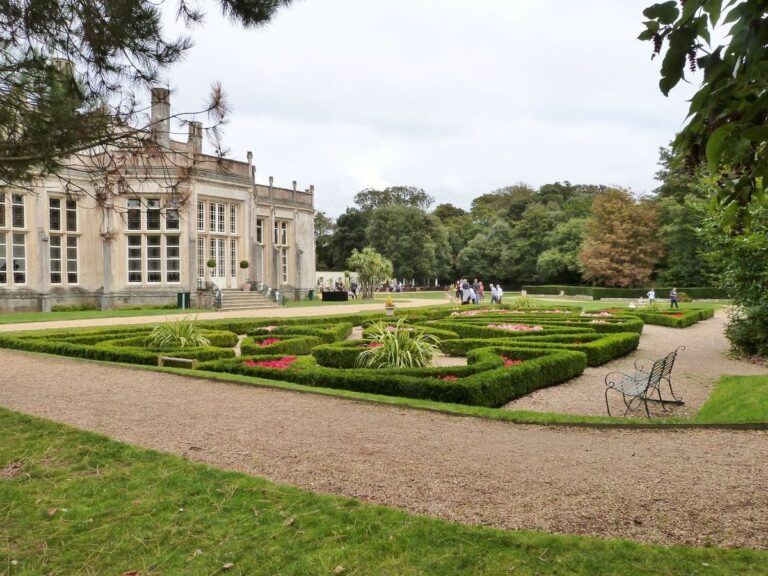
Avon Tyrrell House is an archetypal Arts and Crafts building, designed by architect and designer W. R. Lethaby. Its calendar-house scheme uses features to represent numbers associated with the calendar. The 365 windows stand for the days of the year, the 52 rooms for the weeks, and the 12 chimneys for the months. Seven exterior doors represent the days of the week, while the four wings represent the seasons.
The boathouse
A boathouse opened on the site in 2014, following plans drawn up in 1891.