Prochowice Castle: A Medieval Castle and Ducal Residence in Poland
Site at a Glance
- Popularity
- Medium
- Country
- Poland
- Primary era
- Medieval
- Eras represented
- Medieval, Early Modern
- Civilizations
- Habsburg, Habsburg Austria, Holy Roman Empire
- Site type
- Military
- Remains
- Castle
On this page11 sections
History
Origins and medieval ownership
Prochowice Castle is a medieval castle in Prochowice, Poland, on the left bank of the Kaczawa River. It is dated to the 13th–14th centuries and was standing before 1317. The town grew beside a ford on the route between Wrocław and Głogów and was probably founded in 1259 by Iko Mironowicz, a palatine, or senior official serving a ruler. The castle’s early owner is identified variously as Iko or Stefan von Parchwitz.
In 1398, Piotr of Prochowice, a castellan, or official associated with a castle and its district, sold the property to Ruprecht I and Henry VIII, dukes of Legnica, and Wenceslaus II, a bishop from the ducal family. The Piasts were a ruling dynasty whose Silesian branches governed duchies including Legnica and Brzeg. In 1400, the dukes granted the castle as a fief to Otto von Zedlitz the Elder. Around that time, Otto built a stone castle on the site of an earlier wooden one.
Ducal residence and wartime damage
After 1562, the castle was held by Hans von Oppersdorff, a senior military commander, and Fabian von Schönaich. It returned to the dukes of Legnica and Brzeg in 1567, including Frederick III. The following year, the Piast dukes leased it to Fabian von Schönaich I, and Johann von Schönaich held it from 1591 to 1594.
Duke Joachim Frederick bought the castle in 1594 and lived there until his death. It then became the residence of his son George Rudolf. In 1631, George Rudolf’s second wife, Princess Elizabeth Magdalena, died there. She was the daughter of Charles II, Duke of Ziębice and Oleśnica.
Swedish forces captured and severely damaged the castle in 1642 during the Thirty Years’ War, a major European conflict fought from 1618 to 1648. Princess Anna Sophia of Legnica directed a partial rebuilding in 1658.
Later ownership and restoration
When the Legnica-Brzeg Piast line ended in 1675, the castle passed to Emperor Leopold. It later became a crown estate of the Prussian Hohenzollerns and returned to private ownership during the 19th century.
Count Adolf Curt von Strachwitz began renovations in 1905, bought the castle in 1906, and partly restored it that year. The building was damaged in 1945, near the end of the Second World War, and was subsequently rebuilt. It has been privately owned since 1990 and underwent further restoration after a later change of owner.
Remains
Castle plan and building phases
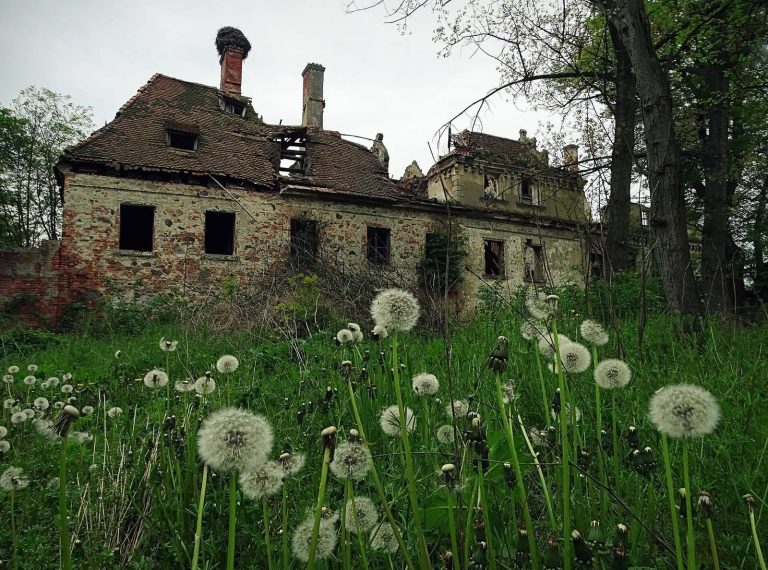
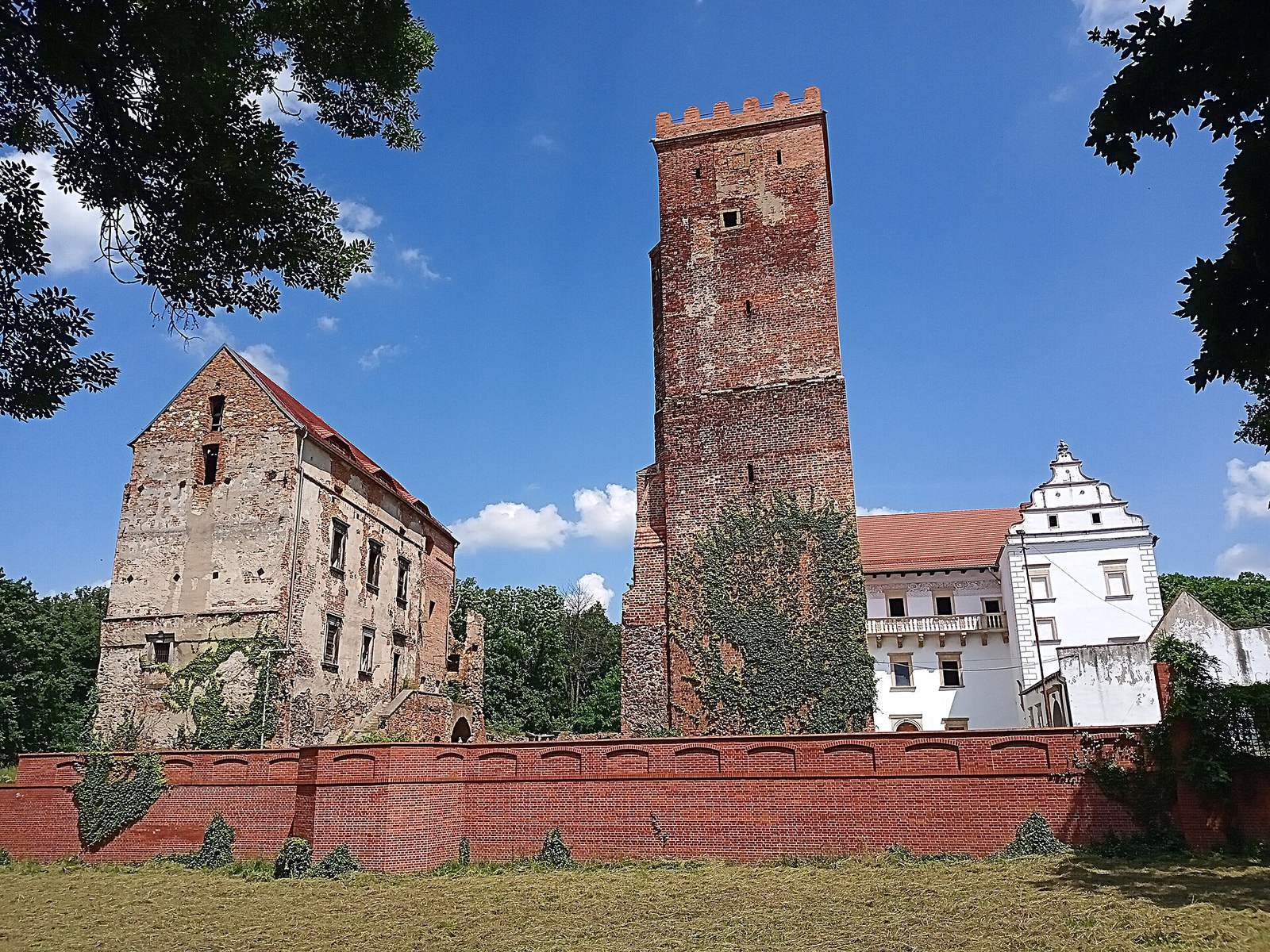
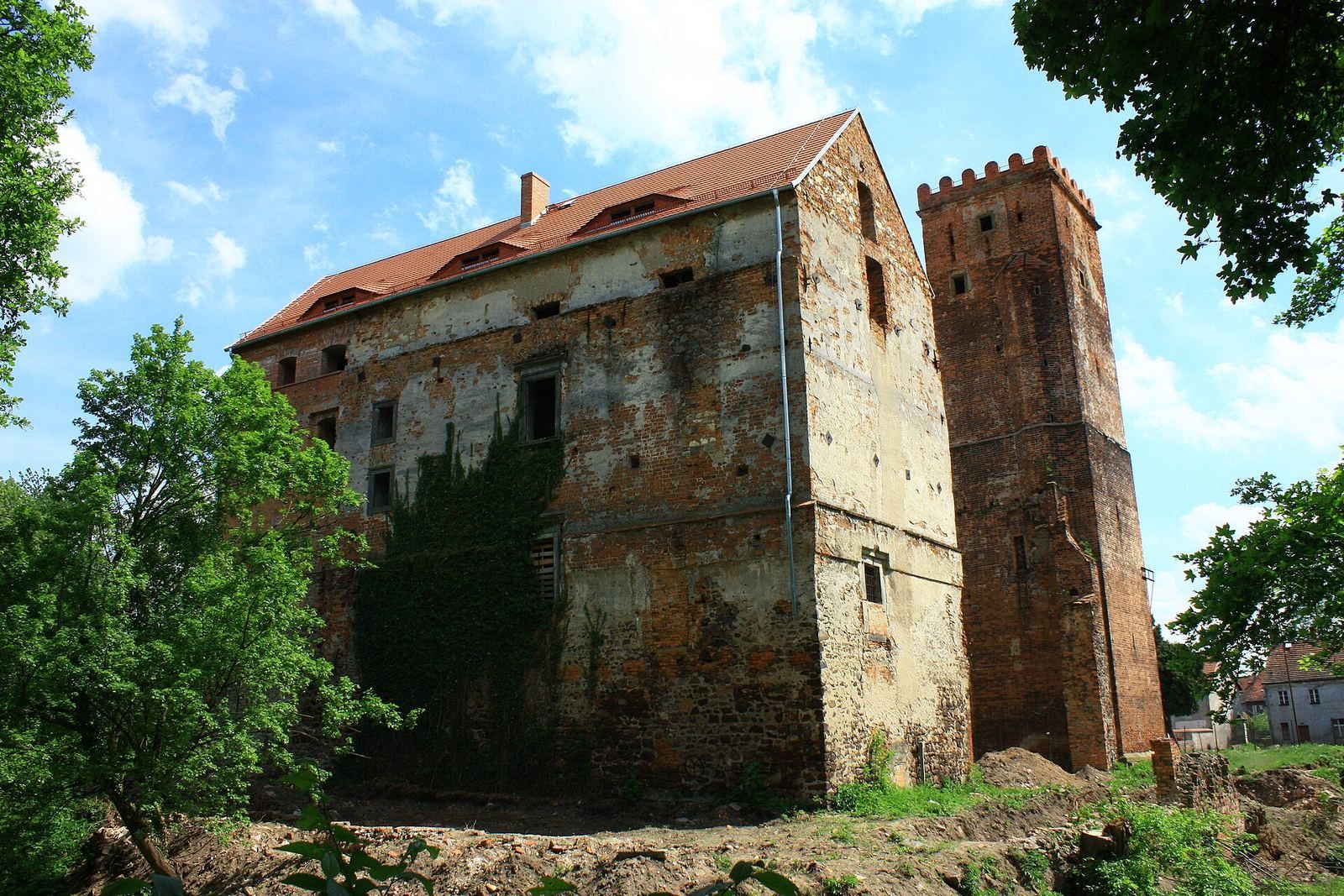
The castle’s early form was built of brick and included a fortified tower and a residential building. The present complex consists of three parallel building sections connected by a fragmentary eastern wing.
Tower and northern core
The tower and north wing form the castle’s core, with the north wing identified as its oldest part. The Gothic tower dates to 1422, while the middle section adjoining it dates to the 16th century.
Eastern wing and southern entrance
The southern gate is the principal entrance. Both it and the eastern wing were built after 1562.
Courtyard portal
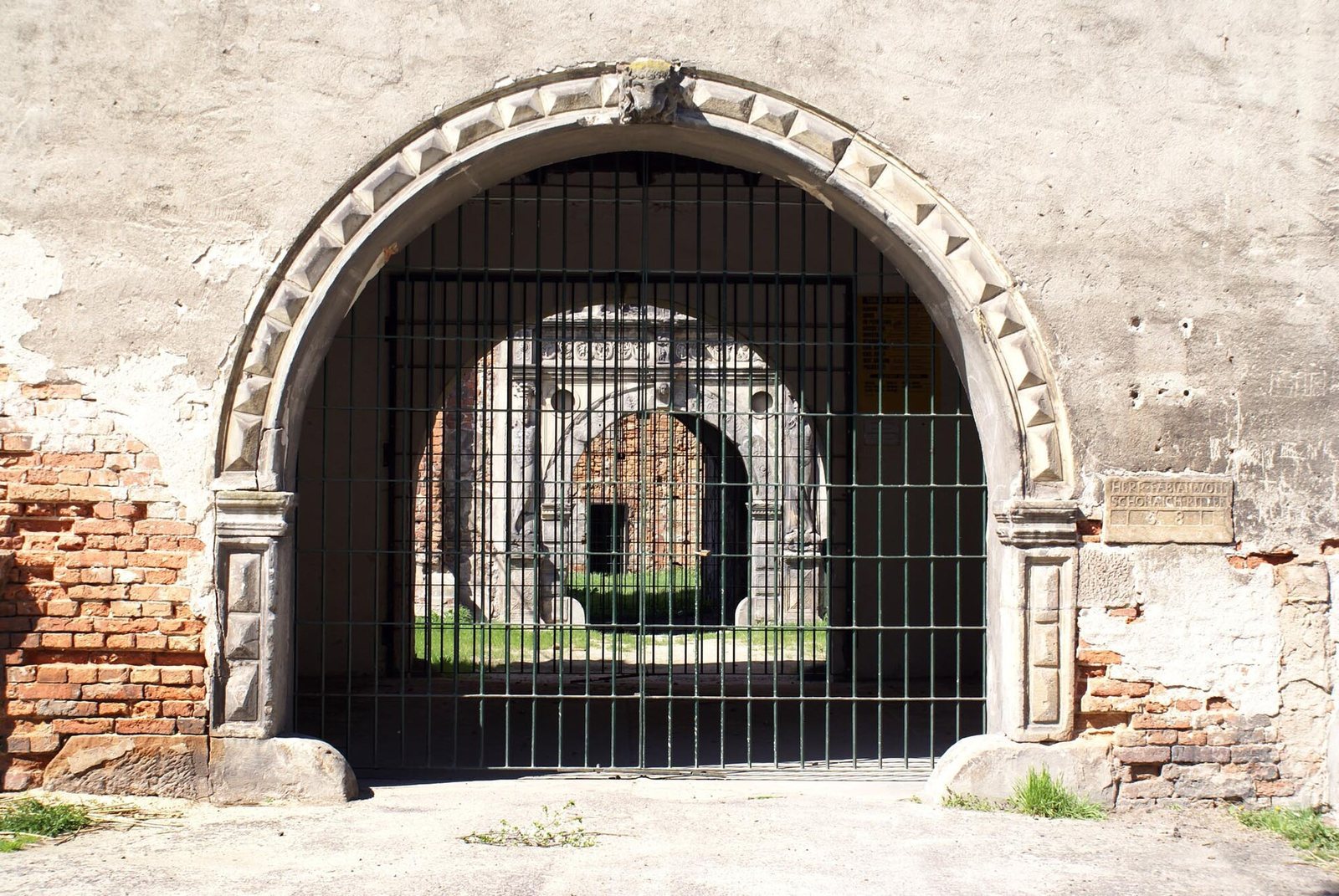
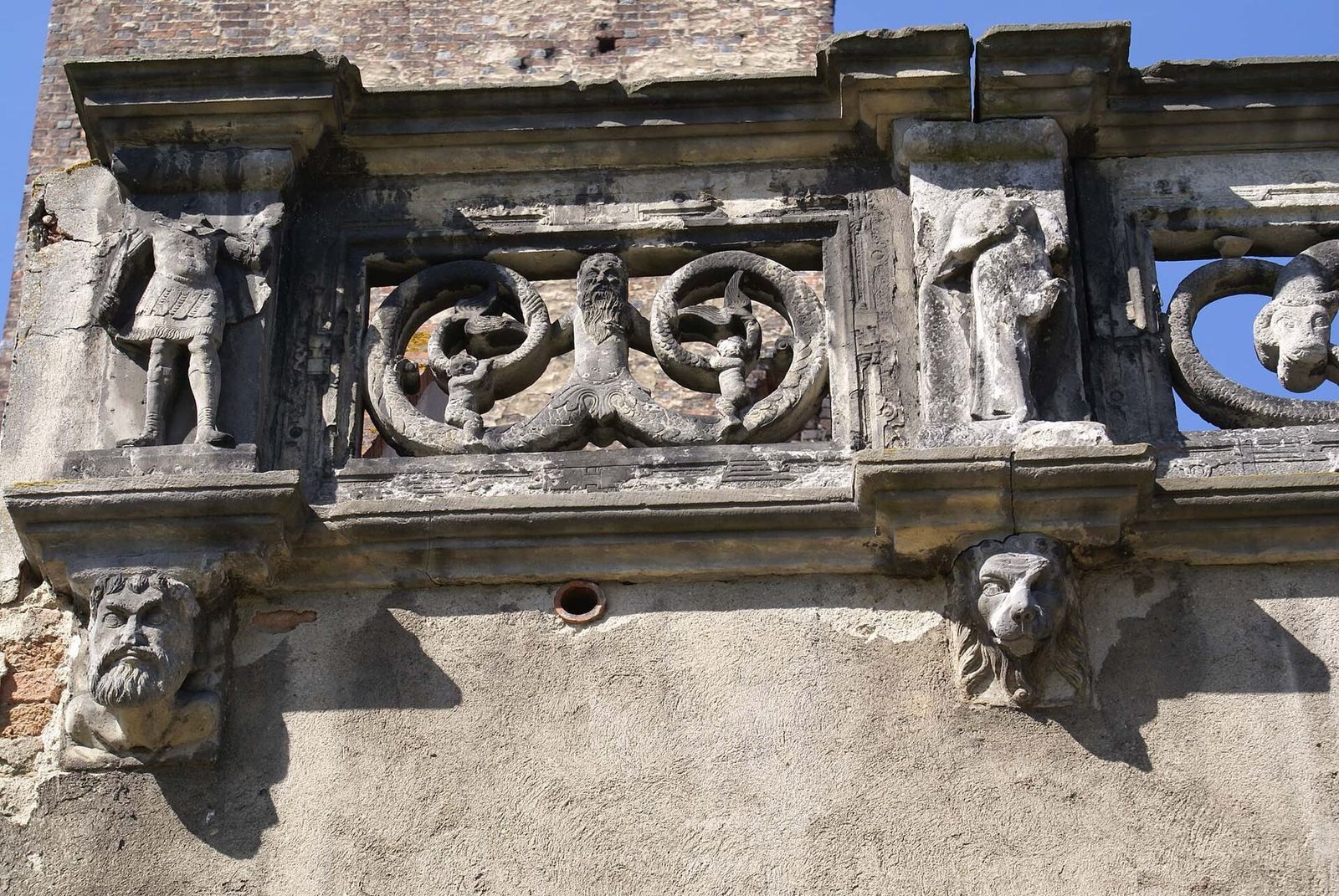
The portal leading into the inner courtyard is decorated with an Atlas, a sculpted male architectural support, and a caryatid, a sculpted female support.
Inscribed panels
Wall panels preserve inscriptions. One identifies Fabian von Schönaich as a knight in 1581. Another attributes the castle’s foundation to Peter I von Parchwitz in 1259, states that it was destroyed in 1642 and partly restored in 1906 by Curt von Strachwitz-Parchwitz, and includes the name Richard von Mattencloit of Pichely.
Landscape park
A landscape park beside the castle was laid out in 1835 by Count Erdmann Silvius von Pückler.