7 Klasztorny Square in Legnica: A Former Monastery and Church
Site at a Glance
- Popularity
- Medium
- Country
- Poland
- Primary era
- Early Modern
- Eras represented
- Early Modern, Modern
- Civilizations
- Habsburg, Holy Roman Empire, Kingdom of Bohemia, Kingdom of Prussia
- Site type
- Religious
- Remains
- Monastery
On this page5 sections
History
The monastic complex at 7 Klasztorny Square in Legnica, Poland, began as a Dominican foundation established by Duke Bolesław II the Bald sometime between 1270 and 1277. The Dominicans, a religious order founded in 1215 and known for preaching, belonged here to the Polish province of their order. The complex later became a Benedictine house and acquired a Baroque church.
Dominican foundation and medieval convent
The precise foundation year is uncertain. Bolesław was buried in the church choir on 17 January 1278, indicating that construction had begun several years earlier. His son, Duke Bernard of Legnica, was also buried in the church, after his death in 1286. A fire damaged the monastery around 1290–91, and the church and monastic buildings were rebuilt in 1301.
The convent took part in civic and religious life. In 1434 its prior, the community’s leader, arbitrated a dispute between a Legnica canon and the vicars of the city’s collegiate church. The monastery joined the Dominican Observance in 1495, a reform movement calling for stricter adherence to the order’s rules. Johannes Advocatus, the regional superior of the Polish province and head of the Warsaw convent, was involved. A regional meeting in 1496 praised Legnica and three other Silesian convents for intending to adopt the reform, whose implementation at Legnica was confirmed in 1519.
Reform and transfer to the Benedictines
In 1517 Duke Frederick II granted the Franciscans and Dominicans of Legnica 15 marks each in annual income from beer duties and other ducal revenues. The Dominicans’ share supported the celebration of 14 Masses for Frederick’s deceased wife, Elisabeth, in St Lawrence’s Chapel at Legnica Castle. St Lawrence was a third-century Christian deacon and martyr. The monastery also maintained a library.
Frederick introduced the Reformation in his duchies of Legnica, Brzeg, and Wołów in 1524. The Dominican monks departed, and the monastery stood vacant by 1526. In 1529, Frederick’s defensive works in and around Legnica destroyed the earlier convent of Benedictine nuns, members of a monastic order following the Rule of Saint Benedict. He assigned them the abandoned Dominican monastery in 1534.
Benedictine rebuilding and later use
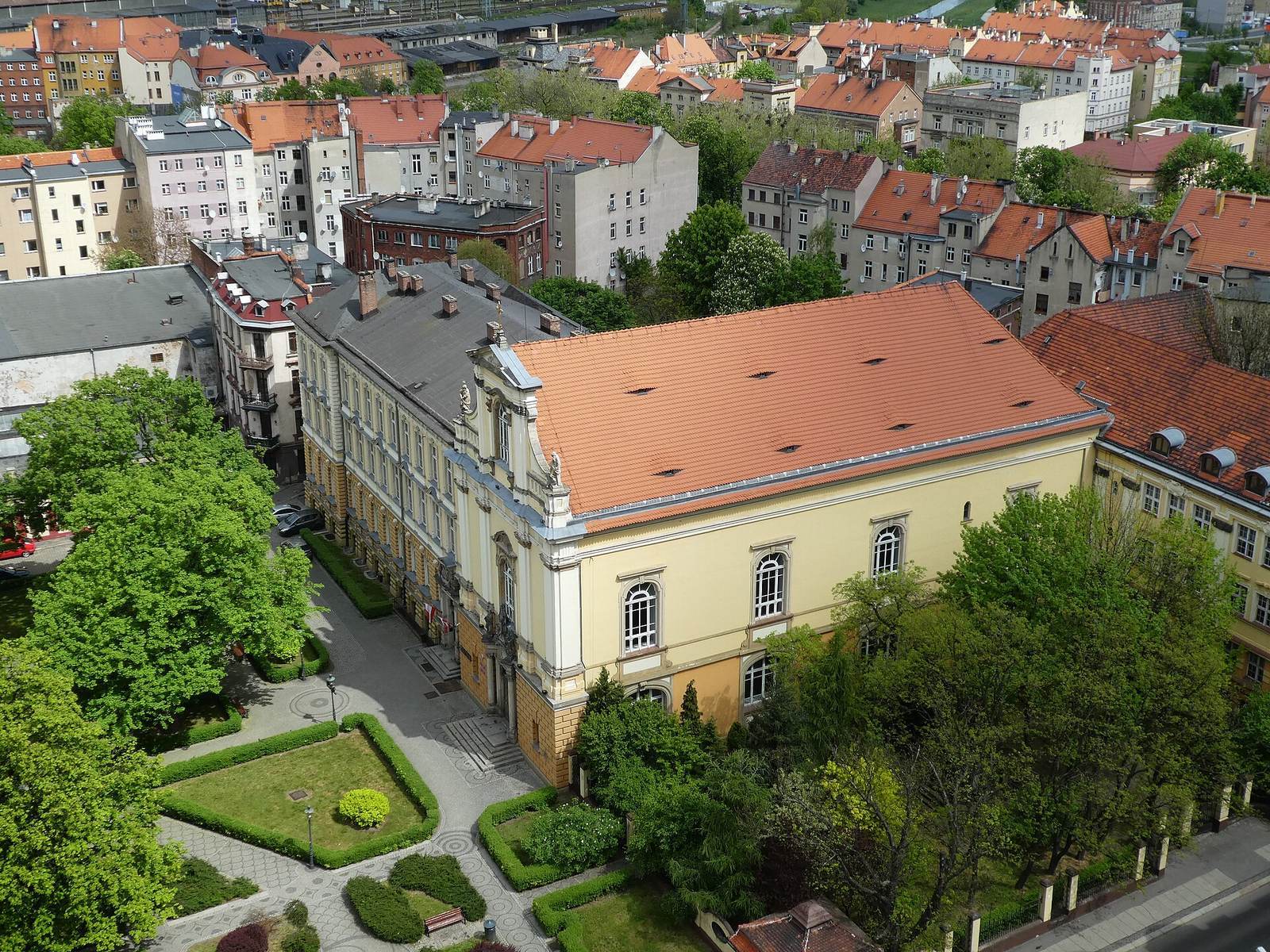
The Benedictines rebuilt the complex between 1700 and 1723. After the order’s secularization in 1810, the former monastery was adapted for school use. Extensive rebuilding followed in 1888. Since 1967, the former monastery buildings have housed the Tadeusz Kościuszko First General Secondary School, and the secularized church is also part of the school.
Remains
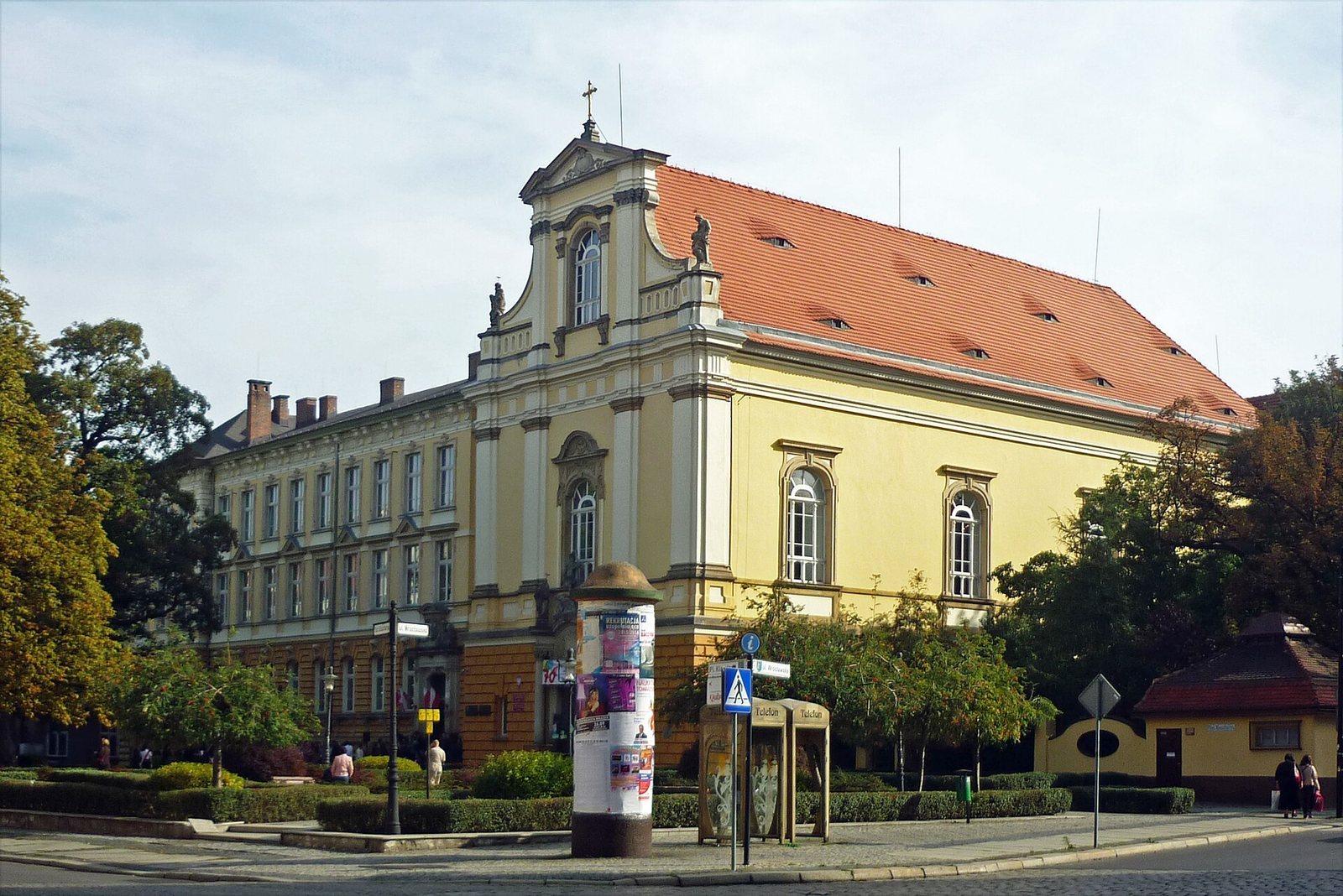
The complex occupies the northeastern part of Legnica’s old town and consists of former monastery buildings and a church. The church is Baroque and stands on the site of the earlier Dominican church, originally dedicated to the Holy Cross. The present church is dedicated to Saint Maurice, a Christian martyr venerated as a soldier-saint. Despite extensive rebuilding, the complex retains a representative Baroque character.
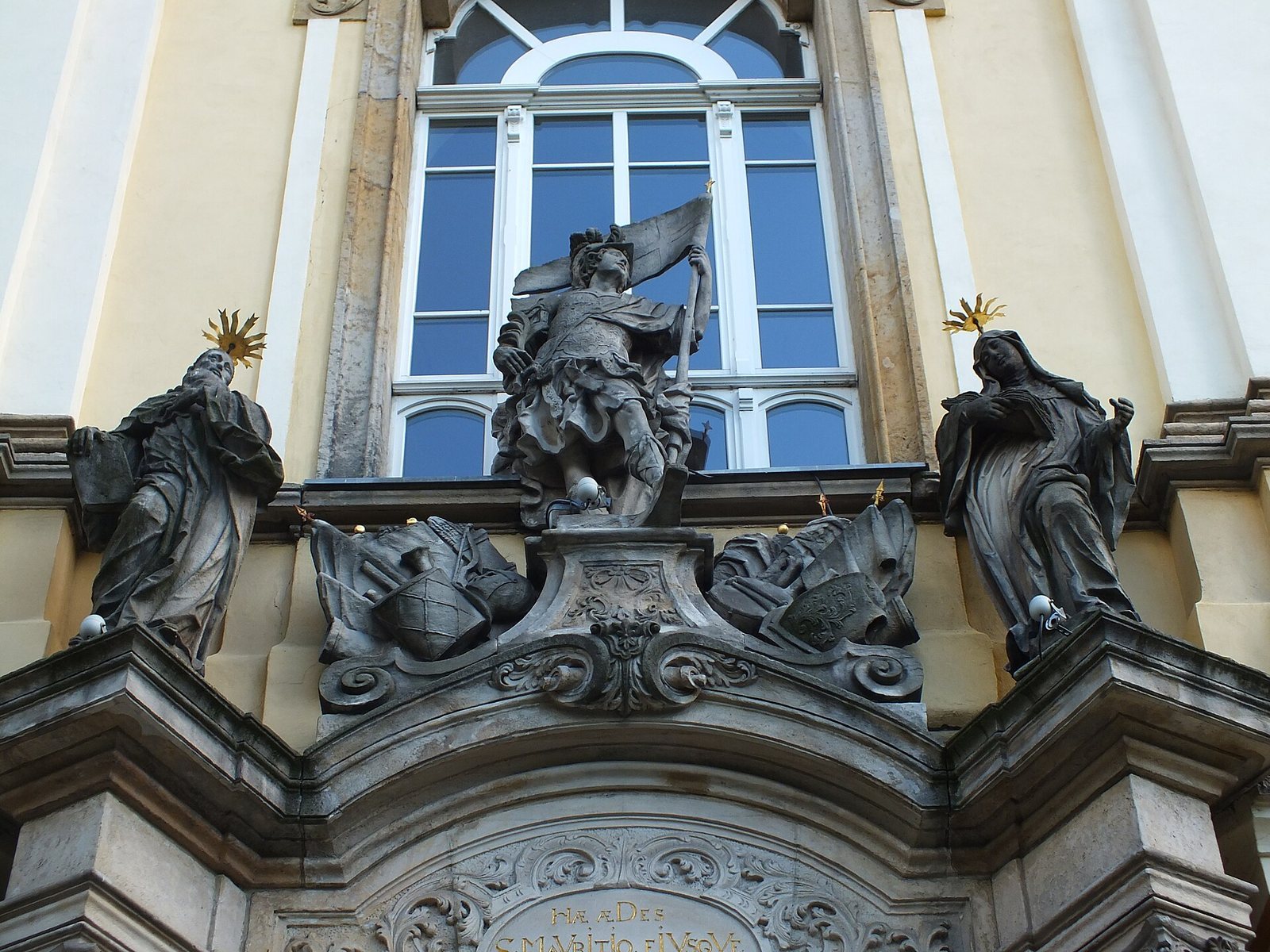
Following the church’s remodeling after secularization, a ceiling divided its interior into two levels. Its façade features a statue of Saint Maurice, an entrance portal, and a heraldic cartouche, a framed display for a coat of arms.