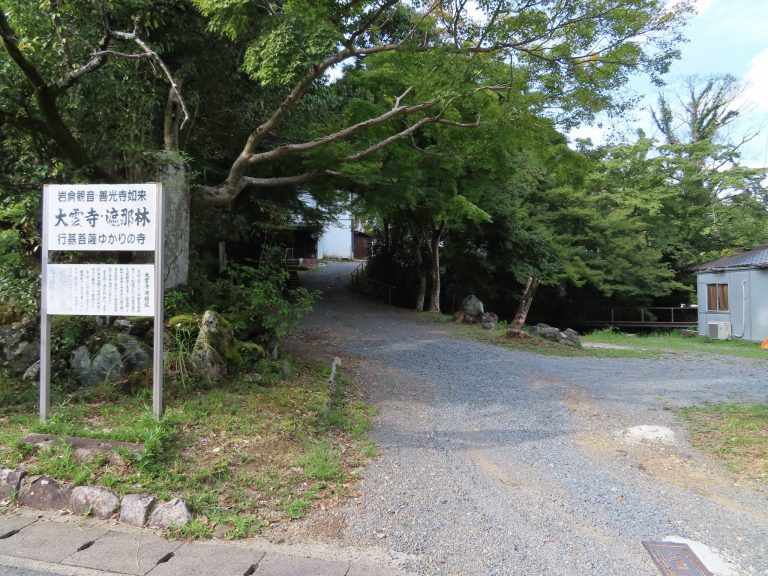
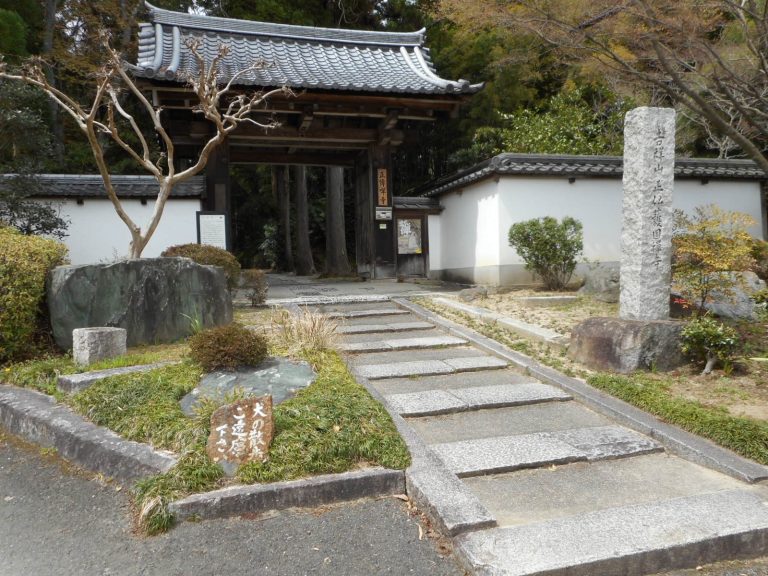
Jōshōkō-ji Temple: A Rinzai Buddhist Temple in Kyoto
Site at a Glance
- Popularity
- Medium
- Country
- Japan
- Primary era
- Unclassified
- Eras represented
- Unclassified
- Civilizations
- Unclassified
- Site type
- Religious
- Remains
- Temple
On this page9 sections
History
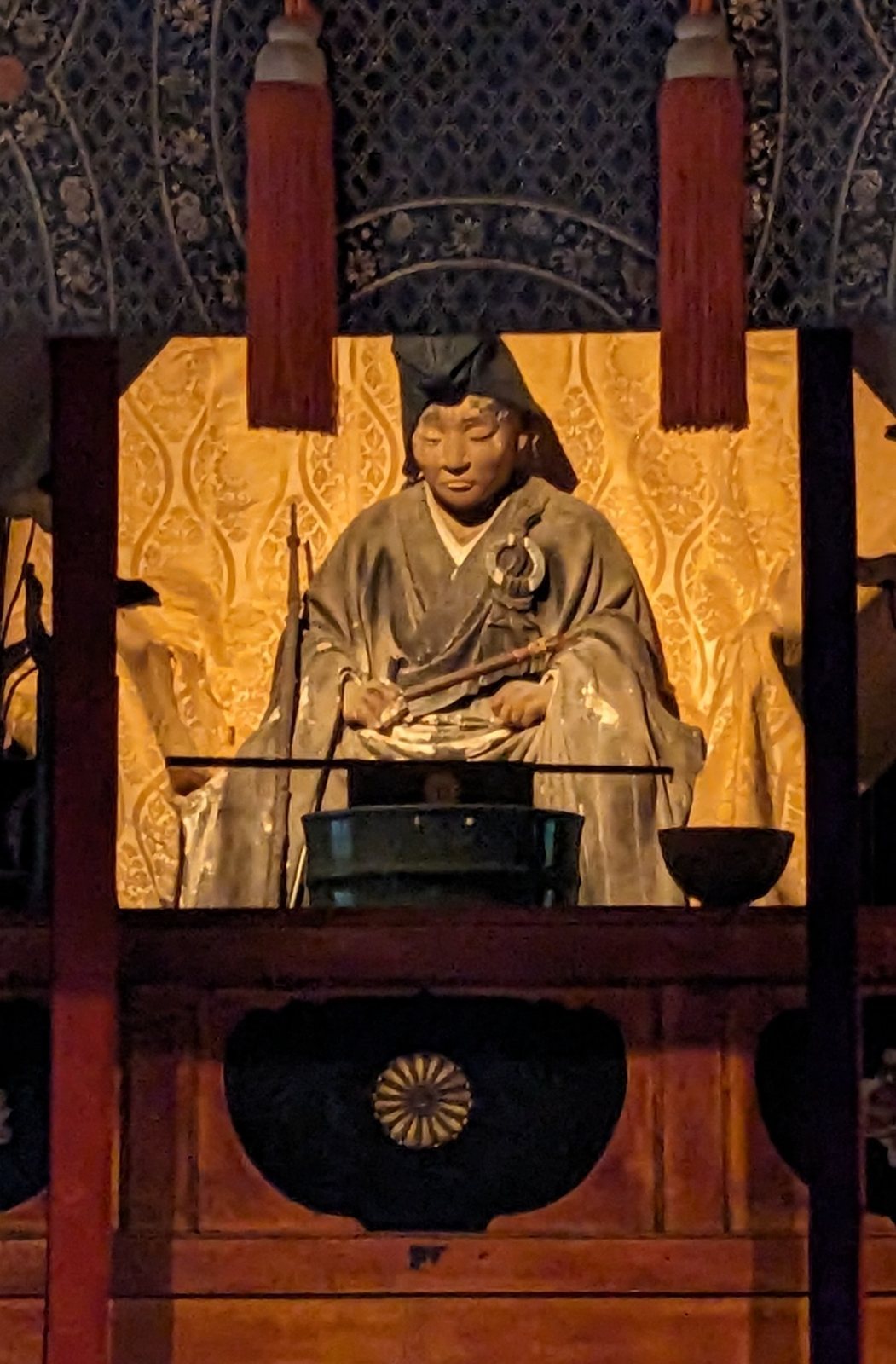
Jōshōkō-ji Temple is a Buddhist temple in the mountainous area north of Kyoto, Japan, founded around 1363 by Kogon, the first emperor of the Northern Court, one of two rival imperial courts in fourteenth-century Japan. It is now affiliated with the Tenryuji branch of the Rinzai school of Buddhism.
Kogon’s foundation
In 1352, Kogon entered Buddhist clerical life at a temporary palace used by Go-Murakami, emperor of the rival Southern Court, in Anō in Yamato Province. He devoted himself to Zen. After returning to Kyoto, he went to the Yamakuni estate in Tanba Province and established the temple at the site of an unused Tendai temple.
Kogon died about two years after founding Jōshōkō-ji and was buried there.
Patronage, destruction, and revival
Emperor Go-Hanazono supported the temple with its rear mountain forest and land assessed at 260 koku, a traditional rice-based measure used for land holdings and stipends. In 1579, fighting involving the military commander Akechi Mitsuhide reached the temple, which burned and then declined for a time.
The temple recovered during the Edo period under Emperor Go-Mizunoo. Tokugawa Hidetada, the second shogun, or military ruler of the Tokugawa shogunate, granted it 50 koku of land from Ido village. By 1788, Jōshōkō-ji had seven branch temples.
Modern history and protection
In November 1869, amid the early Meiji policy separating Shinto and Buddhism and their institutions, a relic pagoda was transferred to Jōshōkō-ji from Kitano Tenmangu. In 1945, as U.S. air raids intensified, the temple was considered as a possible refuge for treasures from the Shosoin, an imperial repository in Nara.
On July 12, 1994, 29.37 hectares around the temple became a Kyoto Prefecture historical natural environment conservation area. The temple’s associated Ninefold Cherry is a national natural monument, and its wooden Amida triad is designated an Important Cultural Property.
Remains
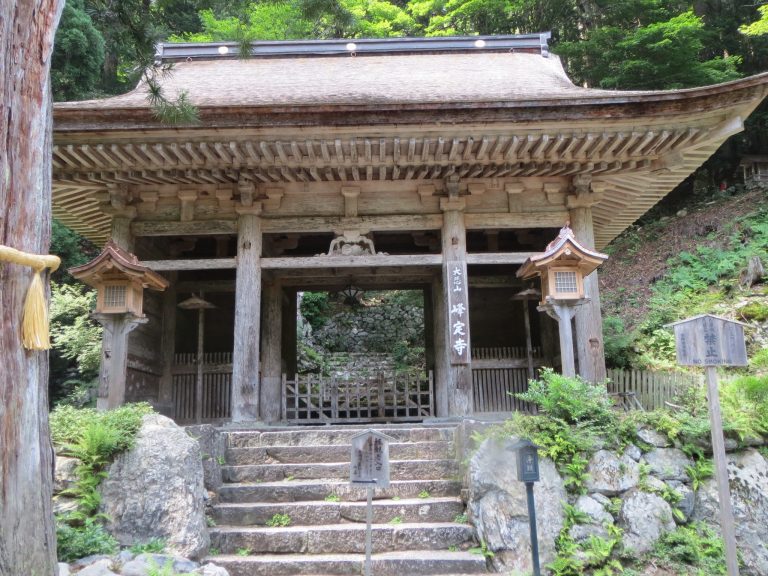
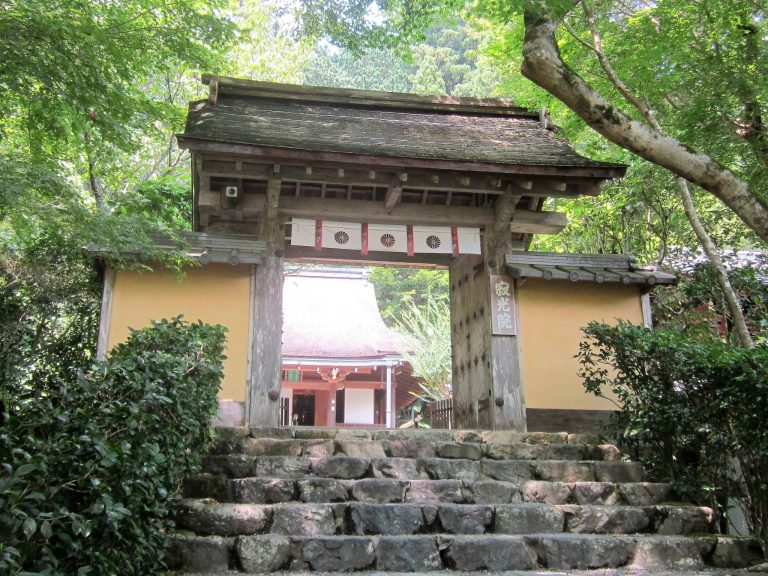
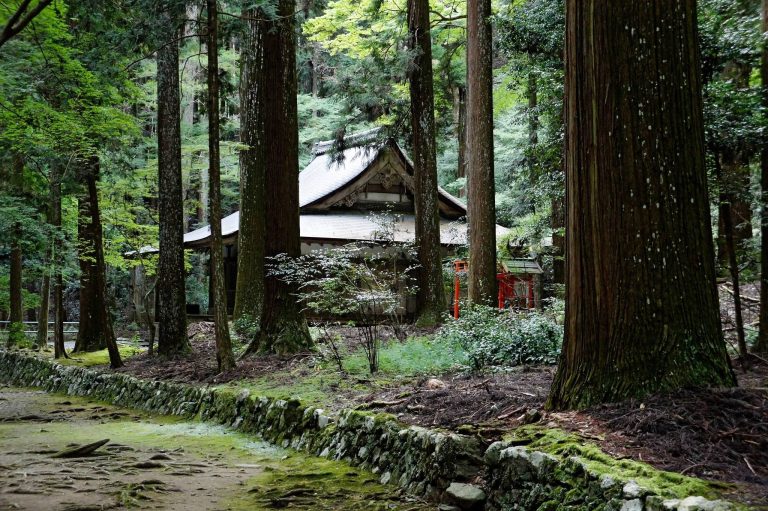
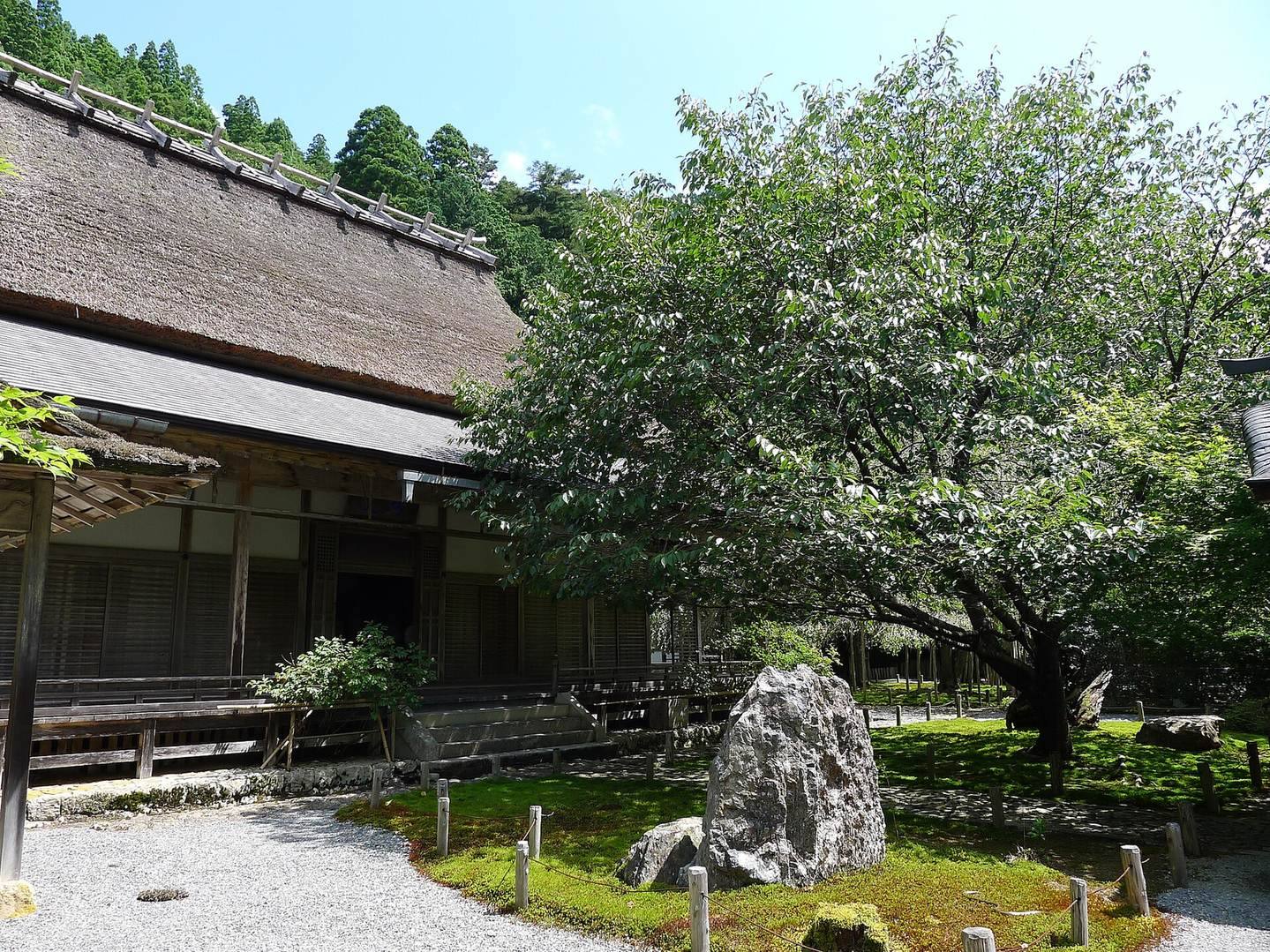
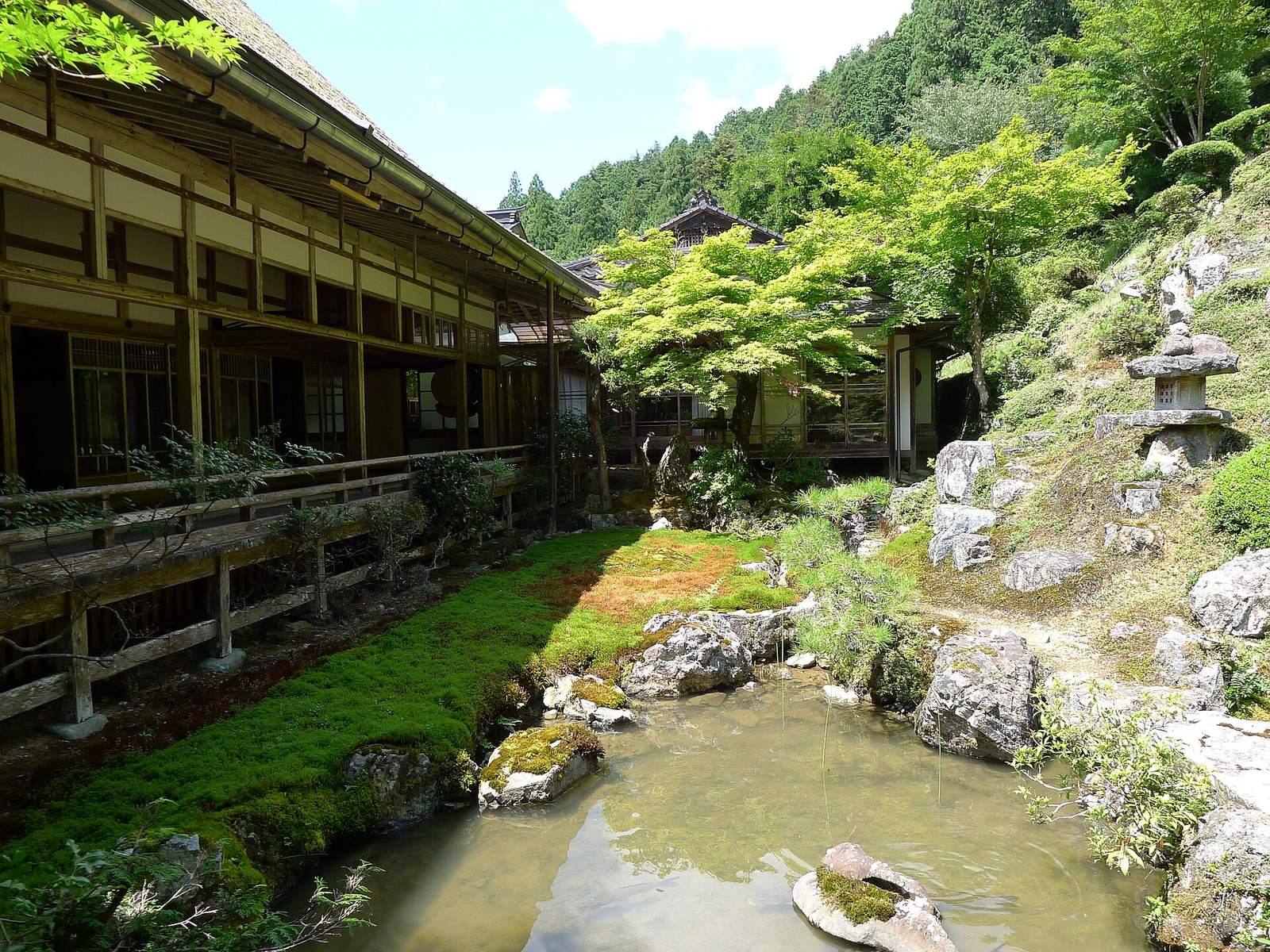
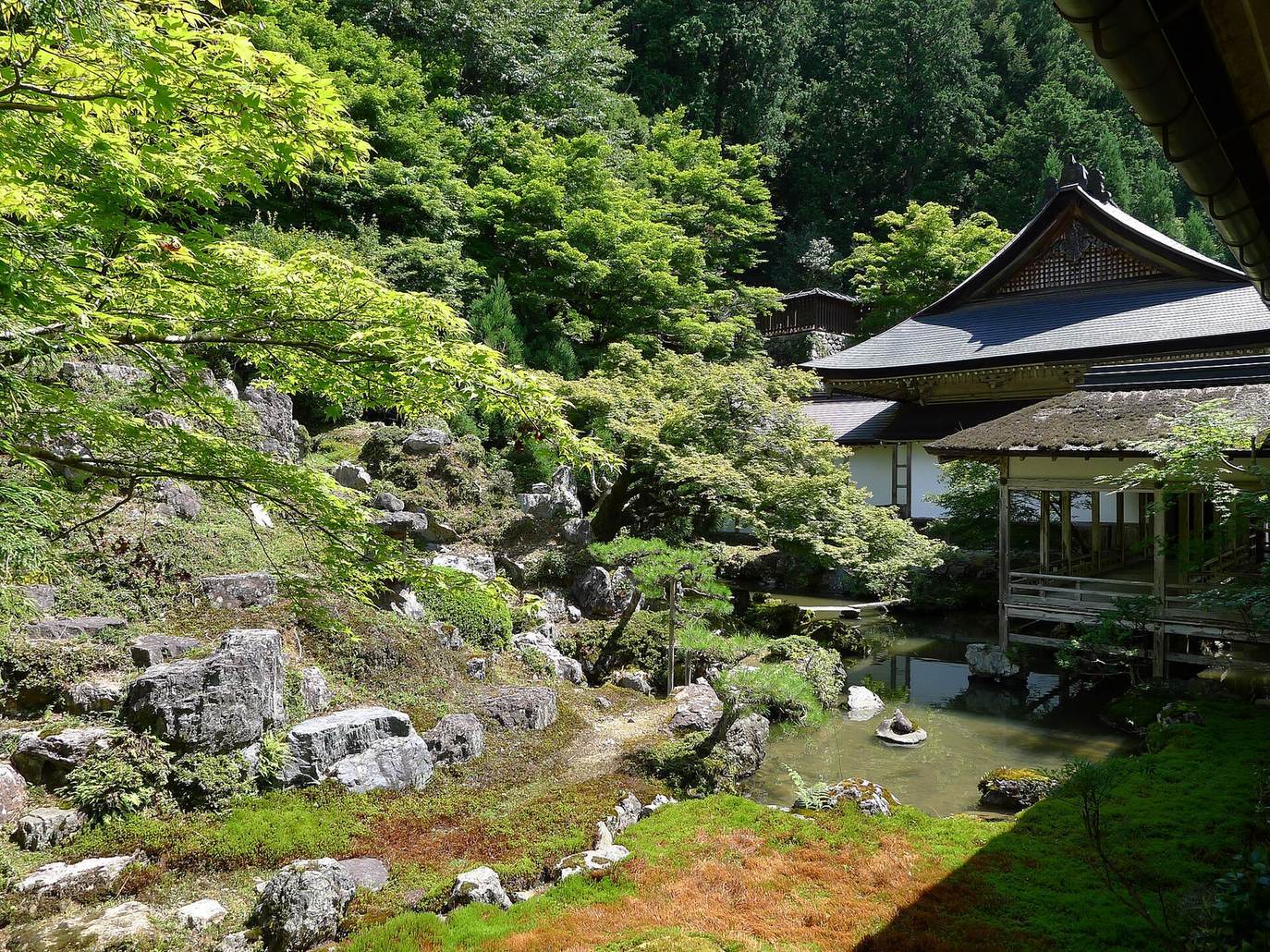
Jōshōkō-ji stands in a mountainous landscape north of Kyoto. Its grounds include the principal image of Shakyamuni Buddha, a temple garden, wooded land, a wooden Buddhist sculpture group, and the brass relic pagoda.
Garden and wooded grounds
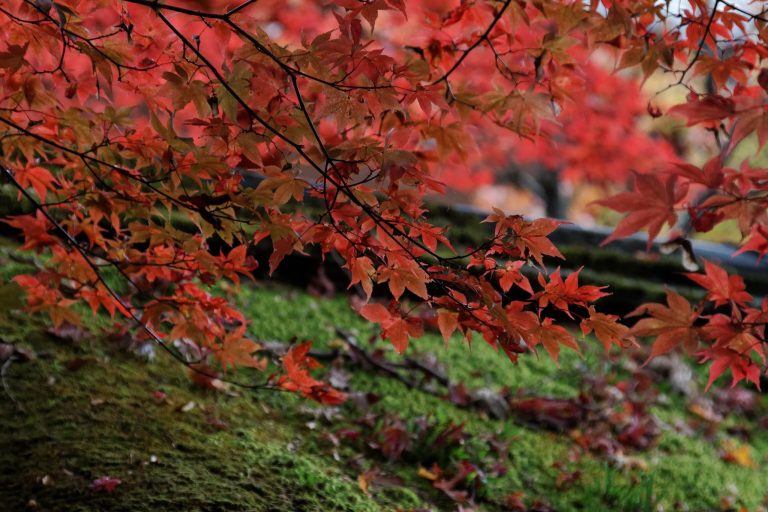
Kogon created the garden with the surrounding scenery as part of its design, naming ten views. These included the rear mountain as Monkey-Return Ridge, a waterfall as White-Jade Spring, and a mountain as the Forest of Ten Thousand Trees. Temple-owned land around the grounds includes Japanese hemlock, fir-and-hemlock, and Japanese white pine forest. The area is also known for cherry blossoms and autumn foliage, and the Ninefold Cherry is associated with the temple.
Buddhist images and relic pagoda
Wooden Amida triad
The wooden Amida triad depicts the Buddha with two attendant figures, all riding on flying clouds in a welcoming descent. Made of Japanese cypress by splitting sections of wood and joining them, the sculpture dates to the late Heian period, before Jōshōkō-ji was founded. It may have belonged to the earlier Tendai temple on the site or may have been Kogon’s personal devotional image.
Brass relic pagoda
The square brass pagoda has details modeled on architectural forms. It probably dates to repairs of the buildings at Kitano Tenmangu during the Genroku era, a Japanese period in the late seventeenth and early eighteenth centuries. The pagoda stands on a wooden base 40 mm high, whose top measures 330 by 338 mm. Above it is a 95 mm-high base with feet at its four corners, measuring 30 by 30 mm across the top, followed by a 48 mm-high platform. The distance from that platform to the upper edge of the eave tiles is 221 mm. The pagoda measures 795 mm from its base to the tip of its top ornament, excluding the wooden support.
An inscription under the wooden base identifies it as a pedestal for a relic hall and says that it was newly made by someone holding a Buddhist ecclesiastical title. The underside of the wooden storage box identifies it as a container for the relic hall in the inner sanctuary of Kitano Shrine. It records that the box was made on the twelfth day of the third month of Genroku 14 by a shrine ceremonial official who also held a Buddhist title.