Cuween Hill Chambered Cairn: A Neolithic Passage Tomb in Orkney
Site at a Glance
- Popularity
- Medium
- Country
- United Kingdom
- Primary era
- Stone Age
- Eras represented
- Stone Age, Modern
- Civilizations
- British
- Site type
- Burial
- Remains
- Tomb
On this page10 sections
History
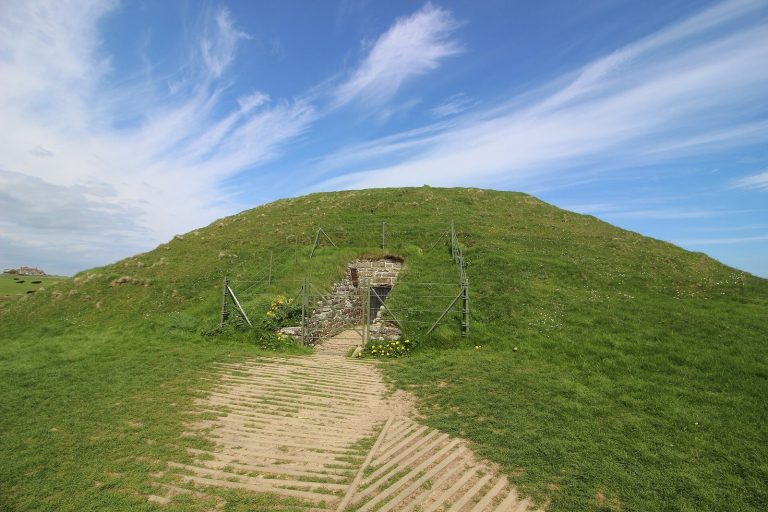
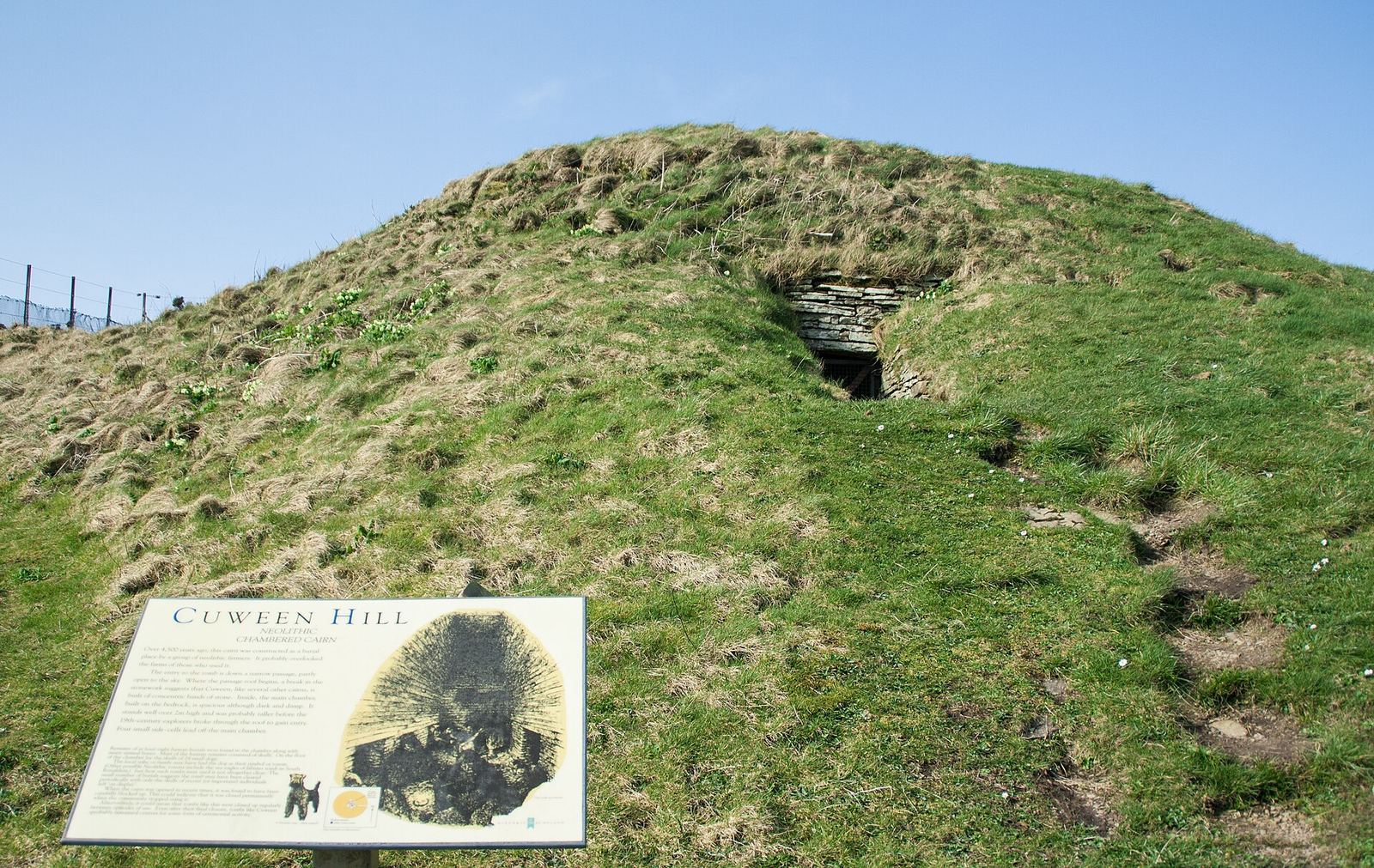
Cuween Hill Chambered Cairn is a Neolithic burial monument on Mainland in Orkney, United Kingdom. Farming communities built it around 3000 BC as a passage tomb, a burial chamber reached through a passage, of the Maeshowe type, named for a major Neolithic tomb in Orkney. It is smaller than Maeshowe.
Neolithic community and use
Excavations in the 1990s uncovered a small Neolithic settlement at Stonehall, immediately below the cairn. Stonehall predates the settlement at the Knap of Howar on Papa Westray and is contemporary with the tomb. Their proximity and shared period have led to the suggestion that Stonehall’s inhabitants built and used the cairn.
Later entry and local memory
Nineteenth-century explorers broke through the tomb’s original roof to enter it. When the cairn was opened in modern times, it was found carefully blocked. This may mean it was sealed permanently after use, or closed between separate periods of use. M. M. Charleson excavated the cairn in 1901.
The name Cuween comes from Kua-eng, an Old Norse term meaning cattle pasture. The hill was also written as Kewing in the early twentieth century, while the cairn was locally called Fairy Knowe. In local folklore, megalithic structures were regarded as homes for trolls or fairies.
Remains
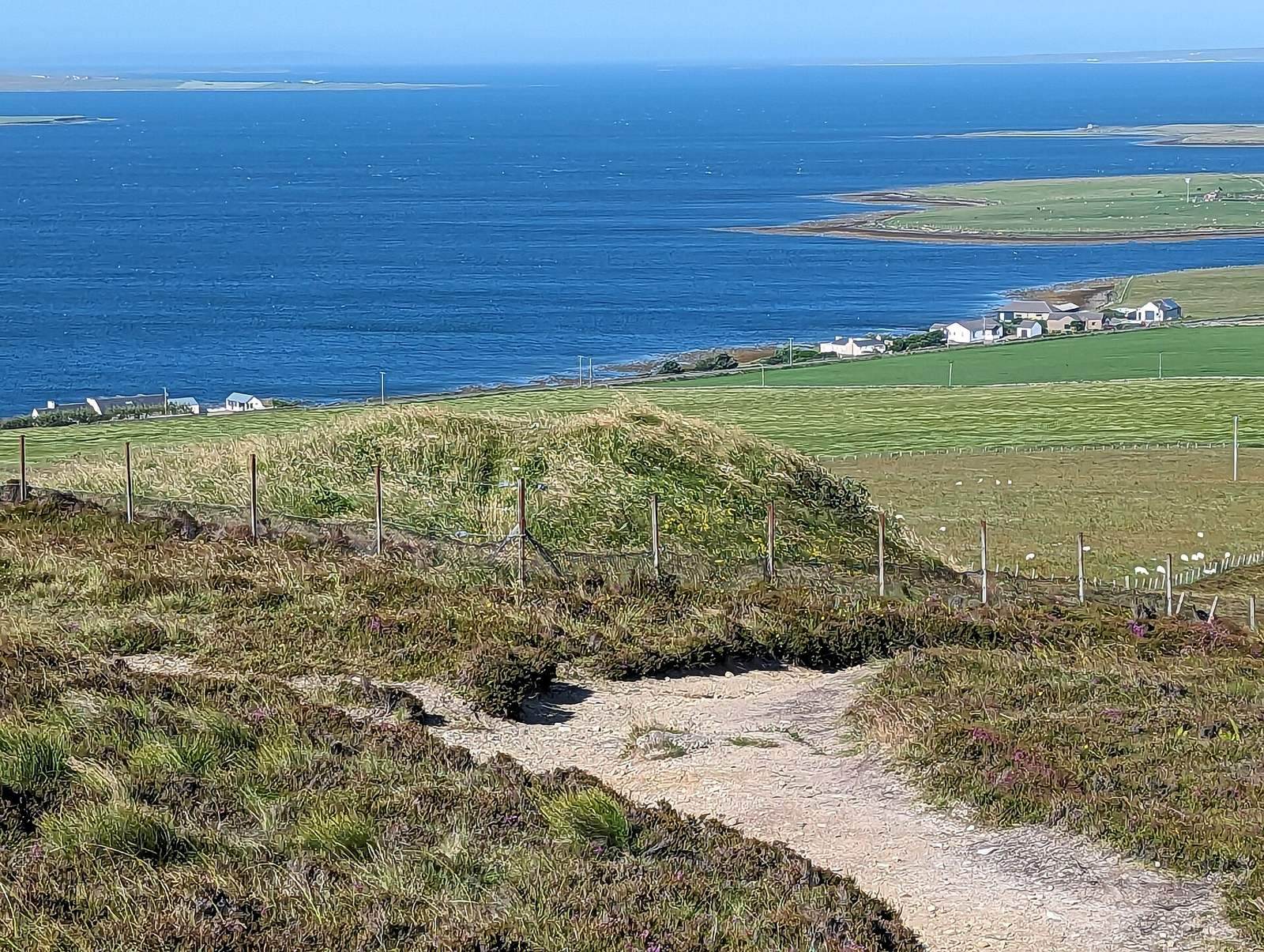
The cairn stands on a hillside overlooking the Bay of Firth. Its low passage leads to a rectangular central chamber built on bedrock, with four side cells branching from it.
Passage and chambers
Passage and central chamber
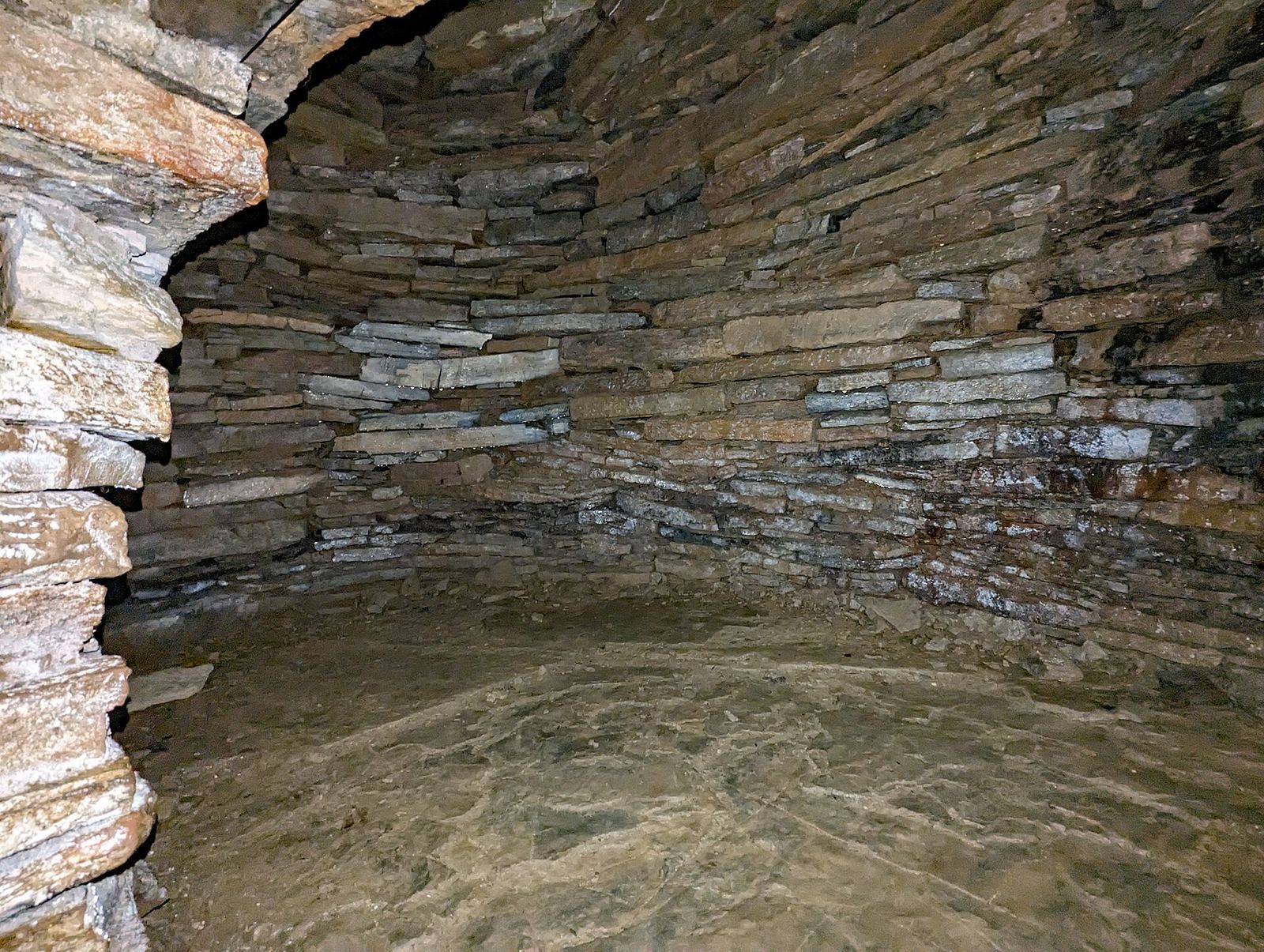
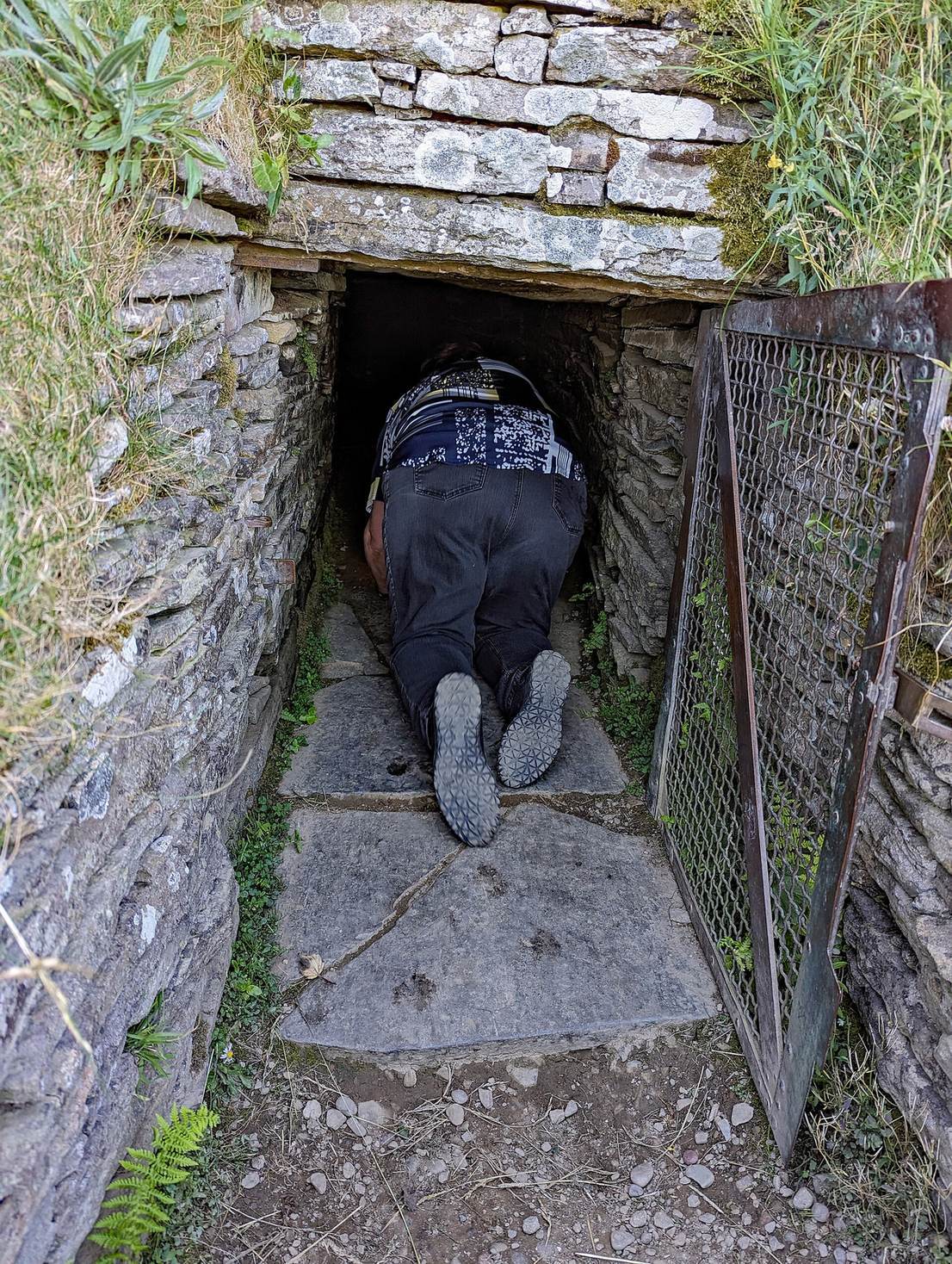
The passage is about 5.5 metres long and 0.8 metres high, and part of it is open to the sky. It leads into the rectangular main chamber. The chamber walls consist of courses of stone slabs, vertical at the bottom and sloping inward above. The original walls survive to about 2.3 metres, and the main and side chambers are more than 2 metres high. The original roof was probably taller than the surviving structure; a modern concrete dome now covers the chamber.
Side cells
Four cells open off the main chamber, one of them double. Their entrances sit slightly above the chamber floor. This arrangement differs from the three side chambers typical of Maeshowe-type tombs.
Human and animal remains
Human burials
Remains of at least eight people were found in the main chamber and its west, south, and end compartments. Most were skulls. The small number of burials has prompted the interpretation that the chamber was cleared at least once during its use. One possibility is that skulls of recently deceased or important individuals were left on display.
Animal remains
The finds included cattle and bird bones, as well as 24 small dog skulls lying on the main-chamber floor. The dogs have been interpreted as a possible emblem of the community or family that used the tomb. This idea has been compared with the proposed emblematic role of sea eagles at Isbister Cairn, also called the Tomb of the Eagles, on South Ronaldsay.
A team at the University of Edinburgh’s Royal (Dick) School of Veterinary Studies CT-scanned one canine skull. Forensic artist Amy Thornton used a 3D print to model the dog’s head, giving it a coat resembling a European grey wolf on expert advice. Alison Sheridan, principal archaeological research curator at National Museums Scotland, interpreted the reconstruction as potentially informative about dogs’ appearance and their possible ceremonial or symbolic importance in Late Neolithic Orkney.