Torö Church: A Wooden Place of Worship on Torö, Sweden
Site at a Glance
- Popularity
- Very Low
- Country
- Sweden
- Primary era
- Early Modern
- Eras represented
- Early Modern, Modern
- Civilizations
- Swedish
- Site type
- Religious
- Remains
- Church
On this page11 sections
History
Early worship and construction
Torö Church is a wooden church on the island of Torö in Nynäshamn Municipality, Sweden. Built in 1699, it provided a place of worship after Torö received the right to its own priest. The island originally belonged to Sorunda Parish, and Torö Parish was formed later.
An older chapel stood on the same site before the present church. Its date is unknown, though it may have been built in the twelfth or thirteenth century. By the time it was replaced, it had fallen into poor condition. The chapel had a rectangular nave, a sacristy to the north, a porch to the south, and a tower to the west.
At the request of Sigrid Horn, then owner of Herrhamra, the new church replaced the chapel on the same foundation. Torö also had a second chapel, south of the present Herrhamra estate. It burned during the events of 1719 and was not rebuilt.
Damage and continuing use
In 1719, Russian attacks on Sweden’s Baltic coast during the Great Northern War damaged Torö Church. Repairs were delayed by a shortage of money and were completed in 1738 after funds were gathered through a church collection.
Today the church belongs to Ösmo-Torö Parish in the Diocese of Strängnäs, an ecclesiastical district of the Lutheran Church of Sweden. Renovation work took place in spring 2011, followed by a rededication ceremony on Pentecost Sunday, 12 June.
Remains
The church is a log-framed building, while its churchyard extends southwest over sloping, uneven ground. The grounds are laid out diagonally along a northeast-to-southwest axis.
The church building
Plan and exterior
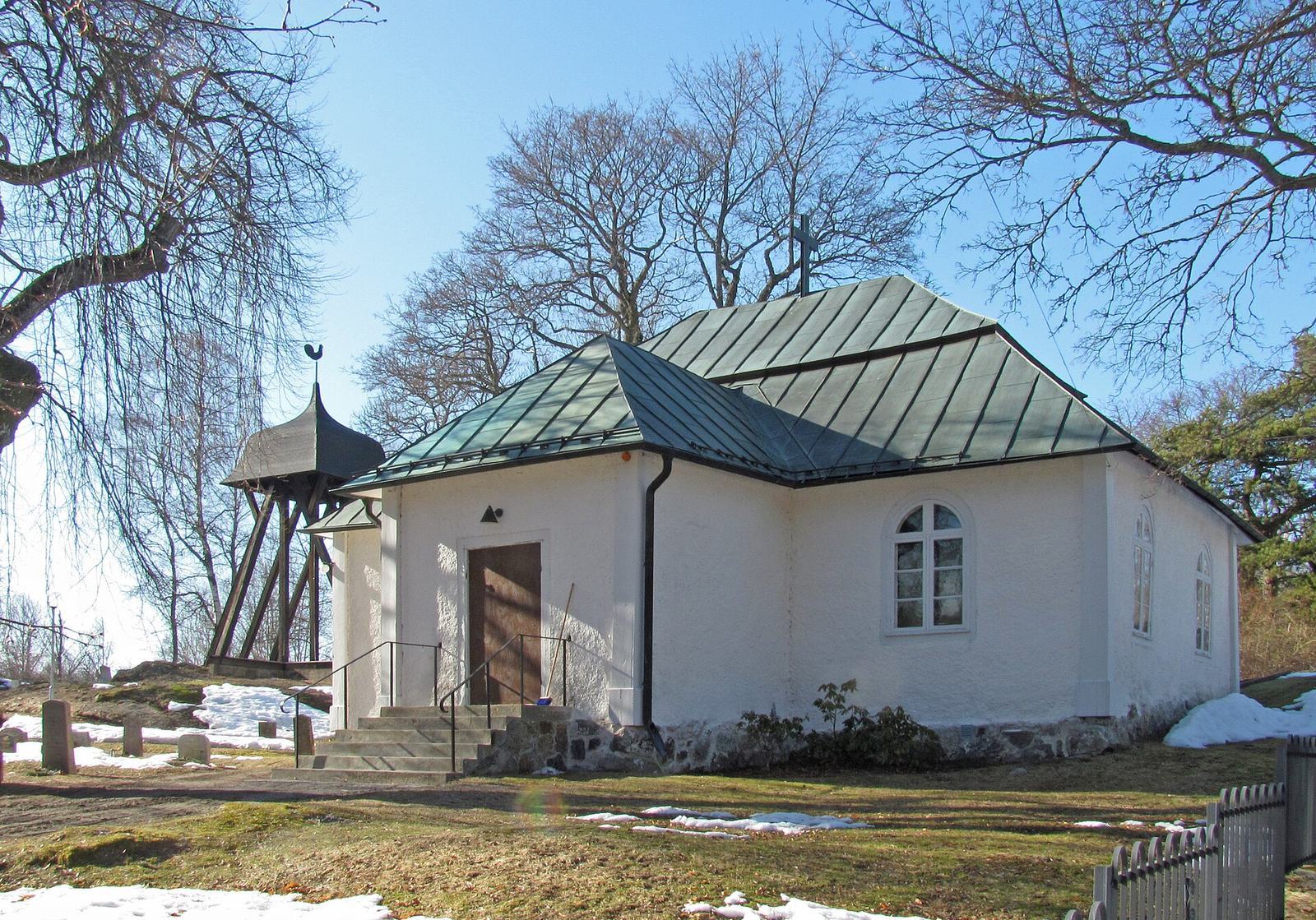
Much of the church’s horizontal-log frame is original. Its nearly square nave has a chancel with a straight eastern end. The main entrance is through a porch on the south side, and a sacristy stands to the north. A mortuary was added against the north side in 1955.
The church was first painted red. In 1849 its exterior walls were covered with render and painted white; the windows were given round arches in 1880. In 1895, metal sheets replaced the earlier roof shingles. The building’s interior was modernized in 1930.
Interior and furnishings
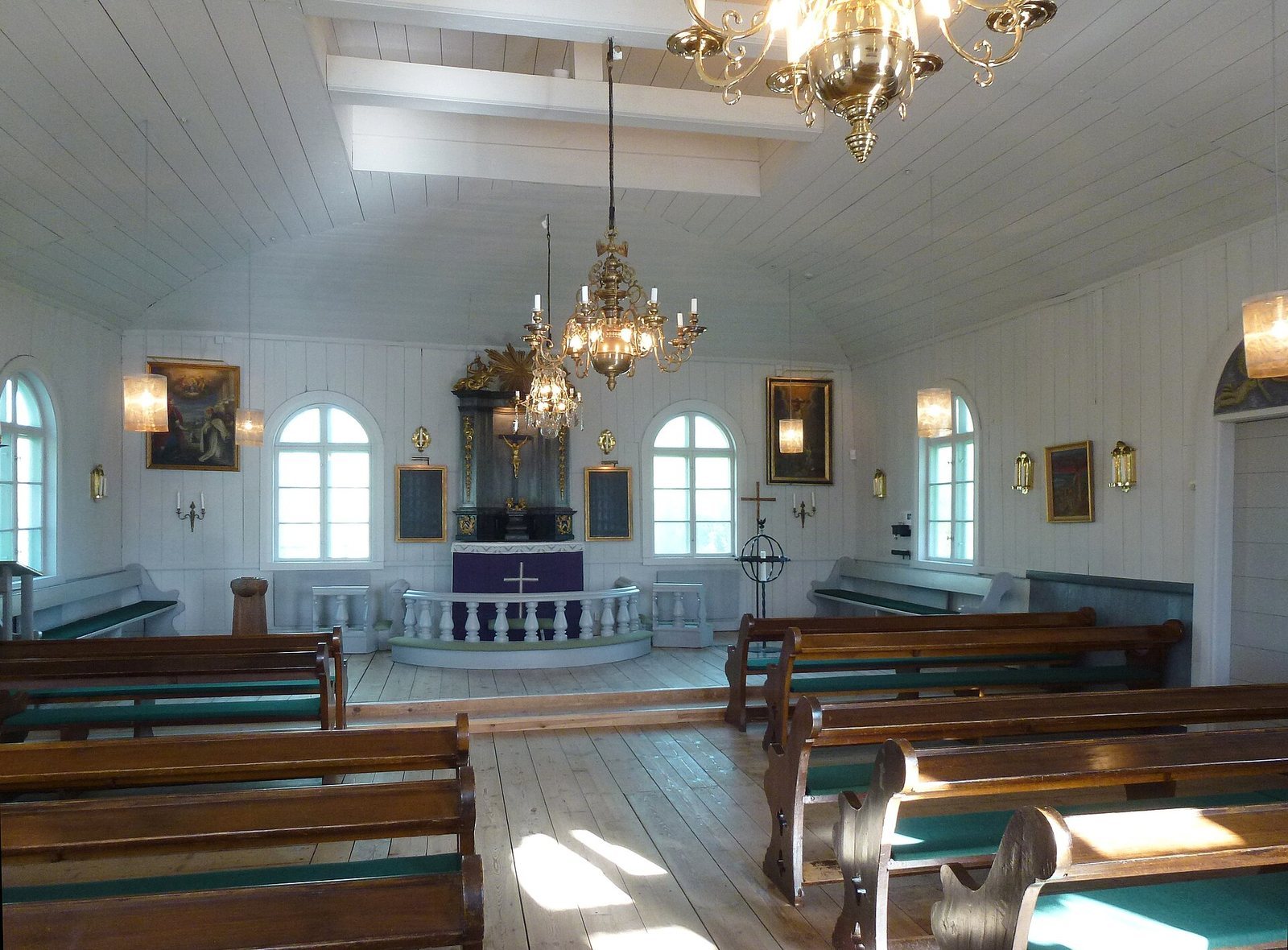
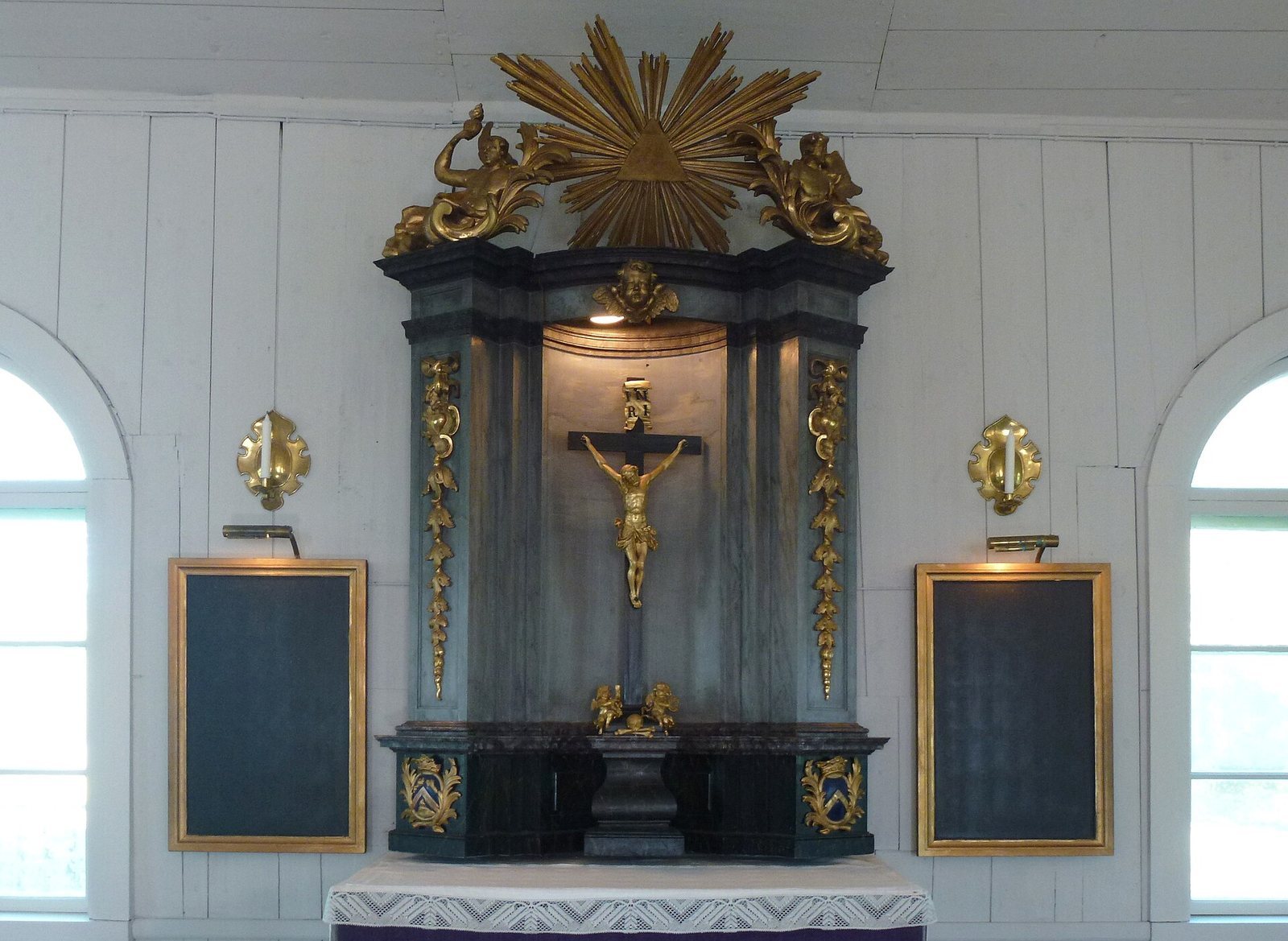
A shallow, curved wooden ceiling spans the interior. During the 2011 renovation, the walls were painted their present white, green wall-to-wall carpeting was removed, and the board floor was exposed. The pulpit dates to the latter half of the seventeenth century, and the oak baptismal font was made in 1921. A harmonium preceded the mechanical organ installed in 1961, built by Werner Bosch of Kassel, Germany.
Churchyard and associated buildings
Churchyard
A memorial grove occupies the southwestern part of the churchyard and was inaugurated in the 1990s. The churchyard was reportedly once enclosed by a timber fence about a metre high. A wrought-iron fence replaced a wooden one in 1966.
Bell tower and sculpture
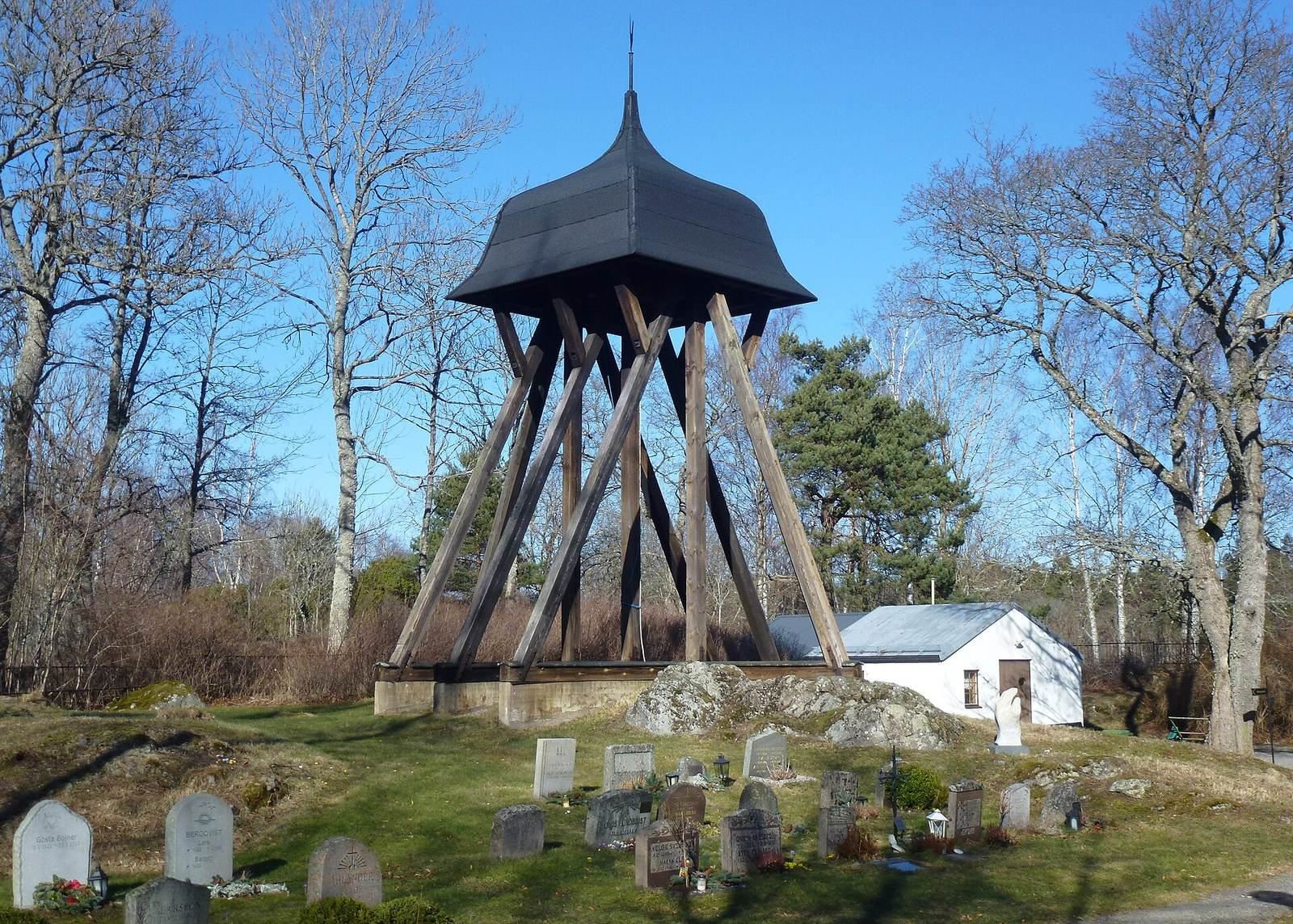
A wooden bell tower built in 1940 in the northern part of the churchyard replaced an earlier tower. Its open timber frame rests on a concrete base and supports a bell-shaped roof. The design resembles the tower at Herrhamra maritime pilots’ cemetery, built a few years earlier. The bells are dated 1645 and 1938.
Beside the tower stands God’s Hand, a white-marble sculpture carved by Harry Bengtsson in 1990.
Parish hall
Snarberga Torö Parish Hall stands southwest of the churchyard among large deciduous trees, beside a picket fence. The older building is painted red and was reportedly once the home of the district midwife.