Church of the Immaculate Conception of the Virgin Mary in Malacky: A Franciscan Church
Site at a Glance
- Popularity
- Low
- Country
- Slovakia
- Primary era
- Early Modern
- Eras represented
- Early Modern, Modern
- Civilizations
- Habsburg, Hungarian
- Site type
- Religious
- Remains
- Church
On this page13 sections
History
Foundation and Franciscan establishment
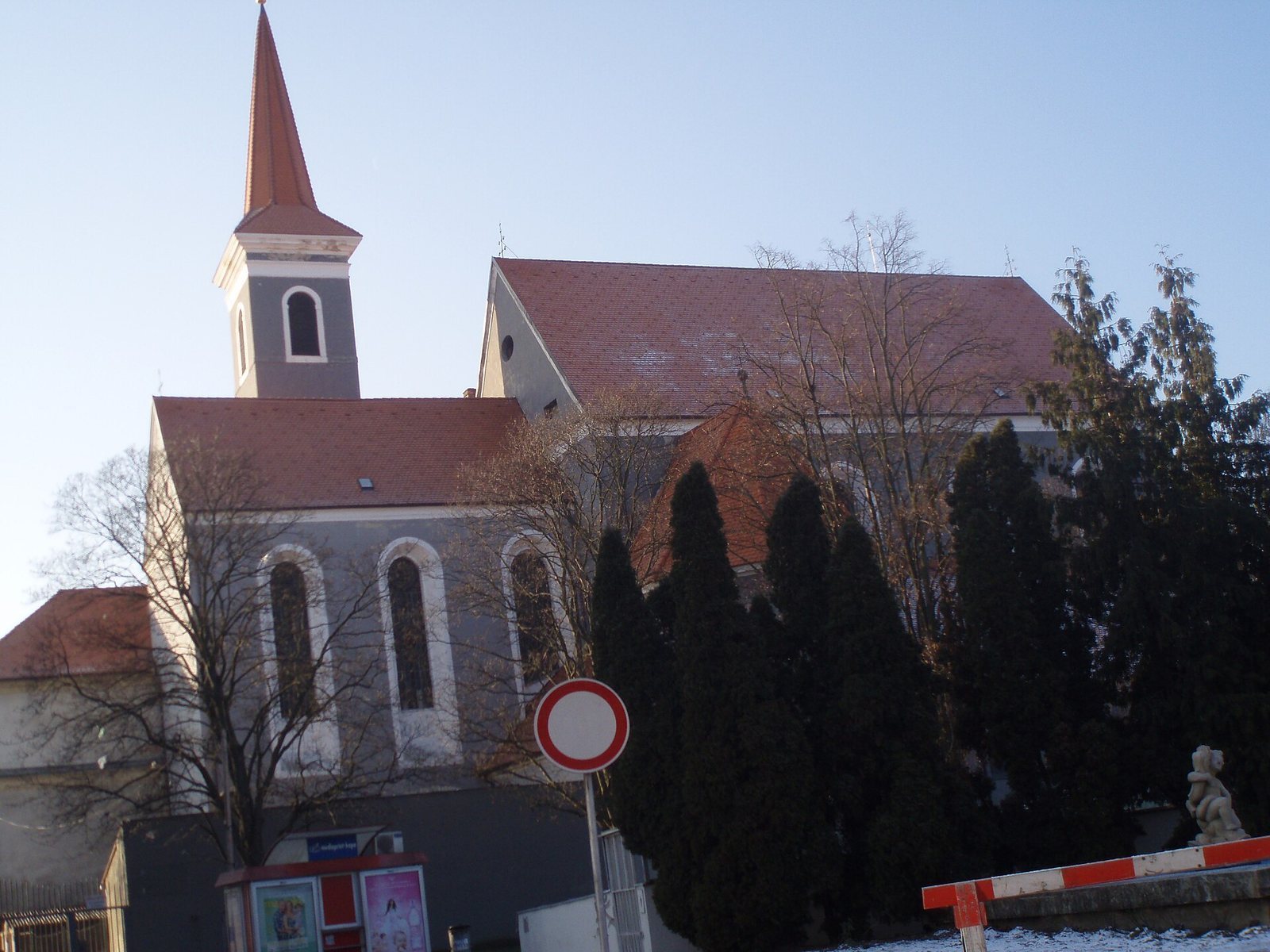
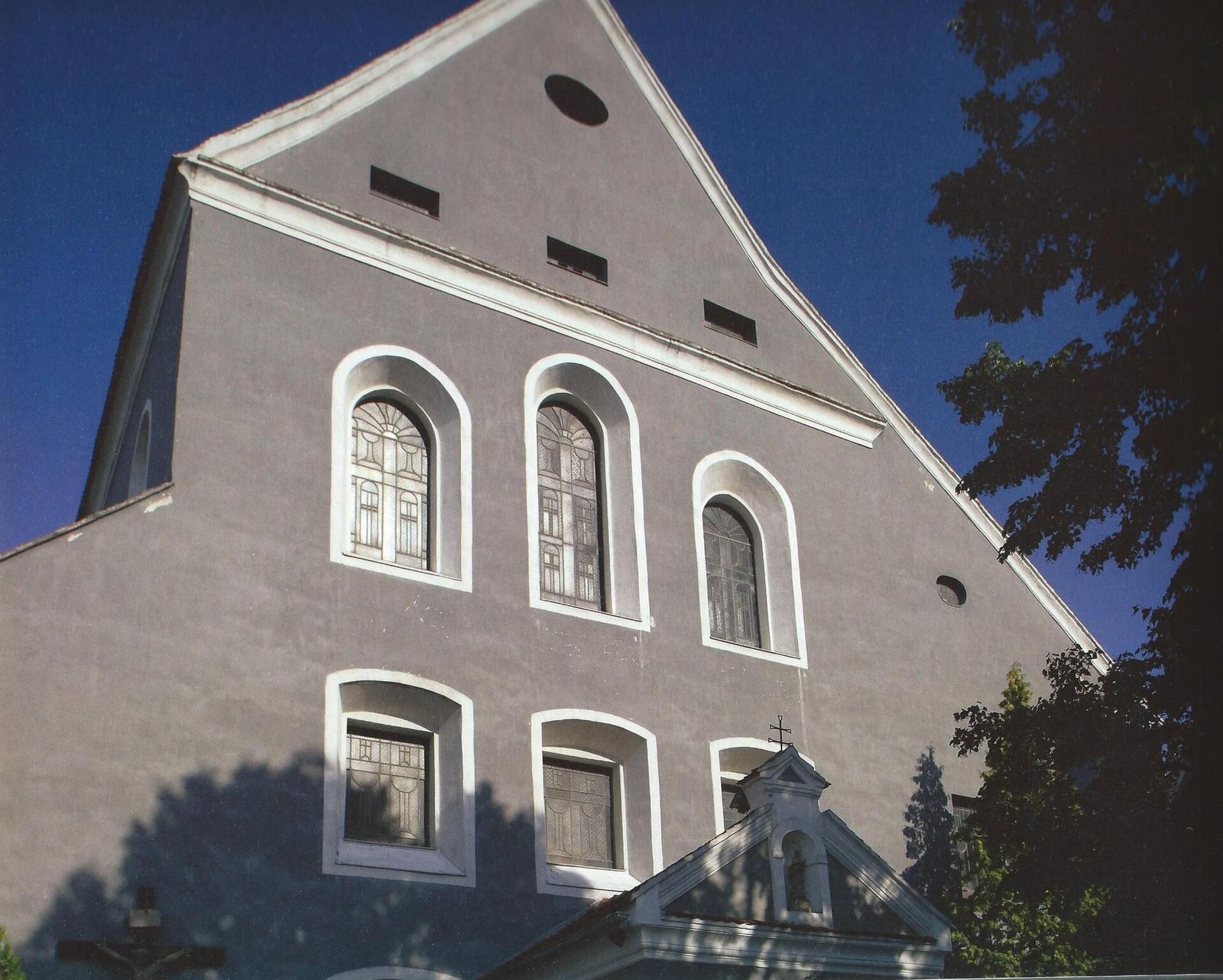
The Church of the Immaculate Conception of the Virgin Mary is a Roman Catholic church in central Malacky, Slovakia. Work on the church and its adjoining monastery began in 1647, and the nave follows the Baroque style, known for elaborate forms and decoration. The church is dedicated to the Immaculate Conception of the Virgin Mary, whose feast is celebrated on December 8.
The monastery was completed in 1652 and the church in 1653. After construction, Pavol Pálfi arranged a deed giving both buildings to the Franciscans, the Catholic religious order founded by Francis of Assisi. At that time, the church had no altars, organ, or pulpit. Bishop Tomáš Pálfi consecrated it in 1660.
Later changes and parish role
Before 1928, the church walls were whitewashed. Prince Mikuláš Pálfi then commissioned painted decoration and partial alterations, work carried out by František Malovaný and his collaborators.
The church is the largest in Malacky parish, but it is not the parish church; the older Church of the Holy Trinity serves that role. The church belongs to the Malacky parish and deanery within the Bratislava Archdiocese and the Western ecclesiastical province. It was listed as a Slovak national cultural monument on July 17, 1963.
Remains
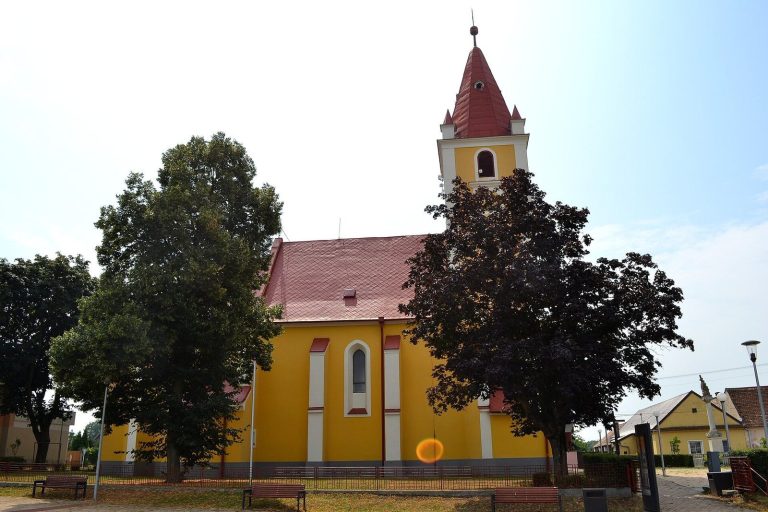
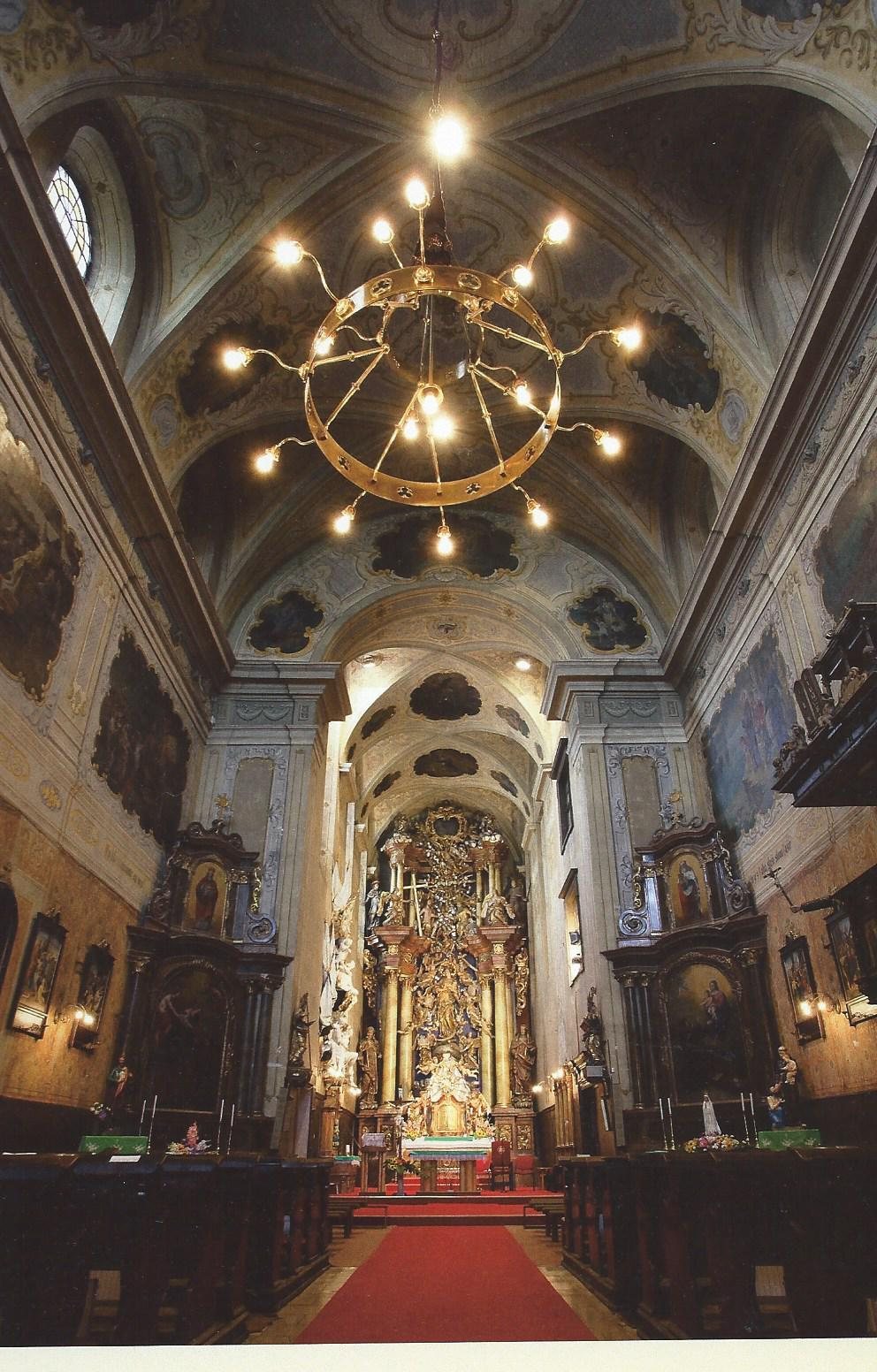
Built of stone, the church has a single nave and one tower, with a Baroque interior. It is connected to the former Franciscan monastery, known as the Black Monastery, and a school is also located within the monastery complex.
Altars and memorial
Main altar
The main altar, made in the first half of the 18th century, is a 14-metre-high wooden structure with colored surfaces and rich gilding. Its design draws on the Litany of Loreto, a devotional prayer invoking titles of the Virgin Mary. A larger-than-life statue of Mary represents the Immaculate Conception at the center. Saint Clare, founder of the Poor Clares, appears below Saint Bonaventure, a Franciscan theologian, on one side. Opposite them are Saint Elizabeth of Hungary, associated with charitable works, and Saint John of Capistrano, a Franciscan preacher. An alliance coat of arms above the altar bears the arms of Mikuláš V Pálfi and his wife Katarína, née Baroness Weichs.
Side altars
Countess Mária Antónia de Souches Ratvit, wife of Count Leopold I Pálfi, donated two altars in the first half of the 18th century. One has a principal painting of Saint Francis of Assisi, founder of the Franciscan order, and an upper painting of Saint Nicholas. The other is in the late Baroque style. Its main painting, by A. Veselý, shows Saint Anthony, while an upper painting by the same artist depicts Saint Leopold.
Pálfi epitaph
The epitaph of Count Mikuláš V Pálfi is set into the wall on the left side of the sanctuary. His grandsons Leopold, Mikuláš, and Rudolf commissioned the memorial, attributed to Ján Mikuláš Moll. Its symbolic imagery refers to the count’s life and the transience of his glory.
Chapels and devotional features
Entrance chapel
A chapel on the left near the entrance contains a Baroque sculpture dated 1725. Busts of Saint Anne, mother of the Virgin Mary, and Saint Joseph, her husband, stand to its left and right. Frescoes on the chapel walls depict scenes from the life of the Virgin Mary.
Wall grotto and niches
A painting is set within an artificial rocky grotto carved into a wall. Two smaller grotto-like niches beside it hold statues of the Virgin Mary and Saint Joseph.
Marian chapel and Lourdes grotto
A chapel dating to the 20th century is dominated by a statue of the Virgin Mary and was restored in the 1940s. Beside it is a Lourdes grotto, a devotional setting recalling the French pilgrimage site associated with Mary. An altar dedicated to the Sacred Heart, a Catholic devotion to Jesus, stands immediately next to the grotto.
Right-side chapel and Holy Stairs
A chapel on the right side of the nave provides access to the pulpit. The Holy Stairs consist of two flights divided by a wall, with 20 steps in each flight. Only the left-hand flight serves as the Holy Stairs, a devotional staircase climbed on the knees; the Altar of the Holy Cross stands at its top.