Šatrija: A Hillfort in Samogitia, Lithuania
Site at a Glance
- Popularity
- High
- Country
- Lithuania
- Primary era
- Medieval
- Eras represented
- Medieval
- Civilizations
- Grand Duchy of Lithuania
- Site type
- Military
- Remains
- Fort
On this page9 sections
History
Settlement and medieval fortifications
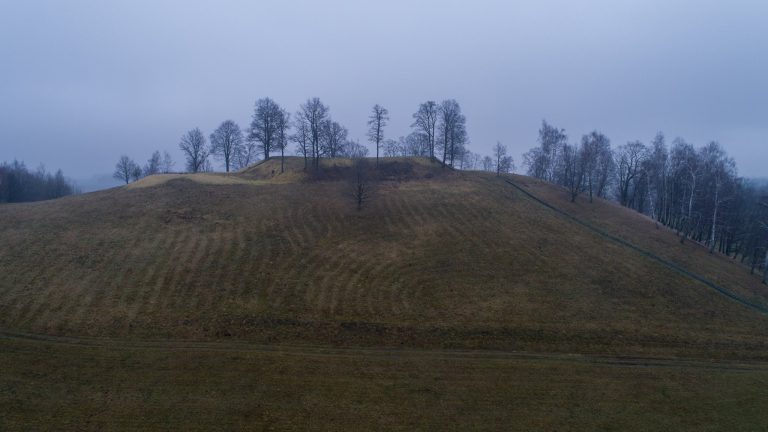
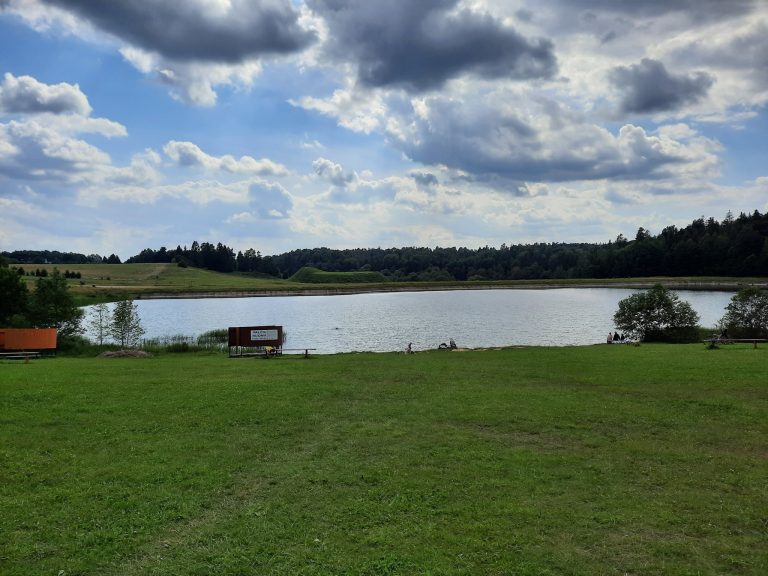
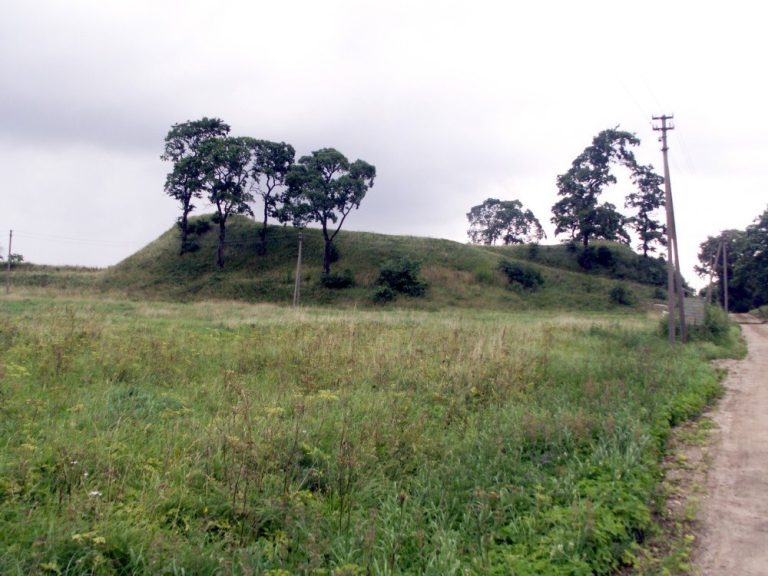
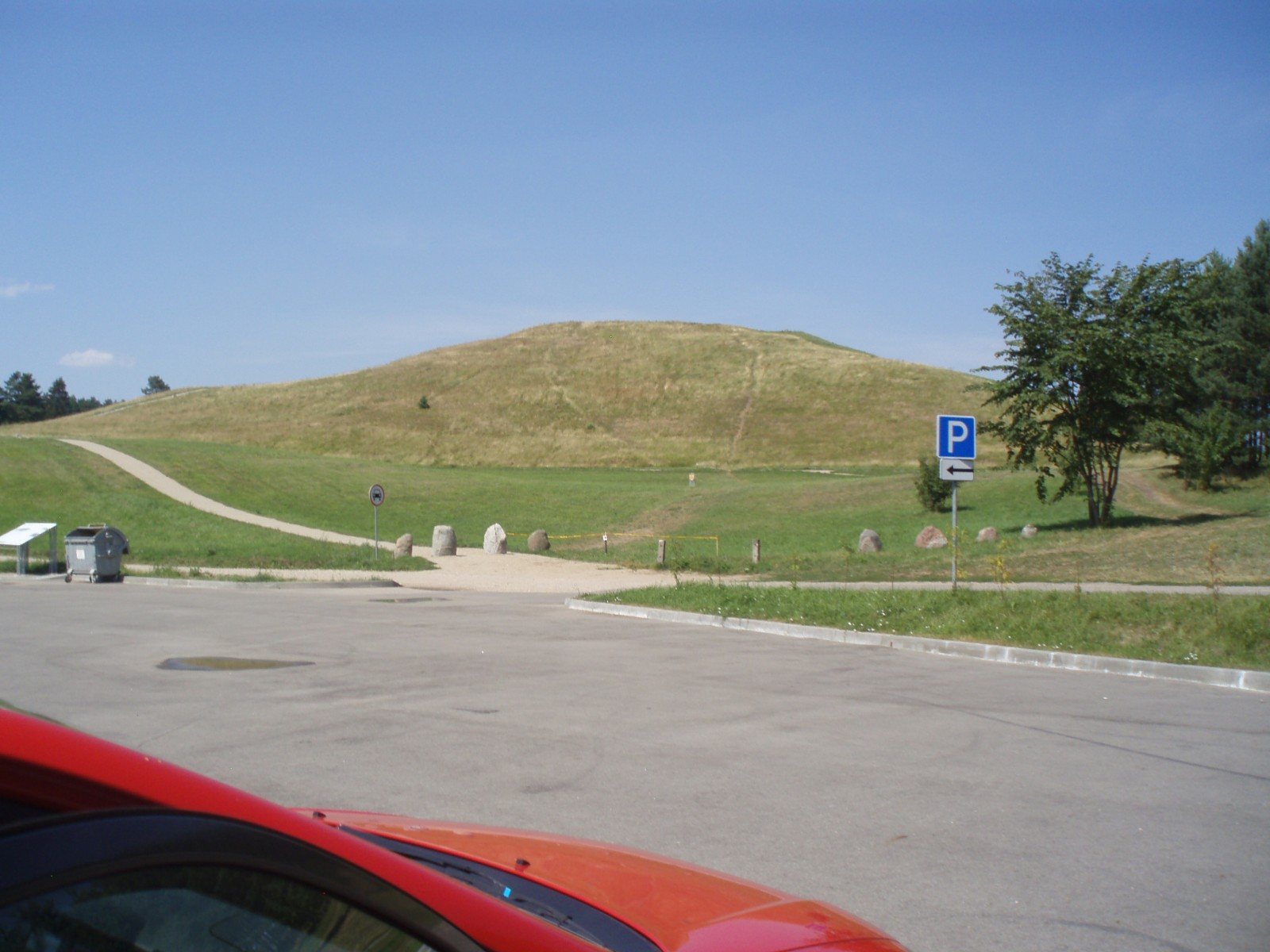
Šatrija is a hillfort, a fortified site built on elevated ground, in Samogitia, a historic region of western Lithuania. It lies near Pašatrija and 2.7 km southeast of Luokė. The hillfort is broadly dated to the latter half of the first millennium and the start of the second. It may have served as an important center of pre-Christian religious practice.
People lived on the hill’s slopes or foothills from the second century BCE. Settlement activity was concentrated mainly in the sixth to tenth centuries. A wooden castle or fortifications stood on the summit in the fourteenth century. Šatrija may have been destroyed during the introduction of Christianity. In the Middle Ages, an effort to rename the hill after a saint did not displace its established name.
Folklore and cultural memory
Local stories tell of witches from Samogitia gathering on the hill and burying a church beneath the earth. In this legend, the summit sank as the church decayed. Other tales describe witches flying to Šatrija on Kupala Night, a midsummer festival night in Slavic traditions, or a witch hosting a gathering beside the coffin of Alcis, a legendary figure in Lithuanian folklore. Another story links the hill’s name to a giant whose pockets of soil were gnawed through by mice. A different tale says a witch lost her broom and cried out for her šatra, a twig from a broom. The name has also been associated with the Lithuanian word šatrija, meaning “witch,” though it may instead derive from the local place-name.
Šatrija has also appeared in Lithuanian art and literature. Eduardas Mieželaitis, Antanas Žmuidzinavičius, Maironis, Kazys Bradūnas, and Čiurlionis featured the hill in their work. The Lithuanian writer Marija Pečkauskaitė used the pen name Šatrijos Ragana, meaning “Witch of Šatrija.”
Excavations and living traditions
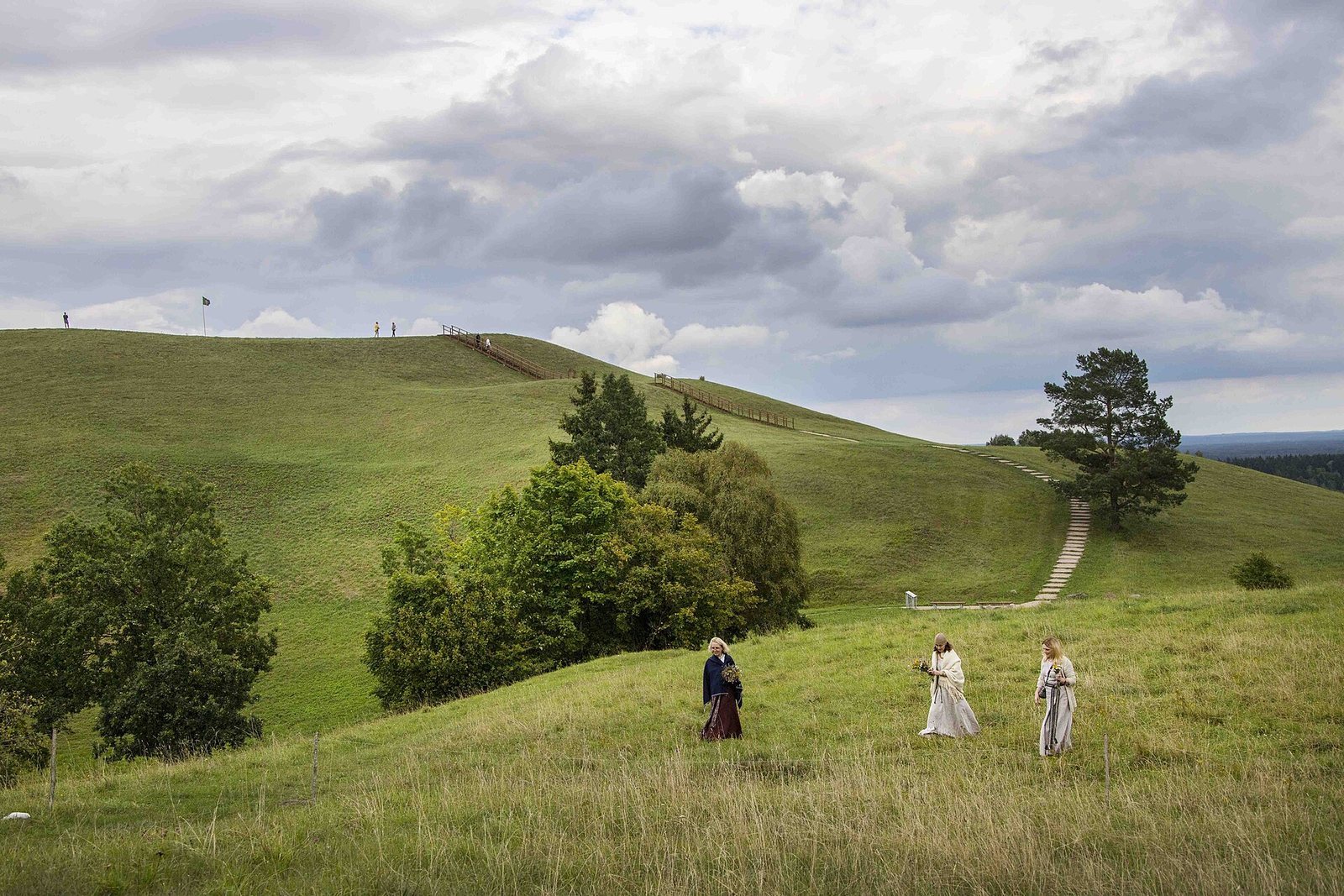
Excavations took place at Šatrija in 1835, followed by archaeological investigation in 2009. A tradition of guarding sacred fire, practiced in Baltic lands before Christianity took hold, has been revived at the hill. Volunteers have tended a fire there daily since 2017. Each year on the third Saturday of July, adherents of the old ancestral faith gather for the festival of Gabija, the Lithuanian goddess associated with sacred fire.
Remains
Hilltop layout and features
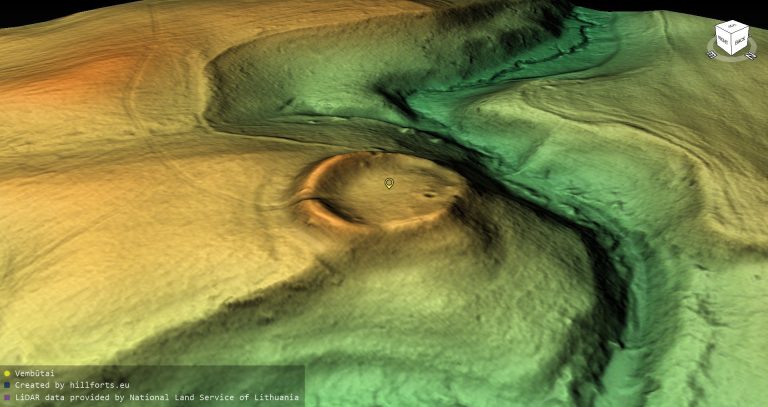
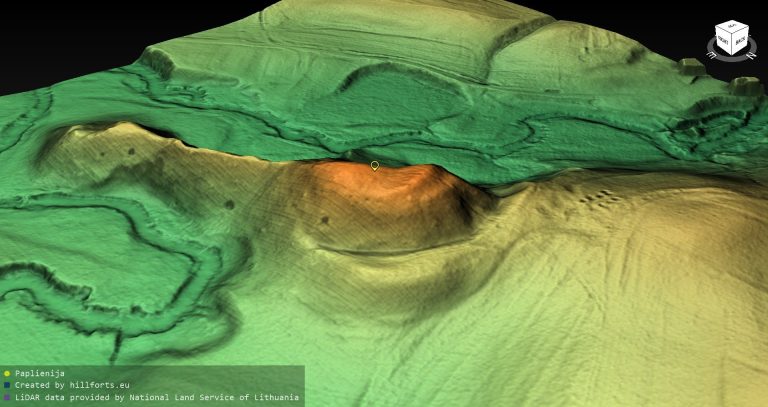
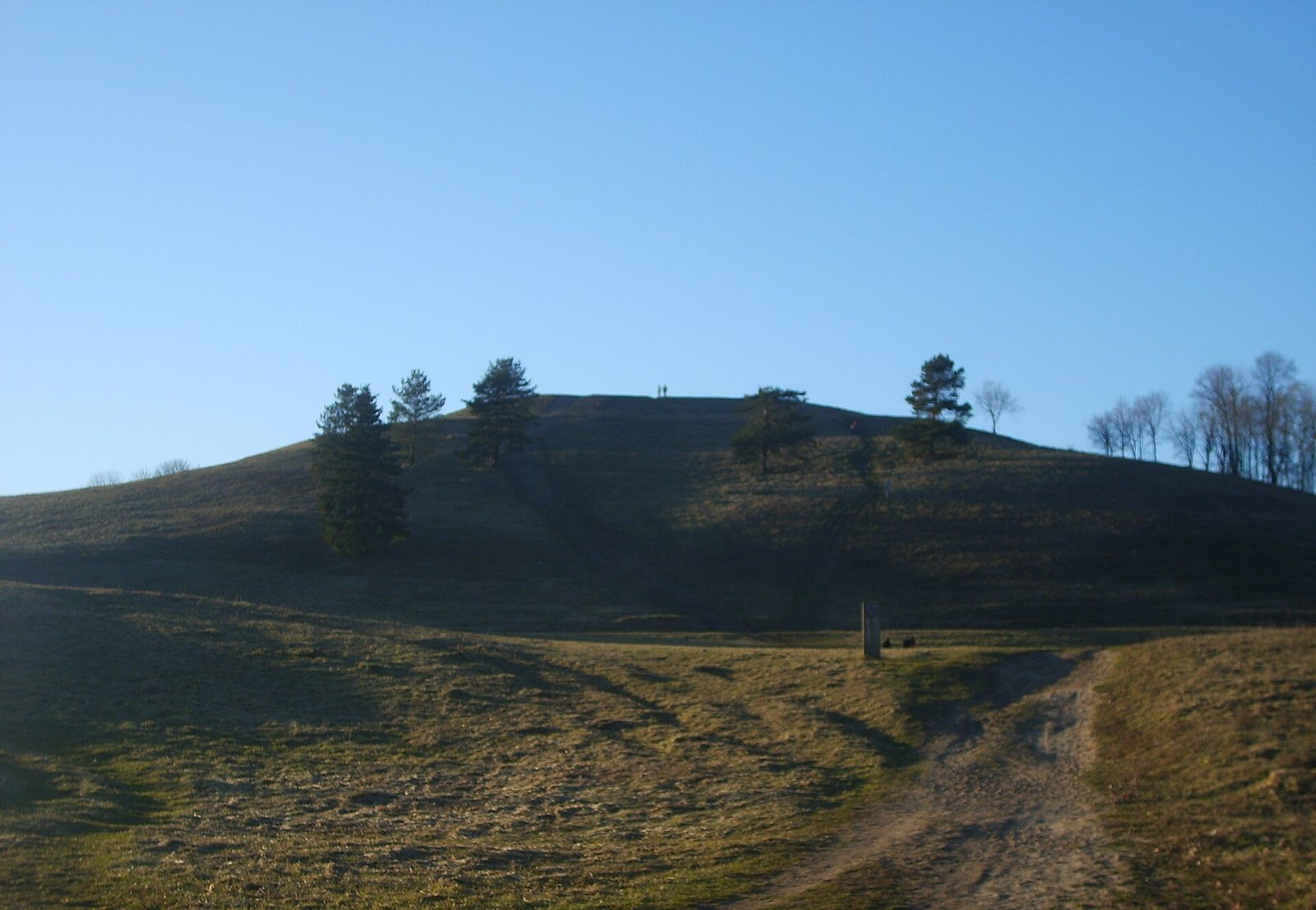
Šatrija rises to 228.7 m and stands about 50 m above its surroundings, the greatest relative height in Lithuania. The hill formed during the last glacial period. Its oval summit measures about 60 by 60 m. The west and east slopes are very steep and more than 25 m high. Clear ramparts survive on the southern slope; elsewhere they are badly damaged, partly because the slopes were once ploughed. An altar stands on the hill. On neighboring Raudonkalnis, an eternal fire is maintained in a fire house.
Archaeological evidence
Settlement traces and finds
In 2009, archaeologists examined 220 m² across the slopes, terraces, summit, and a path at the foot of the hill, using 61 trenches and small test pits. One trench held two hearths 5.40 m apart. Finds from it included bones of large herbivores and birds, small boar tusks, iron-smelting waste, a bone comb, a man’s ring, and a flint blade. Pottery fragments included wheel-thrown and rough-surfaced pieces, as well as handmade examples decorated with pinching or finger impressions. Other finds from the hill include cremation graves, burial urns, tear-shaped cups, stones marked with cups, amber and glass ornaments, and stone axes.
Human remains at the foothill
Three test pits along the foothill path used by farmers revealed a layer of earlier activity. A pit at the eastern foot uncovered human remains 40 cm below the surface, including several skulls, leg bones, and a tooth. The remains may date either to the fifth through eighth centuries or to the fifteenth century.