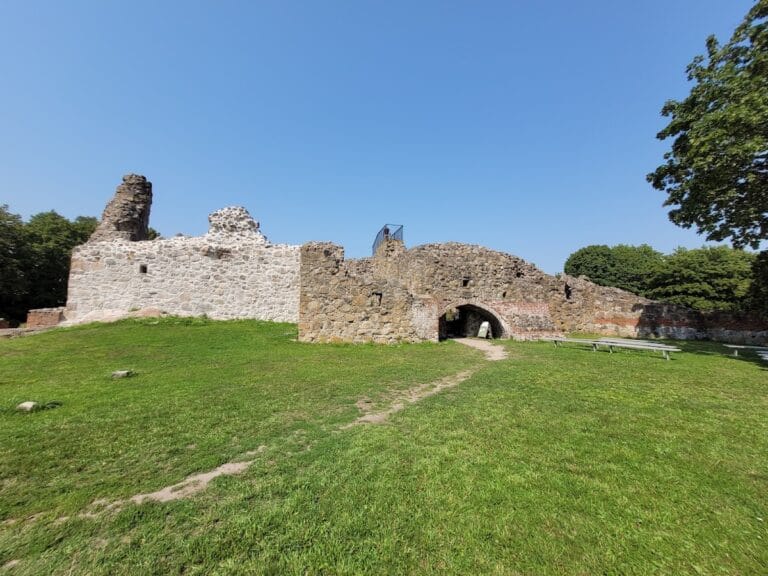
Turku Castle: A Historic Fortress and Cultural Landmark in Finland
Visitor Information
Google Rating: 4.5
Popularity: High
Official Website: turunlinna.fi
Country: Finland
Civilization: Early Modern, Medieval European
Site type: Military
Remains: Castle
History
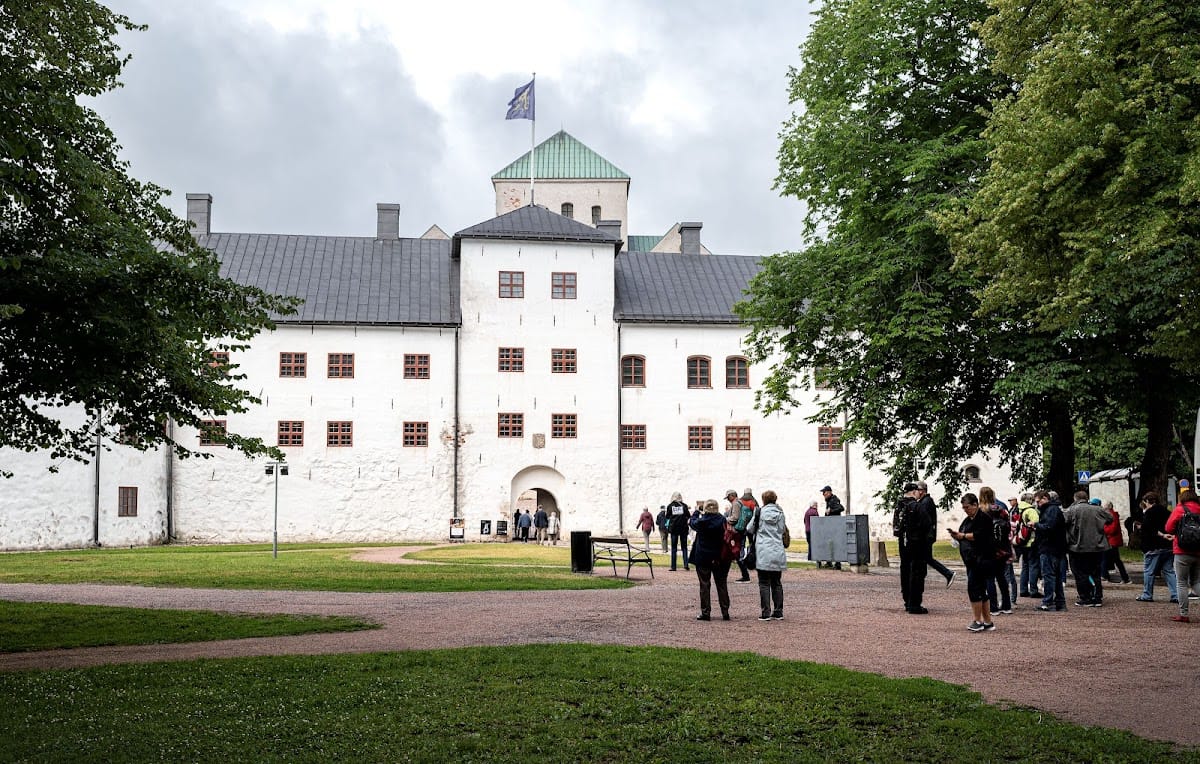
Turku Castle is located in the city of Turku, Finland, and was originally established by Swedish rulers in the late 13th century. Constructed at the mouth of the Aura River, it served as a fortified military camp and an administrative center after southwestern Finland became part of the Swedish realm.
The castle’s earliest phase centered on defense and governance. Its first known commander was Carolus Gustavi. Throughout the 14th and 15th centuries, Turku Castle grew in size and strength, with higher walls and additional towers erected to improve its fortifications. Residential sections and a chapel were built inside, making the castle not only a military post but also a place of political and religious importance. It was a vital stronghold guarding the eastern borders of the Swedish kingdom and controlling river traffic, while also functioning as a tax collection point. During the mid-14th century, the castle endured a lengthy siege lasting eight months (1364–1365) amid conflicts involving Albrecht of Mecklenburg.
In the 16th century, the castle experienced significant transformation under King Gustav I Vasa and his son Duke John, who later became King John III. Turku Castle was redesigned from a medieval fortress into a Renaissance-style palace and seat of local government. Duke John’s court, active between 1556 and 1563, was known for its cultural richness and international connections, hosting elaborate celebrations. However, this era came to an end during a siege in 1563 led by King Eric XIV, marking a shift in the castle’s role and ownership. The castle also functioned as a prison for prominent captives, including Queen Karin Månsdotter from 1573 to 1577, as well as King Eric XIV and his family.
The 17th century brought change following a fire in 1614 during the visit of King Gustav II Adolf, which damaged much of the medieval stronghold. Afterward, the main part of the castle was abandoned for residential use and repurposed mainly as a granary. The Renaissance-style outer courtyard became the residence of the provincial governors and the center of regional administration. During the 18th and 19th centuries, the castle’s functions shifted toward military uses, including serving as a prison, armory, and barracks. Overcrowding was a serious issue, particularly in the prison cells located in the outer bailey. The last inmates were removed in 1891, and the castle’s role as a museum began as early as 1881.
World War II inflicted heavy damage on Turku Castle during Soviet bombings in 1941. Roofs, floors, and the castle church, dating to the 18th century, were destroyed. Restoration efforts started soon after the war, led by architect Erik Bryggman and archaeologist Carl Jacob Gardberg. The process extended over decades, balancing restoration of medieval and Renaissance features with modern adaptations. The castle was reopened to the public in 1961, with full restoration completed by 1990, preserving its historical integrity and functional use as a cultural venue.
Remains
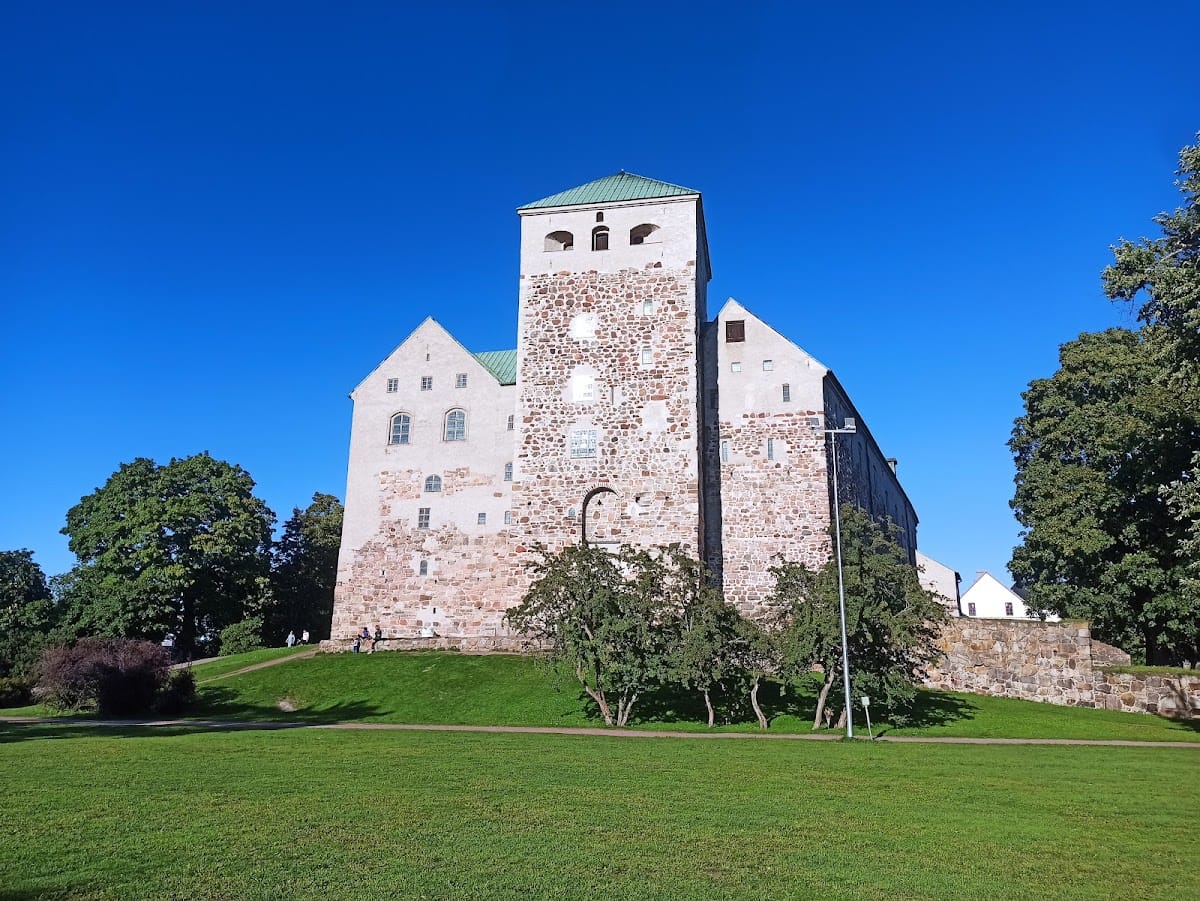
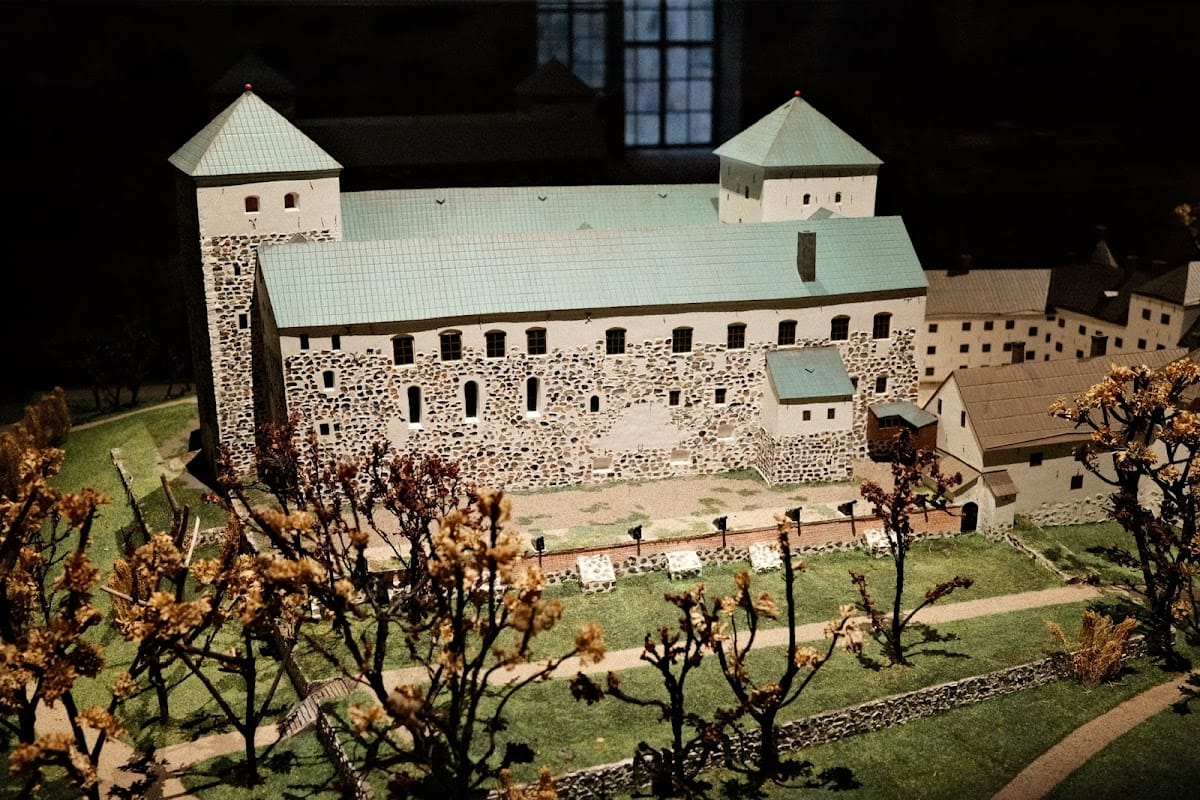
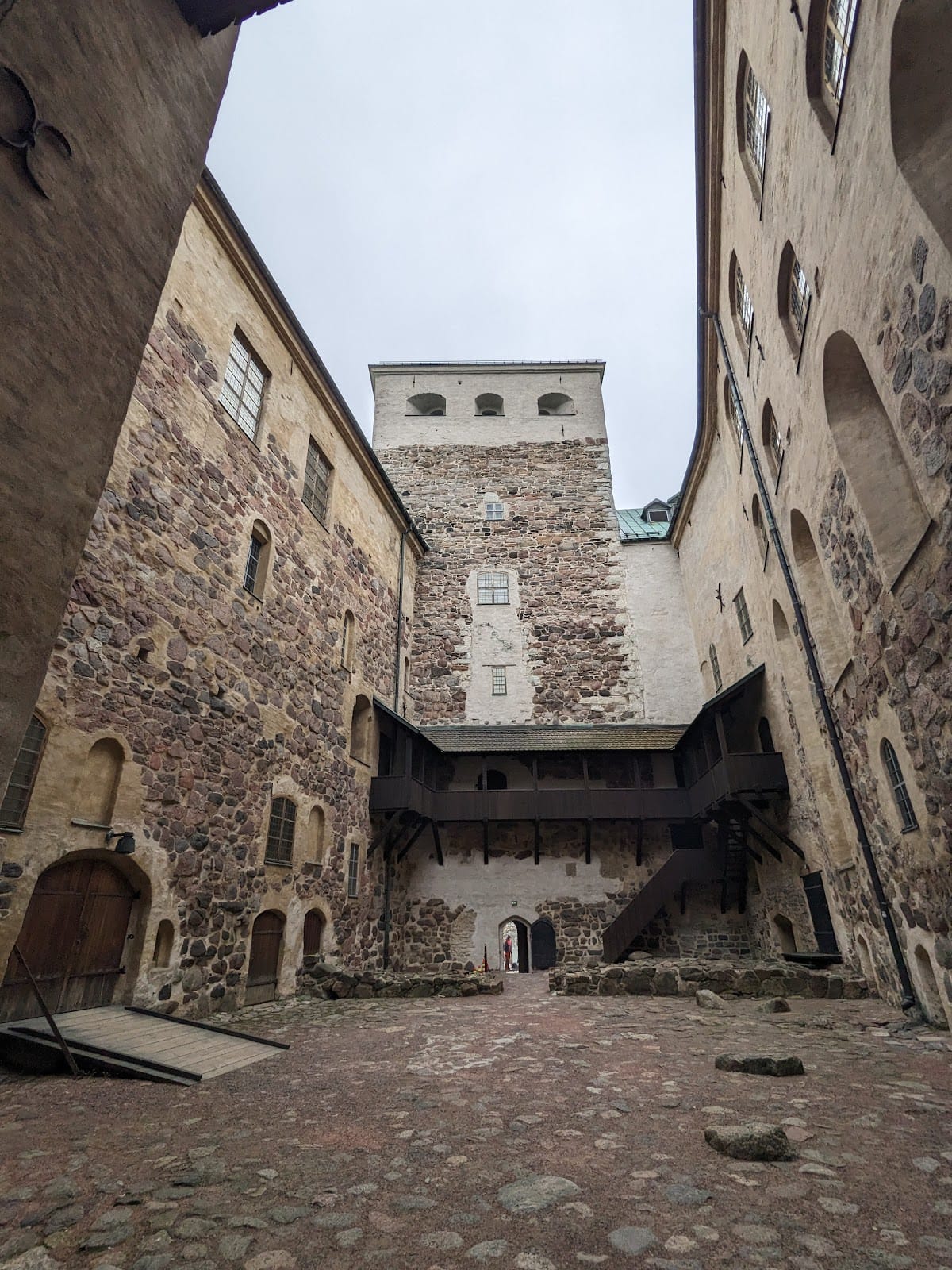
Turku Castle’s layout is anchored by a massive rectangular keep constructed from grey granite and brick, measuring about 65 meters in length and 30 meters in width. The walls at the base are notably thick, reaching approximately five meters, providing formidable defense. Originally, the stronghold was encircled by a moat linked to the Aura River, effectively isolating it like an island. Two prominent square gateway towers provide access at the west and east ends of the keep, with the western tower known as the “heart tower.” This five-story tower includes a firing gallery and was designed as an inner stronghold accessible through a single door, enhancing its defensibility.
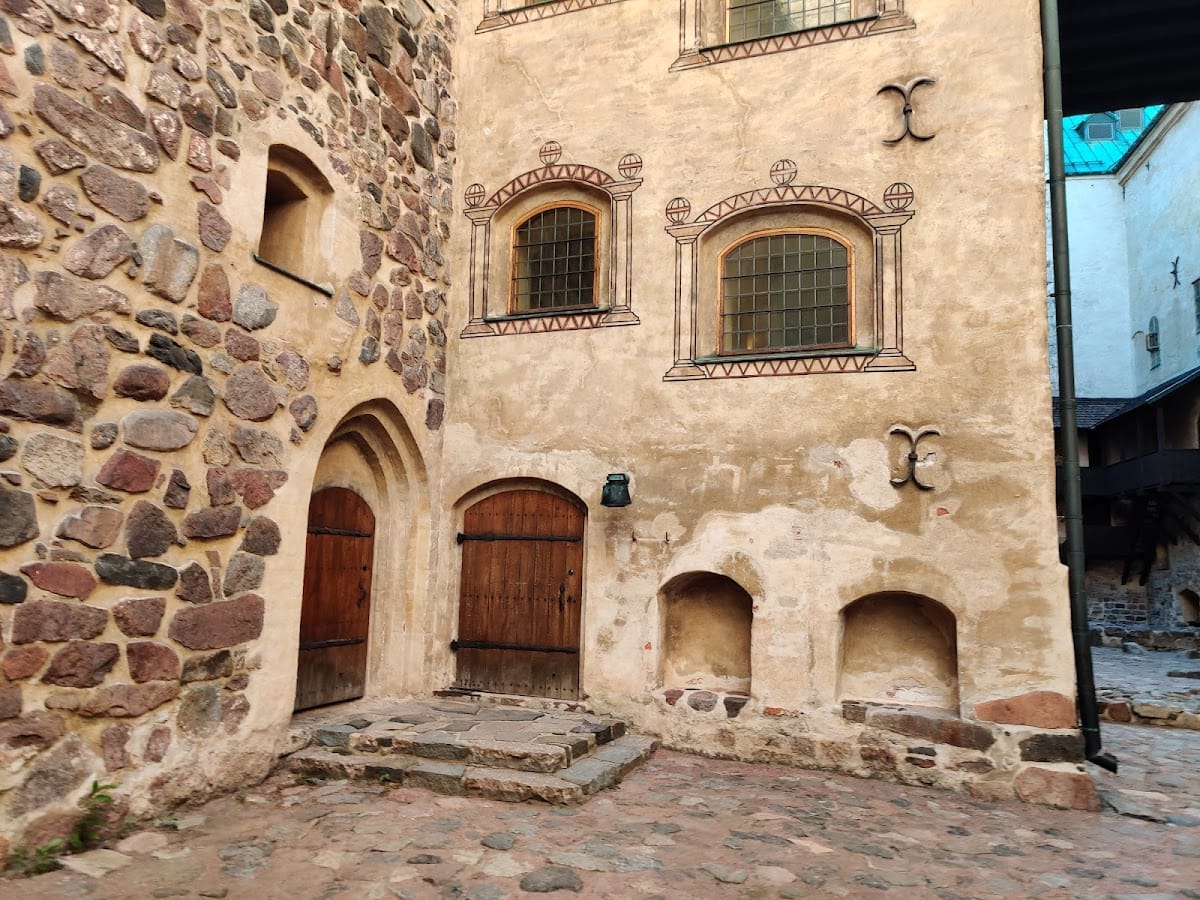
Within the thick walls lies a courtyard divided by a transverse partition into upper and lower sections. Residential wings line the northern and southern sides, containing over 40 individual rooms, including a chapel called the Nunn Chapel, which today remains open to visitors. The castle’s defensive features include narrow gunports and few large windows facing outward, while larger windows overlooking the courtyard allow more natural light within. Decorative touches were introduced through limestone imported from Gotland, enhancing specific details on the granite and brick construction.
In the 16th century Renaissance remodeling, an additional upper floor was added to the main keep, and medieval narrow stairways were replaced with more spacious stair towers. Interior spaces underwent transformation, featuring vaulted halls and ceilings crafted in the Renaissance style, with notable rooms such as the King’s and Queen’s halls showcasing these refinements.
Surrounding the main keep is the outer bailey, also called the Renaissance bailey or esilinna, built between the late 15th and late 16th centuries. This fortified square complex includes several towers of varied shapes and functions: a pentagonal tower in the north corner, a hexagonal tower occupying the southern wing, a quadrangular tower along the eastern wall, and a round tower equipped for artillery in the eastern corner.
The castle church, originally constructed during the medieval period, was rebuilt in the great hall of the main keep in 1705–1706. Furnished with royal thrones dating from King Gustav III’s visit in 1775, the church served the spiritual needs of the castle’s inhabitants until its damage during the 1941 bombings.
Beyond its core structures, the castle accommodated practical facilities such as granaries, an armory, a brewery, a smithy, a shoemaker’s workshop, a sauna, and prison cells. The prison quarters in the outer bailey were notoriously overcrowded in the 18th century; records show that up to 20 inmates could be confined within a small cell.
The extensive destruction caused by World War II air raids necessitated comprehensive restoration that sought to recover original architectural features from the medieval and Renaissance periods. Modern upgrades were incorporated during restoration, including the installation of an elevator, the addition of a lecture hall seating 120, and updated kitchen facilities. The castle courtyard itself features a café and hosts medieval-themed events, with the site surrounded by a public park that frames the castle’s silhouette within Turku’s cityscape.