Staroměstský hřbitov: The Old Town Cemetery of České Budějovice
Site at a Glance
- Popularity
- Very Low
- Country
- Czechia
- Primary era
- Medieval
- Eras represented
- Medieval, Modern
- Civilizations
- Holy Roman Empire, Kingdom of Bohemia
- Site type
- Burial
- Remains
- Necropolis
On this page12 sections
History
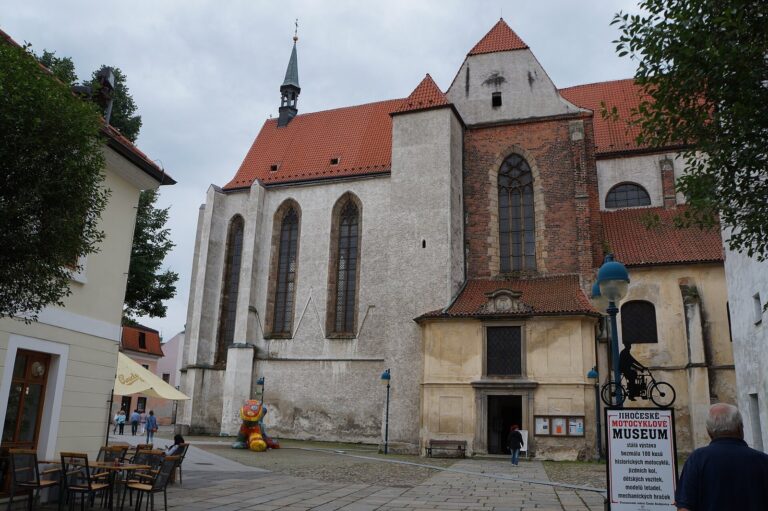
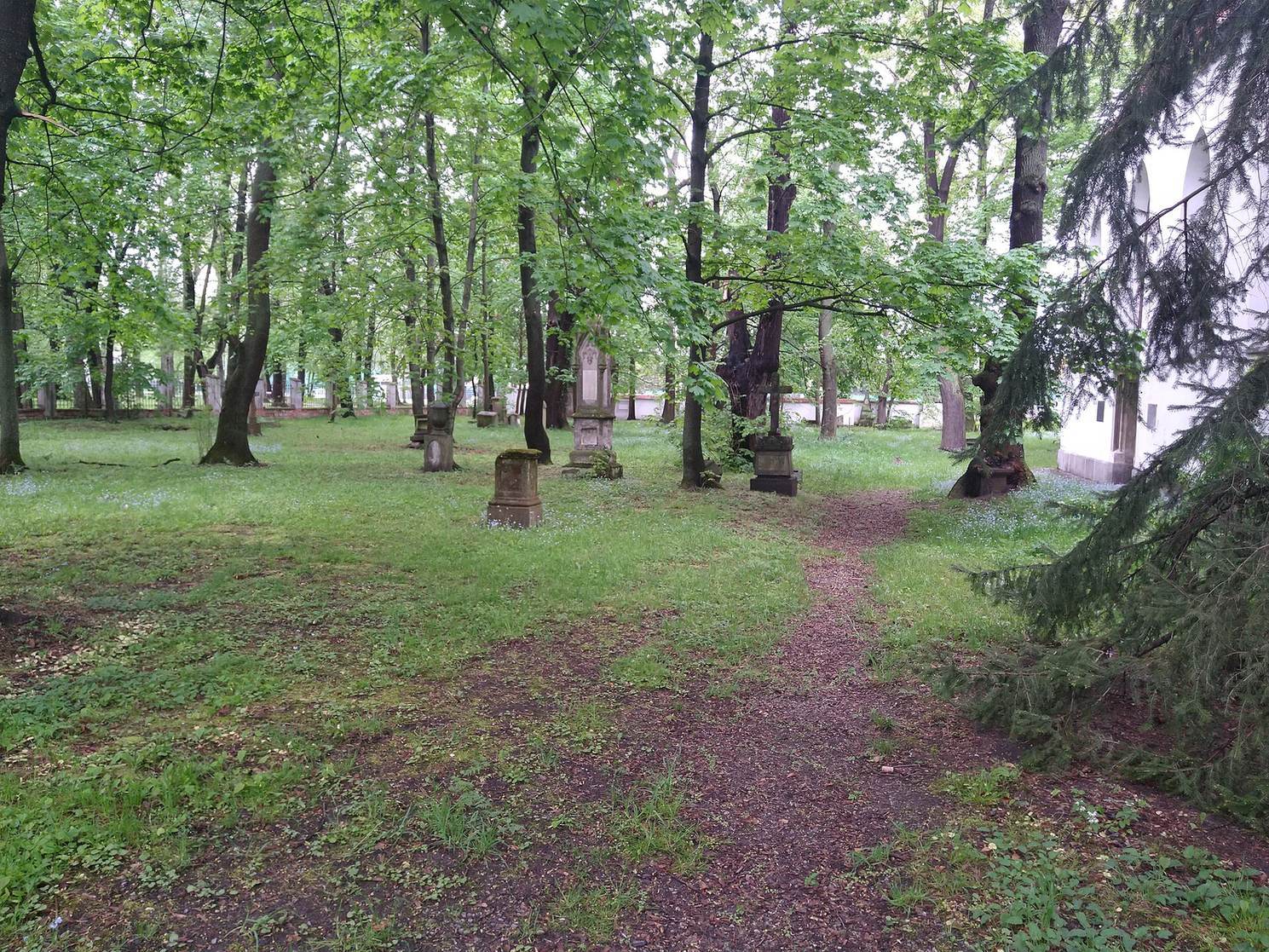
The Old Town Cemetery (Staroměstský hřbitov) is a historic burial ground beside the Church of St John the Baptist and St Procopius in České Budějovice, Czechia. It was established with the church in the first quarter of the thirteenth century and became the oldest cemetery in the city. Its early burial grounds served people from the suburbs and nearby villages, as well as soldiers.
Expansion and changing use
The cemetery was enlarged in 1686 and 1742, then again in 1838. When the cemetery by the cathedral closed in 1784, the Old Town Cemetery once more became the required burial place for residents of České Budějovice.
Closure and later changes
Talks about further expansion began in the 1870s with owners of nearby land, but the only resulting clearance was the demolition of a former school. In 1885, the city decided to establish a new cemetery. The final burial at the old grounds was that of teacher Stanislav Illichmann (1850–1889) on 23 April 1889, the same day the first burial took place at the new cemetery.
A former gravedigger continued to maintain the grounds. In the early twentieth century, the city considered abolishing the cemetery. The civic group For Old Budweis, led by A. Träger, objected and suggested making it a park, delaying the plan. A watchman lived in a house on the grounds for several more decades.
Redevelopment of the former Old Town as a housing estate in the 1960s changed the cemetery’s layout. Its newer section became a park, while the oldest area around the church was retained. The grounds later fell into neglect, followed by restoration around the turn of the twenty-first century.
Clergy and educators buried here
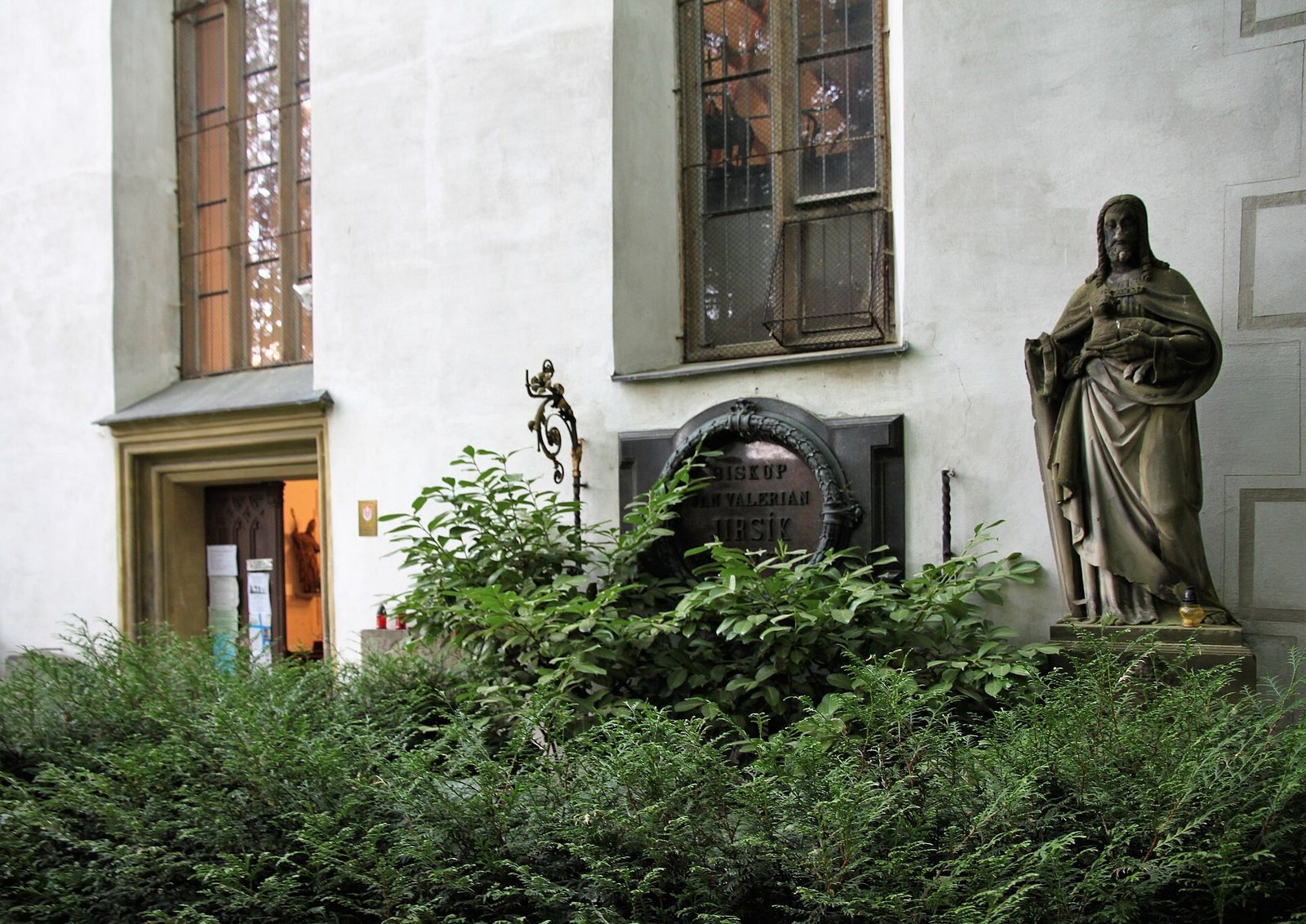
Four bishops of České Budějovice were buried at the cemetery: Jan Prokop Schaaffgotsche (1748–1813), the first bishop; Arnošt Konstantin Růžička (1761–1845), the second; Josef Ondrej Lindauer (1784–1850), the third; and Jan Valerián Jirsík (1798–1883), the fourth. Other religious and educational figures included Kajetán Matouš Bernert (1804–1862), a Piarist priest and theology professor. The Piarists are a Catholic religious order associated especially with education. Vojtěch Mokrý (1803–1882), a provost, or senior clerical office-holder, in České Budějovice, was also a Catholic publicist. Educator Johann Kogler (1822–1866) helped initiate the city’s German teacher-training institute shortly before his death.
Civic and commercial figures
František Eusebius Daublebský ze Sternecku (1750–1815), a member of a prominent local family, served on the city council and was mayor from 1788 to 1815. Two other mayors buried here, František Josef Klavík (1798–1878) and Eduard Claudi (1810–1884), served in the Bohemian Diet, the representative assembly of the Kingdom of Bohemia. Claudi also sat on the Imperial Council, the legislature for the Austrian half of the Habsburg monarchy. Their graves were in the section later removed during redevelopment.
Other civic figures included Matthäus Wenzel Klaudi (1778–1824), a city official who founded the Budweis hospital; municipal builder Josef Sandner (c. 1803–1861), whose grave was also in the later-removed section; and Ernst Franz Richter (1817–1870), a municipal official who began publishing the city’s first newspaper in 1848. Hynek Zátka (1808–1886), an entrepreneur and member of both the Bohemian Diet and Imperial Council, was buried with his wife Terezie (1819–1878). Anton Ferus (1840–1887), a freight forwarder and merchant, founded a firm. Thadeus Lanna (1773–1828) worked in shipbuilding and shipping.
Other notable burials
Ferdinand, Baron von Haering (1732–1822), a senior Austrian army officer, commanded the Fourth Artillery Regiment until 1809 and received the Military Order of Maria Theresa, a Habsburg decoration for distinguished military service. Felix Zdarssa (1807–1861) worked as a printer for the bishop and as a bookseller, editor, and publisher of the Budweiser Wochenblatt.
Franz Josef Pachner, Knight of Eggendorf (1753–1841), was buried in a family tomb. His second wife, Josefina, daughter of Budweis mayor Vinzenz Strandl, was buried there as well. Local physician Friedrich Claudi (1808–1842) was laid to rest with his wife Eleonora (1810–1842) and their son Ludwig (1841–1842).
Remains
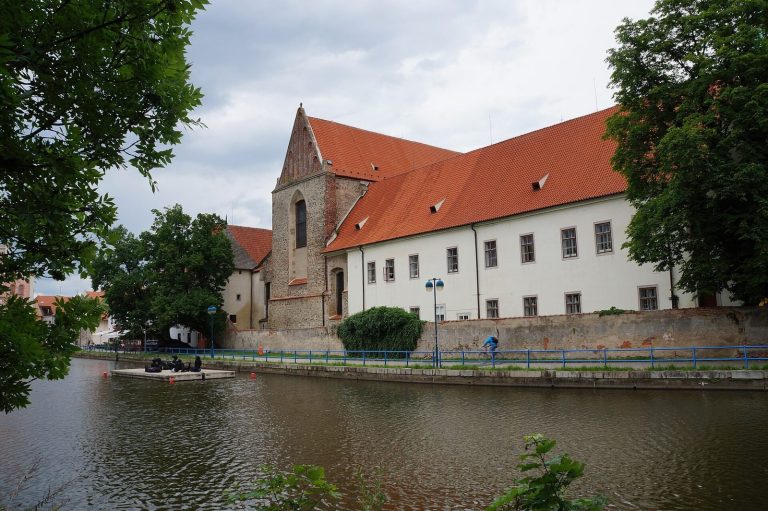
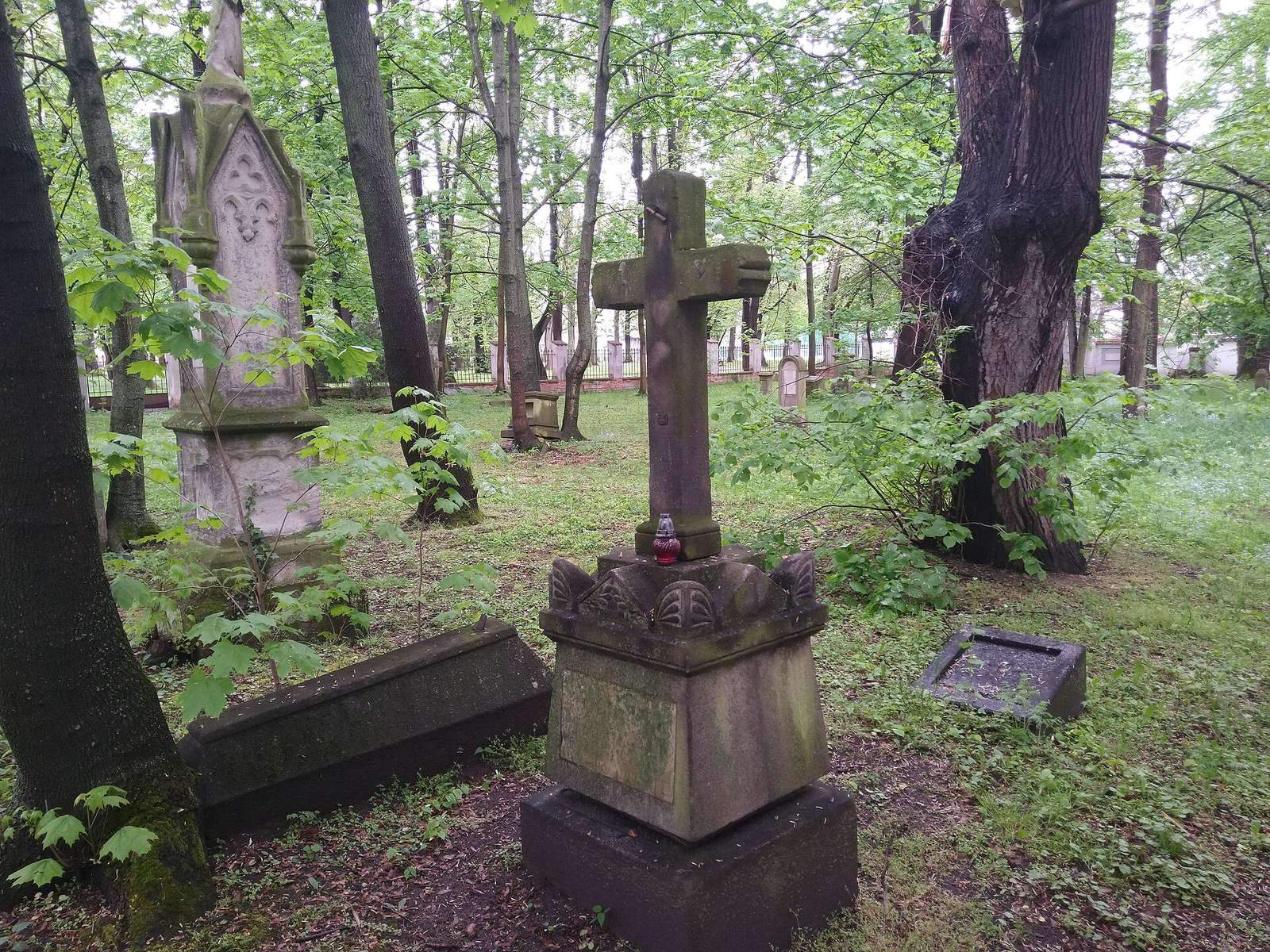
The cemetery’s oldest surviving area lies around the Church of St John the Baptist and St Procopius. Its remaining features include tombs along the eastern wall, memorial slabs fixed to the church and cemetery walls, a cross among tree growth, and the former gravedigger’s house.
Tombs and memorial features
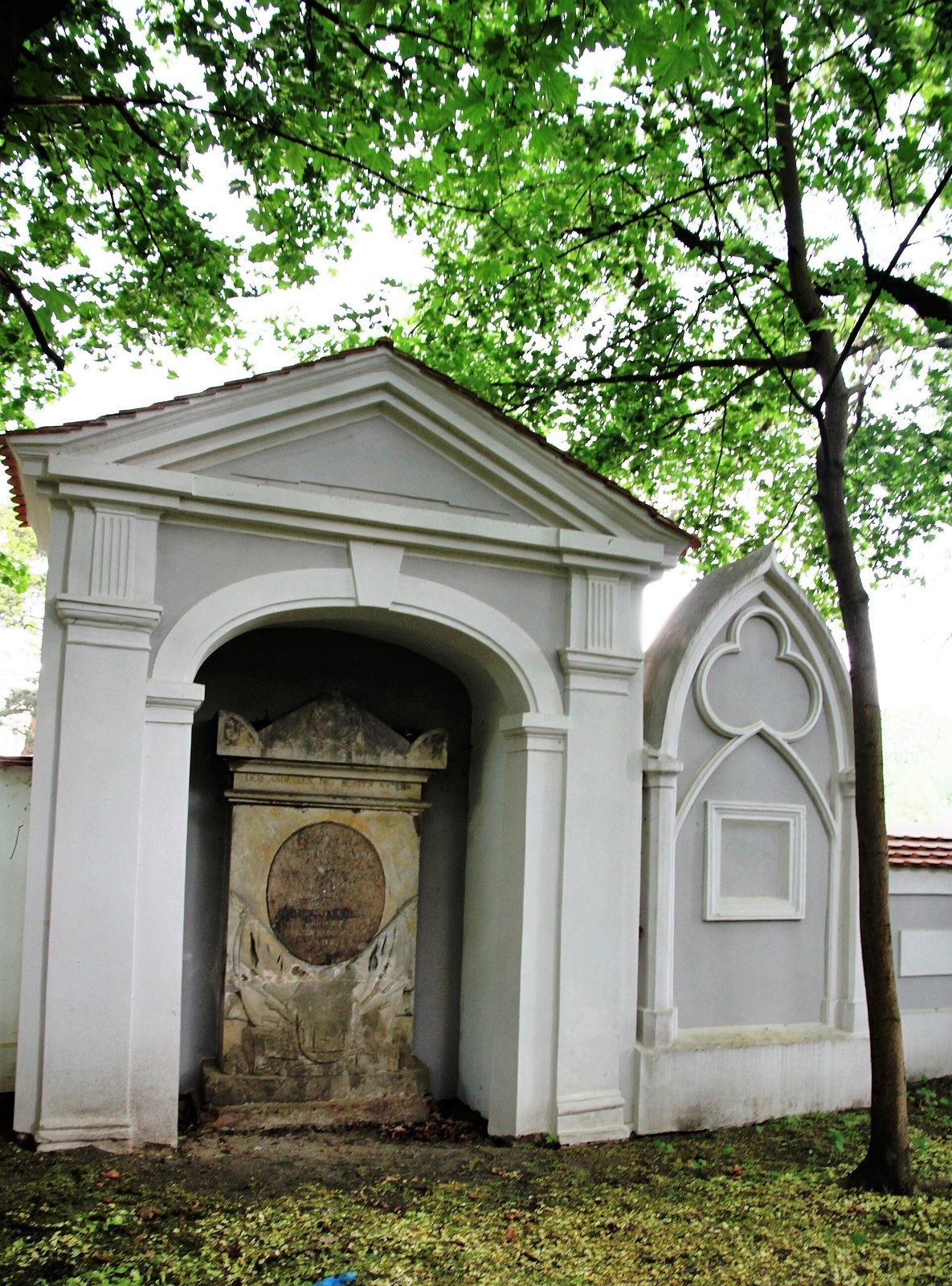
Tombs along the eastern wall
A row of tombs in Classical and historicist styles survives beside the eastern wall. Historicist designs draw on architectural styles from earlier periods.
Restored tomb slabs
Tomb slabs belonging to prominent citizens have been restored and mounted on the walls of the church and cemetery.
Cross
Tree growth has enveloped a cross within the cemetery.
Former gravedigger’s house
The former gravedigger’s house remains on the grounds and is used as a Scout clubhouse.