Saint-Eugène Passage Dolmen: A Prehistoric Burial Monument in France
Site at a Glance
- Popularity
- Low
- Country
- France
- Primary era
- Bronze Age
- Eras represented
- Stone Age, Bronze Age
- Civilizations
- Unclassified
- Site type
- Burial
- Remains
- Tomb
On this page14 sections
History
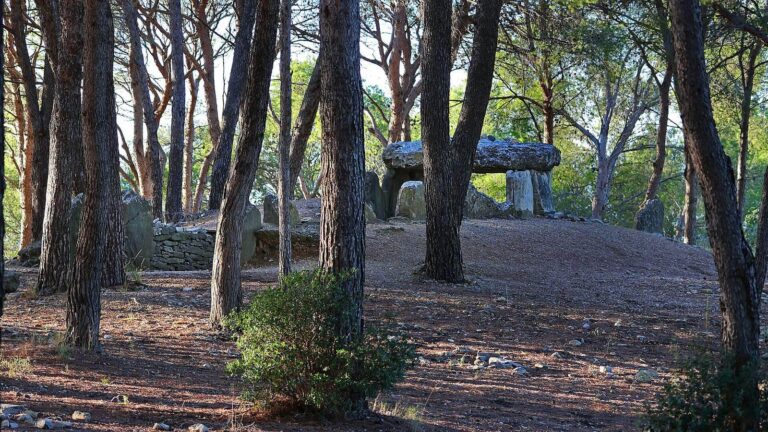
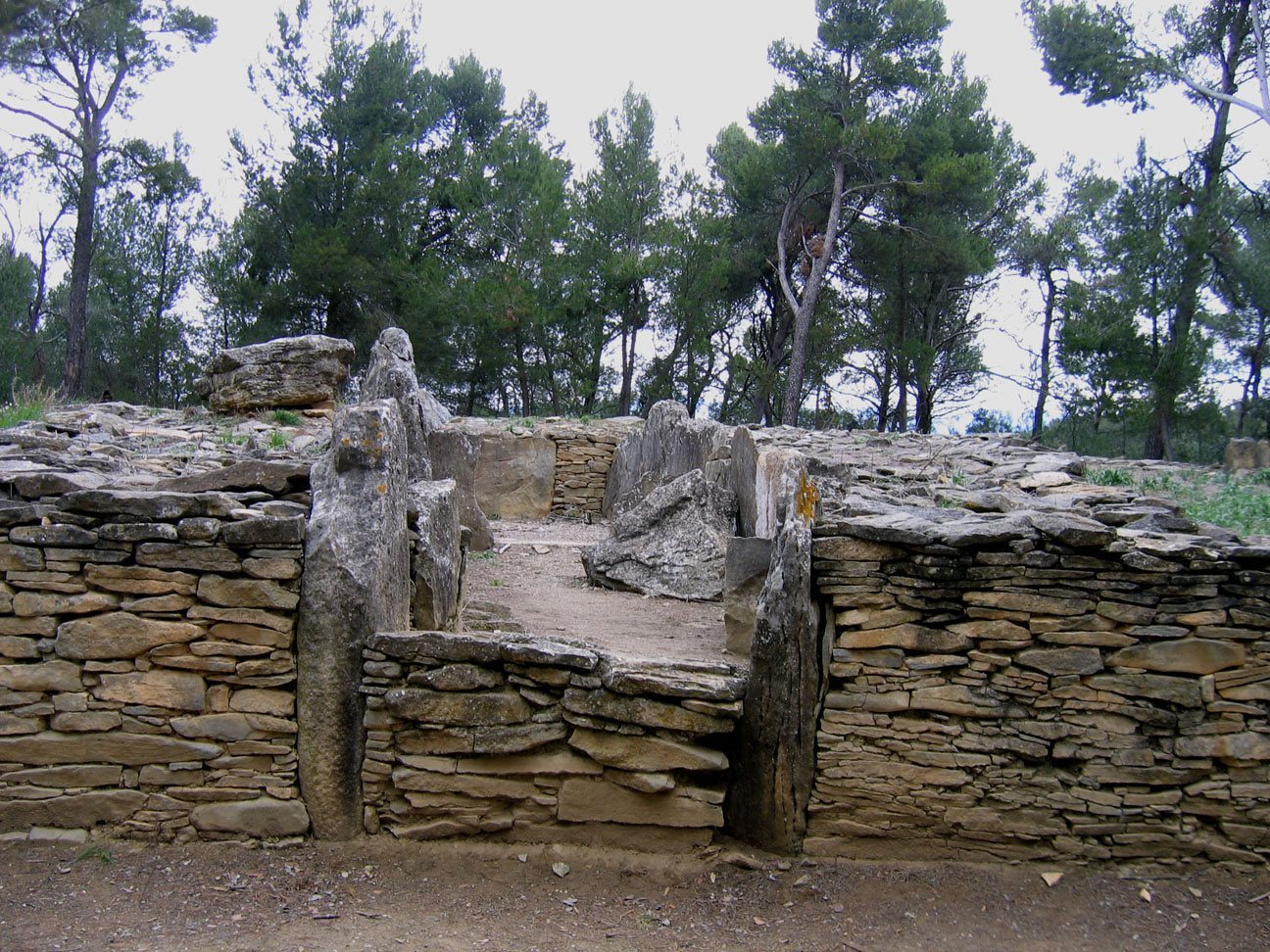
The Saint-Eugène Passage Dolmen, a large-stone tomb with a passage leading to a burial chamber, lies in Laure-Minervois, France. It dates to the transition from the Chalcolithic, or Copper Age, the prehistoric period between the Neolithic and Bronze Age, to the beginning of the Bronze Age. It is the third-largest megalithic complex in southern France.
Prehistoric and Roman-era use
The tomb was disturbed in Roman times, and fragments of amphorae, large ceramic containers, were found there.
Excavation and restoration
Germain Sicard excavated the monument in the 1920s, and Jean Guilaine directed later archaeological work. The tomb received the French Monument historique designation, a protected status for historic monuments, in 1931. Guilaine directed restoration in 1964, and the low stone mound was restored in 1992.
Remains
Passage and chambers
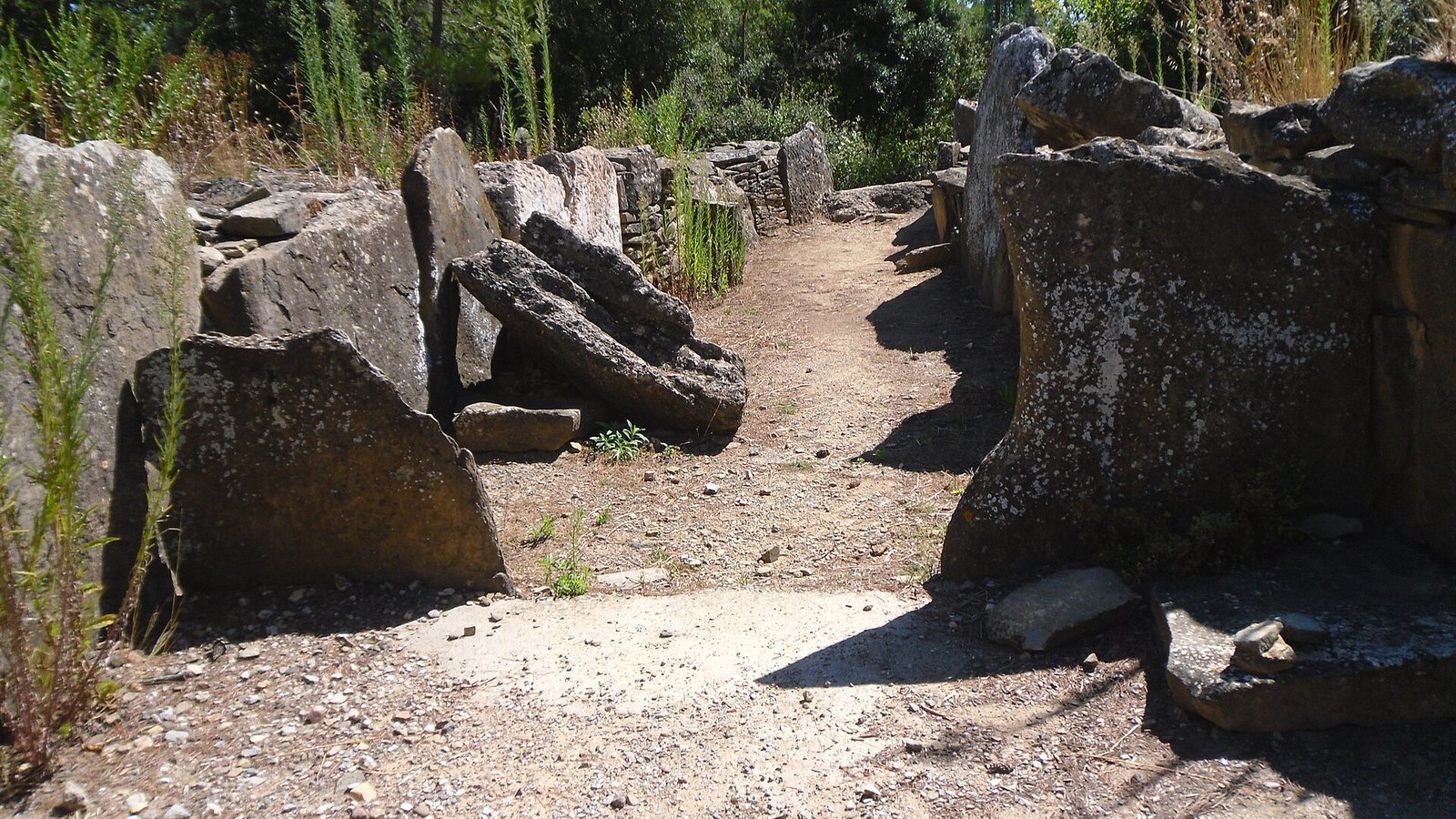
The monument extends about 16 metres from south to north. Guilaine described its passage as narrowing toward the entrance, distinguishing it from a covered passage with a more even width. Inside, the tomb comprises a corridor, an antechamber (an intermediate room before the burial chamber) and a burial chamber.
Corridor
The corridor is 4 metres long and averages 1.2 metres in width. Its floor stands about 0.4 metres above the level of the antechamber.
Antechamber
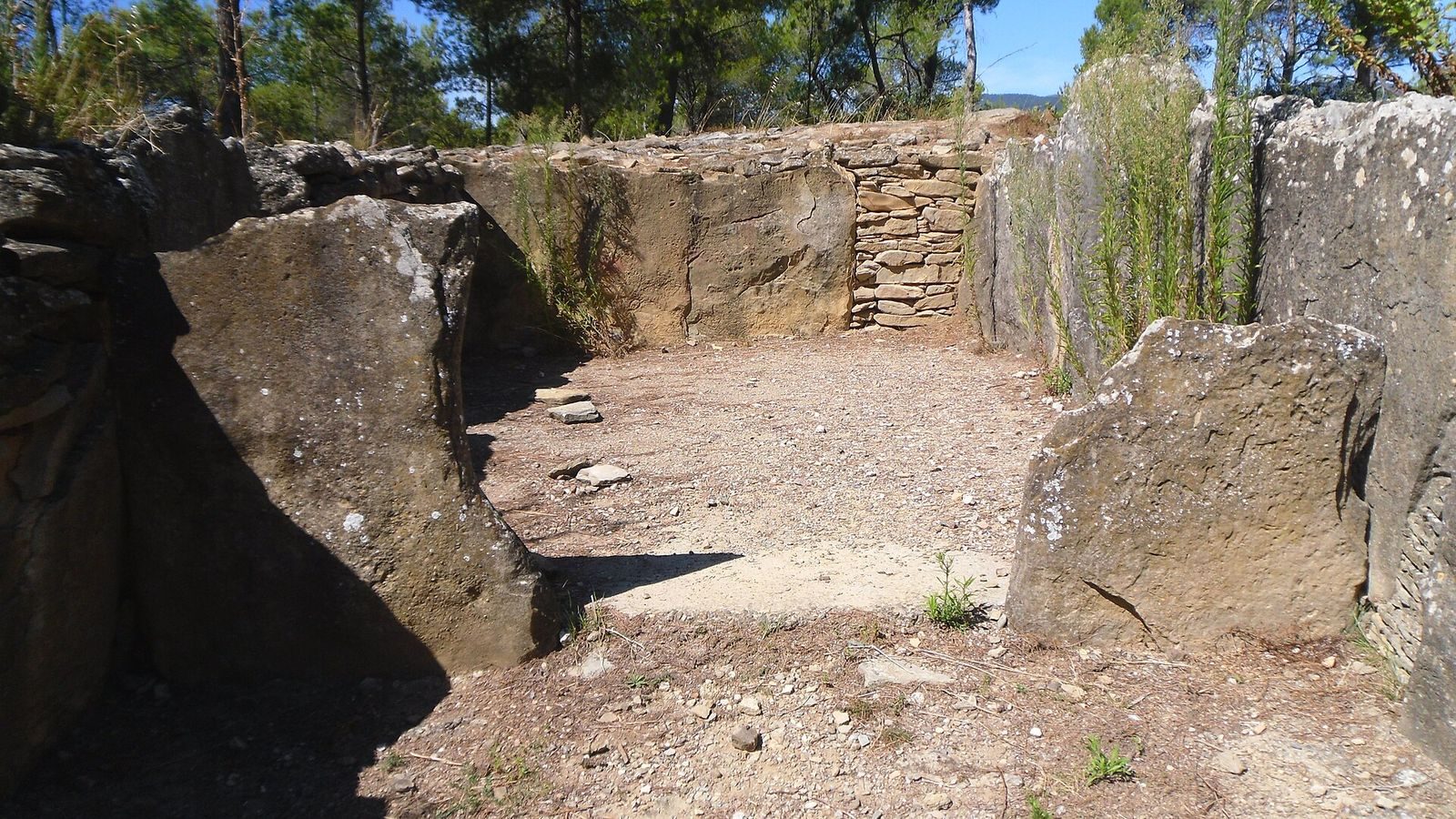
The antechamber measures 5.6 metres long and averages 2.5 metres wide, broadening toward its far end. A stone slab pierced by an opening, called a porthole slab, separates it from the burial chamber.
Burial chamber
The burial chamber is about 5 metres long and 3.2 metres wide. Eight full-height slabs and several shorter ones form its walls. Masonry fills gaps between the stones, especially along the west side. The entrance is heavily damaged.
Boundary and mound
Upright stones
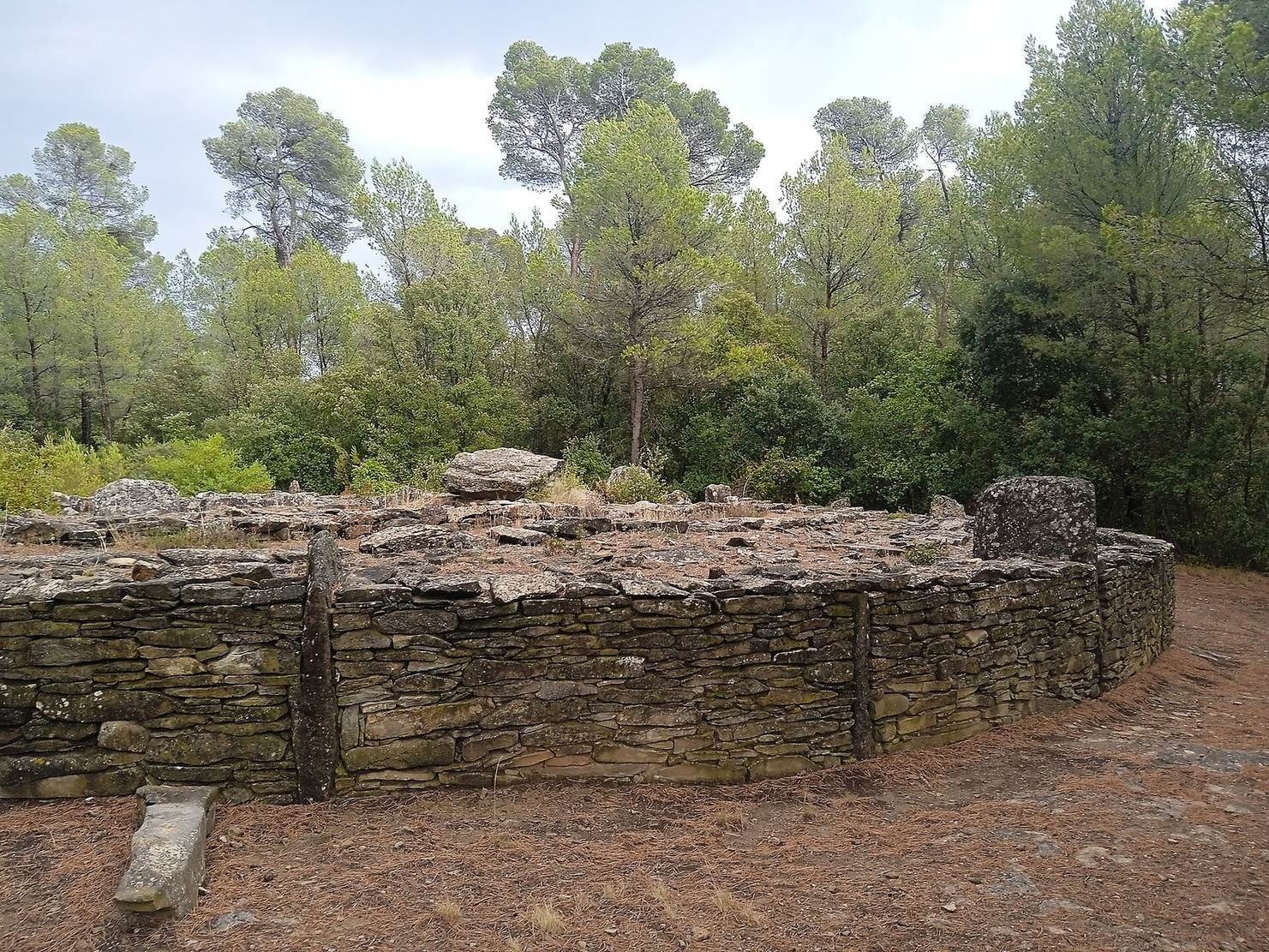
Upright slabs border the structure. At the northeast corner, one has a second supporting stone that projects 0.25 metres above ground.
Circular mound
A circular burial mound about 24 metres across surrounds the tomb. Twenty upright stones reinforce its perimeter. The low stone mound is made of slabs and masonry laid without mortar; the restored mound consists of rubble stones.
Excavated finds
Sicard’s excavation
Human bones from about 300 individuals were recovered. Other finds included a small copper dagger, two copper awls, or pointed piercing tools, three copper rings and an oval gold bead. Stone objects comprised two spear-shaped points of white flint, six other flint spear points, three blades of obsidian, or volcanic glass, ten arrowheads with side barbs and projecting bases, and two objects made of talc. The finds also included 40 small perforated cowrie-type shells, 18 perforated cockle-shell beads, 28 pendants and 17 flat green-schist palettes. Animal teeth came from boar, cattle, horses, deer and small carnivores. Numerous pottery shards bore incised decoration.
Guilaine’s later work
Later excavations added 50 beads made of limestone and shell, five soapstone beads, two arrowheads with side barbs and projecting bases, and one leaf-shaped arrowhead. Numerous pottery shards from this work date to the Chalcolithic. Taken together, the finds belong to the transition from the Copper Age to the beginning of the Bronze Age.