Fröslunda Church: A Medieval Parish Church in Sweden
Site at a Glance
- Popularity
- Very Low
- Country
- Sweden
- Primary era
- Medieval
- Eras represented
- Medieval, Early Modern, Modern
- Civilizations
- Swedish
- Site type
- Religious
- Remains
- Church
On this page12 sections
History
Foundation and early history
Fröslunda Church is a medieval parish church in Örsundsbro, Sweden. It belongs to the Church of Sweden, an Evangelical Lutheran church, and is part of Lagunda Parish in the Diocese of Uppsala, an administrative district of the church. The church was consecrated in the fifteenth century and was probably built late in that century. Several furnishings predate the present building, suggesting that an earlier church stood here.
Repairs and restoration
In 1748, repairs addressed cracks in the walls, and the windows were enlarged. In the early nineteenth century, the parish priest proposed closing Fröslunda and holding services at Biskopskulla Church. The congregation unanimously chose to restore its church instead. Parishioners carried out the work in the summer of 1816 under the direction of a master builder from the Rosersberg royal estate.
Further major work followed in 1907 and 1932. The southeast corner was taken down, the foundations strengthened, and the walls rebuilt in 1907. In 1932, a large medieval choir window was blocked, and the fixed pews were altered.
Remains
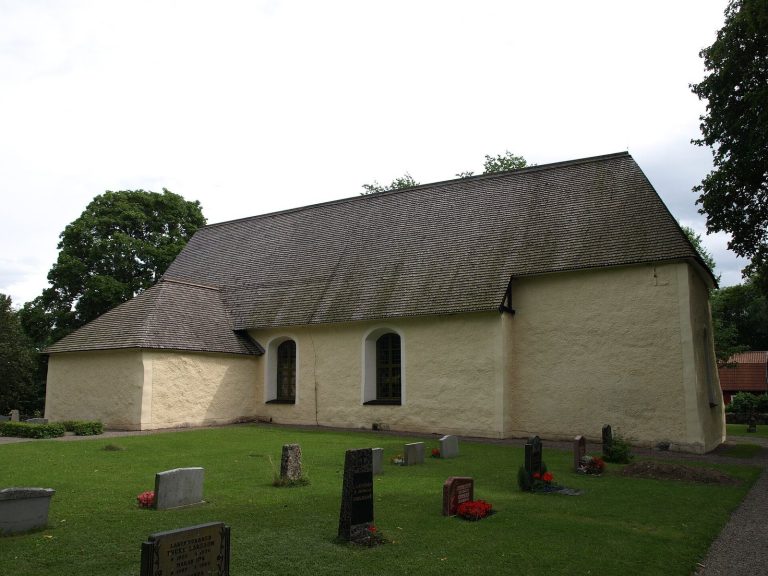
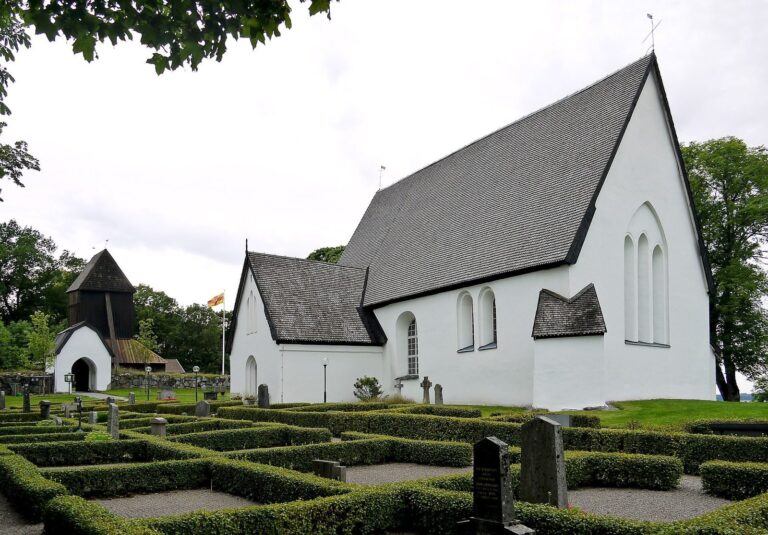
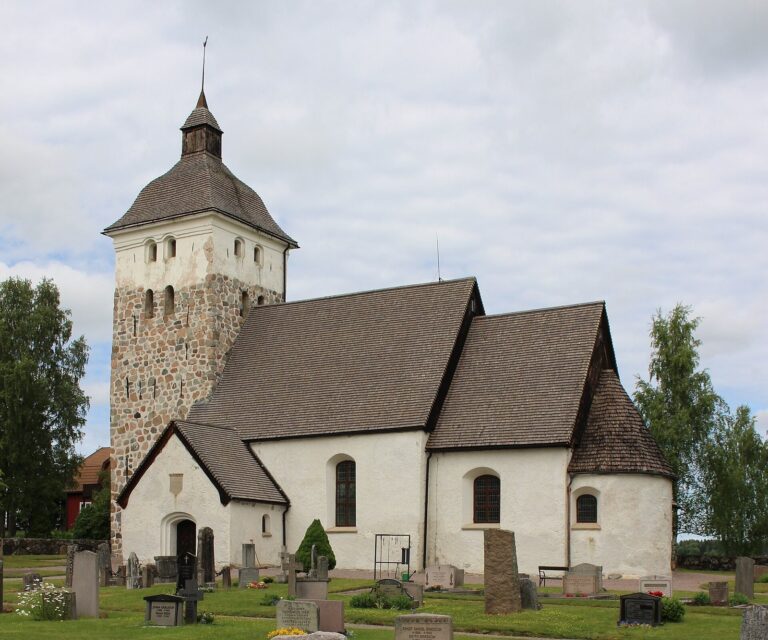
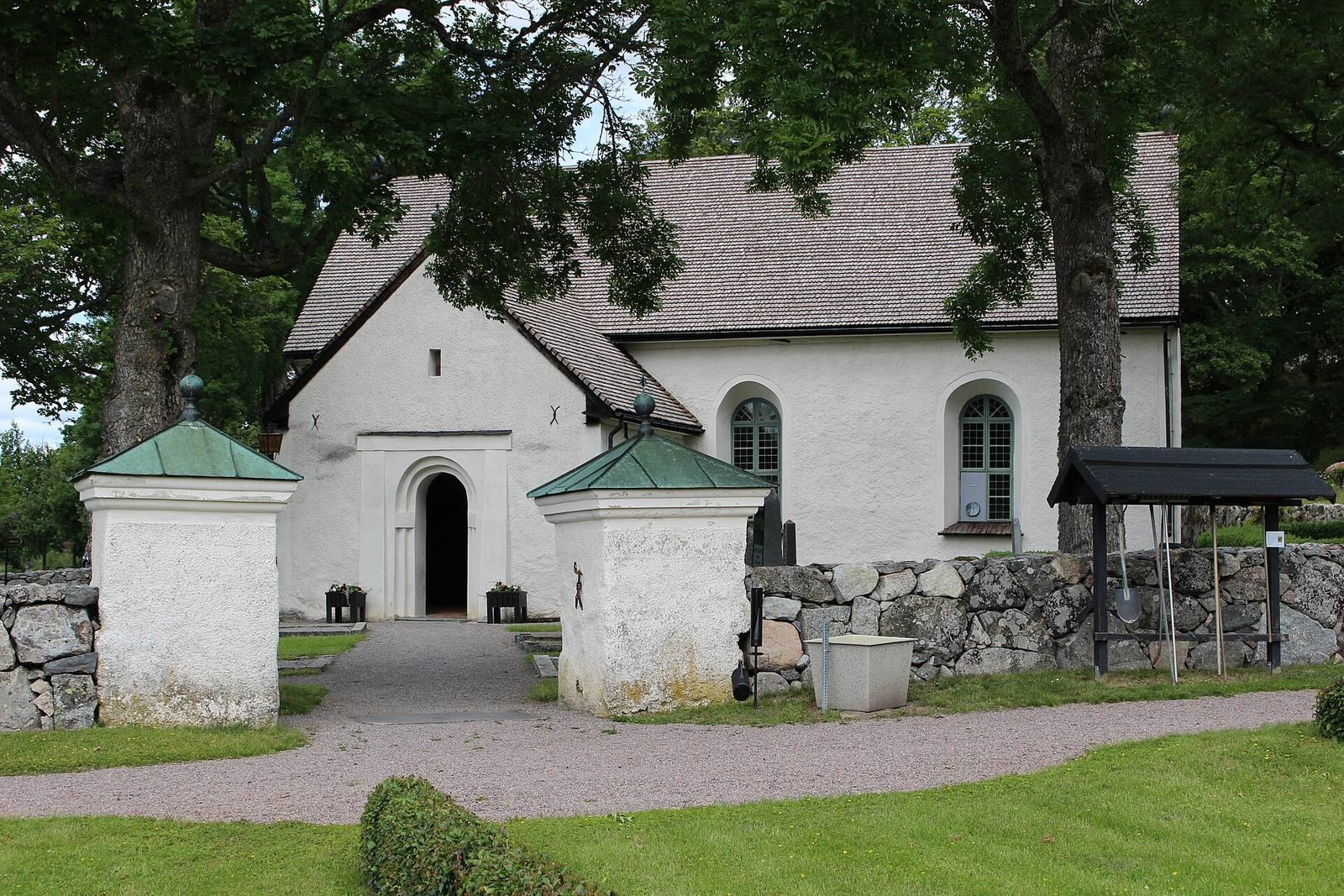
The church combines a medieval exterior with later structural changes and a richly furnished interior. Its main building, porch, sacristy, and separate bell tower form a group set on a wooded slope in the Örsunda River valley, amid rolling agricultural land.
Plan and construction
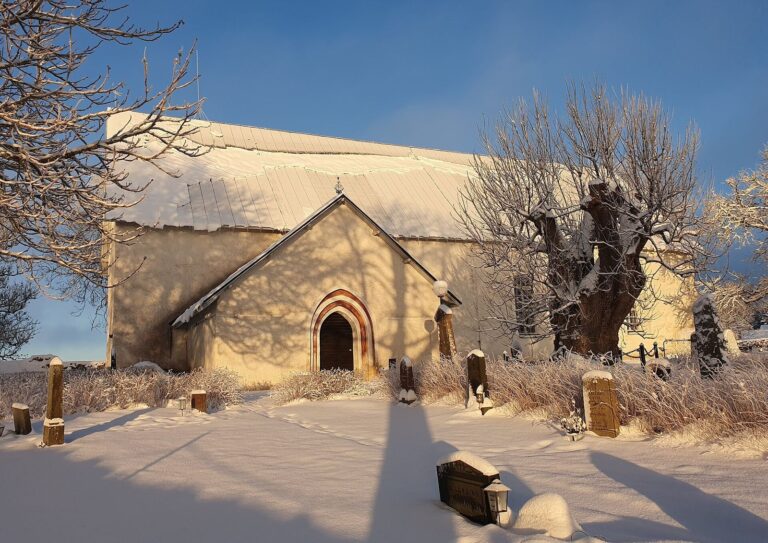
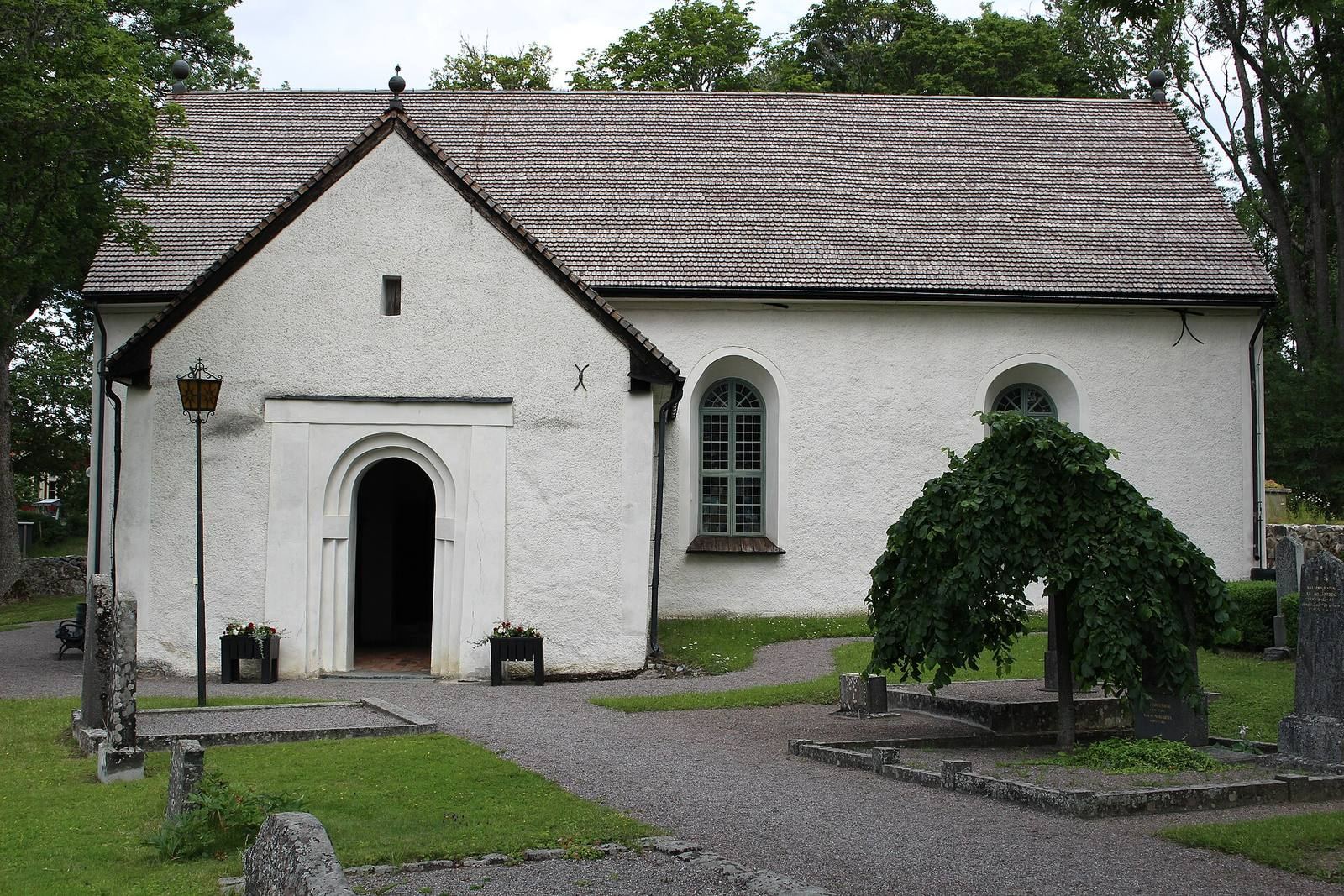
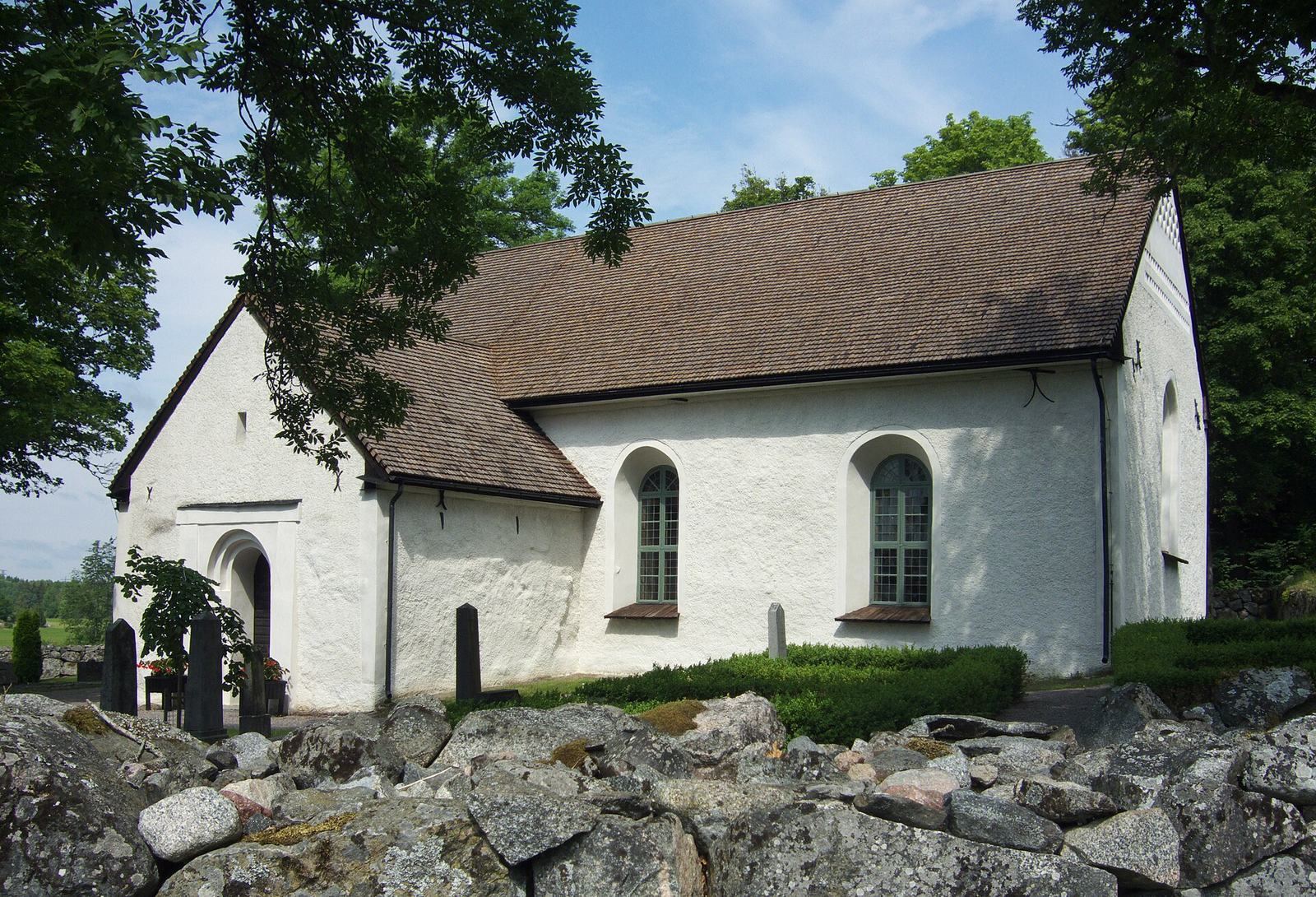
The church is a hall church with a rectangular nave and a choir ending in a straight eastern wall. A porch adjoins the southwest side, while a sacristy, a room for clergy and worship objects, stands at the northeast. The entrance is on the south, through the porch. Plastered natural stone forms most of the walls; brick is used in the gables and around the doorways. The nave and sacristy gables have blind arcading, decorative arches that do not open through the wall. The church stands on moraine ground, where difficult foundations have contributed to wall cracks. The 1816 restoration replaced the medieval brick ceilings with a continuous curved timber ceiling to protect the walls. It also enlarged existing windows and opened another in the nave’s north wall. The rebuilt southeast corner is in brick. The blocked medieval choir window remains part of the building, and the exterior retains a medieval character.
Interior furnishings
Altar and pulpit
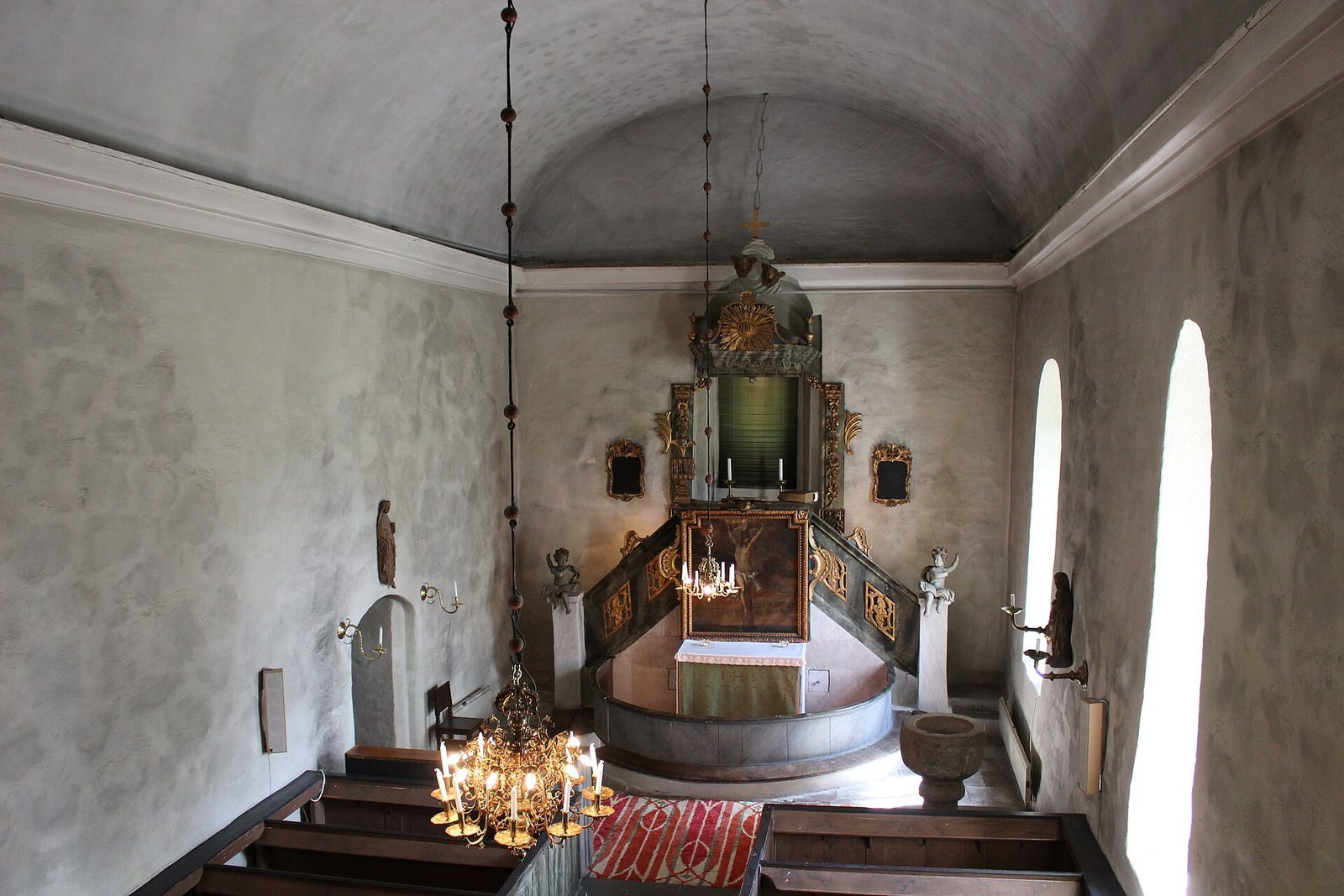
The altar wall has an unusual arrangement, with the pulpit placed above the altar beneath a canopy. Made in 1762 in the Rococo style, an eighteenth-century style of elaborate, flowing ornament, the ensemble is accompanied by an early-eighteenth-century altarpiece depicting Jesus on the cross. Rococo number boards acquired in 1768 hang on the east wall.
Baptismal font
The limestone baptismal font dates to the same period as the church. Its polygonal bowl is decorated with rope moulding, a raised pattern carved to resemble twisted rope.
Medieval images
The sacristy holds a 125-centimetre-high sculpture of the Virgin Mary and Child, probably made in the early thirteenth century, and a Christ figure thought to date from the late thirteenth century. A groove around Christ’s head suggests the figure once wore a royal crown; its feet are crossed and pierced by a nail. Beneath the gallery on the south wall, a carved image of Saint Birgitta, a Swedish religious visionary and founder of the Bridgettine order, shows her seated with a book. It dates to the early fifteenth century. A large sculpture of John the Baptist, a central figure in Christian tradition who baptized Jesus, stands in the porch and dates to the first half of the fourteenth century.
Organ and gallery
The west gallery holds an organ described as originally dating to the sixteenth century. Its case has three towers with delicate ornamental tracery, or interlacing decoration, from that period. The instrument has five stops and a short octave, a keyboard arrangement that adapts some low keys to provide a wider bass range in a compact instrument. It was made for Kumla Church in Västmanland. A 1630 reference describes it as old and unfinished; Daniel Stråhle rebuilt it in 1739. Fröslunda acquired it in 1819. It was repaired in 1871, conserved in 1932, and restored in 1996 to its 1738 condition.
Seating, lighting, and worship objects
The fixed pews date from the 1760s. Bronze and brass chandeliers and candle arms from the sixteenth and seventeenth centuries form a substantial group of historic lighting. In the sacristy are an eighteenth-century Baroque chair and table. The communion chalice has a late-medieval stem, while its bowl and foot were remade in the eighteenth century. Its associated paten, a plate for Eucharistic bread, is dated 1695. An eighteenth-century red-velvet chasuble, the outer garment worn by a priest during worship, is also preserved; a black-velvet example was purchased in 1762.
Bell tower
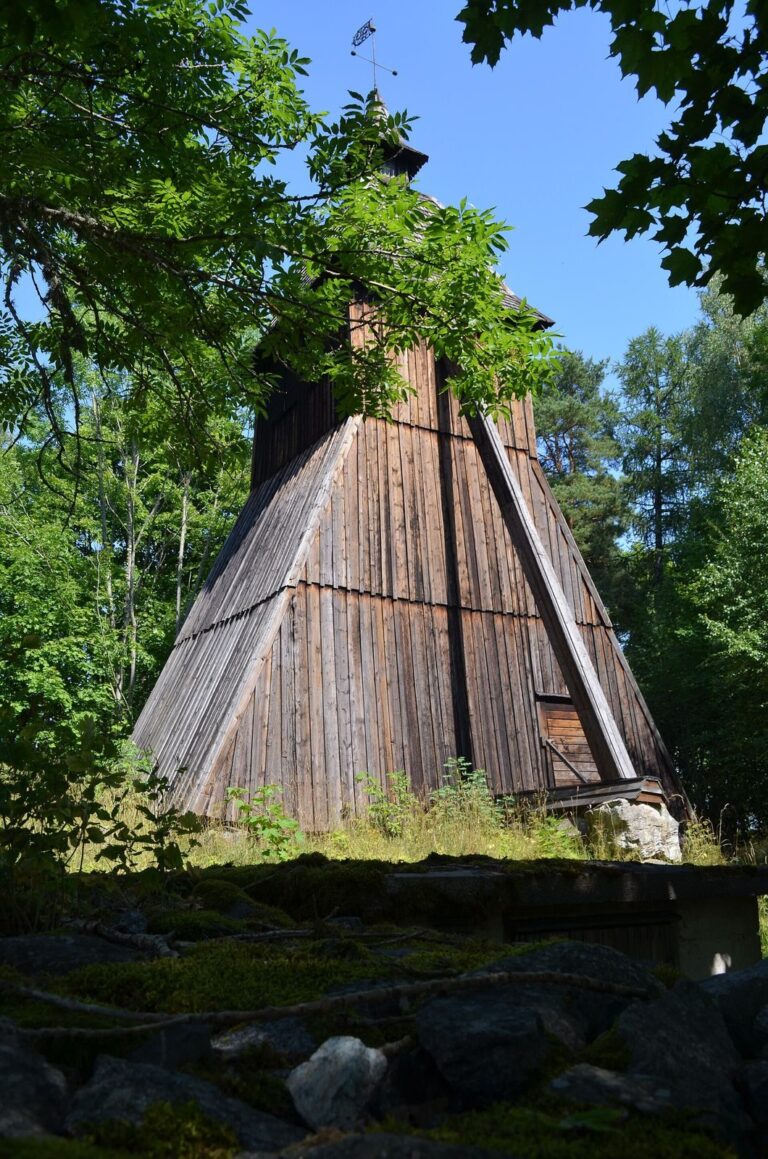
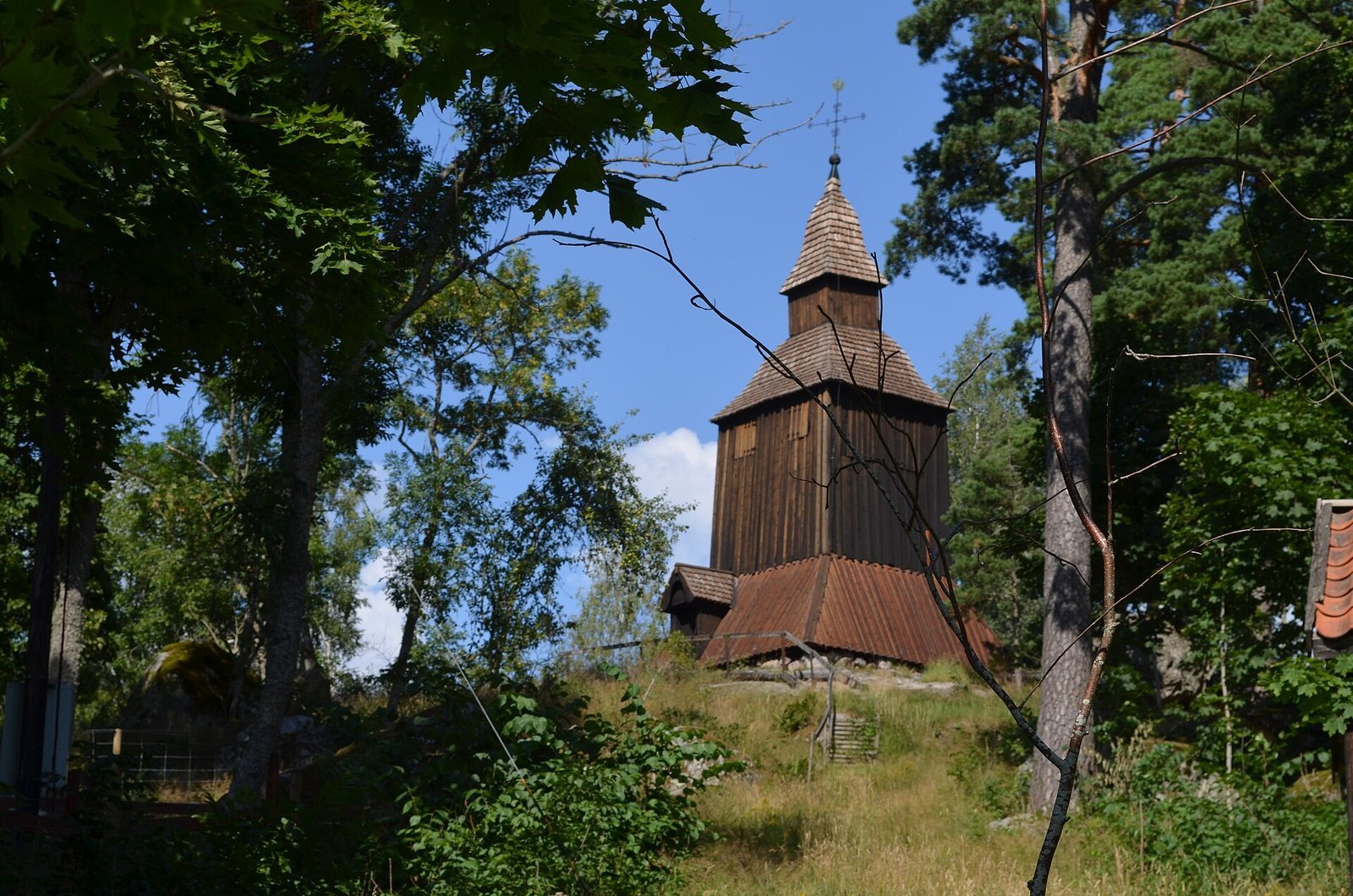
A board-clad bell tower built in 1752 stands on a rise north of the church. It contains two bells. Gerhardt Meyer cast the great bell in 1706, and S. C. Grönvall of Stockholm made the smaller bell in 1829.