Zennor Quoit: A Neolithic Burial Chamber
Site at a Glance
- Popularity
- Medium
- Country
- United Kingdom
- Primary era
- Stone Age
- Eras represented
- Stone Age
- Civilizations
- Unclassified
- Site type
- Burial
- Remains
- Tomb
On this page9 sections
History
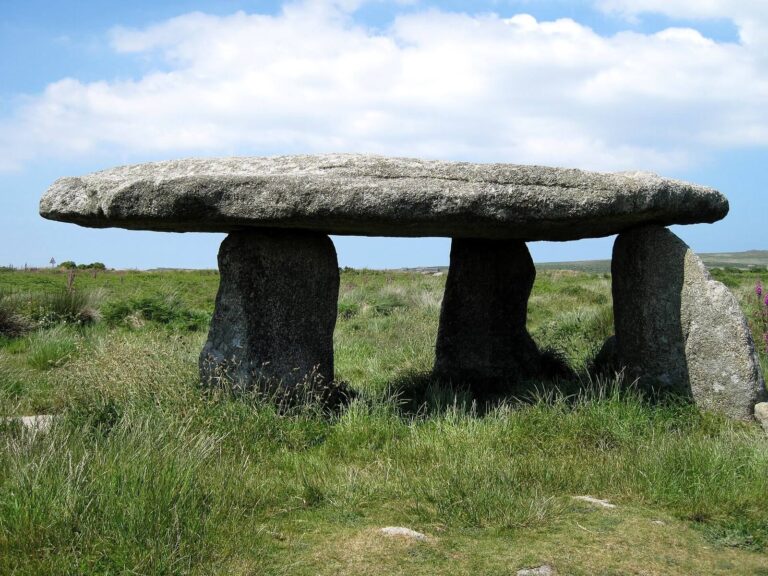
Zennor Quoit is a Neolithic burial chamber in Zennor, United Kingdom. A quoit is a Cornish term for a chamber tomb made from large stones; this example is a portal tomb, with an entrance framed by upright stones. The Neolithic, or New Stone Age, was a prehistoric period associated in Britain with farming and the building of stone monuments. The tomb’s precise date is uncertain, and it is one of eight surviving quoits on the West Penwith moors. It was used for burials, and earlier bodies may have been cremated and removed before later burials took place.
Antiquarian study and later changes
The Cornish antiquary William Borlase, a scholar of ancient monuments and objects, examined the site in 1754 and 1769. In his 1769 account he called it “Senar Quoit,” published details in Antiquities of Cornwall, and made careful drawings.
In 1861, a farmer proposed turning the tomb into a cattle shed, a plan that involved removing an upright stone and drilling the sloping roof stone. The local vicar, William Borlase, a great-grandson of the antiquary, persuaded him to build elsewhere by paying him five shillings. The farmer had already set stone posts at the site. Charles Taylor Stephens, a local shoemaker and postman, wrote a poem about the proposed conversion.
In 1872, William Copeland Borlase, a later antiquarian and great-grandson of William Borlase, published a detailed account and reproduced the earlier drawings. He considered them especially useful because the monument had changed considerably since they were made.
Around 1881, a man and his son dug beneath the tomb while searching for objects and blasted two flat stones. When the Penzance Natural History and Antiquarian Society visited in 1882, a member of the Borlase family urged that the blasting stop, likening the monument’s sanctity to that of a father’s grave.
Local tradition says that stones taken from the tomb mysteriously returned overnight. At Midsummer, the Old Cornwall Society, an organization concerned with Cornish heritage, holds a ritual bonfire behind the chamber.
Remains
The monument measures about 12.8 m across and centers on an east-facing stone chamber built from upright stones and a large capstone. It stands on the West Penwith moors, roughly 1.5 to 1.6 km east of Zennor. Sperris Quoit lies about 300 m to the east and is in considerably poorer condition.
The burial chamber
Entrance and inner chamber
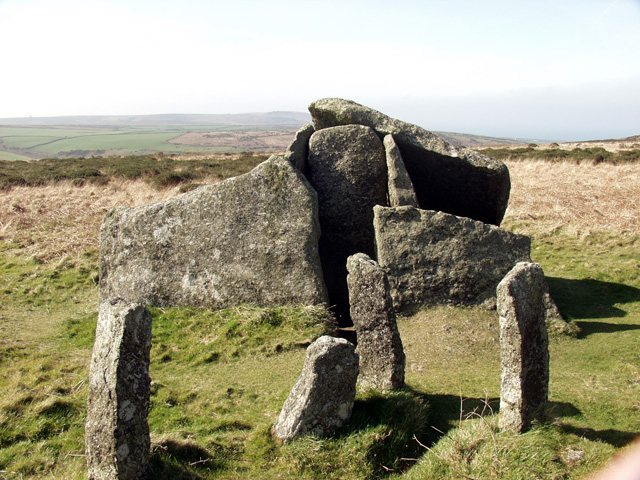
Seven upright stones form the chamber structure. Two large slabs frame the front entrance and its entry space, with the main chamber behind them enclosed by four stones. The entrance arrangement also included a small porch and an antechamber, a smaller space before the main chamber, with its own narrower entrance. Borlase’s drawing gives the chamber an internal height of about 2.4 m.
Capstone
Five stones supported the roof slab, which measures about 5.5 by 2.9 m and weighs an estimated 12.5 tonnes. It has shifted backward, leaving one end on the ground, while the chamber remains in good condition. Borlase’s 1769 drawing shows the slab in its original position; an 1849 engraving depicts it displaced, placing the movement between those dates. The shift probably followed the failure of the rear western support. Drilling marks remain on the sloping stone.
Outer features and excavated finds
Cairn and standing stones
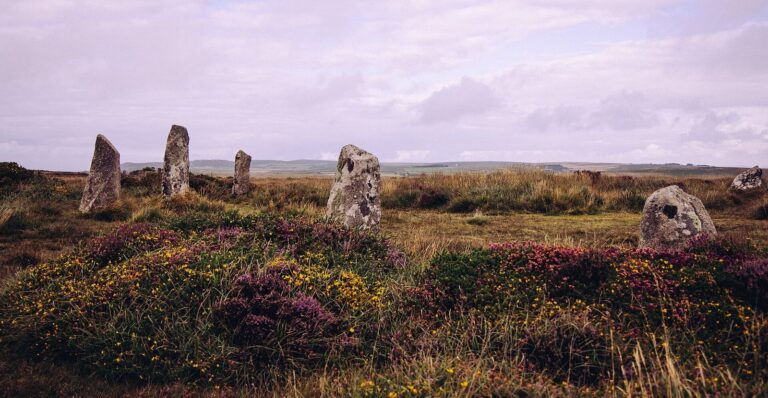
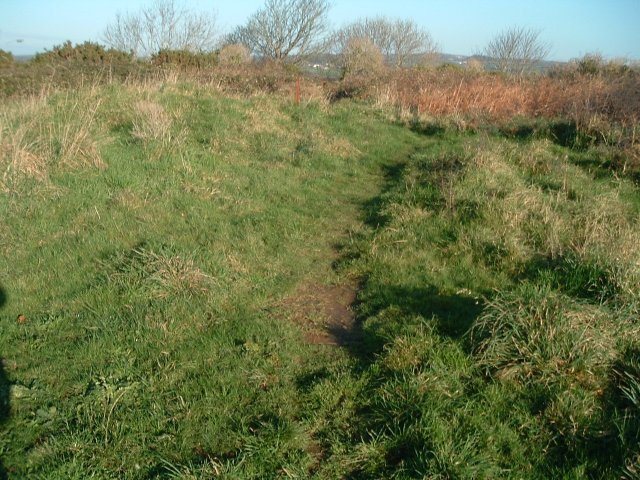
A cairn, a mound of stones built over or around a burial, originally covered the tomb. It probably left the entrance open rather than covering the chamber completely. Borlase’s drawing shows the stone mound with a diameter of about 13 m. A separate group of five standing stones in front of the tomb forms a rectangle about 3.5 by 1.5 m. The purpose of these outer stones is uncertain; they may have supported bodies left exposed to birds before burial.
Excavated objects
Excavations produced flint, pottery of Neolithic style, and cremated bones; urns may also have been recovered. Beneath the tomb, investigators found a whetstone, a stone used for sharpening blades, and part of an urn. The whetstone is held at Penzance Museum. A member of the Borlase family interpreted it as an object buried with the dead to sharpen weapons in the afterlife.