Pech Laglaire Dolmens: Neolithic Tombs in France
Site at a Glance
- Popularity
- Low
- Country
- France
- Primary era
- Stone Age
- Eras represented
- Stone Age
- Civilizations
- Unclassified
- Site type
- Burial
- Remains
- Necropolis
On this page10 sections
History
The Pech Laglaire dolmens are three Neolithic tombs near Gréalou in France. They are also known locally as the Dolmens of Mas-de-Pégouriès, after a nearby hamlet.
Dolmens 1 and 2 received legal historic-monument protection on 9 January 1978. Dolmen 2, owned by the municipality of Gréalou, has been part of the UNESCO World Heritage property Routes of Santiago de Compostela in France since 1998, as a component of the Via Podiensis, a historic pilgrimage route across France toward Santiago de Compostela. Restoration and an archaeological study at Dolmen 2 took place from April to June 2013.
An old cross associated with Dolmen 2 has been interpreted as evidence that earlier places of worship were Christianized. The dolmens and scallop shells also appear on Gréalou’s coat of arms.
Remains
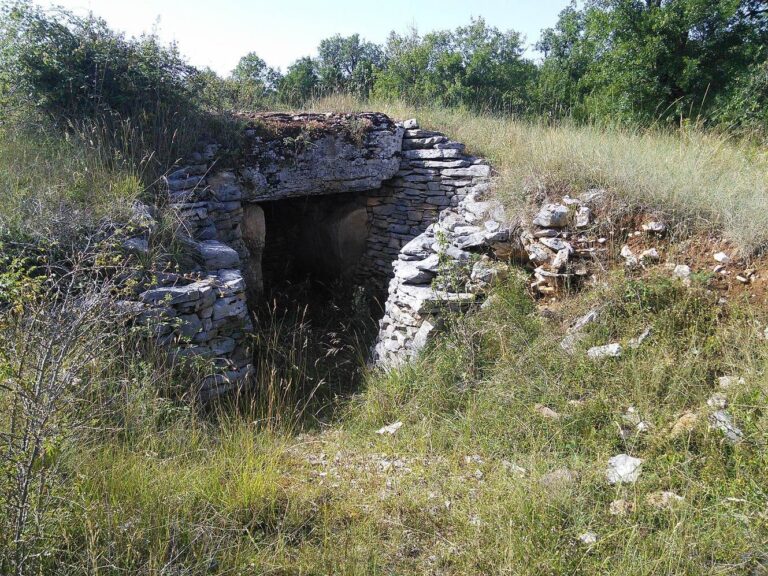
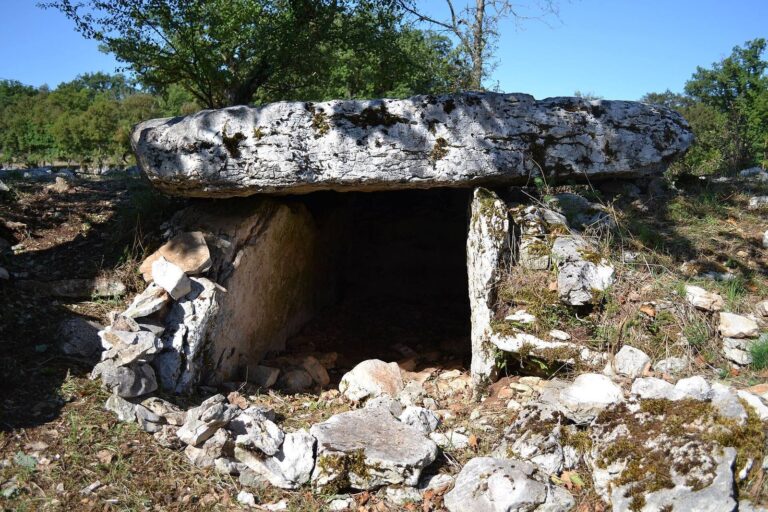
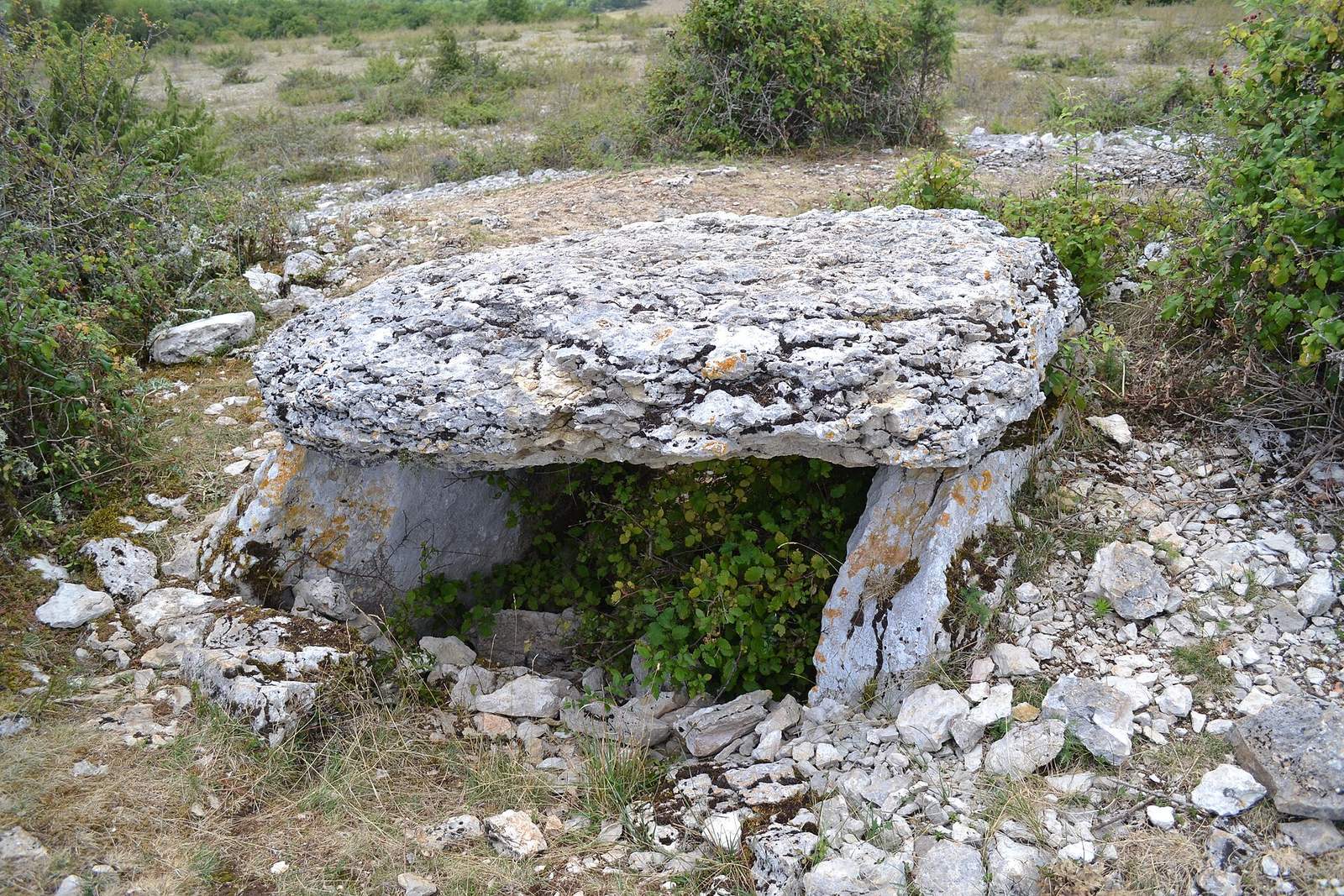
The three tombs lie within about 200 metres of one another. Their burial chambers use upright stones to support capstones, and all three are oriented toward the southeast.
Dolmen 1
Main chamber and mound
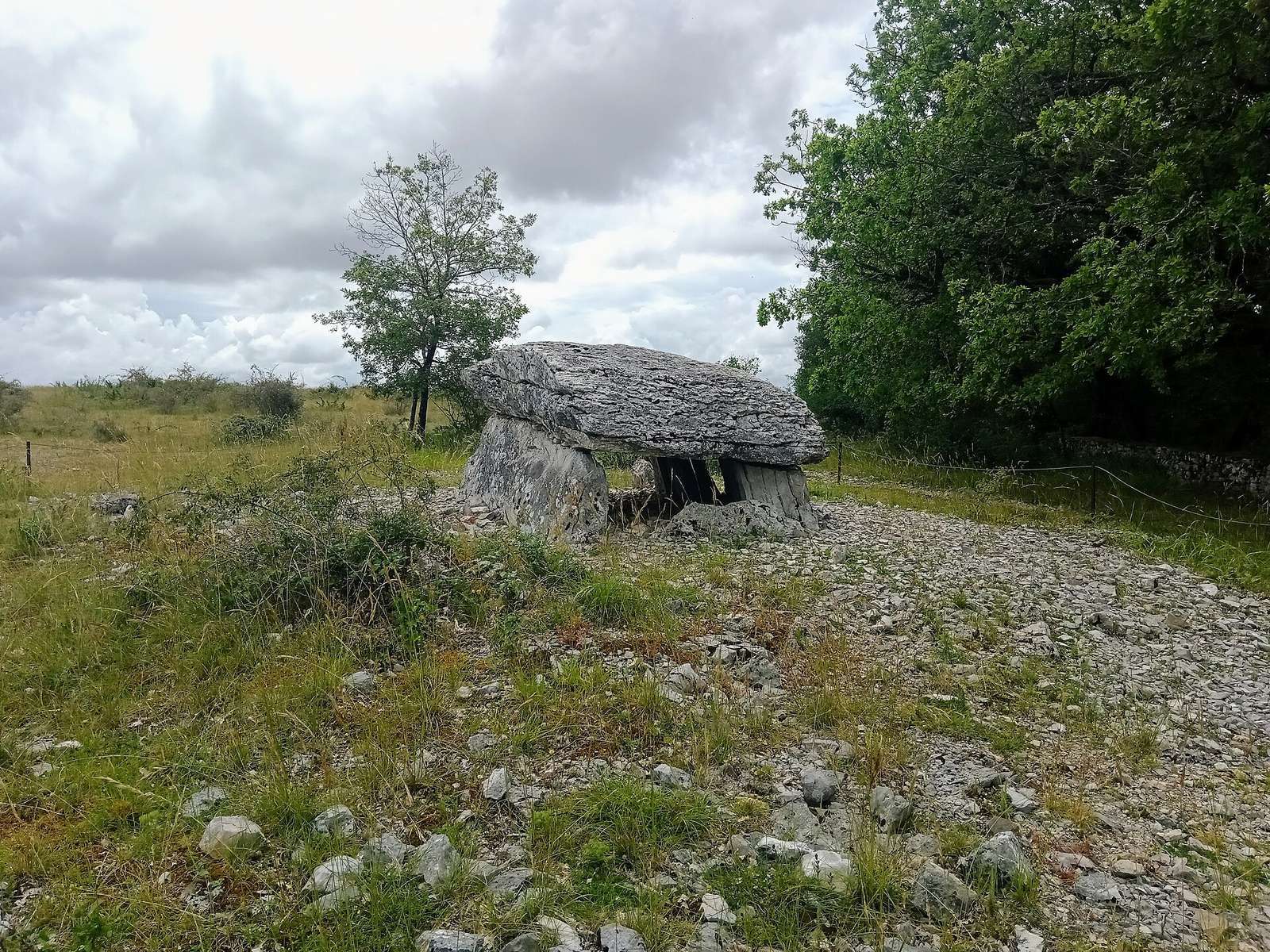
Dolmen 1 stands at the highest point of Pech Laglaire hill. Its oval mound measures 18 by 15 metres. The chamber, about 3.5 metres long, 1 metre wide and 0.8 metres high, is formed by two side stones, an end stone and a capstone. The tomb faces southeast on a bearing of 121 degrees.
Possible second chamber
An upright slab measuring 1.5 by 0.2 metres reaches the ground surface. It may indicate that the monument was originally a double dolmen. Behind the main chamber, a second chamber is completely filled; its offset position suggests it could have been added later. Two limestone slabs lying on the ground may be remnants of a capstone.
Dolmen 2
Burial chamber and mound
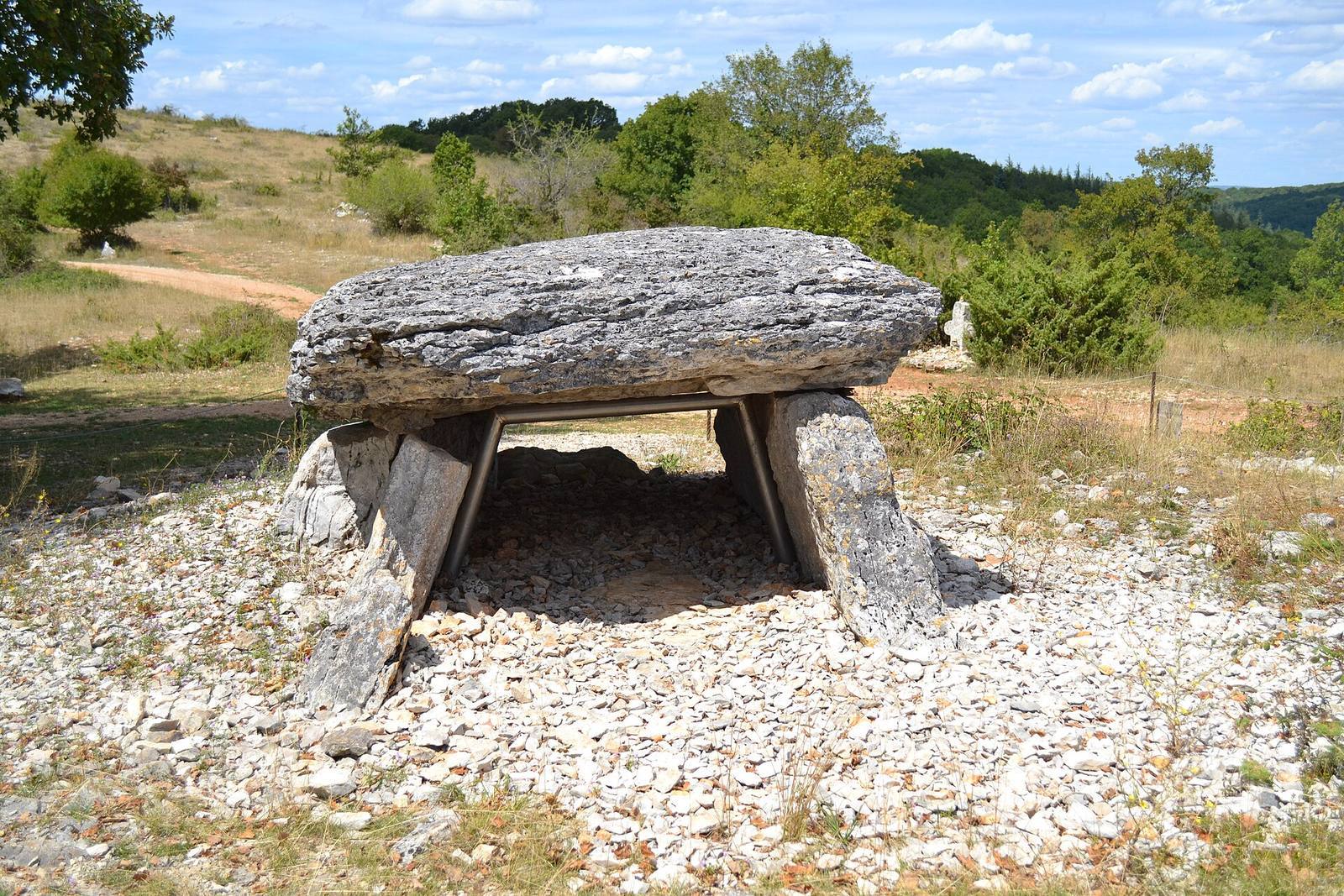
This simple Caussenard-type dolmen belongs to a regional form associated with the Causses. Facing southeast on a bearing of 123 degrees, it has a four-sided chamber about 2.5 by 2 metres and 0.8 metres high. Two upright stones and an end stone define the chamber, while its capstone is estimated to weigh about 7 tonnes. The mound was probably four-sided or trapezoidal and measured about 10 metres across.
Excavated objects
Objects from earlier excavations at Dolmen 2 are held at the Cahors Museum under the label Communal de Gréalou. They include 114 shell beads, two ring-shaped jet beads, 11 ring-shaped calcite beads, a grooved bone bead, a pointed bead, a perforated shell, a broken arrowhead and a pendant made from a flat pebble.
Cross beside the dolmen
An old cross stands immediately beside Dolmen 2.
Dolmen 3
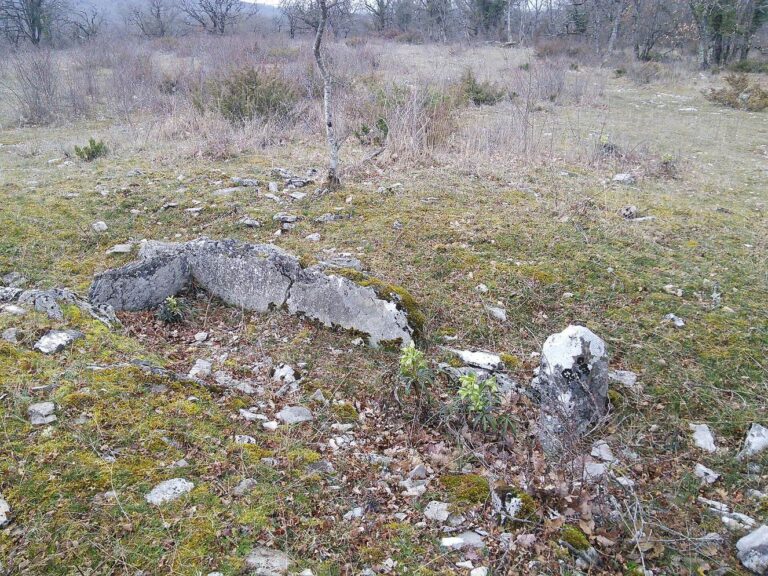
Dolmen 3 is badly damaged. Two upright stones and part of its capstone survive, and rubble fills the chamber. Its circular mound, 17 metres in diameter, is comparatively well preserved. The dolmen faces southeast on a bearing of 120 degrees.