Mên Scryfa: An Inscribed Standing Stone in Madron
Site at a Glance
- Popularity
- Medium
- Country
- United Kingdom
- Primary era
- Bronze Age
- Eras represented
- Bronze Age, Medieval
- Civilizations
- Unclassified
- Site type
- Civic
- Remains
- Monument
On this page4 sections
History
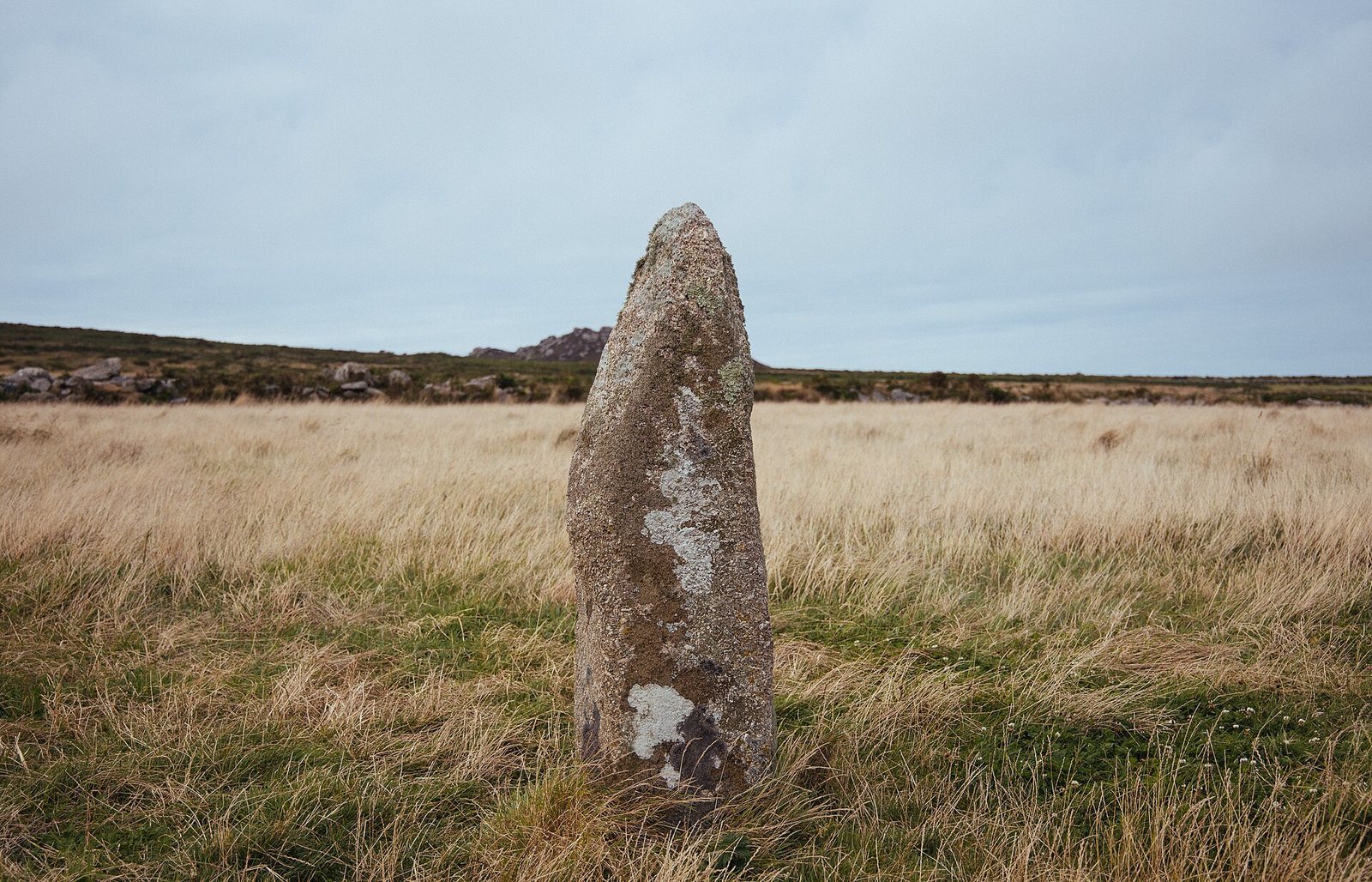
Mên Scryfa is a standing stone in Madron, near Penzance, in the United Kingdom. It may have begun as a prehistoric monument, perhaps in the Bronze Age, before being inscribed as a memorial in the early medieval period. Its name, also written Mên Scrifa, means “stone with writing.”
The inscription and later interpretations
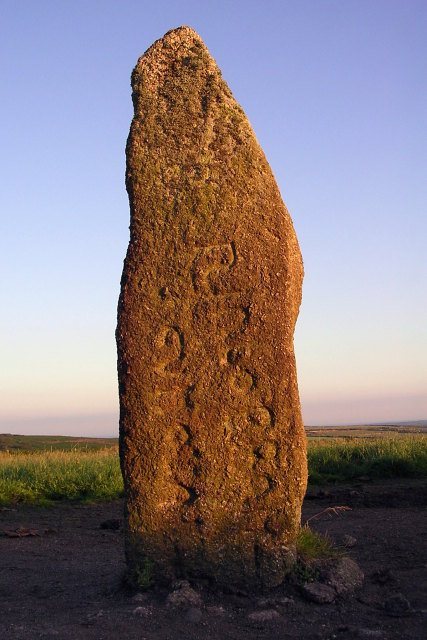
The inscription commemorates Rialobranus, son of Cunovalus. Rialobranus may have been a Cornish petty king, a ruler of a small territory who could have been subordinate to a higher monarch or one of several regional rulers. Proposed interpretations connect Rialobran, also given as Ryalvran, with “royal raven.” Cunovalus has been understood as “famous leader” or, alternatively, “worthy hound.”
Antiquaries once identified Cunovalus with Cunobeline, a pre-Roman British king, although Rialobranus is not among Cunobeline’s recorded sons. A separate genealogical proposal links Cunovalus to one of two men named Cynwal. If Rialobranus was the son of Cynwal Garnwch, he would have been a cousin of King Arthur; if he was the son of Cynwal son of Ffrwdwr, he would have been Arthur’s great-uncle. These links are conjectural, and Arthur is a legendary British ruler in medieval tradition.
Local folklore places a battle near the stone and says Rialobranus was killed and buried there. One version tells that he died while trying to reclaim lands his father had lost to invaders. The raven was associated in the tradition with death and magical powers, and the stone’s length was said to match the warrior’s height of about nine feet.
Antiquarian accounts and changes to the stone
Edward Lhuyd, a Welsh scholar of antiquities, sketched the stone in the early eighteenth century. A letter dated 7 January 1712 placed it in a pit about three feet deep beside the road between St Ives and St Just-in-Penwith. William Borlase, a Cornish antiquary, described it lying on the ground in 1769.
The stone was raised in 1825 and was also temporarily moved at some point between 1824 and 1849, while work was under way at a nearby mine. Treasure hunters who had dug around its base toppled it in 1849. John Thomas Blight, a Cornish antiquary, described it in 1861 with its inscribed face turned down. It was put upright in its present position around 1862.
On 1 June 2023, unknown individuals poured petrol on the stone’s top and set it alight. A four-inch hole had also been dug around its base.
Remains
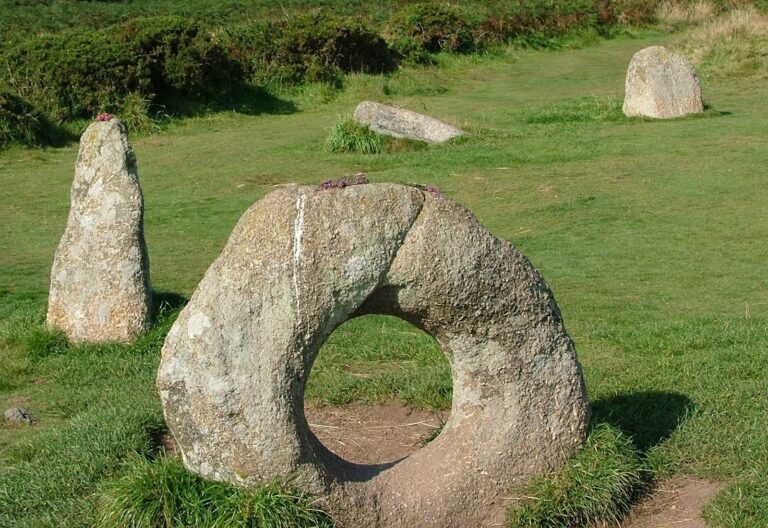
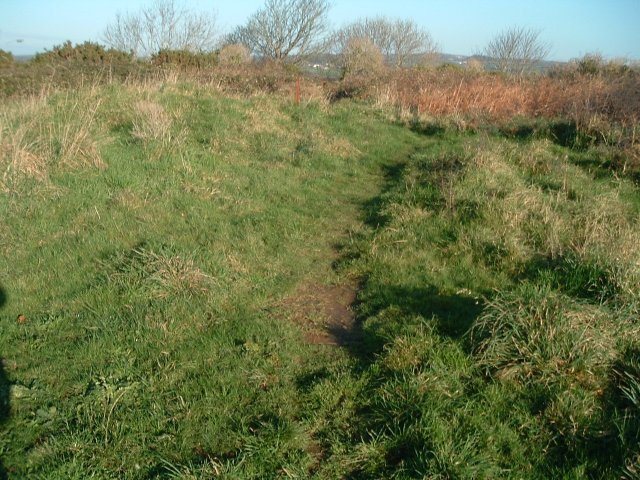
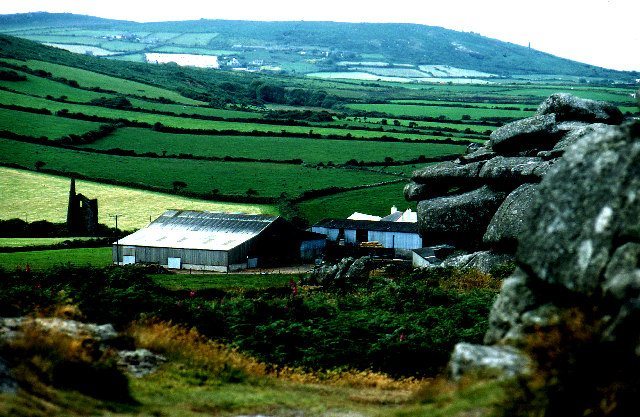
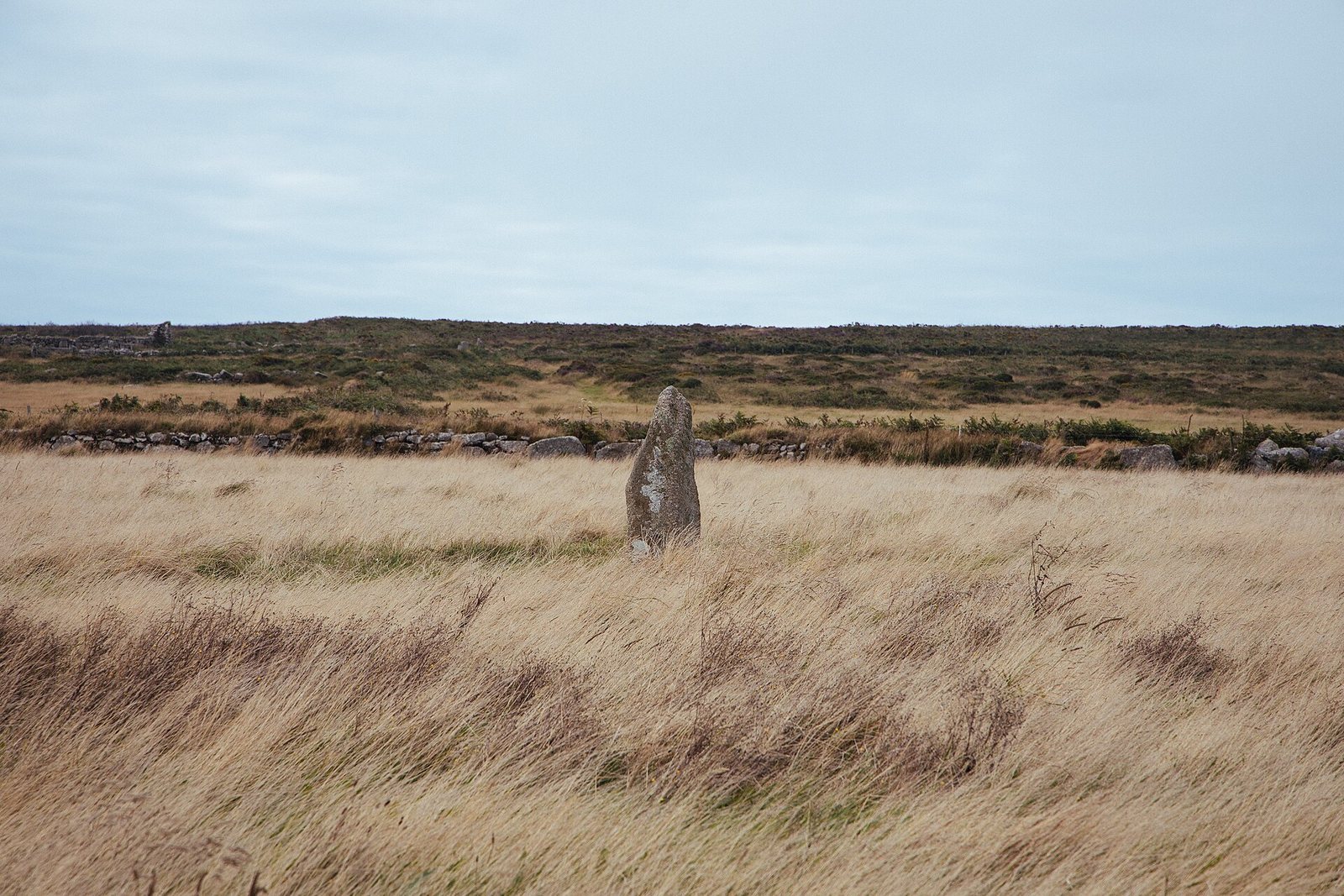
The stone stands in an elevated field, described as a wheat field, northeast of the Madron–Morvah road and at the end of a dead-end track. The Mên-an-Tol stones lie about 300 metres to the south. Mên Scryfa is approximately 1.7 metres high and has a roughly rectangular cross-section measuring about 0.4 by 0.5 metres.
Its inscription occupies the northern face and runs in two vertical lines of uppercase lettering based on Roman inscription forms. The text, Rialobrani Cunovali fili, means “Rialobranus, son of Cunovalus.” The lower part of the stone is buried, and its final word was covered when it was re-erected. Near the top, the lower of two reported simple crosses retains a visible horizontal stroke, while its vertical stroke is indistinct. A smaller cross was also described above it.