Funazuka Kofun in Ikaruga: A Late-Sixth-Century Burial Mound
Site at a Glance
- Popularity
- Medium
- Country
- Japan
- Primary era
- Medieval
- Eras represented
- Medieval
- Civilizations
- Yamato
- Site type
- Burial
- Remains
- Burial Mound
On this page5 sections
History
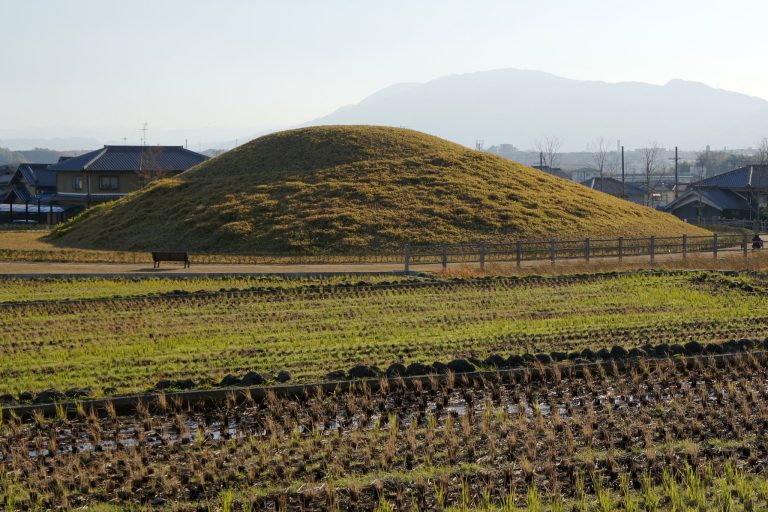
Funazuka Kofun in Ikaruga is a circular burial mound in Nara Prefecture, Japan, estimated to date to the second half of the sixth century, during the late Kofun period, an era associated with the construction of burial mounds. Its date is also placed around the TK43 phase, an archaeological pottery category used to date Kofun-period remains. The mound is important for understanding Ikaruga before Fujinoki Kofun, another burial mound in the area, was built.
Tradition says that a boat made of camphor wood was unearthed at Funazuka, giving the mound its name. The story has also been interpreted as a possible memory of the discovery of a wooden coffin. The burial chamber was probably destroyed in the seventh century, an interpretation supported by material in its fill.
Nara University’s cultural-property researchers surveyed and excavated the mound in March 2022, then carried out further excavations in February–March and August–September 2023.
Remains
Setting and Mound
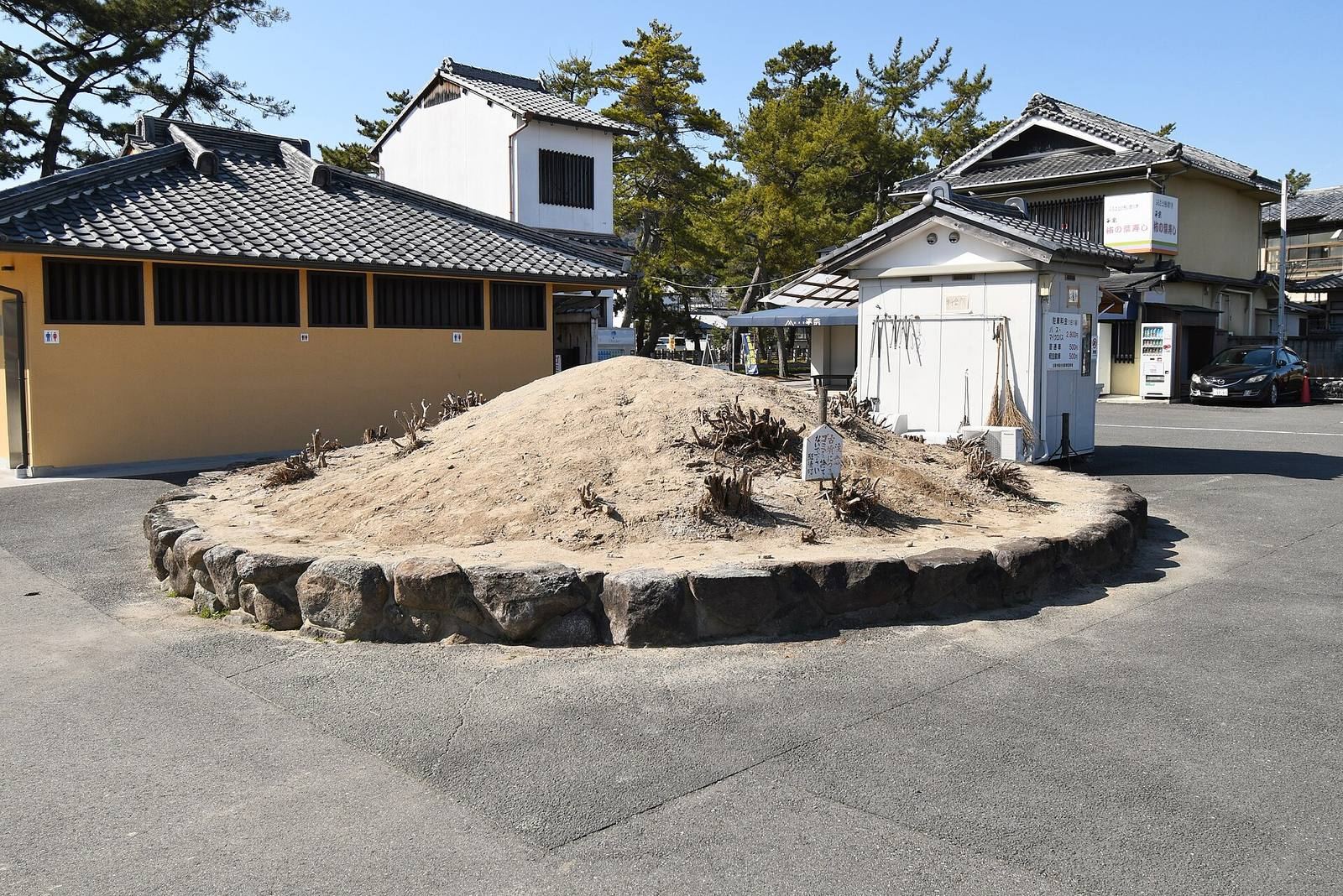
The mound lies at the southeastern foot of the Yata Hills, in the northwestern Nara Basin, within the Horyuji car park. The surrounding area is used for parking, and a stone retaining wall covers the mound’s base. The circular mound measures 8.5 metres across and stands 1.5 metres high.
Stone Burial Chamber
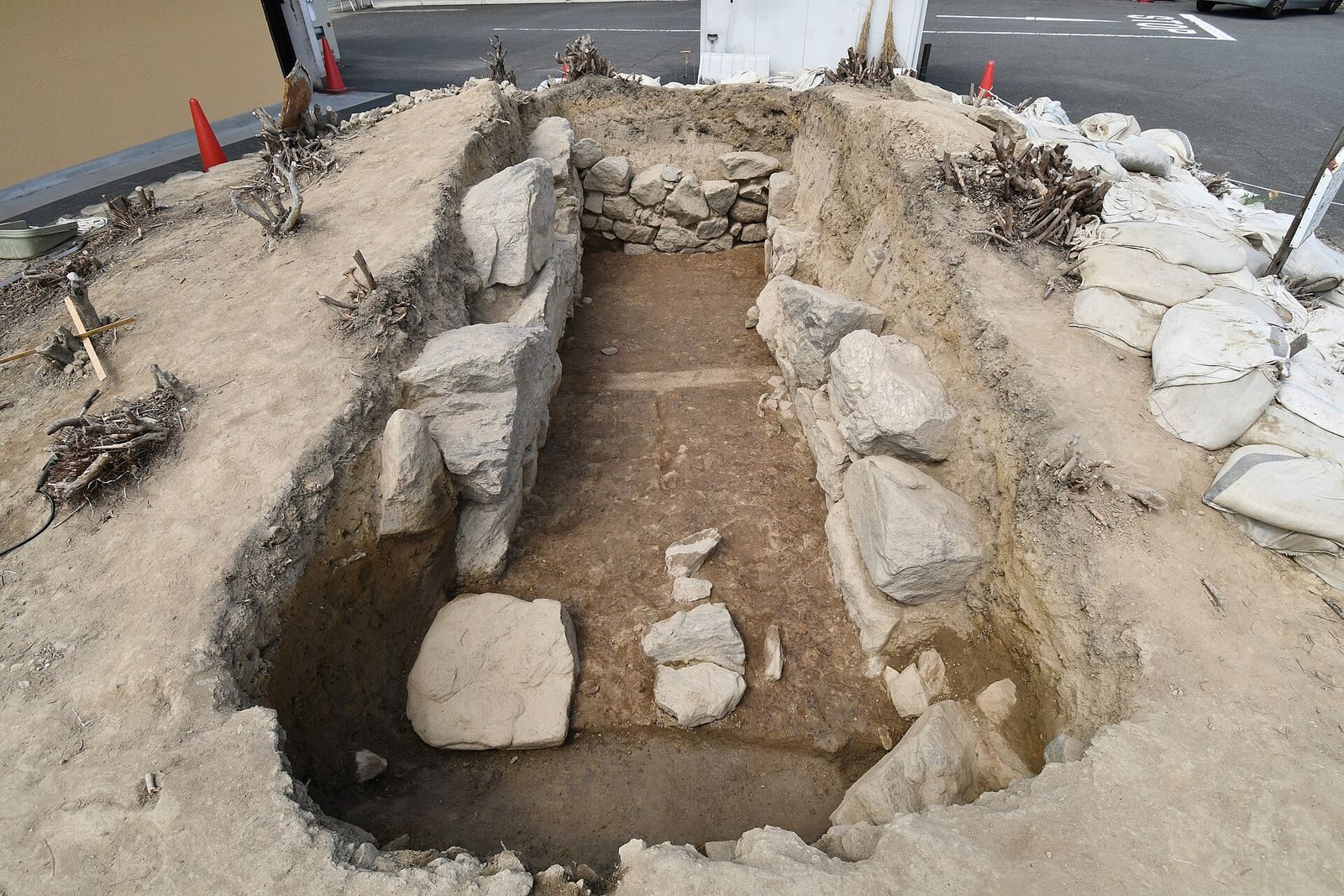
A horizontal-entry stone chamber, reached through a passage that joins one side off-centre, forms the burial facility. Its entrance faces south-southeast, and the chamber is now backfilled. The main chamber measures 3.8 metres long and 1.6 metres wide; its rear wall survives to a height of 0.9 metres. The rear wall was built in at least five courses, and the side walls in at least three, with small stones at their bases. By the time of investigation, the upper parts of the rear and side walls, the passage and the ceiling stones had been destroyed.
Finds from the Chamber
Objects recovered from inside include beads, a sword, iron arrowheads, horse fittings, and large quantities of Sue ware, a high-fired stoneware, and Haji ware, an unglazed earthenware. The sword and horse fittings were practical items. A round roof tile from an eave end, dating to the Asuka period, a later ancient Japanese period conventionally dated from the late sixth to the early eighth century, was also found in the chamber fill.