Heilig Blut: A Former Pilgrimage Church in Umrathshausen
Site at a Glance
- Popularity
- Very Low
- Country
- Germany
- Primary era
- Medieval
- Eras represented
- Medieval, Early Modern, Modern
- Civilizations
- Duchy of Bavaria, Electorate of Bavaria, German, Holy Roman Empire, Kingdom of Bavaria
- Site type
- Religious
- Remains
- Church
On this page8 sections
History
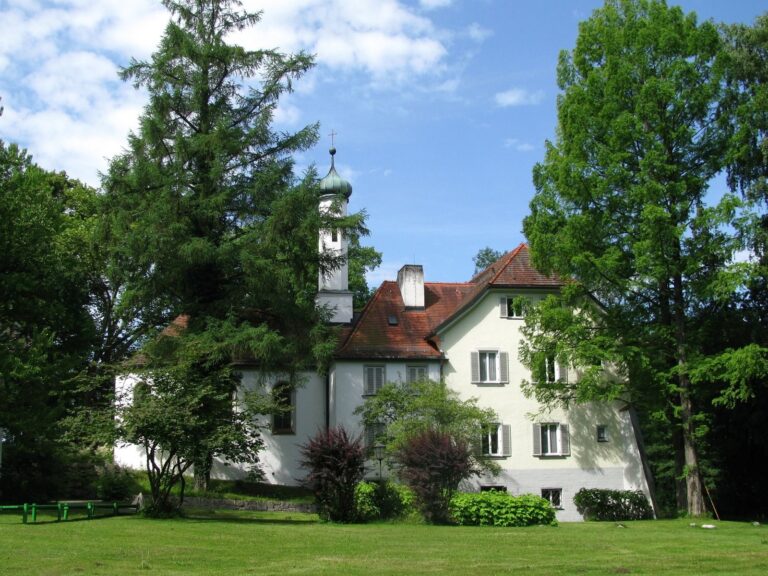
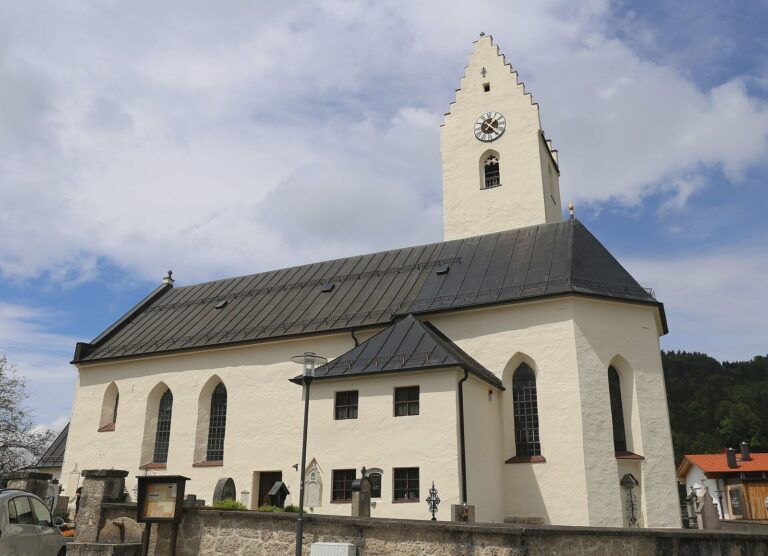
Heilig Blut is a Roman Catholic branch church and former pilgrimage church in Umrathshausen, part of Frasdorf, Germany. Built around 1470 in the late Gothic style, it serves the local community and belongs to the Rosenheim deanery, a district grouping churches within the Archdiocese of Munich and Freising, a diocese led by an archbishop.
Origins and pilgrimage
The church is first mentioned in 1365, when Saint Ulrich of Augsburg, a tenth-century bishop and saint, was its patron. Local tradition says the church held a relic in a gold vessel, believed to contain drops of Jesus’s blood. The relic drew pilgrims, and the church came to be called Heilig Blut, meaning “Holy Blood.”
The same tradition tells that three men buried the vessel during a military conflict to protect it from looting. They are said to have been killed, and the vessel was never found. The church’s interior was remodelled in the Baroque style beginning in 1680, with another phase in 1749.
Tower collapse and later repairs
On 22 June 1825, the old tower collapsed for no apparent reason. Its two bells suffered little damage and were placed on a frame beside the church. After a replacement tower was built between 1827 and 1830, the bells were returned to it.
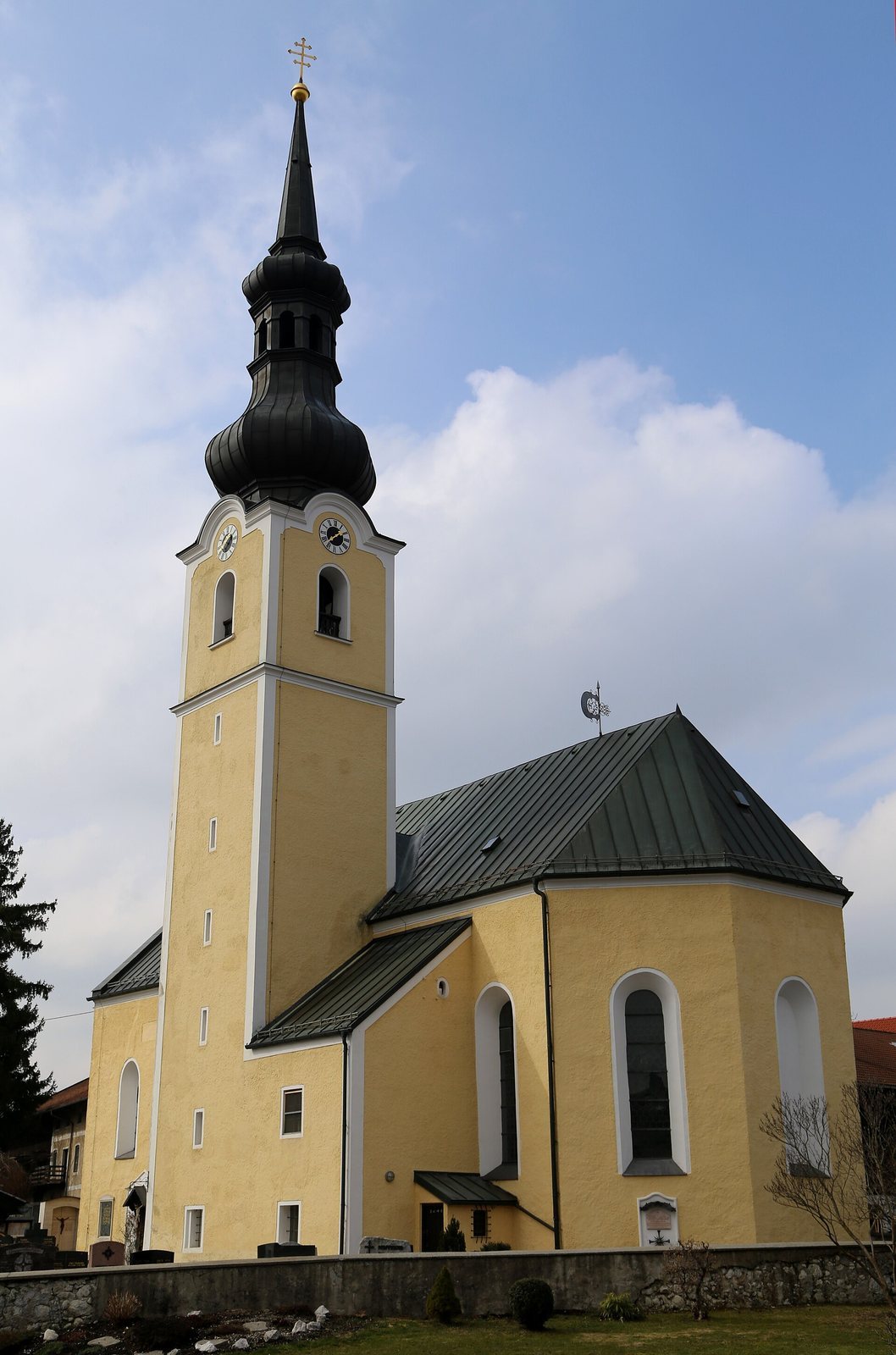
A fire on 18 September 1898 destroyed the tower’s cap and the church roof. The roof was restored in 1899, and the tower received a bulbous cupola in 1900.
Remains
Building plan and exterior
The late-Gothic church has a broad nave and a narrower eastern choir, the church’s sanctuary area, which ends in three sides. A sacristy, a room used to prepare for services, adjoins the choir on the south; an oratory, or prayer room, occupies its upper floor. The tower stands at the southwest corner of the nave and sacristy, and has a bulbous cupola. The west entrance doorway is set within a porch added in 1678.
High altar
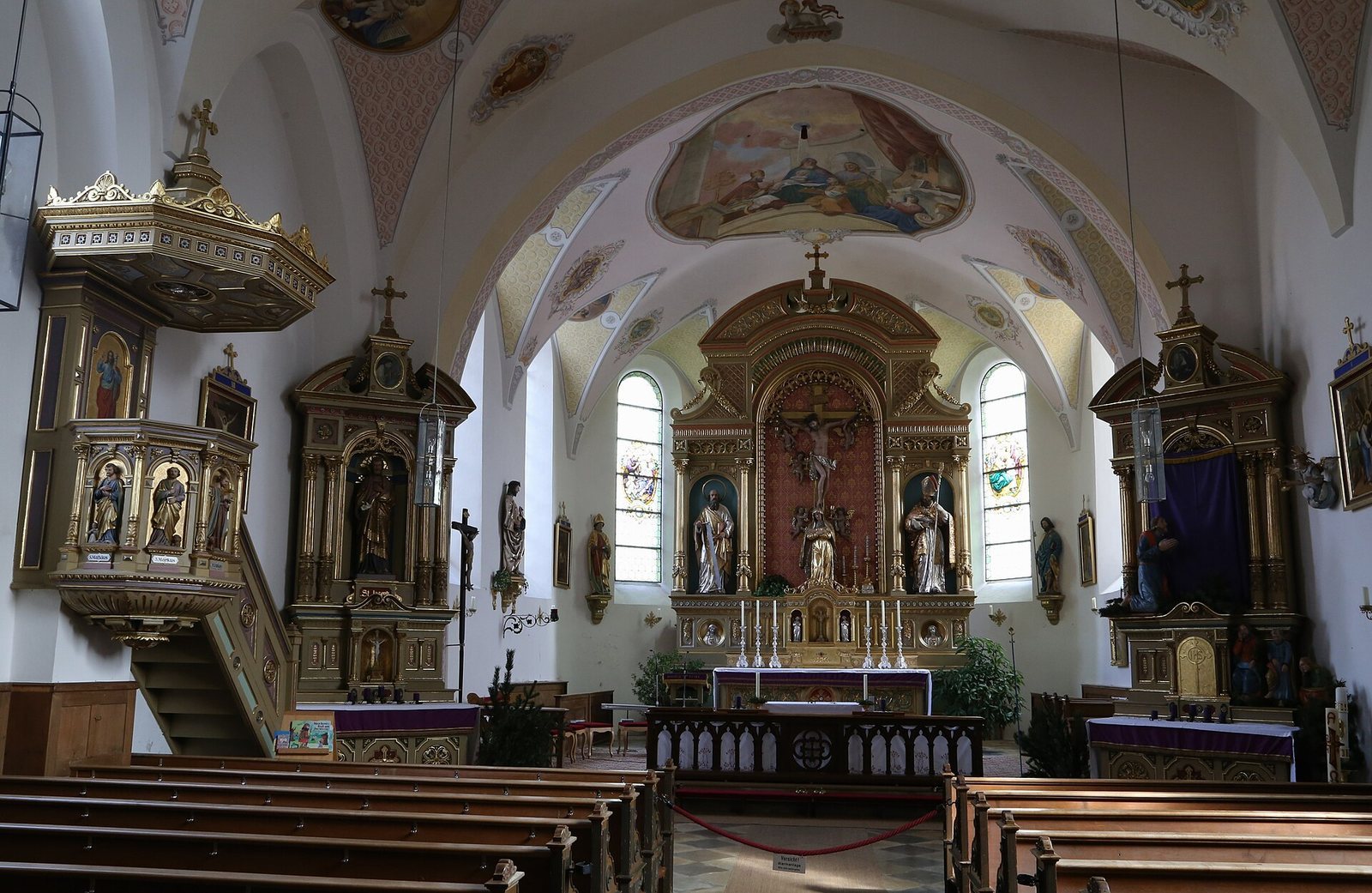
Balthasar Kraft made the high altar in 1872–73. Its retable, the decorated structure behind the altar, has three round-arched niches set between columns, with a larger central niche flanked by two smaller ones. A curved, segment-shaped top crowns the arrangement. The central niche contains a group carried over from the previous high altar: Jesus on the cross, angels receiving blood from his wounds, and Mary grieving at the foot of the cross. The side niches hold statues of Saint Peter, one of Jesus’s apostles, and Saint Ulrich of Augsburg.
Ceiling paintings
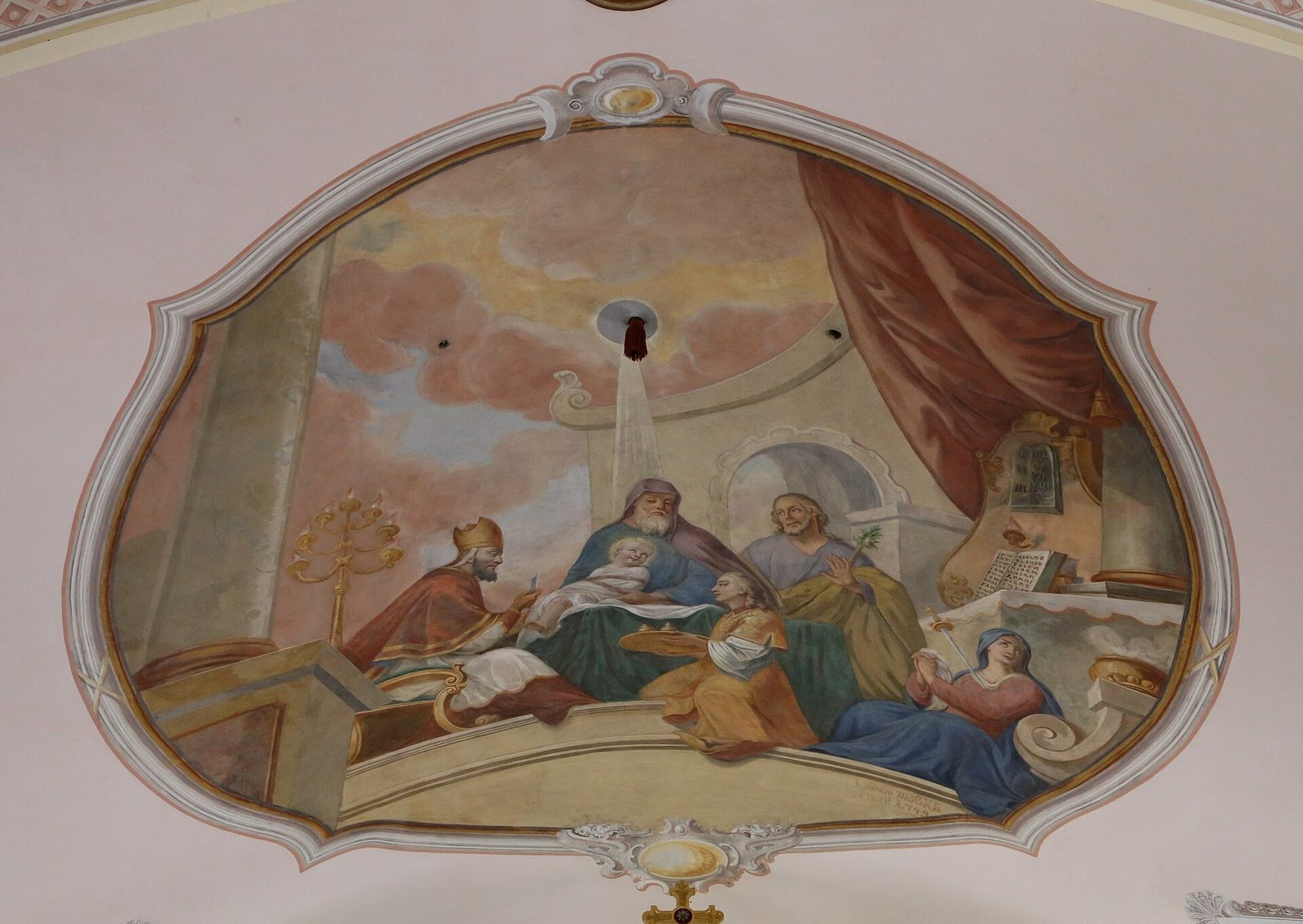
Joseph Adam von Mölk painted the ceilings in 1749. In the nave, the painting shows the church’s Holy Blood dedication, with blood flowing as a blessing over the four continents recognized at the time. Above the choir, the painting depicts the infant Jesus with his parents at his circumcision in the Temple. The sword shown at Mary’s breast refers to Simeon’s prophecy, which foretold suffering for her.
Organ
Josef Hackl built the organ in 1900. It has nine stops, which select different pipe sounds, operated from one keyboard and a pedal. Its mechanical air-control system uses cone-shaped valves to supply the pipes.