Entella: An Ancient City in Sicily
Site at a Glance
- Popularity
- High
- Country
- Italy
- Primary era
- Classical
- Eras represented
- Iron Age, Classical, Medieval
- Civilizations
- Unclassified
- Site type
- City
On this page22 sections
History
Entella is an ancient city on Rocca d’Entella near Contessa Entellina in Sicily, Italy. Its urban development dates from the Late Archaic period, the final phase of ancient Greek Archaic culture, while proposed foundation dates range from the fifth to the third centuries BCE. The city’s origins remain uncertain, and accounts of its beginnings combine ancient traditions with evidence of long-term occupation.
Origins and early city
Entella has been linked to the Sicans and Elymians, ancient peoples of Sicily. One tradition says that Acestes, a Trojan figure, founded the city and named it for his wife, Entella; another credits Elymus, a legendary ancestor associated with the Elymians. Virgil, the Roman poet, instead presents Entellus as a companion of Acestes. Entella is often associated with the Elymians, but the Greek historian Thucydides names Eryx and Segesta as Elymian cities without mentioning Entella.
Evidence places human activity at the site in the Eneolithic, the period between the Neolithic and Bronze Age, and during the Bronze Age, including its Middle Bronze phase. Urban development followed much later, in the Late Archaic period. These early traces and the later city belong to distinct phases, rather than a single continuous period of construction.
Campanian control and conflict
In 404 BCE, 1,200 Campanian mercenaries, soldiers from southern Italy hired by Carthage, entered Entella as allies. They killed the city’s male citizens and took control. The Campanians held Entella for many years and remained allied with Carthage in its later wars against Syracuse, a Greek city-state in Sicily. In 396 BCE, they maintained that alliance even as most Sicilian cities supported Dionysius I, ruler of Syracuse.
Dionysius captured Entella in 368 BCE, but the Campanians continued to govern it and turned against Carthage. In 345 BCE, Carthage devastated the surrounding territory and laid siege to the city, possibly occupying it for a short time. Timoleon, a Greek military leader active in Sicily, later recovered Entella and restored its freedom and independence.
Roman city
Entella’s part in the First Punic War is uncertain. After the conflict, refugees and former prisoners of war repopulated the city. They probably included descendants of the Campanian mercenaries who had settled there in the fifth century BCE.
Under Roman rule, Entella became a prosperous municipium, a self-governing community incorporated into the Roman state. Cereal cultivation and vineyards supported its economy. Cicero praised the inhabitants’ agricultural labor and craftsmanship, while the Roman magistrate and governor Verres subjected the city to exactions. The Roman author Pliny the Elder and the geographer and astronomer Claudius Ptolemy later included Entella in their works.
Medieval occupation and destruction
Entella remained occupied into the Middle Ages. During the thirteenth century, rebels against the Kingdom of Sicily fortified the naturally defensible site. In 1246, Frederick II, ruler of Sicily and Holy Roman Emperor, captured the stronghold and destroyed it. The inhabitants were expelled and relocated to Lucera.
Excavation and the bronze tablets
Excavations by the Scuola Normale Superiore di Pisa established the site’s prehistoric occupation and later urban development. Eight bronze tablets were found in the area around 1970. During the 1970s they were illicitly removed and sold on the antiquities market. Some were later recovered through cooperation between the Carabinieri’s cultural-heritage protection command and historian Giuseppe Nenci. The tablets first appeared in print in the 1980s.
Remains
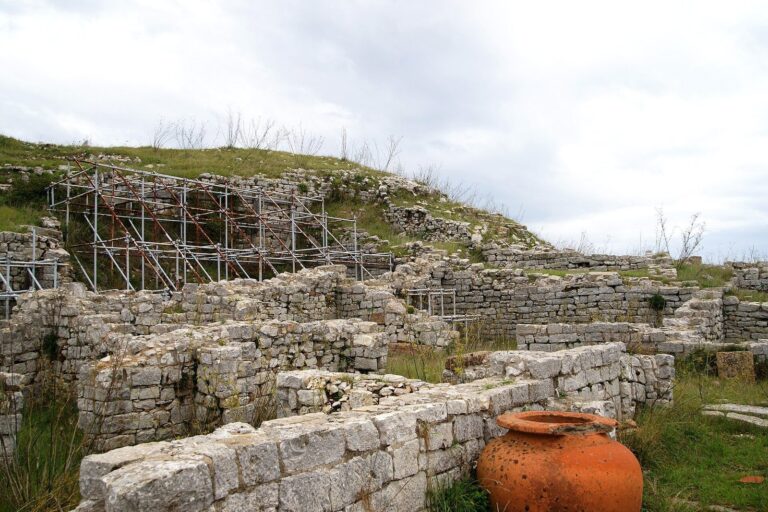
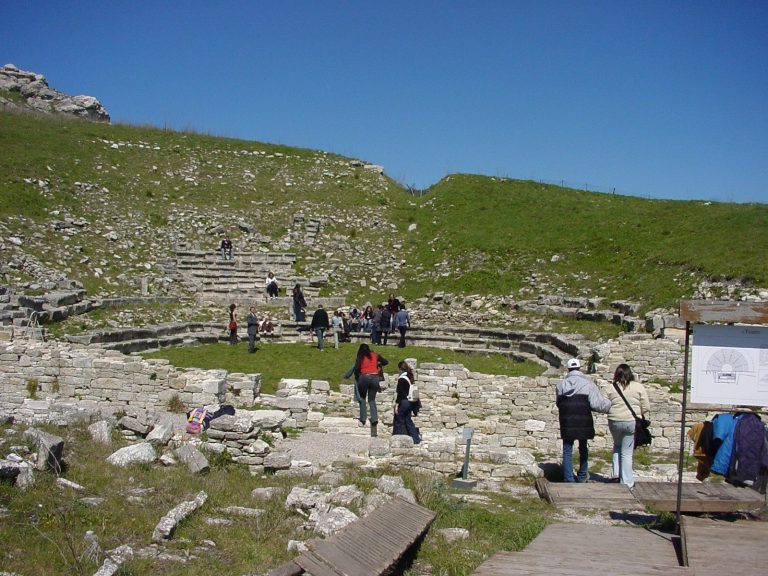
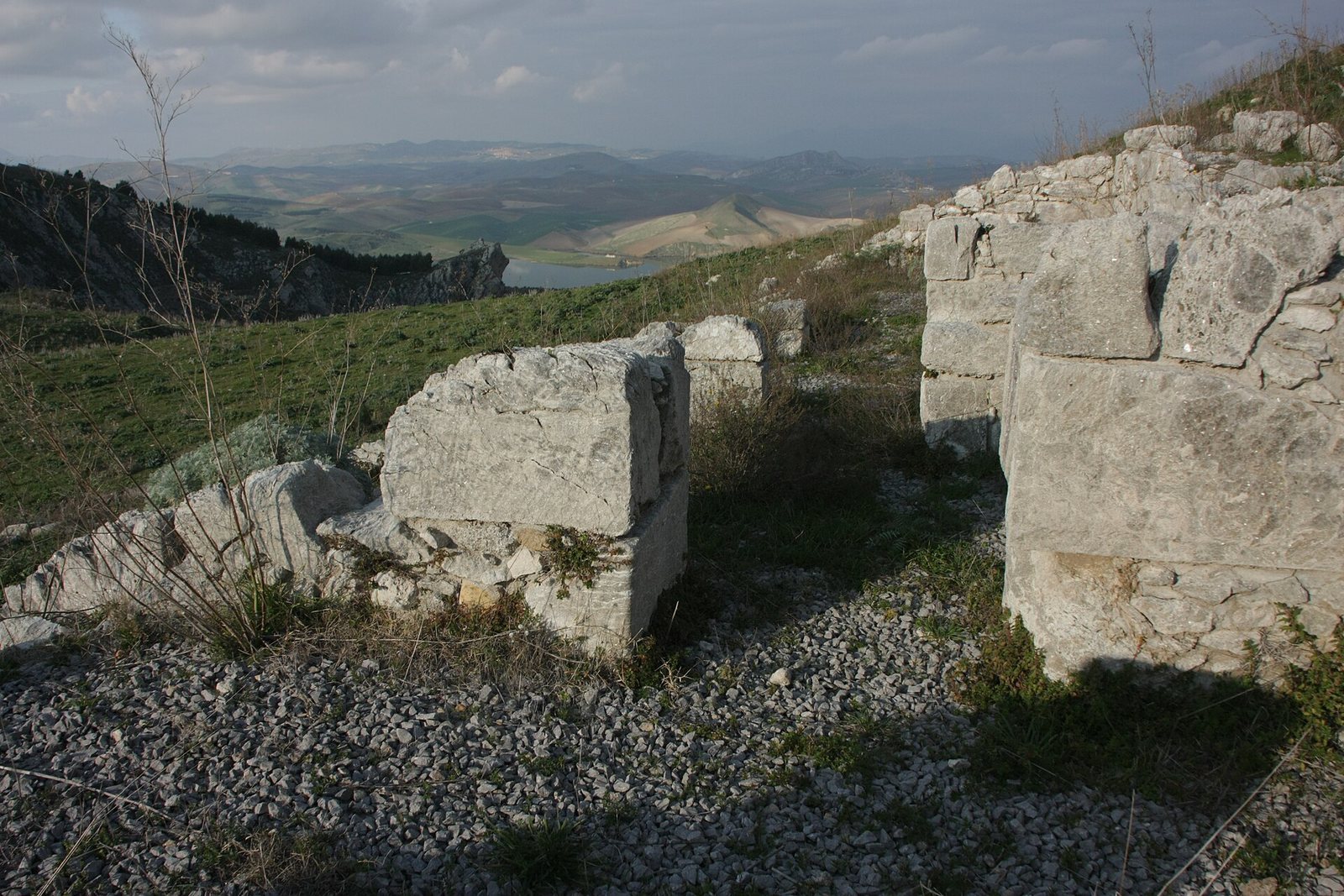
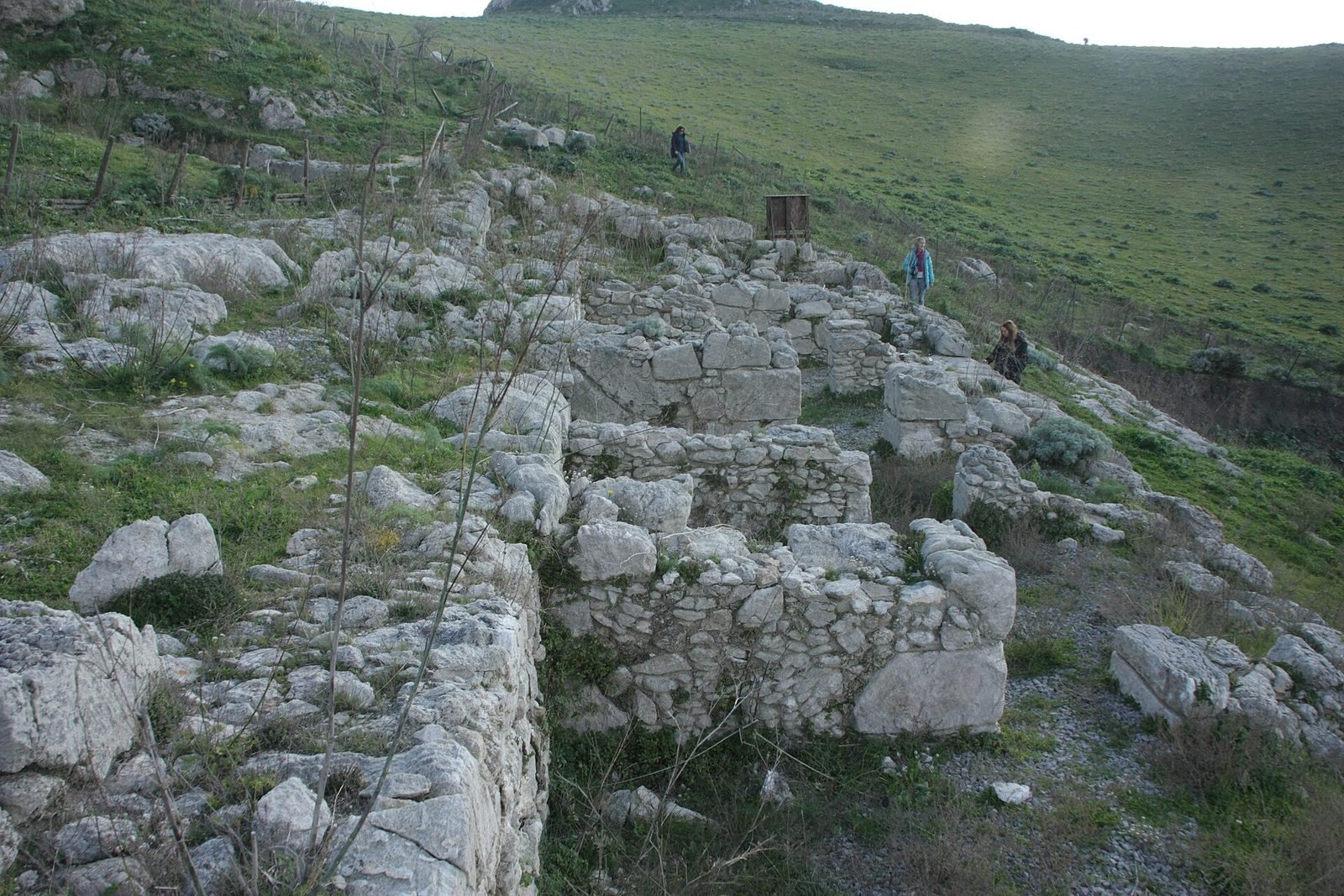
The ancient city spread across Rocca d’Entella’s summit plateau and adjoining slopes, using the ridge’s natural defenses alongside built fortifications. The hill stands beside the Belice River, called the Hypsas in antiquity; the river curves around the site to the north and west. Entella lies roughly 40 km from the river mouth and a similar distance from Sicily’s northern coast. The plateau includes a broad level area and overlooks the surrounding territory.
Defenses and approaches
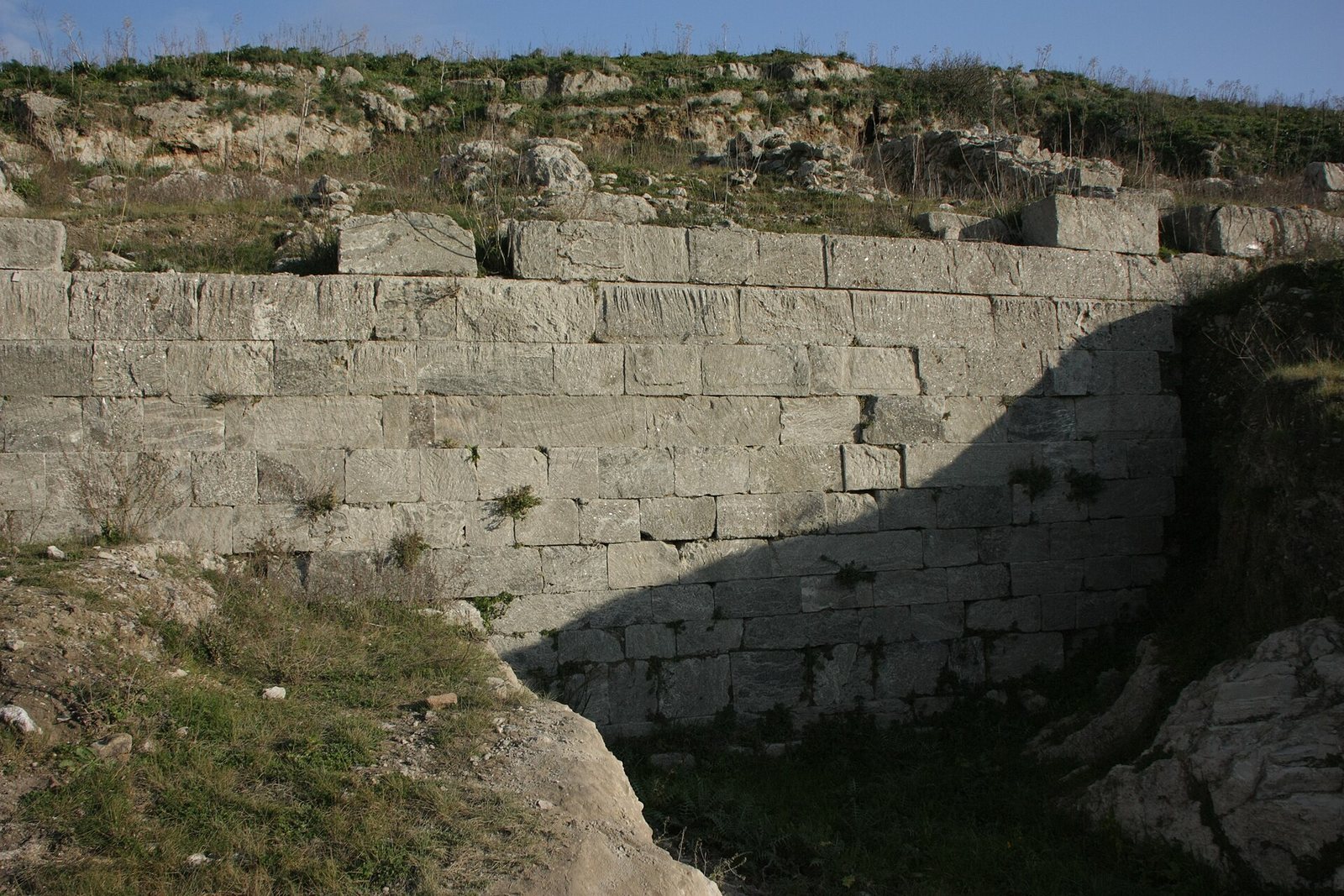
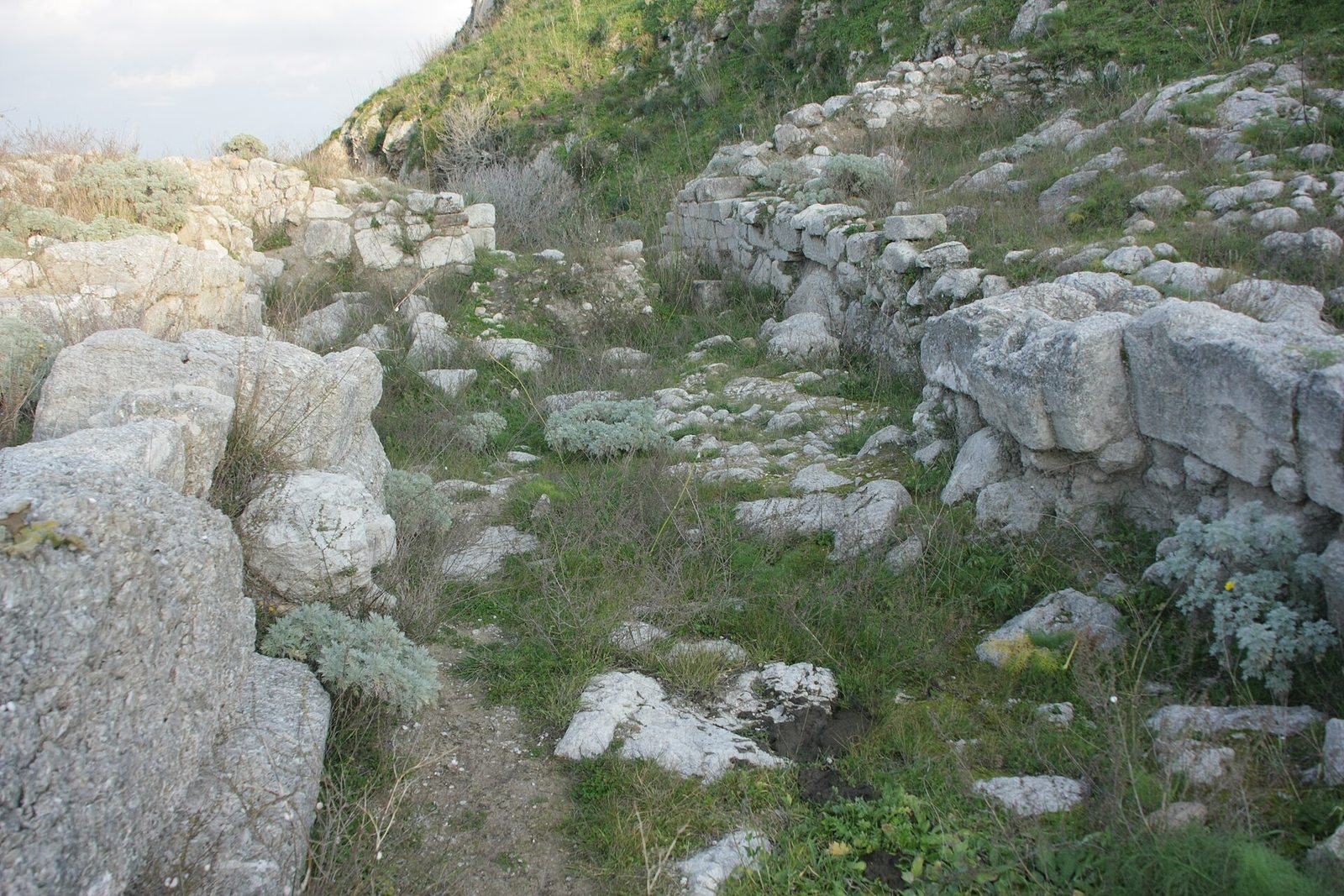
A wall about 2,800 m long protected the more accessible northern slope. Steep rock faces defended the southern, eastern and western sides, with some human modifications. Gates stood at the mouths of two ravines. The northwestern entrance is clearly identified, and an ancient road from the Belice valley approaches it along the slopes of Cozzo Petraro; this road remains passable. The northeastern approach, which led towards the city’s public gathering place, or agora, is less clearly traced.
Sanctuaries and civic buildings
Petraro sanctuary
Outside the walls near the northwestern gate, in the Petraro area, a large group of religious offerings marks a sanctuary beside the ancient road from the Belice valley. The sanctuary was used from the late sixth through the third century BCE. Worship of Demeter, goddess of agriculture and grain, and Kore, associated with the underworld and seasonal renewal, is attested there from the fifth to the third century BCE. The offerings and pottery are now in the Antiquarium of Contessa Entellina.
Temple by the agora
Along the eastern side of the agora in the eastern ravine stood a temple dating to the first decades of the fifth century BCE. It had an internal altar and no surrounding colonnade, a form known as an oikos.
Granary and nearby deposits
A granary built in the late fourth century BCE had monumental façades and was destroyed by fire in the mid-third century BCE. Small statuettes associated with the worship of Demeter came from a foundation deposit beneath the building. A gypsum quarry supplied material for the complex. Nearby, excavations exposed a large room partly cut into the rock and a separate group of religious offerings dating to the late fourth century BCE.
Burial grounds
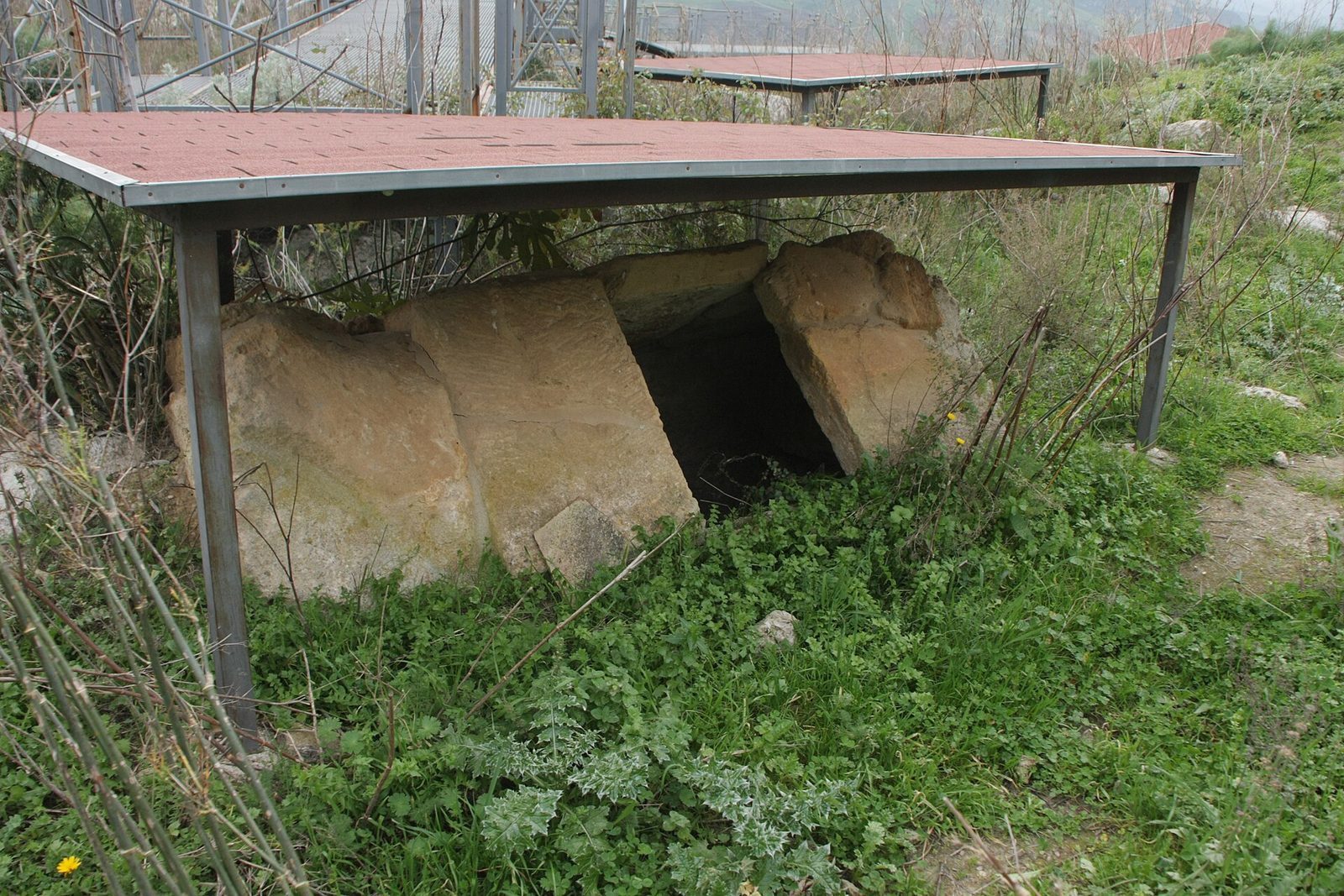
Most tombs in Necropolis A, one of the city’s burial areas, belong to the Hellenistic period, which followed Alexander the Great’s conquests and lasted from the late fourth to the first century BCE. Their forms and associated pottery indicate their date. A separate cemetery from the Islamic period lies near the northwestern gate.
Buildings on the southern plateau
Medieval palace
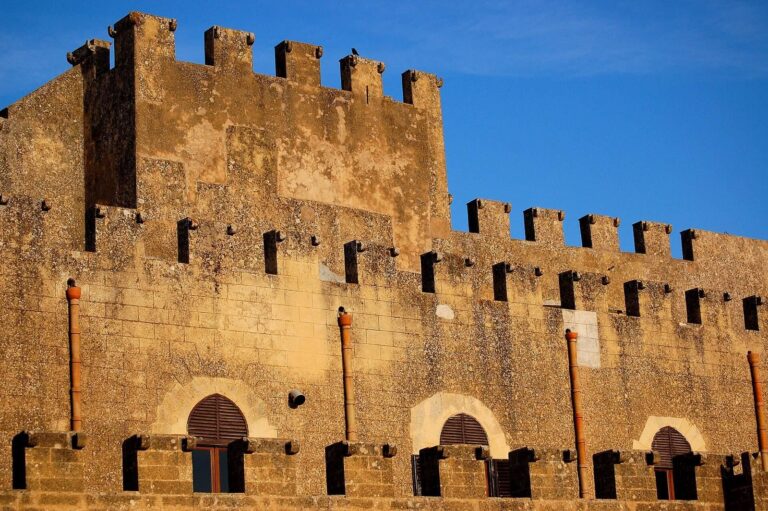
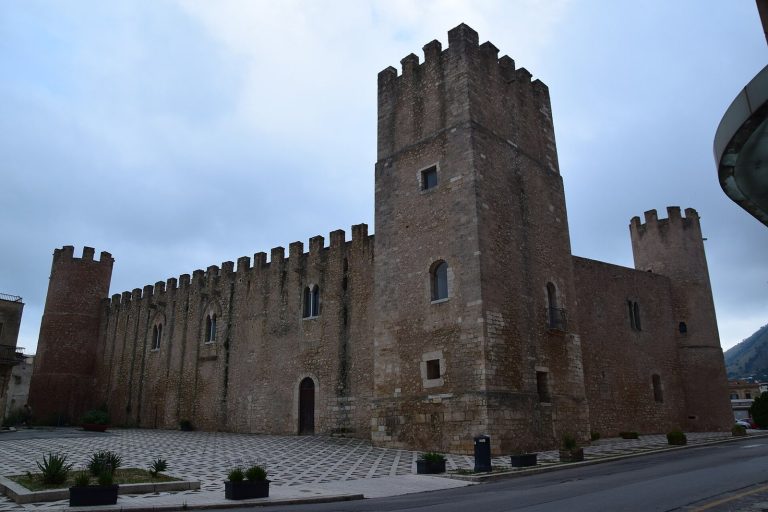
At the southern edge of the plateau are the remains of a fortified palace dated from the twelfth to the middle of the thirteenth century. Its plan is arranged around two open spaces and includes a tower and an access ramp. The design has parallels in buildings in North Africa.
Hellenistic building
Farther south, beside a small lane, stood a building of the fourth or third century BCE. It was destroyed by fire, probably at about the same time as the granary. Vessels used as religious offerings were among the objects recovered from its ruins.
Later building
Remains of another building, occupied in the first century BCE, lie just above the Hellenistic structure.
Castle and defensive system
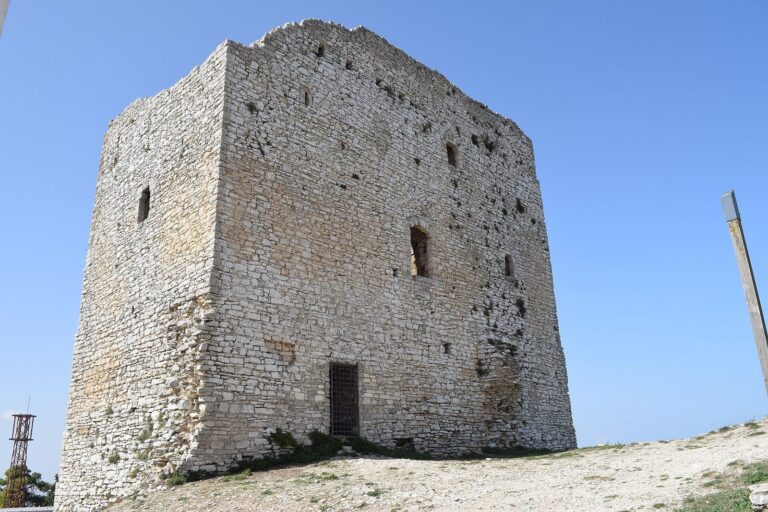
Pizzo della Regina, the highest point of Rocca d’Entella, reaches 557 m and contains the remains of a medieval castle. Its surviving features include a water cistern with a continuous arched roof. The castle formed part of a defense system that also included the fortified palace on the southern slope and a structure at Cozzo Petraro to the north. F. Sabatier described the castle ruins in 1858.
Inscriptions, coins and cave
Entella Decrees
The eight bronze tablets known as the Entella Decrees have uncertain dates, possibly the late fourth or middle of the third century BCE. Seven carry decrees issued by Entella, and the tablets also refer to Campanians living in the city in the mid-third century BCE. Their inscriptions use Greek letters, although the language spoken by the Elymians was not Greek. The tablets are held in the Salinas Archaeological Museum in Palermo.
Coins
Coins from Entella include issues with a legend translated as “of the Entellans.” Coins from the period of Campanian control carry “of Entella” on the front and “of the Campanians” on the reverse.
Cave of the Coins
The Cave of the Coins is a natural cavity in Rocca d’Entella. Local tradition places hidden treasure inside, guarded by spells. Another story tells of a creeping, fourteen-headed monster in the cave that was supposedly appeased by sacrificing a girl each day.