Church of Saint Mary of Jesus: A Franciscan Church in Alcamo, Italy

Site at a Glance
- Rating
- 4.6
- Popularity
- Low
- Country
- Italy
- Primary era
- Early Modern
- External website
- Open
- Eras represented
- Medieval, Early Modern, Modern
- Civilizations
- Crown of Aragon, Kingdom of Sicily, Spanish
- Site type
- Religious
- Remains
- Church
On this page24 sections
History
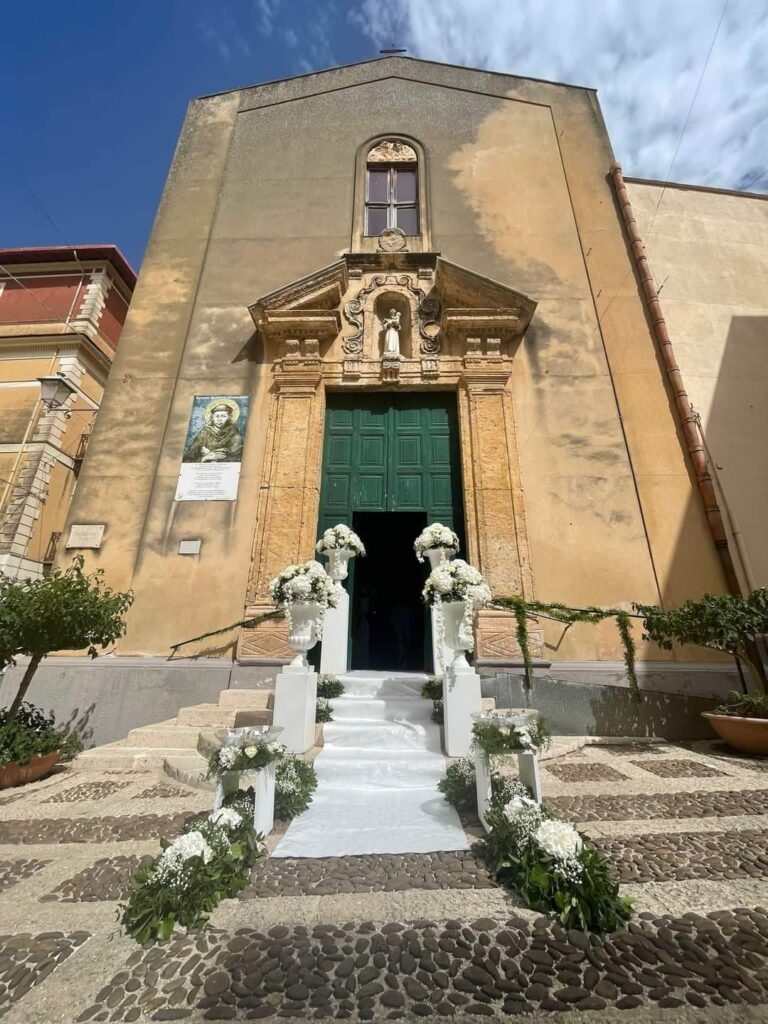
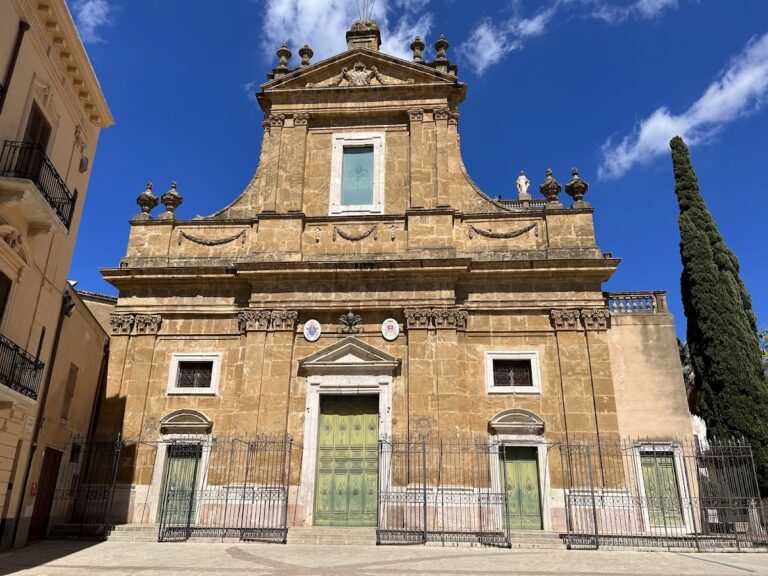
The Church of Saint Mary of Jesus is a Catholic church in Alcamo, Italy, associated with the Franciscan Friars Minor Observants and consecrated in 1816. Its foundation is traditionally placed around 1450, when Blessed Arcangelo Placenza of Calatafimi established it beside the Friary of Saint Mary of Jesus under the direction of Blessed Matteo Guimerà of Agrigento. Other accounts place the foundation toward the end of the fifteenth century.
Foundation and early development
The church originally stood beyond Alcamo’s walls in open countryside. A will made in 1484 by Giovanni di Sanclemente, a Catalan nobleman and castellan of Alcamo, expresses his wish to be buried there and assigns legacies toward its construction. Around 1500, the church gave its name to a gate in the town’s defensive walls, known as Jesus’ Gate.
In 1507, the building was restored and enlarged with financial support from Fadrique Enríquez de Velasco and Anna Cabrera Ximénez, the lords or governors of Alcamo. Some interpretations identify 1507 as the date when the architectural work was completed. The adjoining friary was restored at the same time. In the sixteenth century, the church also received works that shaped its later artistic character, including its Carrara marble entrance portal and several sculptures and paintings.
Eighteenth-century enlargement and later parish history
At the initiative of Father Lorenzo of Casteltermini, the church was enlarged again between 1762 and 1776. The historian Ignazio De Blasi recorded this phase, which followed the building’s earlier Franciscan development and expanded its physical and liturgical accommodation.
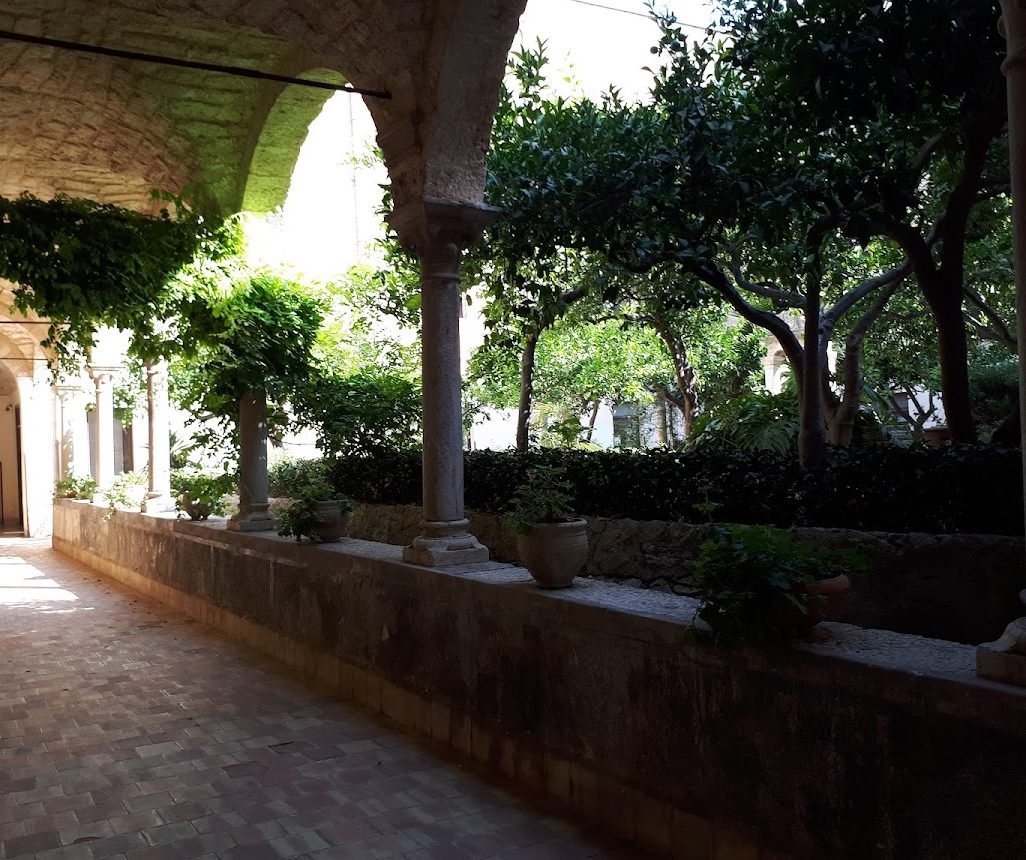
The church became an autonomous parish in 1920 through the action of the bishop of Mazara. Its association with Blessed Arcangelo Placenza was renewed in 1961, when his remains were transferred from the Church of Saint Michael the Archangel in Calatafimi. The friary was restored in 1960 and again in 1984.
Twentieth-century restoration and losses
In 1997, the presbyterial area was restored under the direction of architect Vincenzo Settipani. The work renewed the altar, ambo, baptismal font, candelabrum, and officiant’s seat. Settipani also directed the restoration of the frescoes and the Via Crucis, a series of artistic stations representing episodes from Christ’s Passion, and designed a new lighting system adapted to current legal standards.
The church’s history also includes the loss of important artworks. A 1591 painting of Saint Diego of Alcalá was restored in 1969 and stolen in 1979. Giuseppe Renda’s 1798 painting of Our Lady of Sorrows, also called the Madonna of Confusion, was stolen in the same year.
Remains
The surviving church combines a fifteenth- and sixteenth-century Franciscan foundation with later enlargement and artistic renewal. Its furnishings range from Renaissance marble sculpture and a sixteenth-century Eucharistic tabernacle to Baroque, Rococo, and nineteenth- and twentieth-century works. The remains of Blessed Arcangelo Placenza are preserved inside the building beneath the painting known as the Greek Madonna.
Entrance and baptismal area
Marble portal and holy-water font
The entrance portal was carved in Carrara marble in 1507. Luigi Enriquez and Anna Cabrera, then owners of the Castle of the Counts of Modica, purchased it. Its authorship is attributed either to Bartolomeo Berrettaro or, under another attribution, to Giuliano Mancino, Sicilian sculptors active around the transition from the fifteenth to the sixteenth century. Just inside the church, on the right, stands a sixteenth-century marble holy-water font.
Baptistery sculpture
Beside the baptistery is a small early-sixteenth-century marble statue of Saint John the Baptist by Giuliano Mancino. Two marble medallions from the school connected with the Gagini family depict the Annunciation and Saint Gabriel. Together, these works provide a concentrated group of early Renaissance sculpture within the entrance area.
High altar and major paintings
Apse and high altar
The high altar contains a marble statue of Saint Mary of Jesus, probably produced by Bartolomeo Berrettaro and Giuliano Mancino. A sixteenth-century fresco by Giovan Leonardo Bagolino depicts the Visitation of the Blessed Virgin. It was formerly placed on the high altar and was later moved to a wall behind the apse.
Vault fresco
The vault is decorated with Leopoldo Messina’s fresco of the Assumption. Messina also painted Saint Francis contemplating Jerusalem in 1944. This work replaced Carlo Righetti’s earlier image of Duns Scotus, the theologian associated with the doctrine of the Immaculate Conception.
Paintings beside the altar
Beside the high altar hangs an 1788 painting attributed to Tommaso Pollaci, showing the Madonna with Saint Philip Neri, Saint Lucy, and Saint Catherine of Alexandria. Another painting by Pollaci, also dated 1788, represents the Madonna enthroned between Saint Francis and Saint Clare. Saint Francis founded the Franciscan movement, while Saint Clare founded the Poor Clares, its women’s branch.
Franciscan imagery and liturgical furnishings
Scenes from the life of Saint Francis
Three frescoes painted in 1901 by Carlo Righetti of Padua illustrate episodes from the life of Saint Francis of Assisi. They show Francis setting out for the Holy Land, sending friars to preach the Gospel in distant lands, and appearing before the Sultan of Damietta, the Muslim ruler whom Francis encountered during the Fifth Crusade.
Eucharistic tabernacle
Near the entrance, in the chapel on the right, stands a marble Eucharistic tabernacle made by Baldassare Massa in 1557 and gilded by Giovan Leonardo Bagolino. Its imagery includes God the Father, Saint Francis, and Saint Anthony, while the base represents Jesus and the Apostles at the Last Supper.
Franciscan statues and devotional works
The church contains a wooden statue of Saint Francis of Assisi made in Palermo by Giovanni Piscitello in 1912, along with a wooden statue of Saint Anthony of Padua by an unknown artist. An eighteenth-century Baroque marble statuette of the Immaculate follows the style associated with the Spanish painter Murillo. The Via Crucis was made by Fra Felice of Sambuca in 1785 and 1786.
Additional wooden works
A sixteenth-century polychrome wooden statue of Saint Lucy came from the rural church dedicated to her. The church also preserves an 1830 wooden cross decorated with mother-of-pearl inlay. The first altar on the left contains an eighteenth-century wooden Crucifix modeled on works by Benedetto Valenza.
Greek Madonna and memorials
Greek Madonna
The first altar on the right contains the painting Madonna delle Grazie, also called the Greek Madonna. Attributed to Pietro Ruzzolone of Palermo, it was commissioned by Federico Enriquez and Anna I Cabrera. The Madonna of Grace holds the infant Jesus, with Saint Francis and Saint Benedict at her sides. Three kneeling pages appear beside Count Federico Enriquez, while three ladies stand beside Anna I Cabrera. The painting was restored in 1855.
Tomb of Blessed Arcangelo Placenza
Beneath the Greek Madonna is a glass urn containing the remains of Blessed Arcangelo Placenza. His tombstone is set into a side wall and shows him holding the Book of Rules and Observance. The presence of the urn and tombstone preserves the connection between the church’s foundation tradition and the Franciscan religious figure associated with its beginnings.
Funerary monuments
The counterfacade contains two Baroque marble funerary monuments. One commemorates Giovan Francesco Aversa, Baron of Bellavilla, who died young in 1649. The other commemorates Leonardo Aversa, a baron and presbyter who died in 1658. A Rococo cenotaph, a commemorative monument that does not contain the deceased’s body, was made in 1755 for Baron Nicolò Pastore. His ashes were later transferred by his son Felice Pastore to a chapel in the Pia Opera Pastore.
Sacristy and friary collections
Sacristy statue
The sacristy contains a wooden statue of Saint Paschal Baylon made by Giovanni Stellino in 1835. Baylon was a prominent Franciscan saint, and the work adds a nineteenth-century devotional object to the church’s collection.
Friary works
The adjoining friary contains a wooden statue of Saint Anthony Abbot by an unknown local artist of the sixteenth century and an old painting of Saint Bernardine of Siena. These works extend the Franciscan artistic and devotional setting beyond the church itself.