Maruyama Kofun in Yasu: A Sixth-Century Chief’s Burial Mound
Site at a Glance
- Popularity
- Low
- Country
- Japan
- Primary era
- Medieval
- Eras represented
- Medieval
- Civilizations
- Yamato
- Site type
- Burial
- Remains
- Burial Mound
On this page9 sections
History
Late Kofun-period burial
Maruyama Kofun in Yasu is a burial mound in Sakurabasama Historic Park, Shiga Prefecture, Japan, dating to the first half of the sixth century. It belongs to the late Kofun period, an era named for large burial mounds and conventionally dated from about the third to seventh centuries. The tomb is regarded as a chief’s burial and stands near another major mound in its group, though its date relative to that tomb is uncertain.
Maruyama was the first tomb in the Yasu River basin to use a coffin made from Aso welded tuff, a volcanic rock formed when hot ash deposits compact and fuse. Its coffins and grave goods suggest that the person buried there held considerable power. The tomb was looted.
Designation and investigation
Maruyama Kofun became a National Historic Site in 1941. In 1985, its designation and that of another mound were combined with six previously undesignated mounds under the Mount Oiwa Kofun Group designation, bringing the group to eight mounds. A survey took place in 1982, and excavations connected with improvements to the historic site followed in 2001.
Remains
Mound and stone chamber
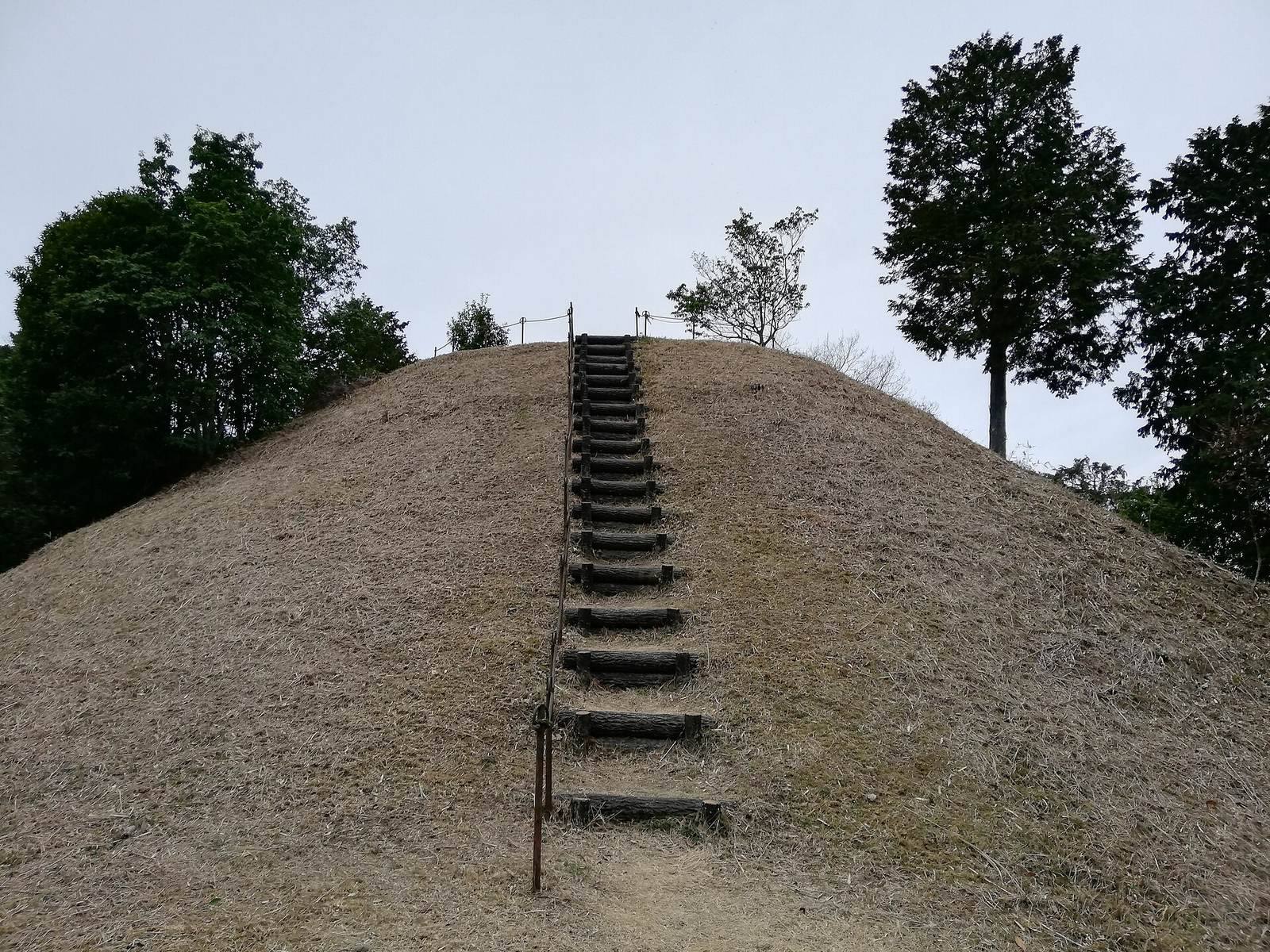
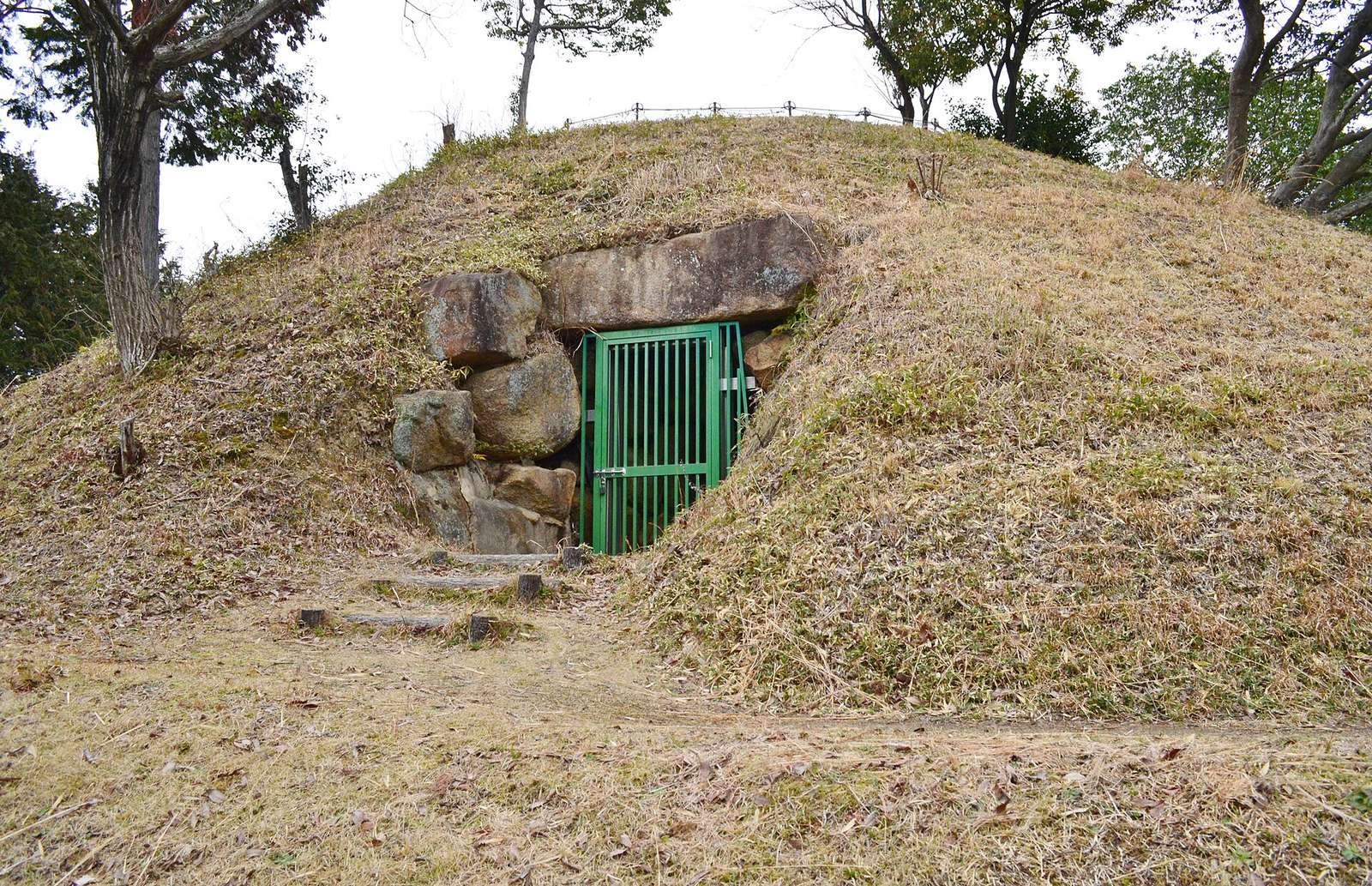
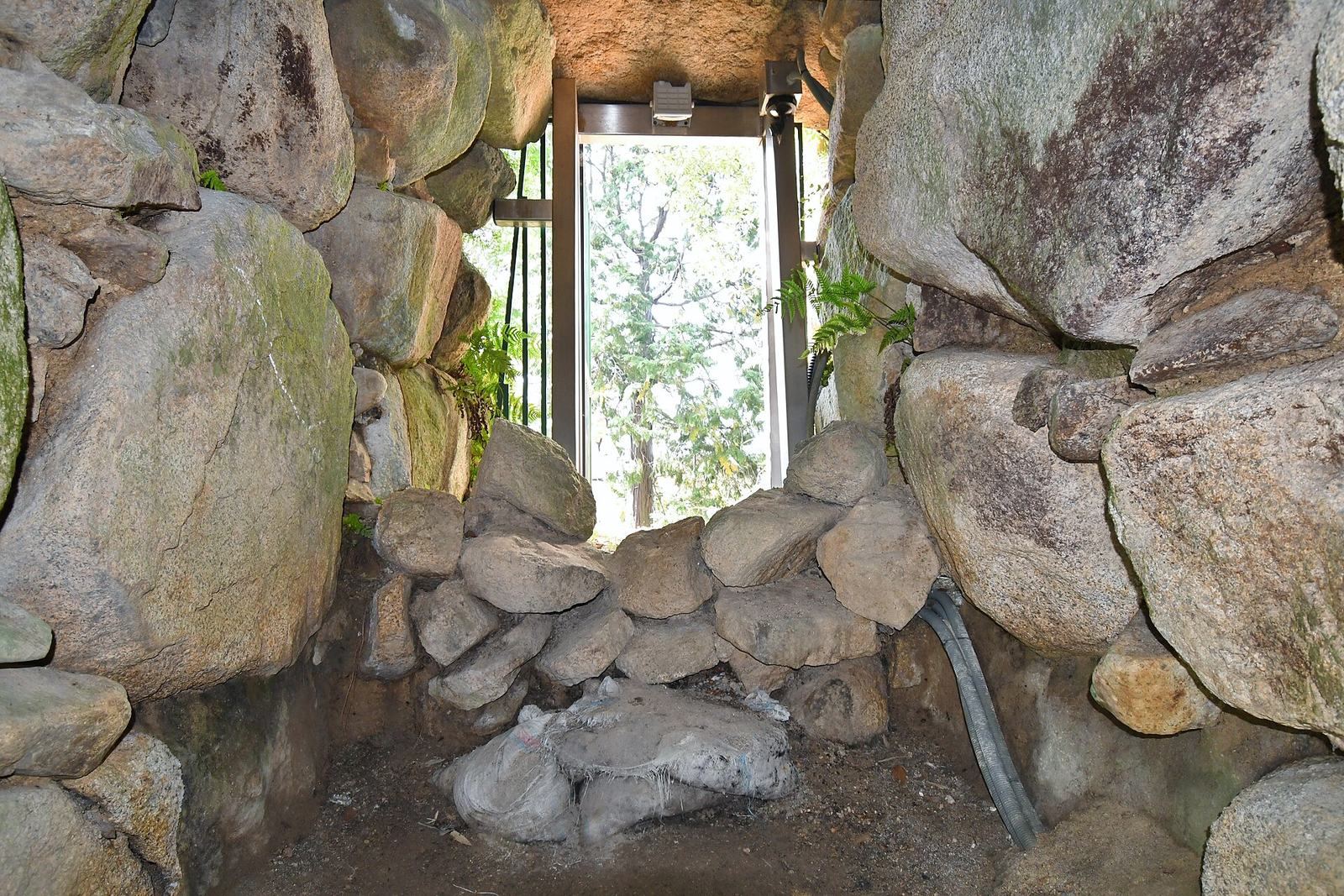
The mound lies at the northern end of a hill extending north from Mount Oiwa, on the right bank of the Yasu River. It is about 28 metres in diameter and 8 metres high. Although an earlier interpretation identified it as scallop-shell-shaped, it is described as circular. The west-opening horizontal stone chamber is entered through a passage, which joins the burial room asymmetrically along one side. The chamber and passage together measure 10.8 metres in length. The burial room is 4.3 metres long, 2.4 metres wide, and 3.1 metres high; the passage is 6.5 metres long and 1.4 metres wide. Its floor descends about a metre from the entrance to the burial room, while the ceiling stones step downward. Cobblestones cover the chamber floor.
Stone coffins
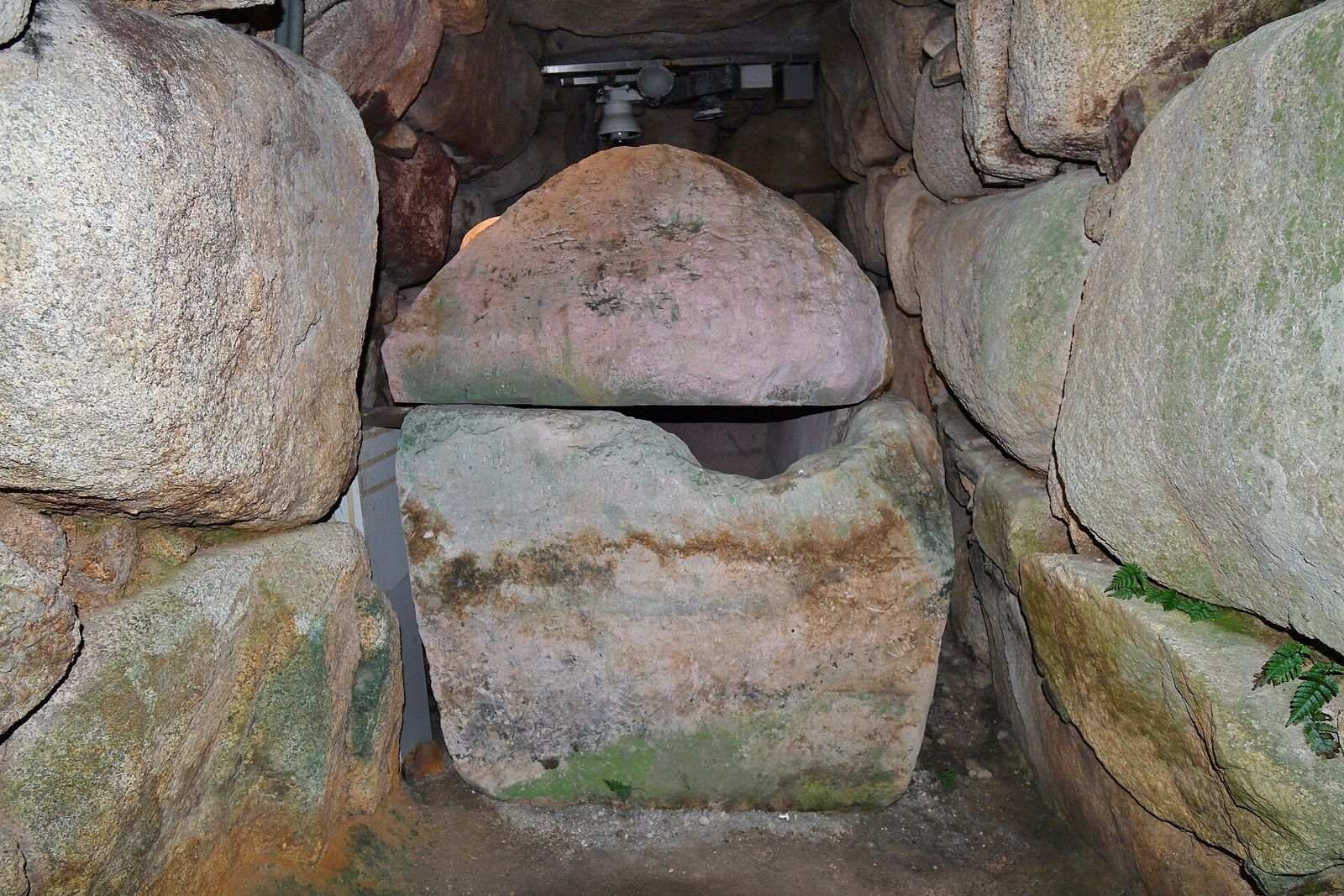
Entrance-side coffin
The coffin nearer the entrance is thought to have held the initial burial. Carved from a single block of Aso welded tuff, also called Aso pink stone, it measures 2.85 metres long, 1.46 metres wide, and 1.83 metres high. Its lid has two rope-hanging projections along each long side and one on each short side. Red pigment covers the coffin.
Rear coffin
A second coffin stands between the first and the chamber’s back wall and is thought to have served for a later burial. Assembled from tuff from Mount Nijo, it has a base measuring 2.45 by 1.20 metres and a body about 0.80 metres high. Rectangular projections appear on its long side slabs. It is regarded as an early example of a Mount Nijo tuff coffin in Shiga, alongside a comparable coffin from a tomb in Takashima.
Grave goods
Excavations recovered silver earrings with pendant ornaments, numerous iron weapons, and 10,000 glass beads.