Men-ar-Rompet Gallery Grave: A Neolithic Burial Monument in France
Site at a Glance
- Popularity
- Low
- Country
- France
- Primary era
- Stone Age
- Eras represented
- Stone Age
- Civilizations
- Unclassified
- Site type
- Burial
- Remains
- Tomb
On this page9 sections
History
Men-ar-Rompet gallery grave is a Neolithic covered stone burial passage near Kerbors, France. Its use is associated with the Bell Beaker culture, a prehistoric culture identified in part by its characteristic bell-shaped pottery.
In September 1956, French archaeologists Pierre-Roland Giot, Jacques Briard, and Jean L’Helgouach excavated the grave. The finds formed one of the most important Bell Beaker assemblages in western France, noted for its richness and scientific value. France classified the monument as a historic monument, a legally protected heritage property, in 1957.
Remains
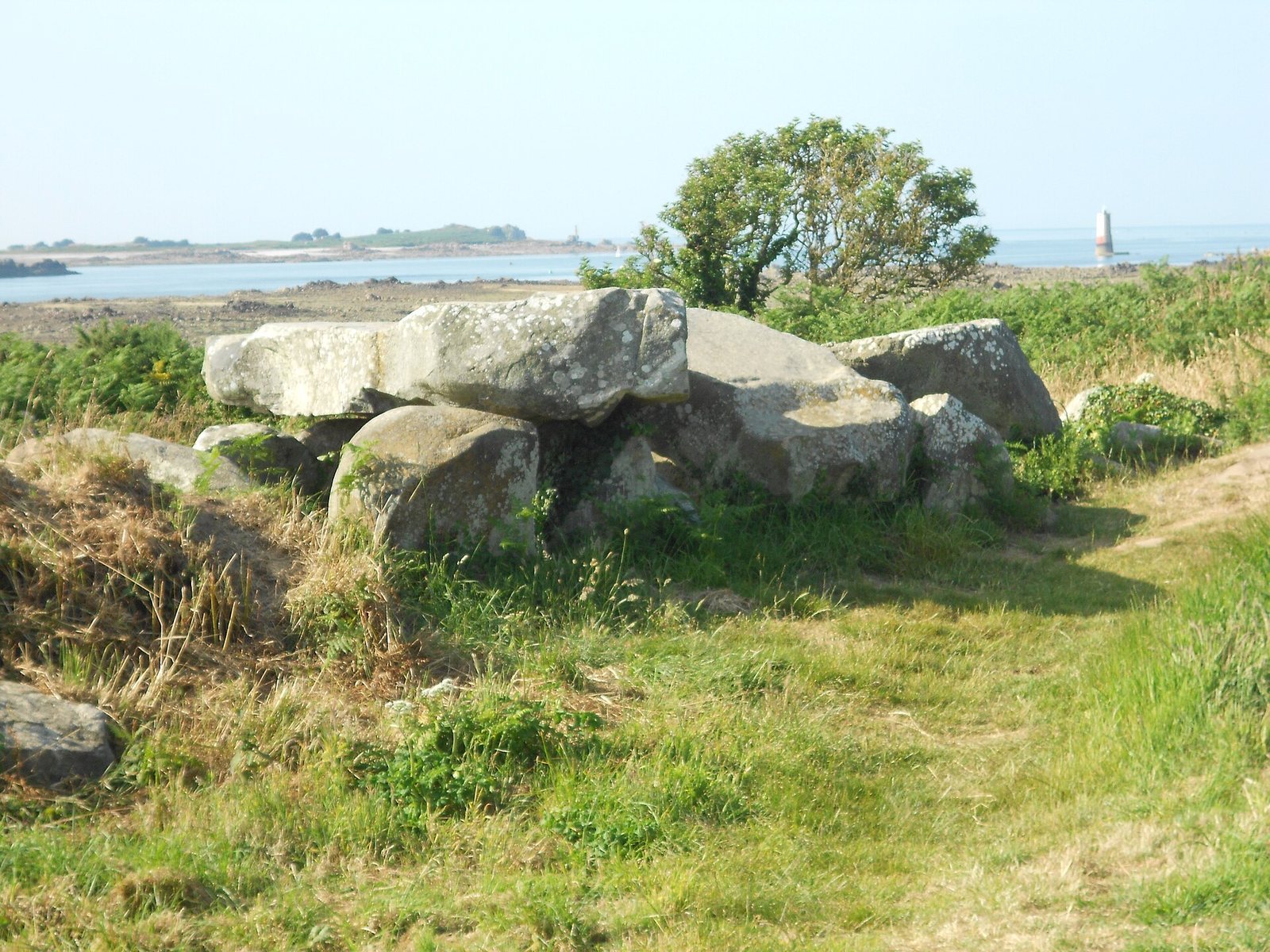
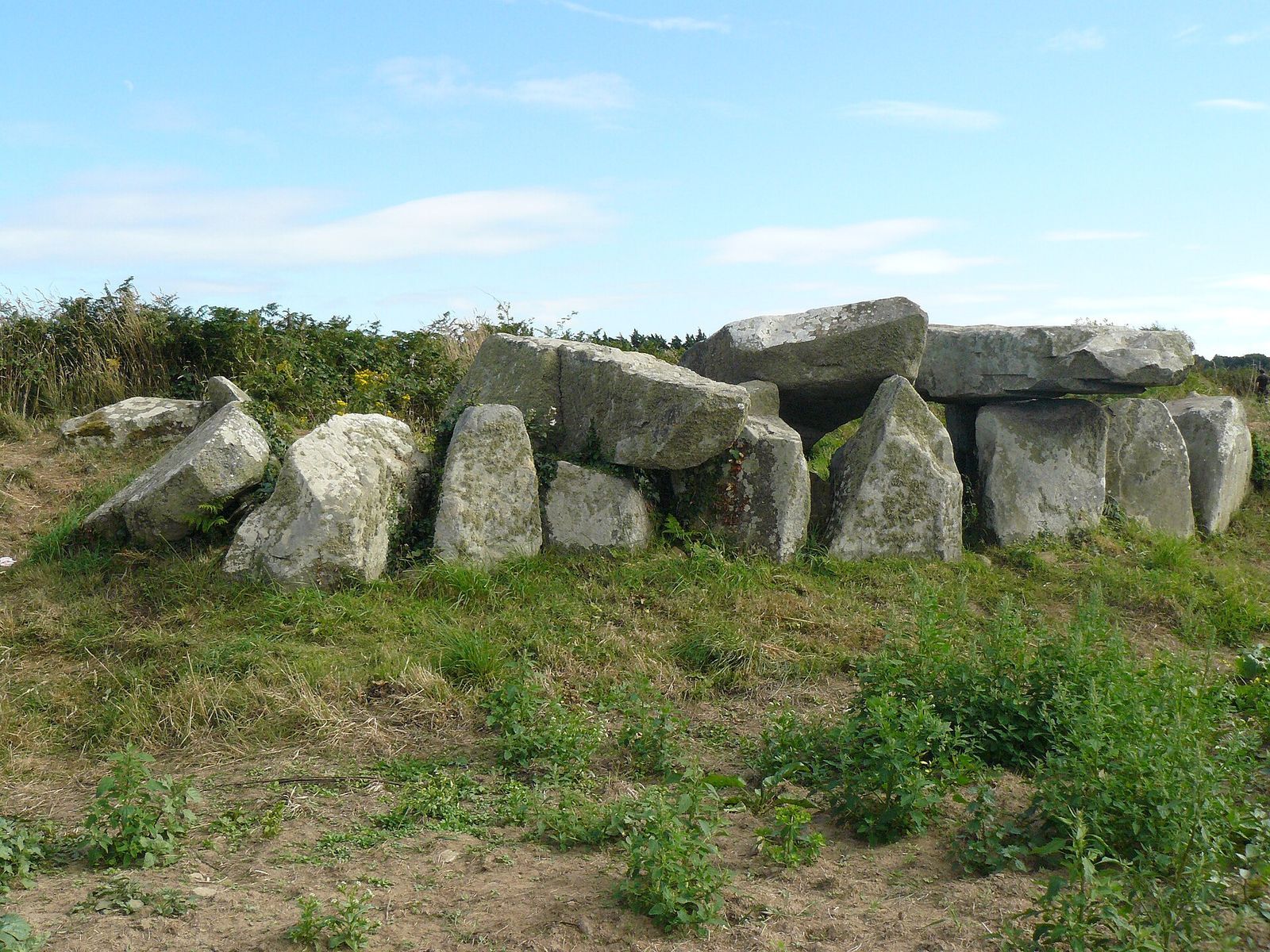
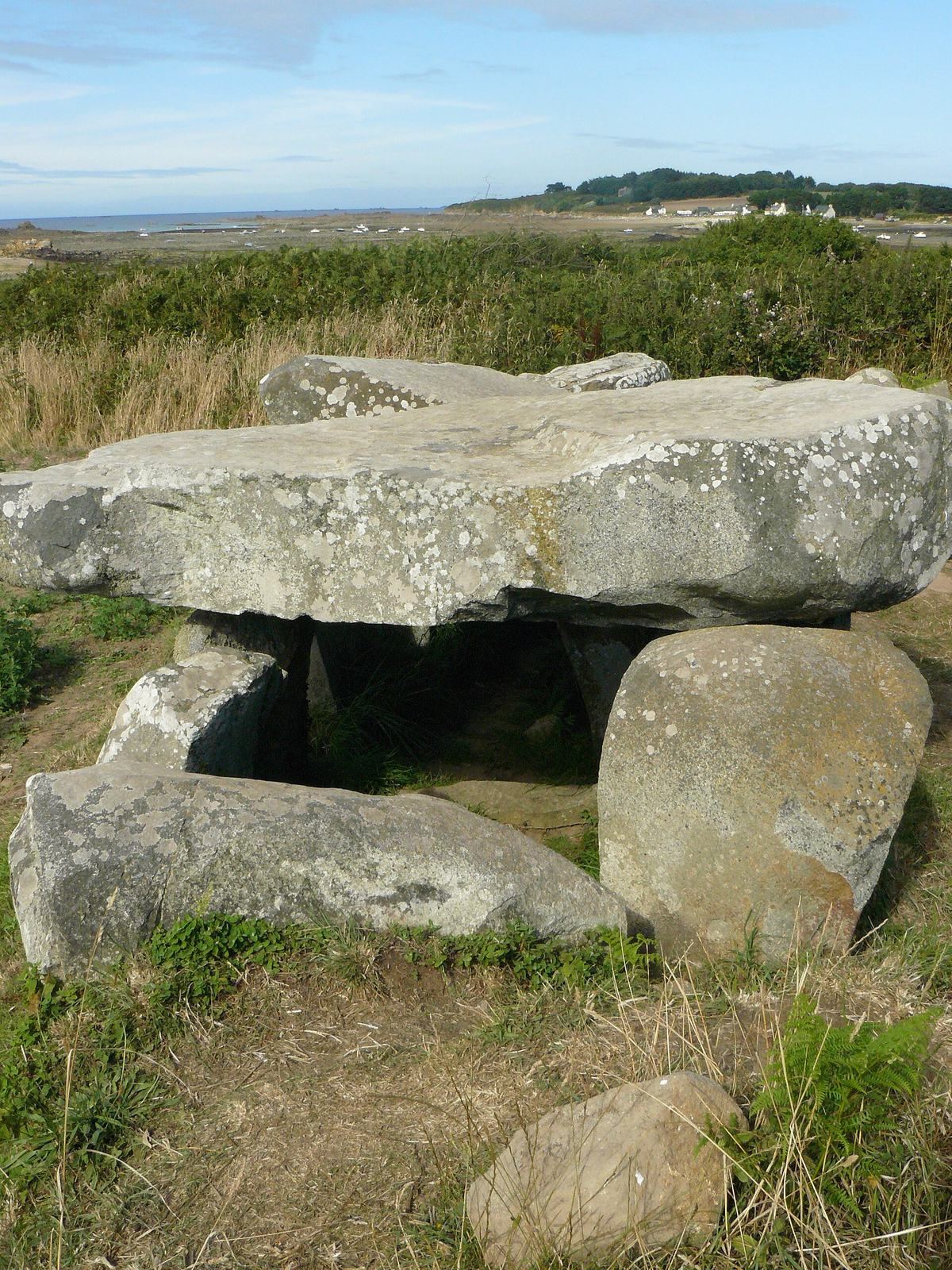
The grave stands north of Kerbors, about 25 m from the sea and 16 m above sea level, facing the Jaudy estuary. Its stone passage runs northeast–southwest and opens toward the northeast. Perros granite forms the sides and end of the gallery, which is roofed with large slabs.
Gallery and chambers
Passage and roof
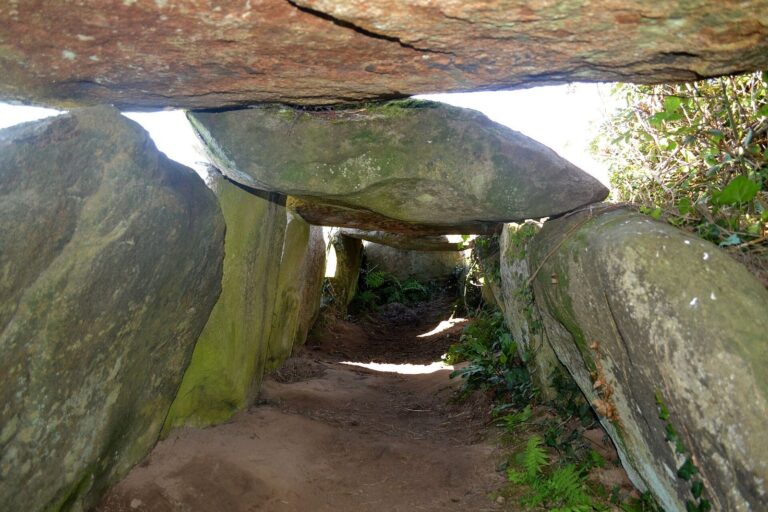
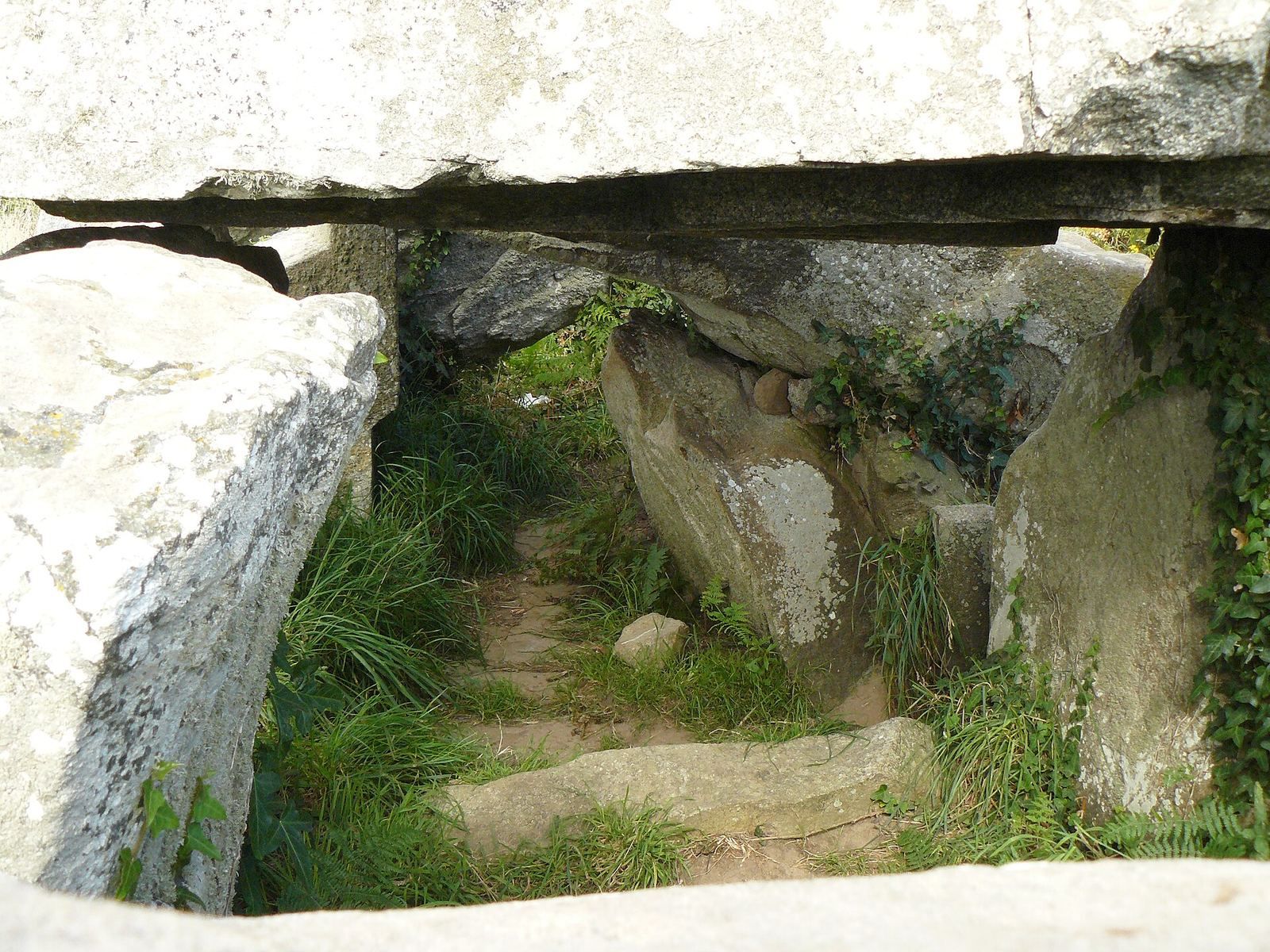
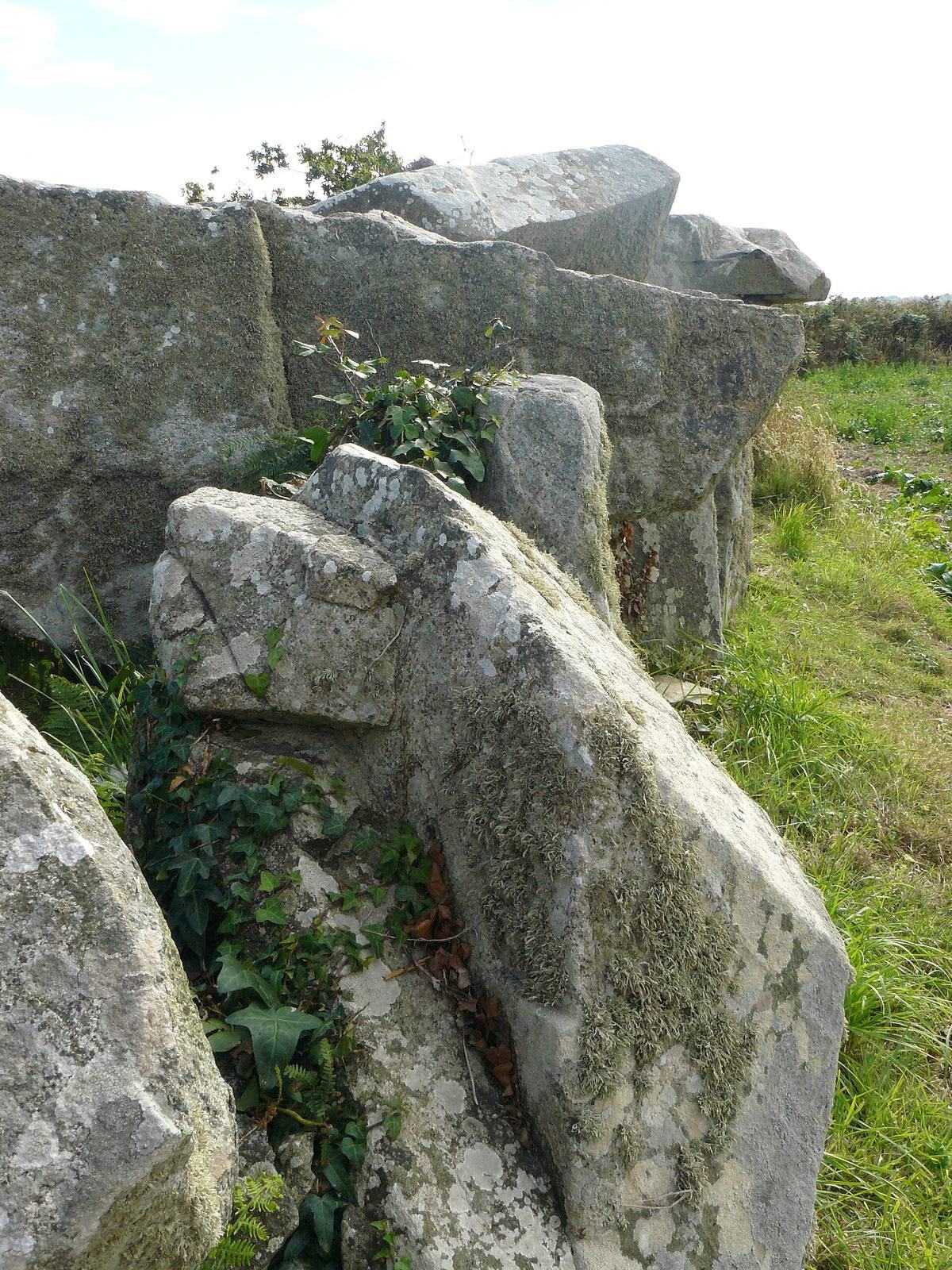
The gallery is about 7.5 m long and averages 1.2 m in width. Seven upright stones form its northern side and five its southern side, with an end slab completing the structure. Four capstones, large slabs laid across the passage as a roof, remain above it; a slab in the western bank may be a fifth. The monument is disturbed, and some stones have fallen or shifted.
A description from 1890 gave the gallery’s dimensions as about 8 m long, 1.4 m wide, and 1 m high. It counted five large roof stones, each supported by three uprights more than 1 m tall. The largest remained in place; three on the eastern side had fallen beside their supports, while the western stone was almost buried in a ditch.
Internal divisions and floor
A block against the northern wall and a threshold slab divide the chamber from the vestibule, or entrance area. The internal height is about 1 m. A two-metre-long antechamber is described at the southern end, and a side entrance leads to a recess in the northern part of the chamber.
Irregular paving covered the chamber floor, while the vestibule floor was unpaved. The paving lay over about 20 cm of silt, beneath which was a clay layer between 3 and 10 cm thick.
Finds
Pottery
The grave’s pottery comprises 41 vessels, including bowls and beakers with concave or flat bases. Twenty-four are Bell Beaker vessels, ten of them decorated. Some ceramics are fine, evenly made, well fired, bright red or brick-coloured, and burnished. Others are thick and coarse, with a granular texture, dark grey colour, and visible temper. Decoration ranges from precise comb or twisted-cord patterns to simpler designs, and much of the pottery reflects local techniques. Some fine Chalcolithic, or Copper Age, vessels may have served as models.
Tools and ornaments
Other finds include five terracotta spindle whorls, small weights used in spinning, a polished-schist archer’s wristguard, a scraper, a polishing tool, and flint fragments. Bell Beaker ornaments are also associated with the grave. Objects attributed to the Bronze Age came from the paved floor; the finds include a fragment of a bronze palstave, a type of prehistoric axe.
Nearby dolmens
Two other dolmens, or megalithic stone tombs, lay nearby. One had a passage leading to a circular chamber roofed by corbelling, a method in which successive stones project inward to form a roof. Slabs close to Men-ar-Rompet may be remains of these tombs.