La Roche-Jagu Castle: A Fifteenth-Century Fortified House in Brittany
Site at a Glance
- Rating
- 4.6
- Popularity
- Medium
- Country
- France
- Primary era
- Medieval
- External website
- Open
- Eras represented
- Medieval
- Civilizations
- Duchy of Brittany, French
- Site type
- Military
- Remains
- Castle
On this page8 sections
History
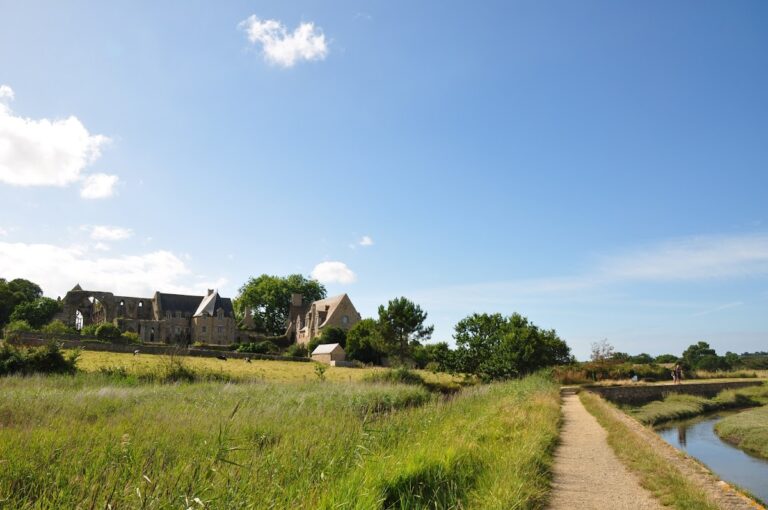
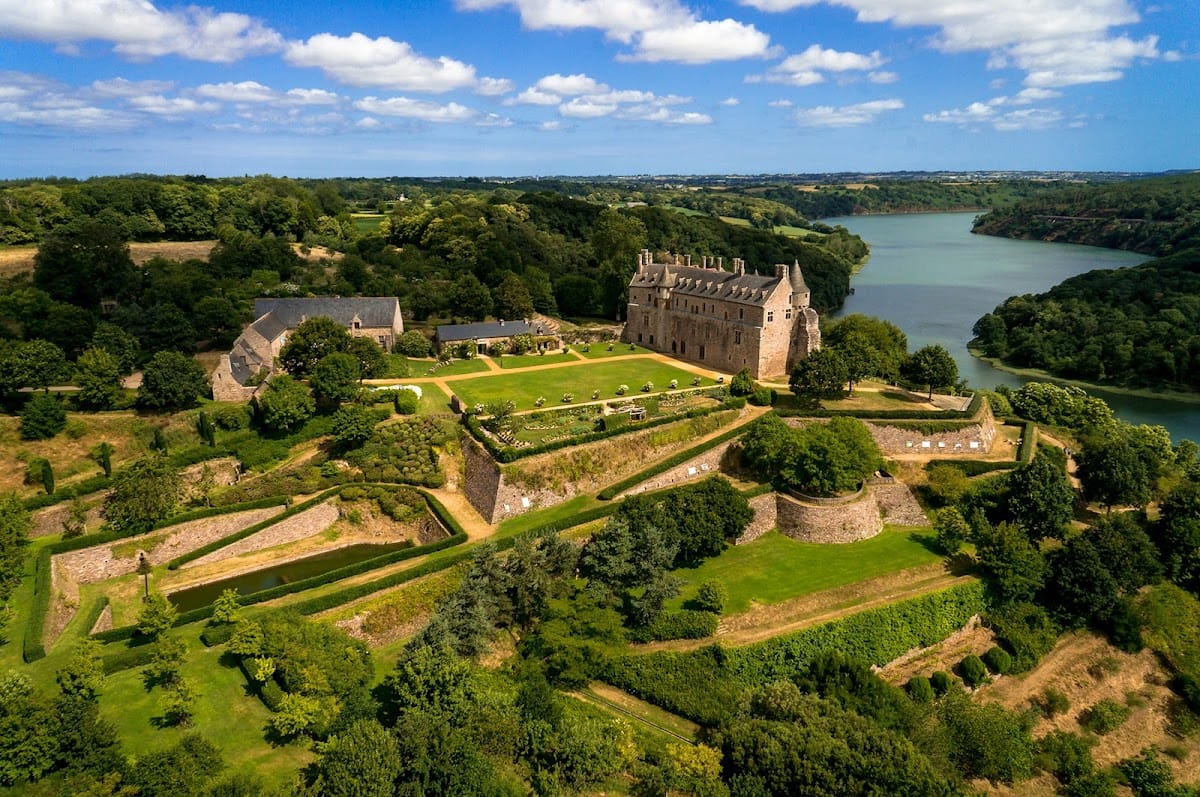
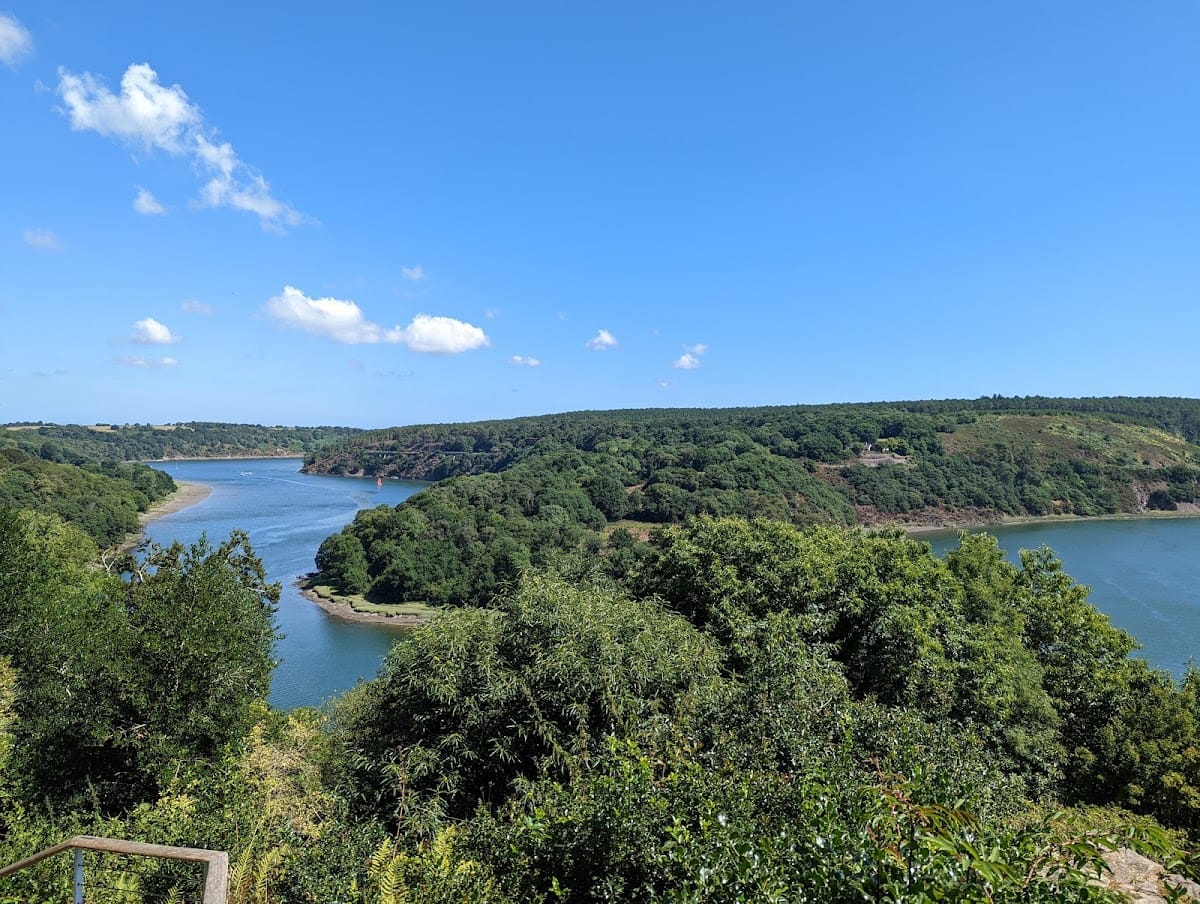
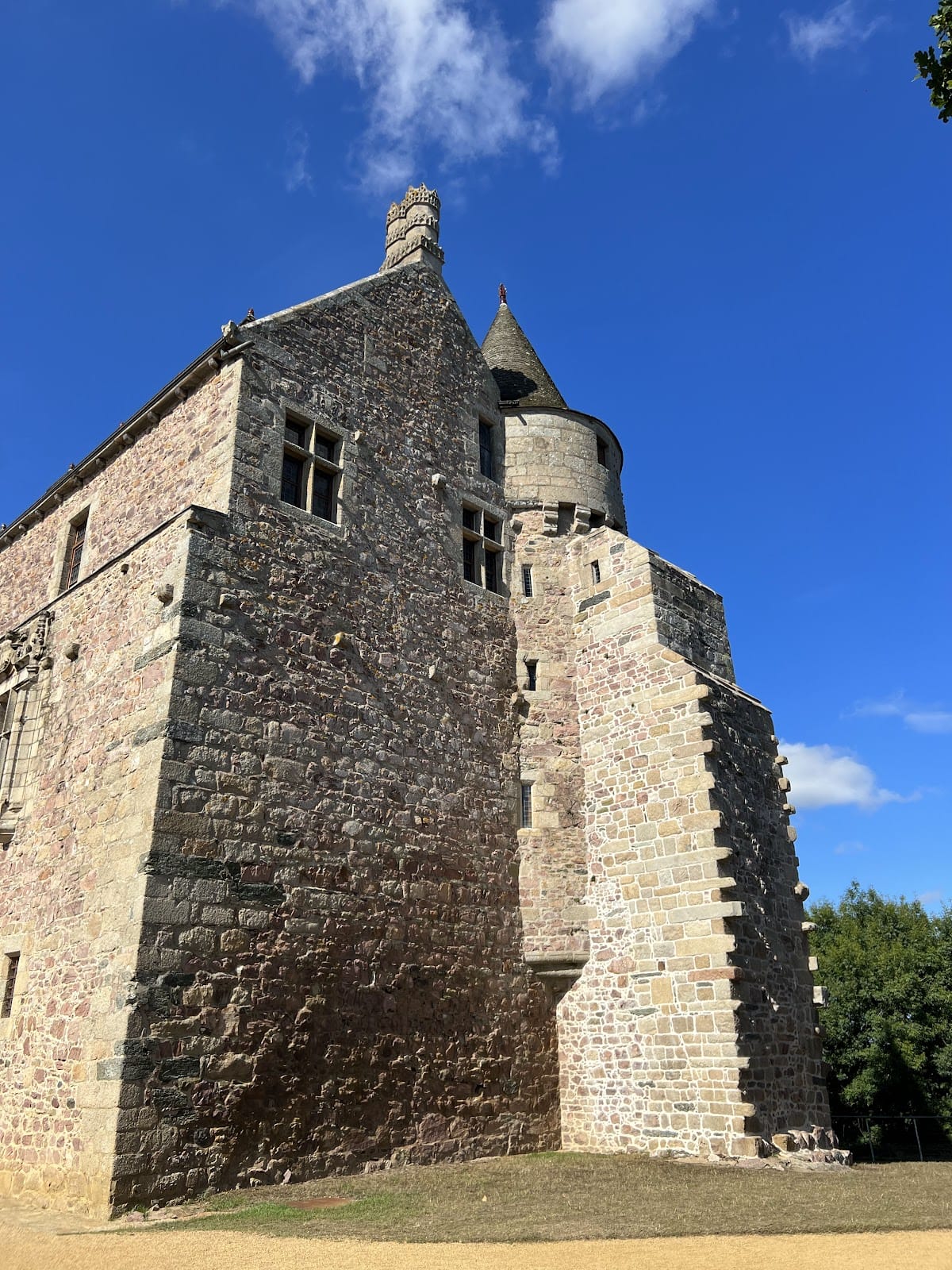
La Roche-Jagu Castle is a fifteenth-century fortified house in Ploëzal, France, built in Brittany between 1405 and 1418 as both a residence and a defensive work. It stands on a steep promontory above the Trieux estuary, where its position allowed the château to monitor movement and trade along the river.
Construction and medieval lordship
Construction began in 1405 and was completed in 1418. Catherine de Troguindy was the château’s initial owner. As a fortified house, La Roche-Jagu combined domestic occupation with defensive features rather than serving solely as a military fortress.
After the building was completed, Roland Péan, a knight banneret, held the lordship of La Roche-Jagu. A knight banneret was a medieval commander entitled to lead troops under his own banner. His son Pierre Péan later inherited the same lordship and died at the Battle of Saint-Aubin-du-Cormier on 24 July 1488.
Pierre Péan’s daughter Françoise became lady of La Roche-Jagu and Grand-Bois and viscountess of Tronquidi, meaning that she held or inherited a viscount’s title. Her marriage to Guillaume d’Acigné took place on 13 March 1494. Their son Jacques d’Acigné and grandson Louis d’Acigné successively became lords of La Roche-Jagu.
Later ownership and preservation
In 1773, Marshal de Richelieu sold the château to Madame Le Gonidec de Tressan. The property later passed to the state through the bequest of Viscount Gaëtan d’Ales. Since 1958, it has been owned and managed by the Departmental Council of Côtes-d’Armor.
La Roche-Jagu Castle was classified as a historic monument on 25 June 1930. Its enclosing wall, gateway, and flanking pavilions received the same protection on 27 January 1969. Restoration of the château took place in 1968, after which it became part of the departmental La Roche-Jagu estate.
A storm devastated the park in 1987. Landscape architect Bertrand Paulet subsequently led the restoration of its plantings and wider landscape. The gardens received France’s Remarkable Garden designation in 2005, a recognition for gardens of notable cultural, historical, or botanical interest. In January 2017, the park became an Ecojardin, reflecting ecological management and respect for biodiversity. The château now accommodates exhibitions, concerts, performances, guided visits, and other cultural events, while the surrounding estate functions as a public park and cultural site.
Remains
Castle building
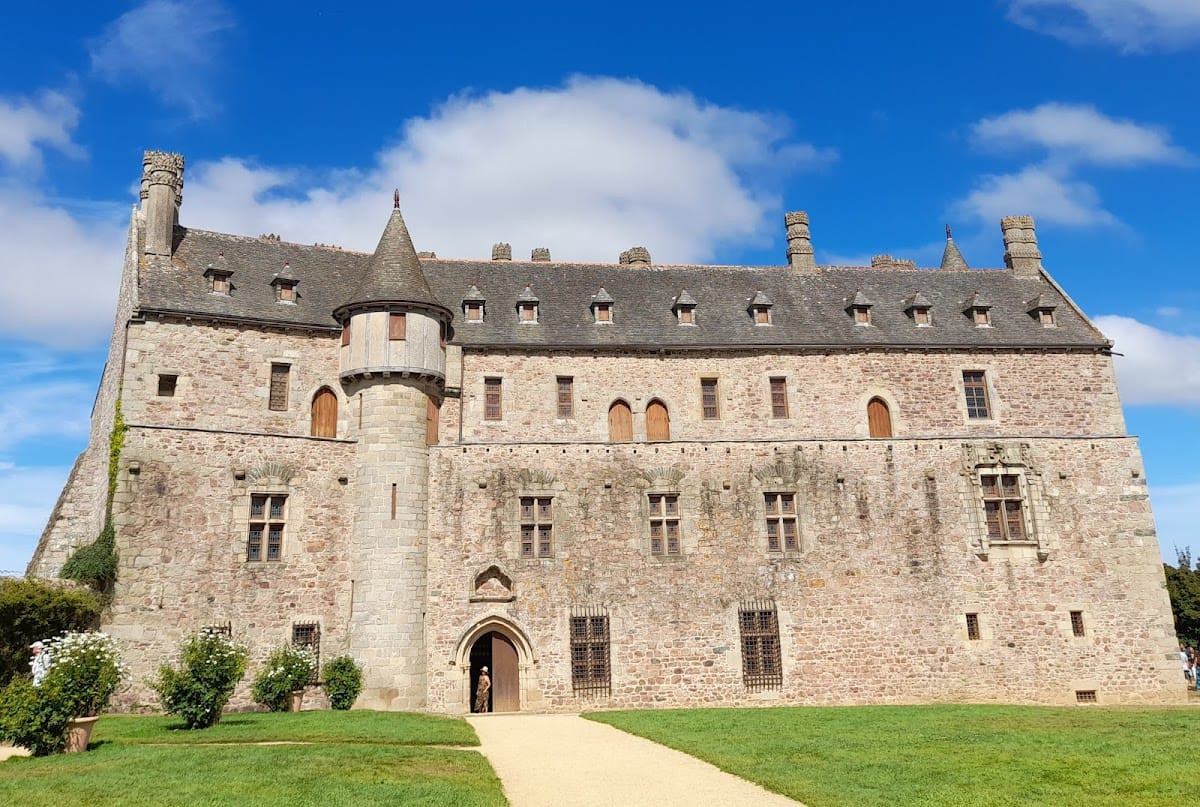
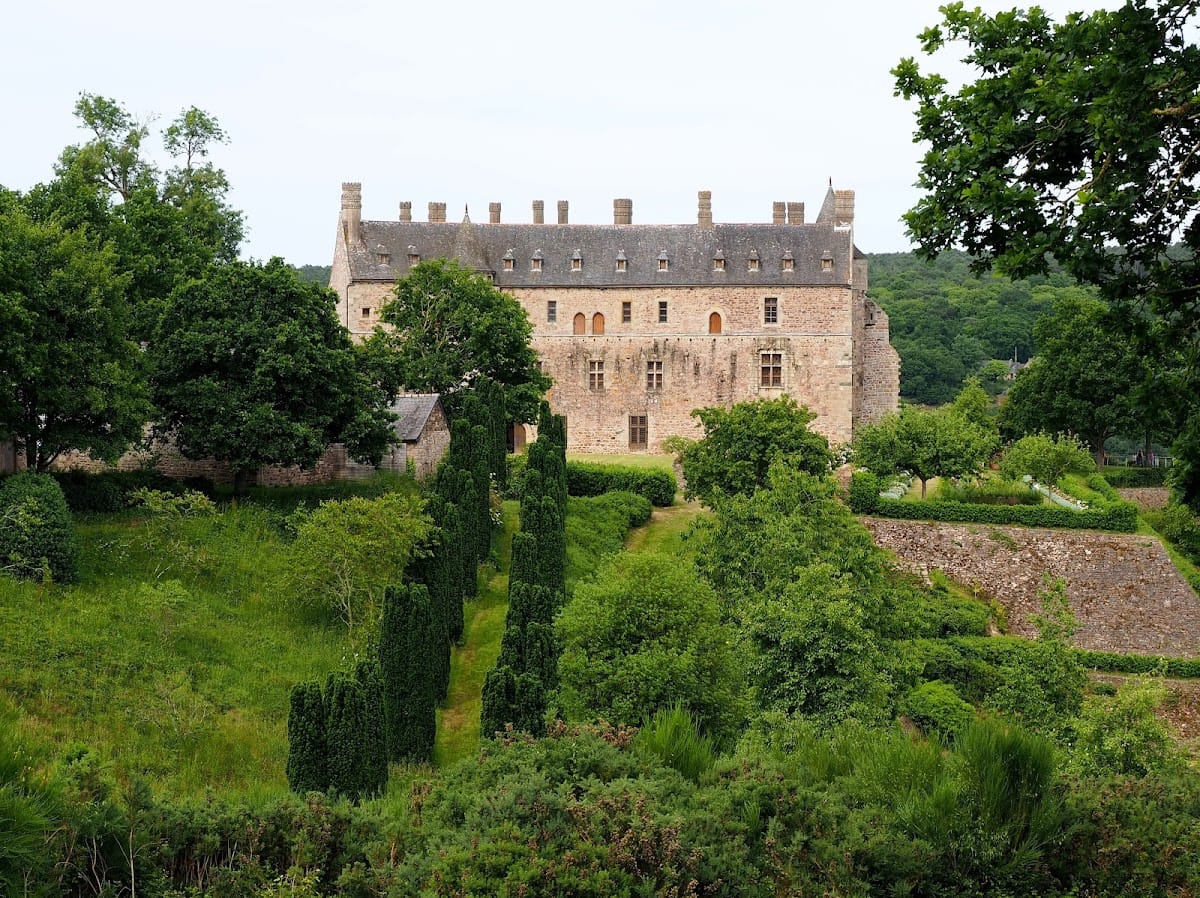
Built of stone, the château consists of a single deep building. Its entrance is formed by a doorway surmounted by a niche. The rear façade faces the Trieux and retains a defensive walkway, or chemin de ronde, a protected passage used to observe and defend the surrounding area. From this position, guards could watch the river and help control river traffic.
Numerous traces remain of a formerly projecting wooden gallery, or passage, which served rooms on the second floor without requiring movement through those rooms. The first floor retains stone mullioned windows, whose openings are divided by vertical stone bars. The recessed second floor and the roof have been extensively altered. The ground-floor kitchen preserves its medieval arrangement, while an upper-floor hall contains a large early-fifteenth-century fireplace with small columns, called colonnettes, on its jambs.
Park and gardens
Landscape and paths
The château occupies the steep western, or left, bank of the Trieux and overlooks the river estuary and surrounding area. A promontory within the grounds provides a panoramic view across the estuary. The estate covers approximately 64 hectares and includes woodland, an oak grove, and a collection of oaks. Three marked paths begin in the main courtyard. One follows features associated with the Stanco spring, a horse basin, and old retting basins, where flax stems were soaked to separate their useful fibers. The Path of the Orient includes a palm grove, while the Silver Rock route leads through another part of the grounds.
Gardens and sculpture
The park and gardens were organized around a several-century-old oak in the main courtyard until the tree was felled in 2009. The grounds contain a rose garden and medieval-inspired gardens with a vegetable garden, a medicinal-plant garden, and a bouquet garden. Approximately 350 varieties of camellias grow alongside honeysuckle, jasmine, wisteria, vines, and other ornamental plants.
Fascines, bundles of interwoven branches or plant material, separate the garden spaces and help shape the landscape. The contemporary gardens were created by Bertrand Paulet with inspiration drawn from medieval garden design. Wrought-iron sculptures by Marc Didou line the paths toward the promontory, while Béatrice Coron’s sculpture Voyage Intérieur stands in the seigneurial garden, a garden associated with a lord’s residence.