Megalithic Tombs near Altenmedingen: Neolithic Burial Monuments in Germany
Site at a Glance
- Popularity
- Low
- Country
- Germany
- Primary era
- Stone Age
- Eras represented
- Stone Age, Modern
- Civilizations
- Unclassified
- Site type
- Burial
- Remains
- Necropolis
On this page12 sections
History
The Megalithic Tombs near Altenmedingen are Neolithic burial monuments in Lower Saxony, Germany, built by communities of the Funnel Beaker culture and dated broadly to 3500–2800 BCE. The Neolithic, or New Stone Age, was a prehistoric period associated with farming and settled communities. The Funnel Beaker culture takes its name from the shape of some of its pottery.
The group is also officially called the Königsgräber, meaning “King’s Graves,” though this is a later label rather than a name from the tombs’ own period. The monuments belonged to a much larger cemetery spread across Altenmedingen and neighboring Niendorf I.
Recording and reconstruction
Georg Otto Carl von Estorff first recorded the tombs in the 1840s. Ernst Sprockhoff later numbered the three surviving monuments 752–754 and assigned numbers 755–757 to three destroyed tombs that von Estorff had described. In 1932, Karl Hermann Jacob-Friesen excavated and reconstructed one of the surviving tombs.
Remains
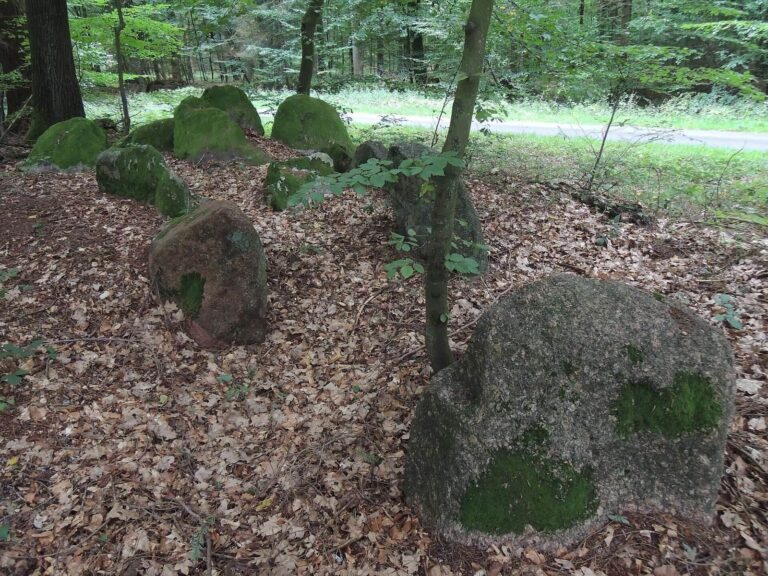
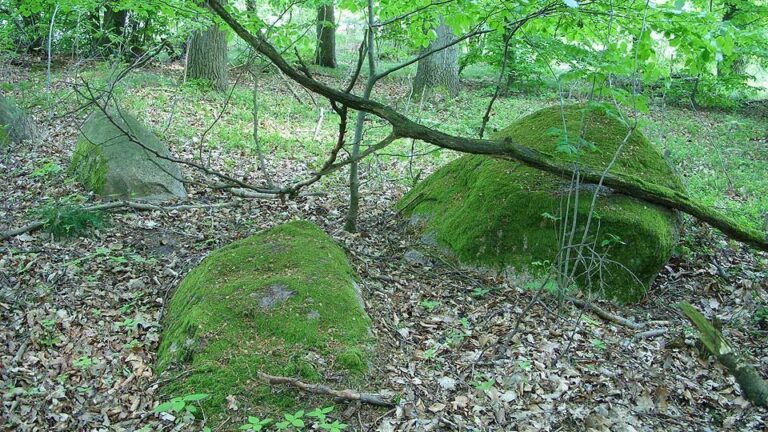
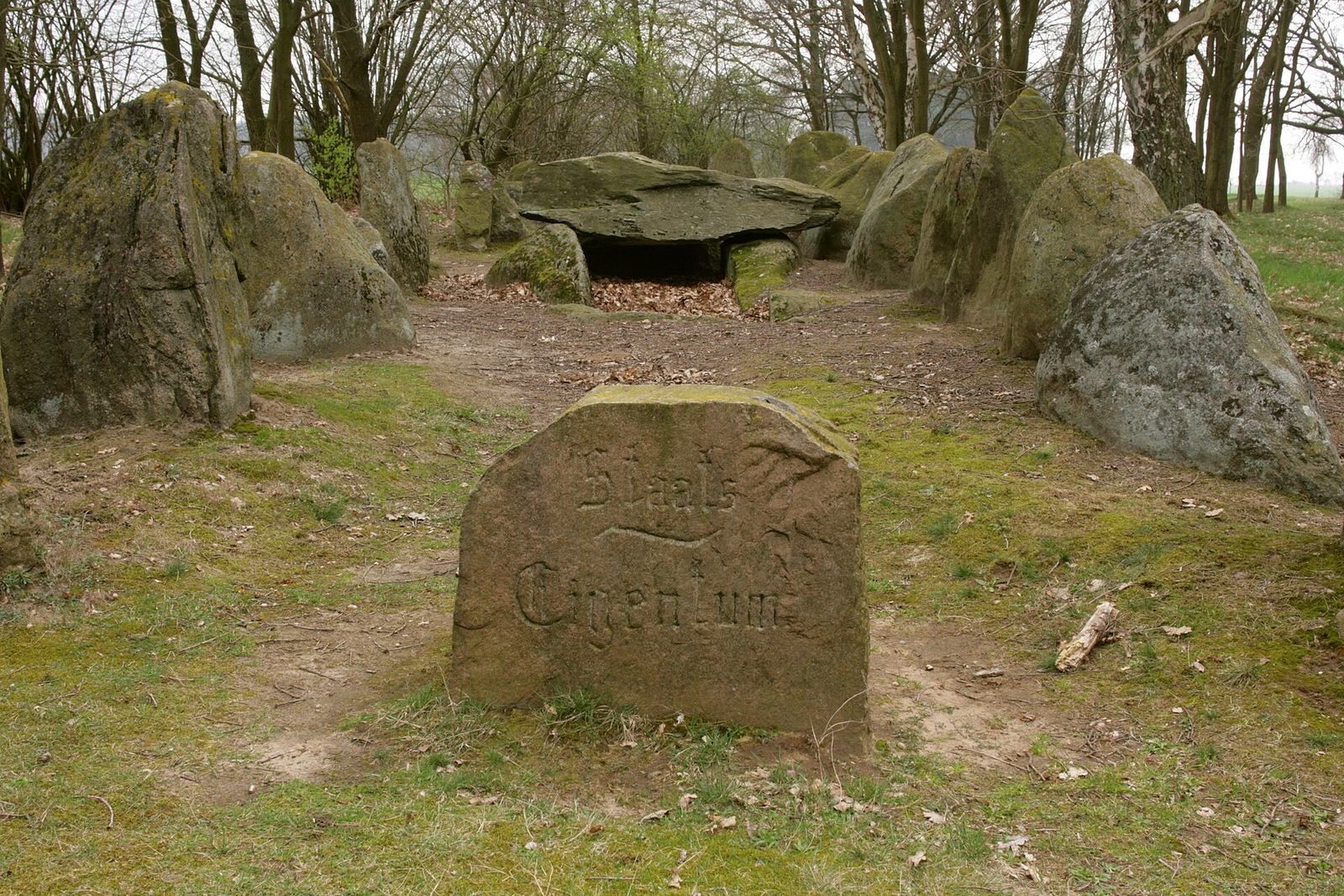
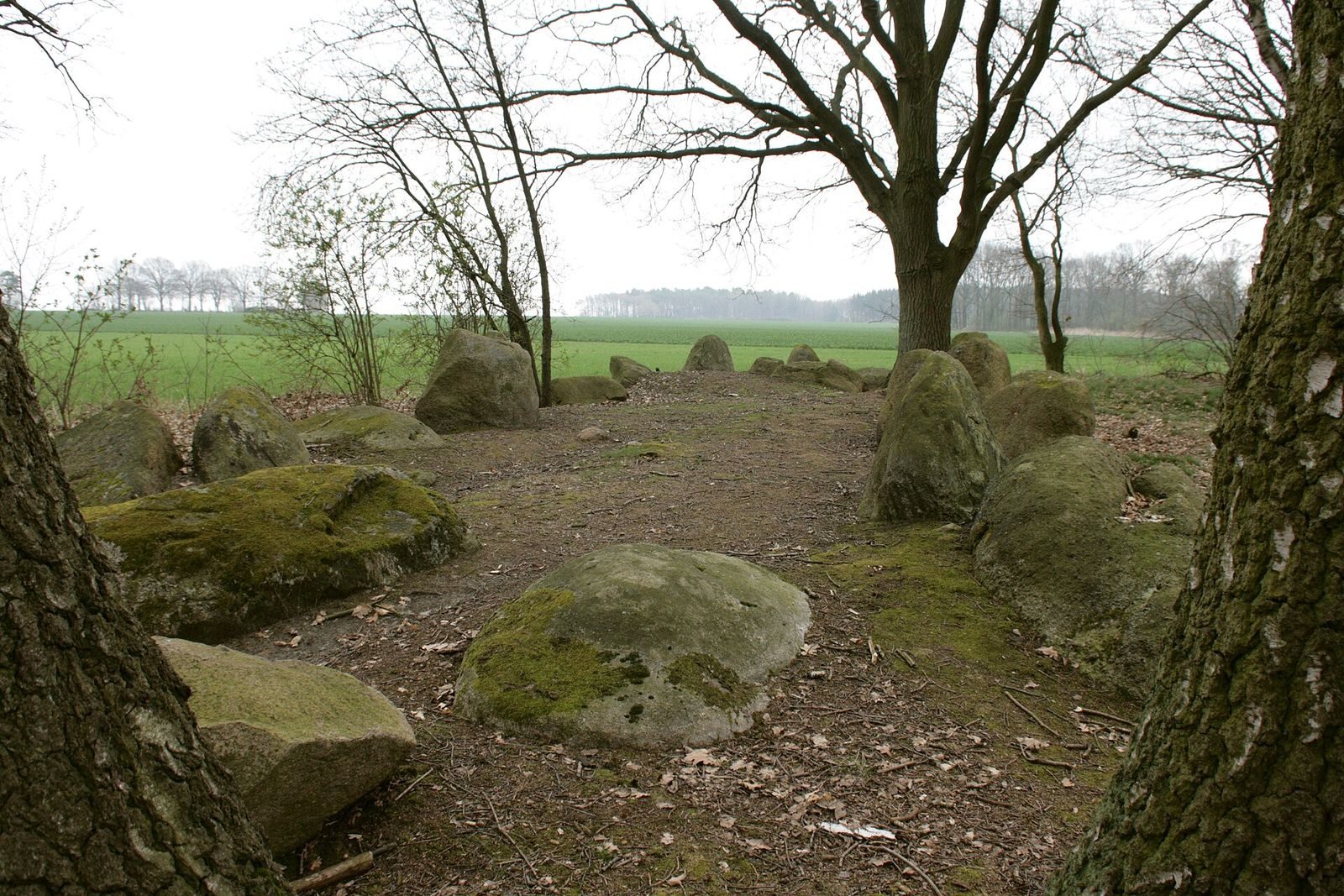
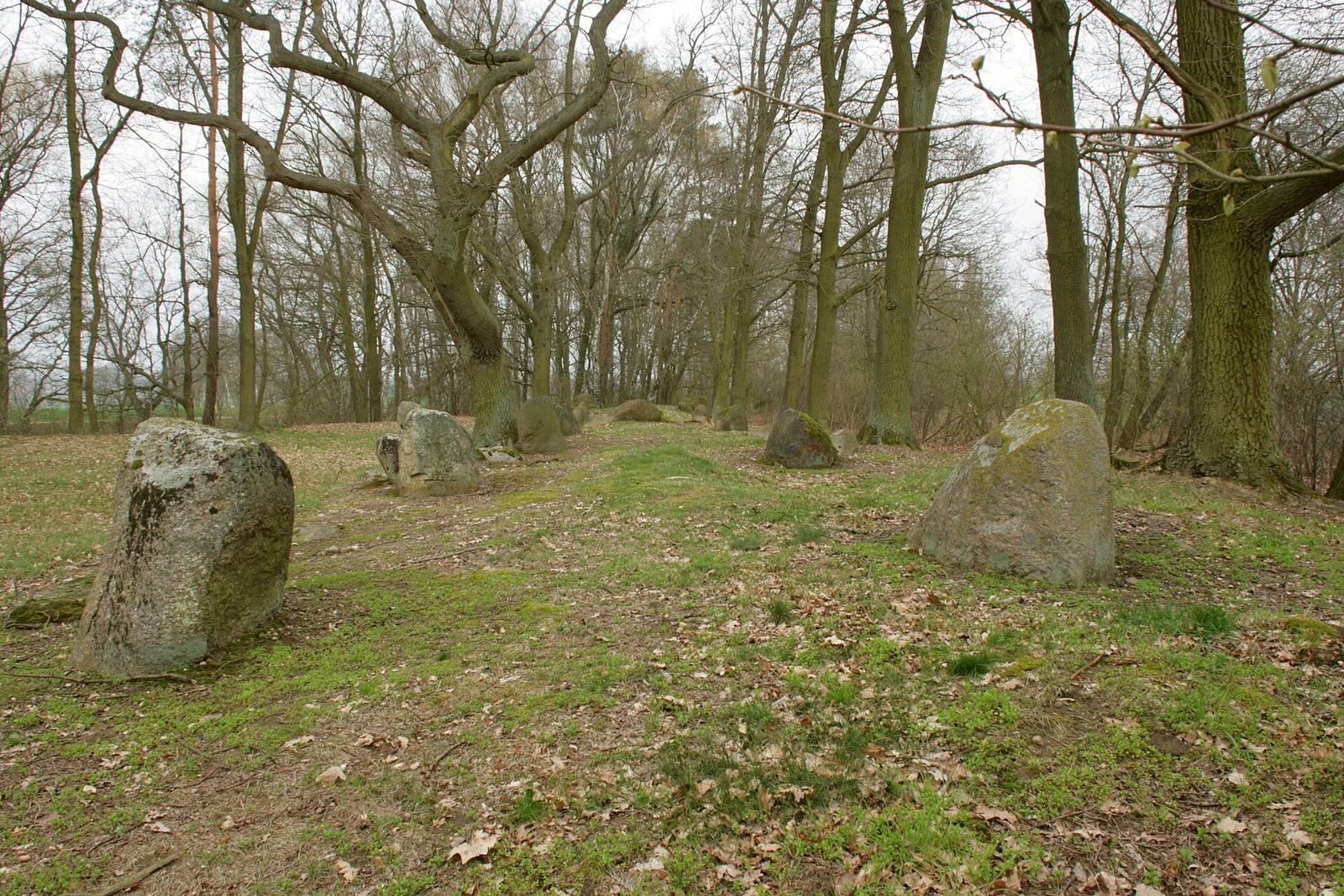
The tombs are long barrows, elongated burial mounds that may enclose stone chambers and have stone perimeters. The three surviving monuments share a northwest–southeast alignment. Their cemetery formed part of a broader landscape of separate burial groups.
Cemetery layout
The largest group formed a dense line from Niendorf I, through Haaßel, to the edge of Altenmedingen. It originally contained 28 megalithic tombs and numerous burial mounds. Fifteen tombs were in Niendorf I and 13 in Altenmedingen; three of the latter survive roughly halfway between Niendorf I and Altenmedingen. Across the wider cemetery, at least 24 graves lay in Altenmedingen and another 18 in Niendorf I, now part of Römstedt. A second group of six tombs stood about one kilometre southeast of Haaßel’s centre, including Tombs 755 and 756. Another five were west of Altenmedingen. Tomb 757’s precise location is uncertain.
Surviving tombs
Tomb 752
This long barrow measures 52 m in length. Its stone perimeter reaches 6 m across at the northwest end, narrows to 4 m near the central chamber, and widens again toward the southeast. The perimeter is damaged and uneven. The chamber measures about 3 by 1.5 m, and two capstones remain in place. A stone at the southeast end and another along the northeast side also survive. A further stone nearby may belong to the chamber, though its association is uncertain.
Tomb 753
The mound has a slightly trapezoidal outline and narrows toward the southeast. Stones in its disturbed perimeter were reset during restoration. Its central chamber is an extended dolmen, a chamber form distinguished by its plan and arrangement of supporting stones, measuring 3.2 by 1 m. All the chamber’s wall stones and its capstone survive. The northwest pair of wall stones is smaller than the southeast pair. The capstone originally lay lengthwise, but reconstruction placed it across the chamber.
Tomb 754
This badly damaged tomb has a mound about 4.5–5 m wide. The surviving earthwork reaches the chamber, while three perimeter stones remain southwest of it. The chamber is approximately 1 m wide and an estimated 3 m long. Its northwest end stone and a pair of long-side wall stones remain in place; three more stones stand along the eastern side, two distinctly smaller than the other.
Other recorded tombs
Von Estorff described Tombs 755–757 before they were destroyed. His accounts preserve details of their former plans and construction.
Tomb 755
This east–west long barrow measured 55 by 4 m and had a chamber at each end. Six metres inward from each chamber, toward the mound’s centre, was a feature consisting of a central stone surrounded by a wall of smaller stones.
Tomb 756
The north–south-oriented chamber measured about 3 by 1.2 m. Its wall stones were arranged with one at each short end and three along each long side.
Tomb 757
This north–south long barrow measured 8 by 3 m. Its perimeter had six stones along each long side, one at one short end, and two at the other; a third may also have stood at that end. The chamber was a great dolmen, a distinct chamber form identified by its plan and supporting stones, measuring 5 by 1 m. Six pairs of stones lined its long sides, with one stone at each short end. Von Estorff noted two capstones.