Vist Church: A Medieval Parish Church in Sweden
Site at a Glance
- Popularity
- Very Low
- Country
- Sweden
- Primary era
- Medieval
- Eras represented
- Medieval, Early Modern, Modern
- Civilizations
- Swedish
- Site type
- Religious
- Remains
- Church
On this page9 sections
History
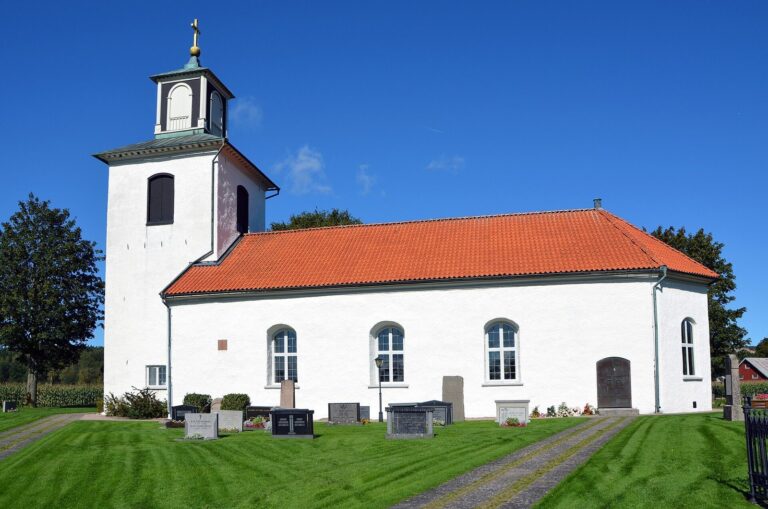
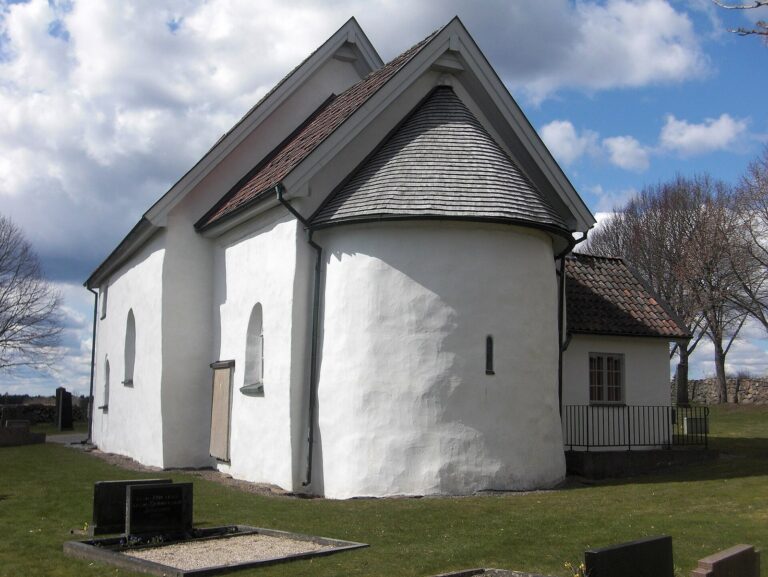
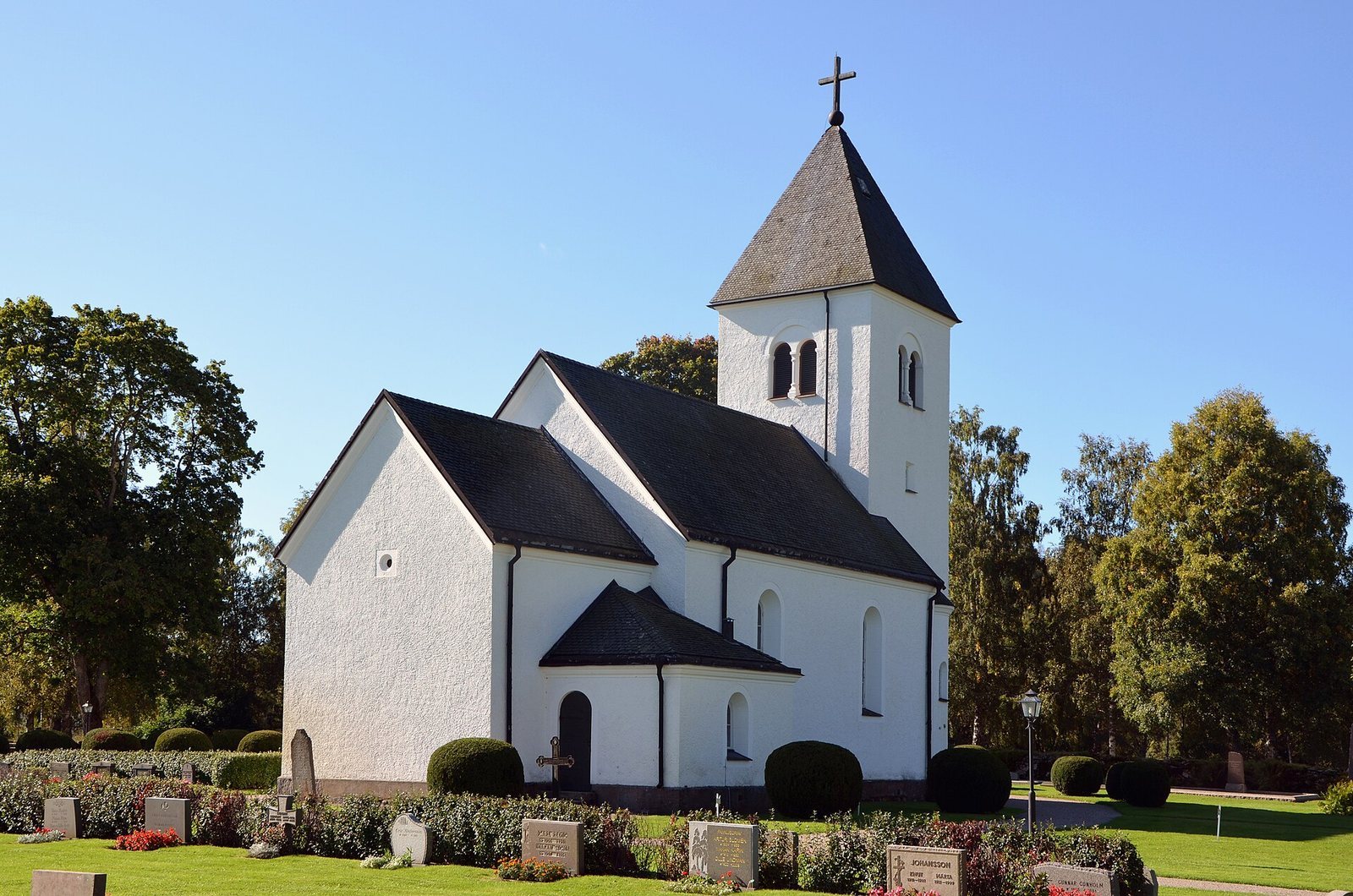
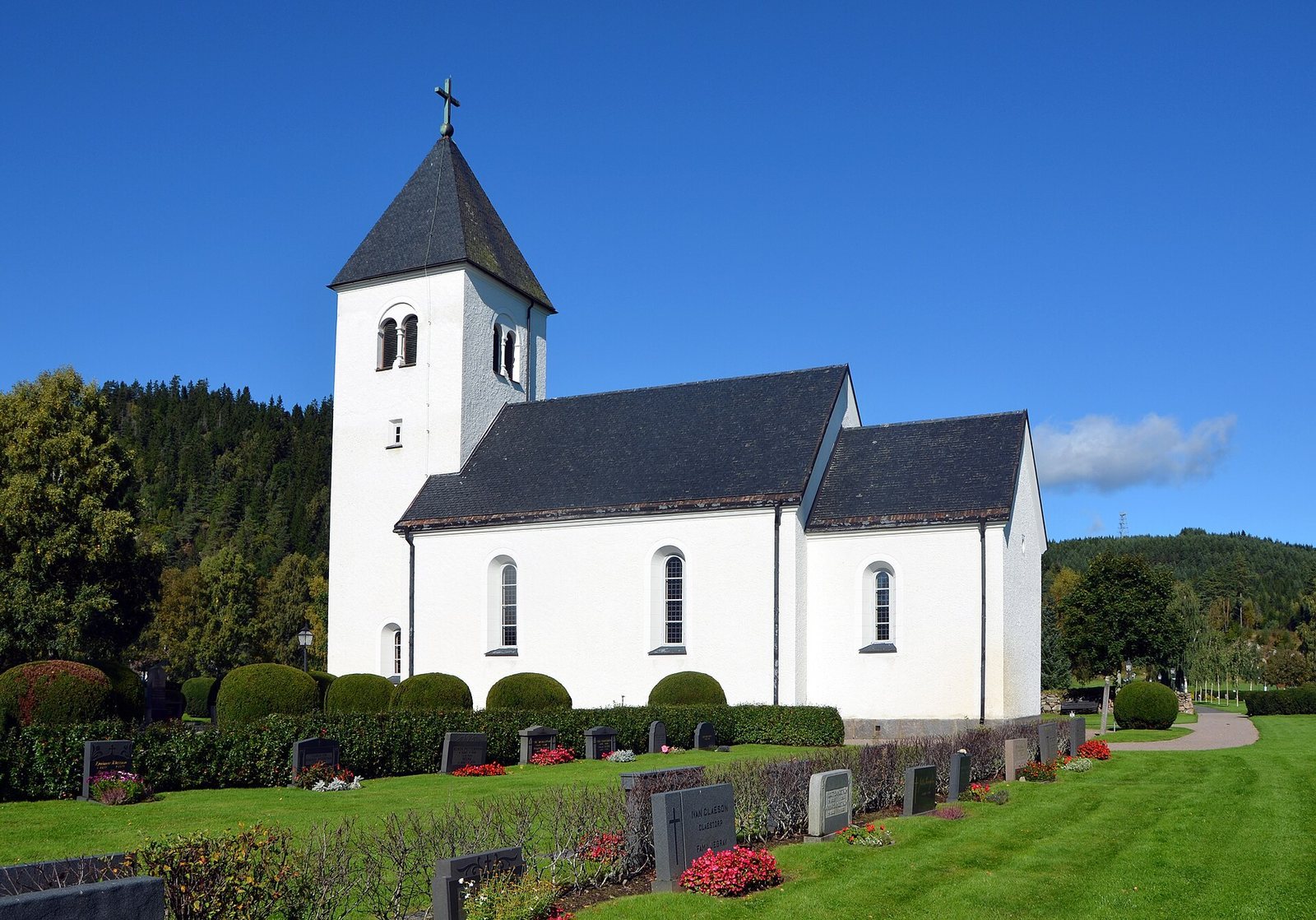
Vist Church is a medieval church below Vistbergen, just north of Ulricehamn in Sweden, consecrated in the 13th century. A rebuilding in 1891 to 1893 gave it a Neo-Romanesque character, a later revival of Romanesque architecture.
Parish and nineteenth-century rebuilding
An inventory made in 1830 described the church as small, dim, unattractive, and undecorated, while noting that it was built of stone. In 1843, the Brunn and Vist parishes were ordered to construct a church together, and work began on the project. In 1888, Vist residents declined to continue it and chose instead to renovate their existing church. The remodeling was completed from 1891 to 1893.
Twentieth-century changes
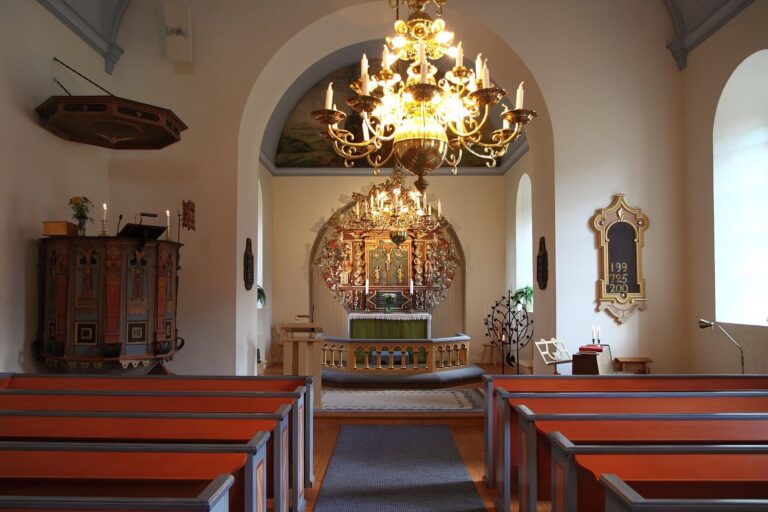
Vist Church belonged to Vist parish until 1938, when it became part of Ulricehamn parish in the Skara Diocese, a regional administrative district within a church. It is affiliated with the Church of Sweden, a Lutheran Christian church. In 1939 and 1940, the interior was redesigned to improve comfort and heating and create a richer atmosphere. This work replaced its Neo-Gothic character, a later revival of Gothic architecture, with Classicism, which draws on forms associated with classical antiquity. The interior was renovated again in 1998 and 1999.
Remains
Church fabric and alterations
The original church was built of fieldstone. The 19th-century remodeling included three windows in the choir gable and colored plaster with white surrounds. In 1939 and 1940, the three-window group was replaced by a small round window with stained glass by Yngve Lundström. The exterior plaster was painted white, and the entrance door was clad in copper. The stove and chimney were removed as electric heating and lighting were installed.
Baptismal font
The sandstone baptismal font, carved around 1300, is of a type influenced by examples from Gotland. It survives in two parts and stands 72 centimetres high. Its basin-shaped bowl has a band of decoration along the rim and shell designs arranged in sixteen panels below. The conical, concave foot has a round footplate 10 centimetres high and a central drainage hole. The font is badly damaged and weathered.
Runestone and coins
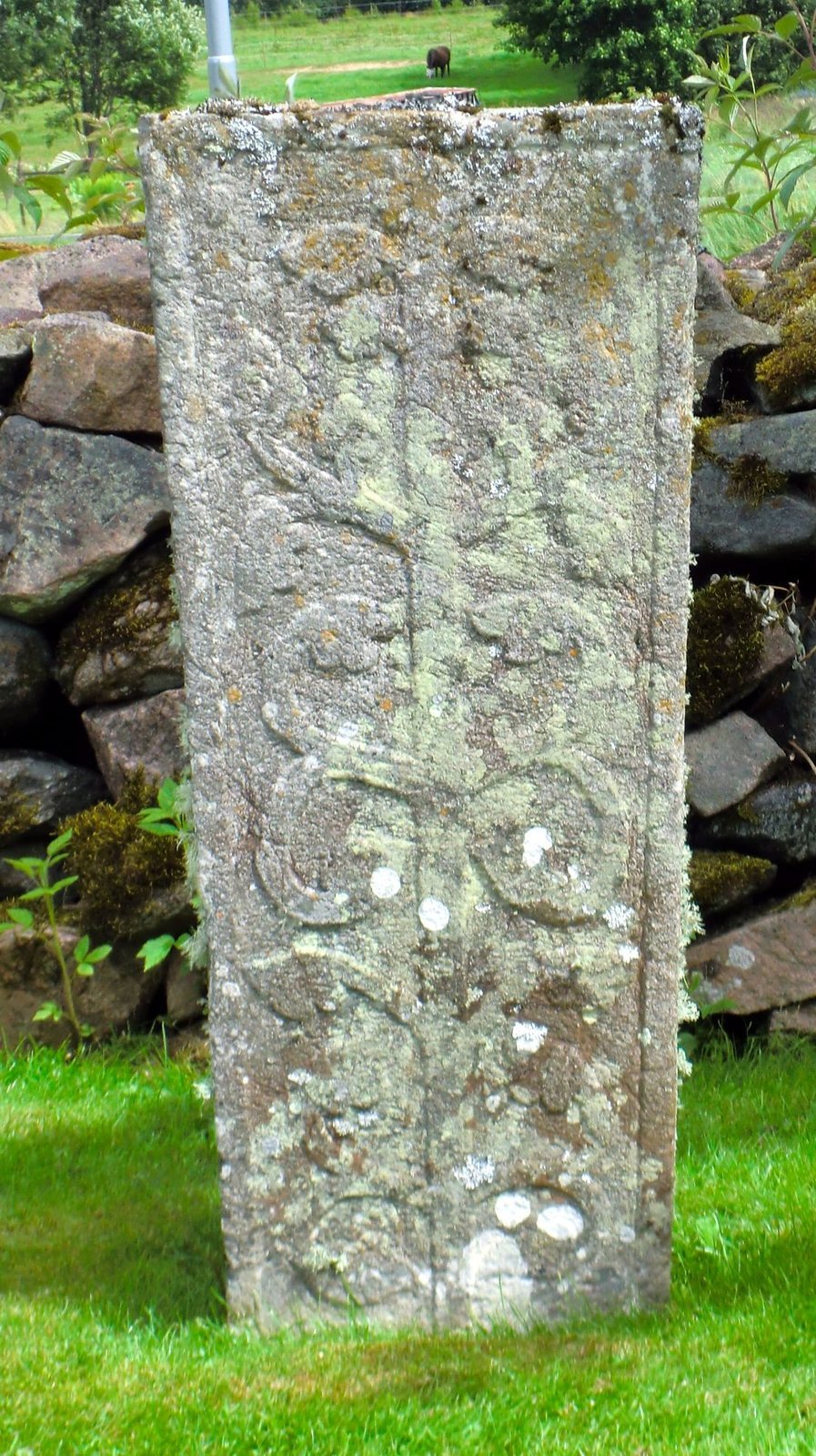
During demolition of the old church, a large runestone was found embedded in its masonry. It bears a cross and runes, characters used in early Germanic writing systems, along its edge. The inscription says that Gere raised the stone for his brother Gude, who died in England. Coins were also found beneath the church floor. They include pieces from the 17th and 18th centuries and smaller, damaged silver coins of earlier date.
Altarpiece and organ
Gunnar Torhamn’s 1939 altarpiece depicts the institution of the Eucharist, the Christian rite commemorating the Last Supper. Wings added in 1954 show Jesus speaking with Nicodemus and with the woman at the well in Sychar, episodes from the Gospel of John. The main organ is now digital, while the 1940 organ façade, made by Liareds organ workshop to the remodeling plans, remains in the organ gallery.
Bells
Both church bells date from the 18th century. The smaller bell was cast in 1704 using metal from two bells taken as war booty in Poland. It first hung in Grovare Church, then for a time in Ulricehamn Church, before being brought to Vist in 1930.