Bottnaryd Church: A Seventeenth-Century Wooden Church in Sweden
Site at a Glance
- Popularity
- Low
- Country
- Sweden
- Primary era
- Early Modern
- Eras represented
- Medieval, Early Modern, Modern
- Civilizations
- Swedish
- Site type
- Religious
- Remains
- Church
On this page8 sections
History
Seventeenth-century construction
Bottnaryd Church is a Lutheran church in Bottnaryd, Sweden. Its wooden building took the place of a medieval wooden church, which was demolished in 1666. The new church was consecrated in 1667, when it was nearly complete, and was finished in May 1695.
The parish’s limited means delayed the interior painting. In 1693, it commissioned church painter Anders Falk, from Bogesund, now Ulricehamn. He completed the work in May 1695.
Reconstruction and later changes
From 1886 to 1890, the church underwent a major reconstruction designed by architect Helgo Zettervall. The medieval masonry sacristy was demolished, and a new one was established in the Ribbing family burial chapel. The exterior walls were painted red again in 1928.
The church belongs to the Church of Sweden, a Lutheran church, and the Diocese of Skara, a regional church district. Since 2002 it has been part of Norra Mo Parish; before then, it belonged to Bottnaryd Parish.
Remains
Church layout and exterior
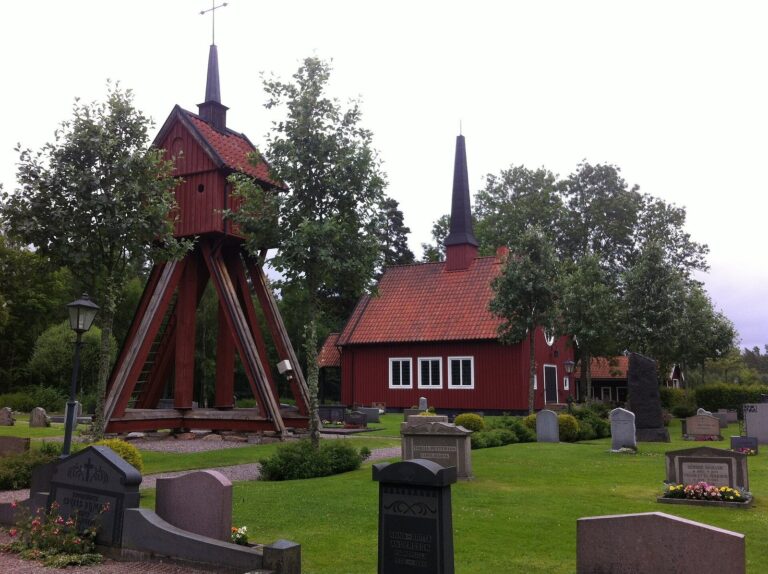
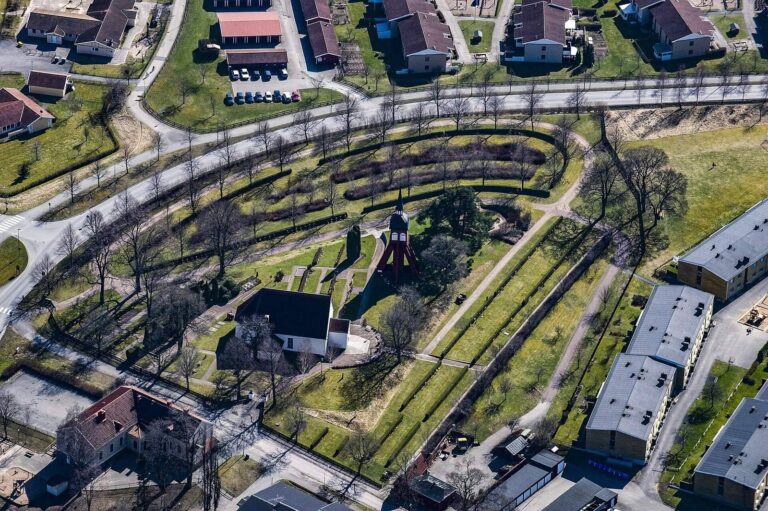
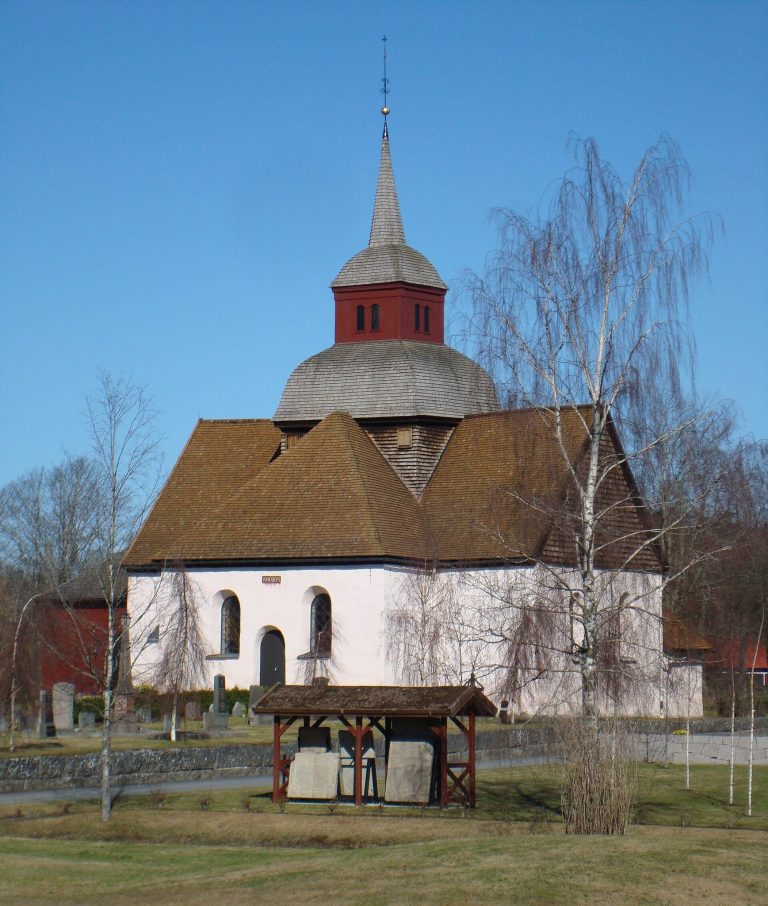
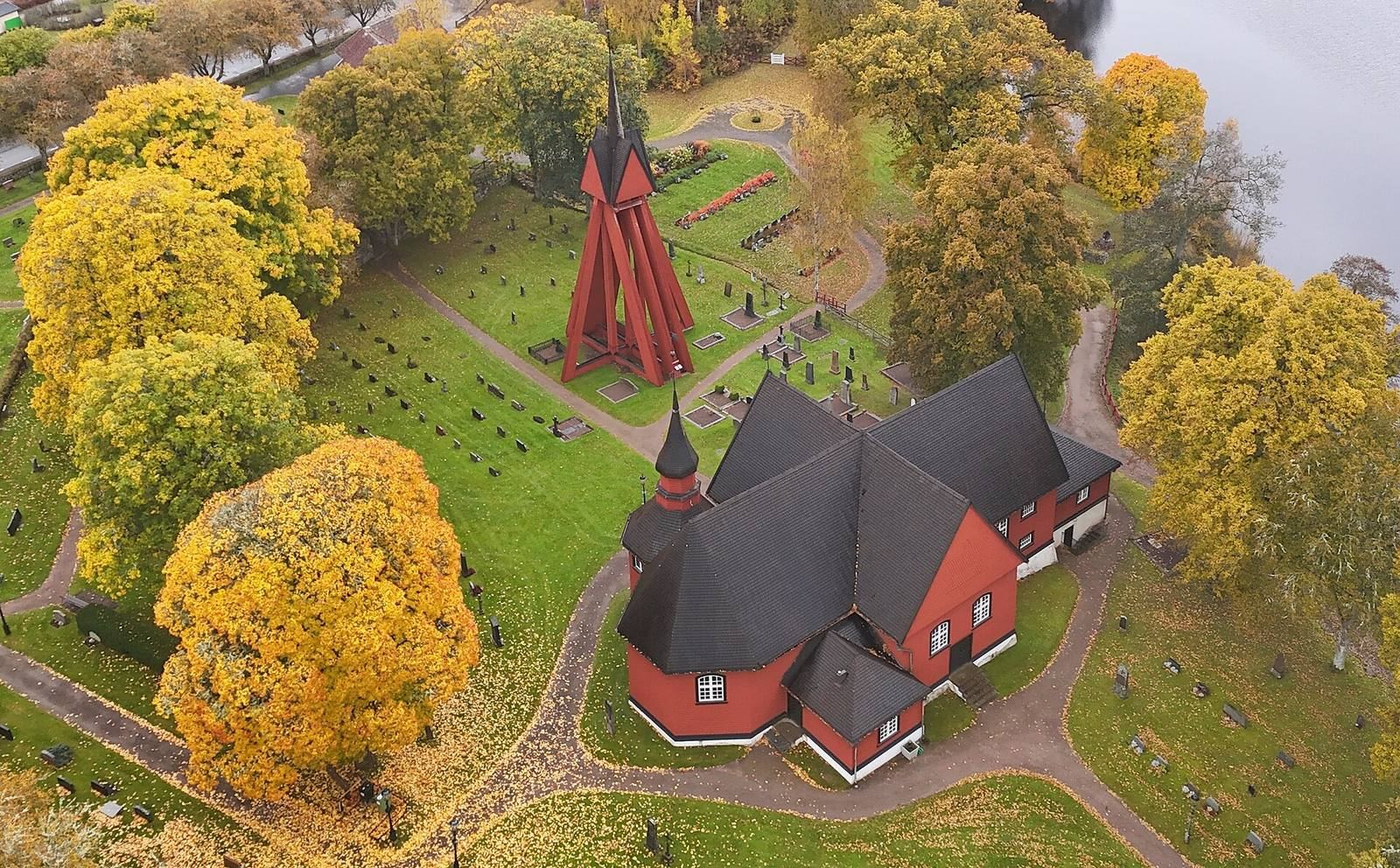
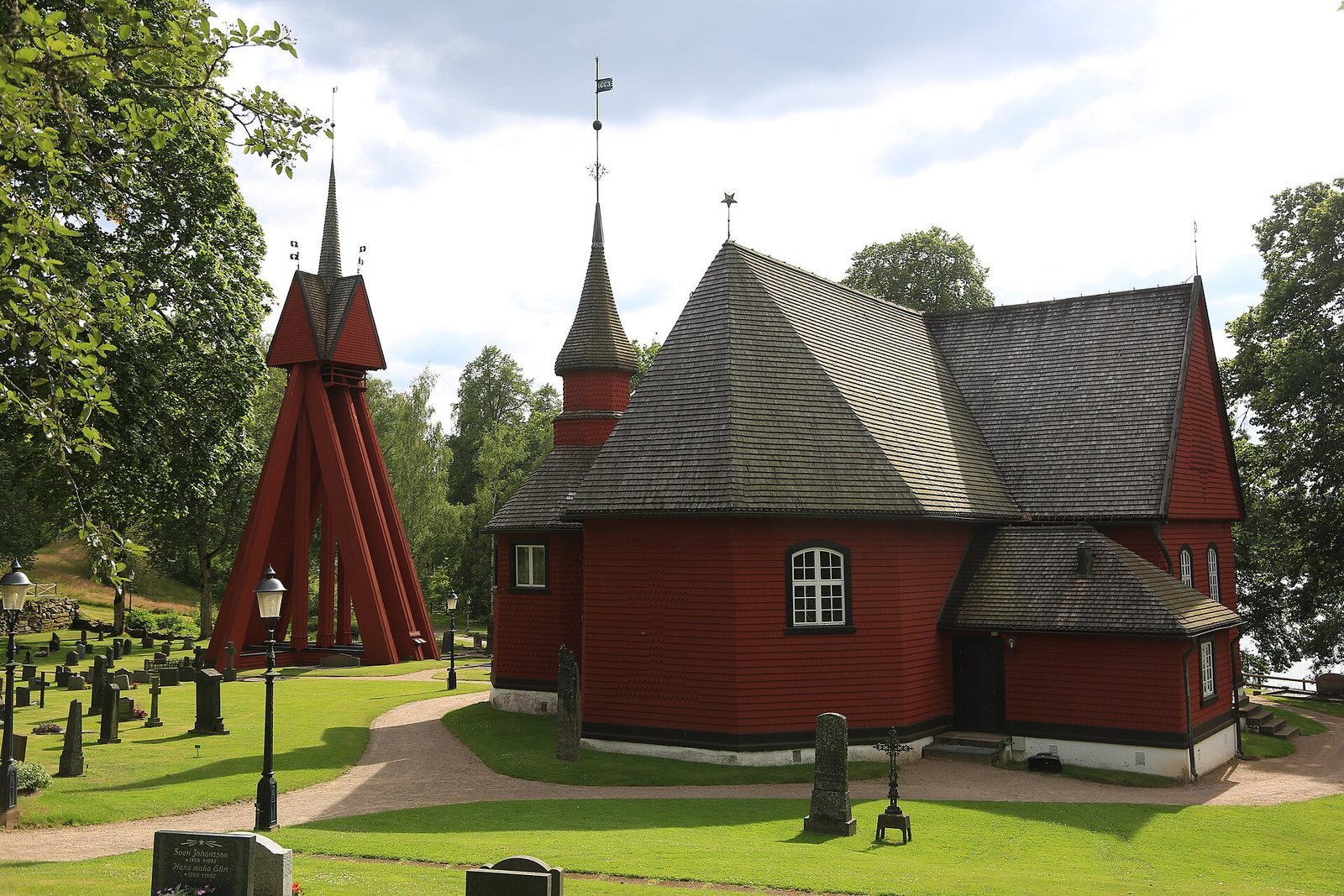
Standing beside Lake Gårdsjön, the church is built entirely of wood. Its plan has a nave, the main body of the church, with a three-sided chancel at the eastern end and sections extending north and south. A small porch dating from 1932 stands to the west. A sacristy, used for preparing for worship and storing church furnishings, was added north of the chancel in 1968.
Bell tower
A separate wooden bell tower stands south of the church. Built in 1686, it holds three bells. The large and small bells are medieval; the middle bell was recast in 1930 and may also date from the medieval period.
Paintings and furnishings
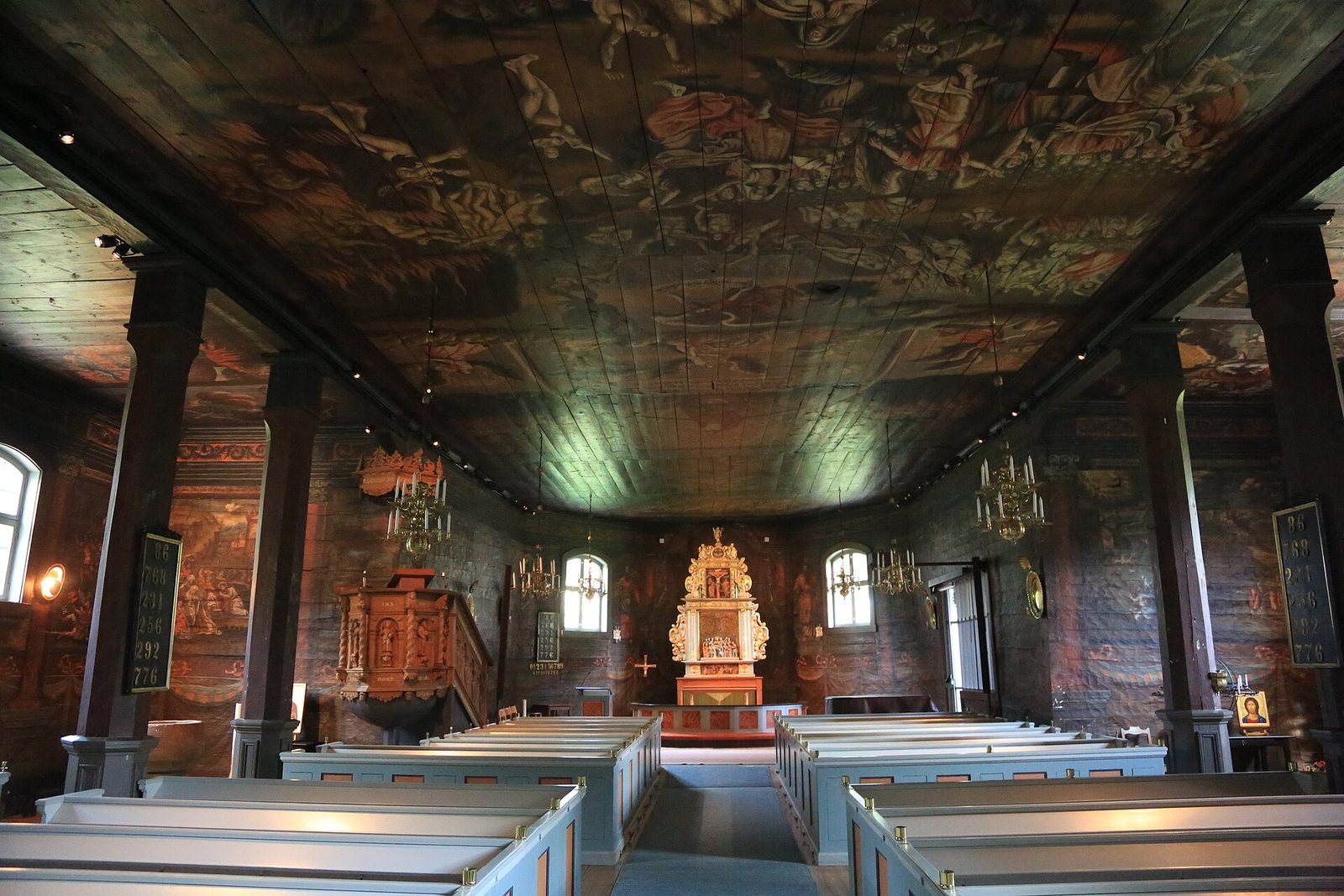
Biblical scenes cover extensive areas of the walls and ceiling. The sandstone baptismal font is medieval, and its brass basin dates from around 1600. The seventeenth-century altar retable probably came from northern Germany. An oak pulpit and its canopy date from 1670. The church also holds a wooden model of the Dutch-built ship Calmare Nyckel, made by craft teacher Bengt Faleskog.
Organs
Jonas Wistenius of Linköping built a nine-stop organ in 1749; an organ stop controls a set of pipes that produces a particular sound. Levin Johansson of Liared built another nine-stop organ in 1894. The present organ was made by A. Magnusson Orgelbyggeri AB in 1970 to 1971. Its keys operate the pipes through mechanical linkages, and its front includes the façade from the 1749 organ, with a stop that sounds from the visible front. A. Magnusson built the mechanical-action choir organ in 1984. Its console is on one long side, with sound-control shutters on the other.