Härna Church: A Medieval Stone Church in Sweden
Site at a Glance
- Popularity
- Very Low
- Country
- Sweden
- Primary era
- Medieval
- Eras represented
- Medieval, Early Modern, Modern
- Civilizations
- Swedish
- Site type
- Religious
- Remains
- Church
On this page12 sections
History
Origins and parish history
Härna Church is a medieval stone church in Härna, Sweden, whose earliest stonework probably dates to the 12th or 13th century. It belonged to Härna Parish until 2006, when it became part of Södra Vings Parish. The church is also within the Church of Sweden’s Diocese of Skara, an ecclesiastical district.
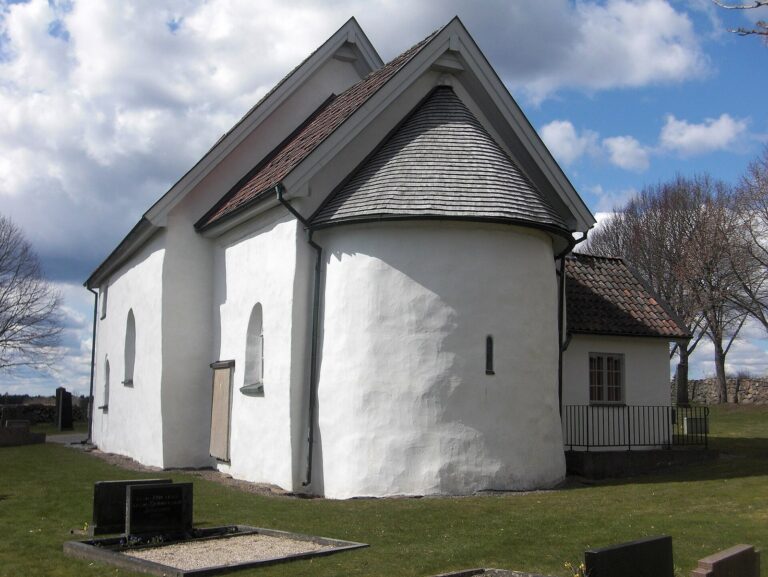
The church was altered and enlarged, probably during the 17th or 18th century. These works likely produced the three-sided chancel at its east end and the sacristy on its north side.
Later alterations and restorations
In the early 19th century, diocesan leaders proposed replacing the church with a new building shared by three parishes. Härna Church continued in use and received a thorough restoration in 1838.
A major restoration in 1900 added a porch designed by architect Bror Almquist. In 1954, another restoration aimed to recover the interior’s older character by removing several additions made in the late 19th and early 20th centuries.
Remains
Church and interior
Main building
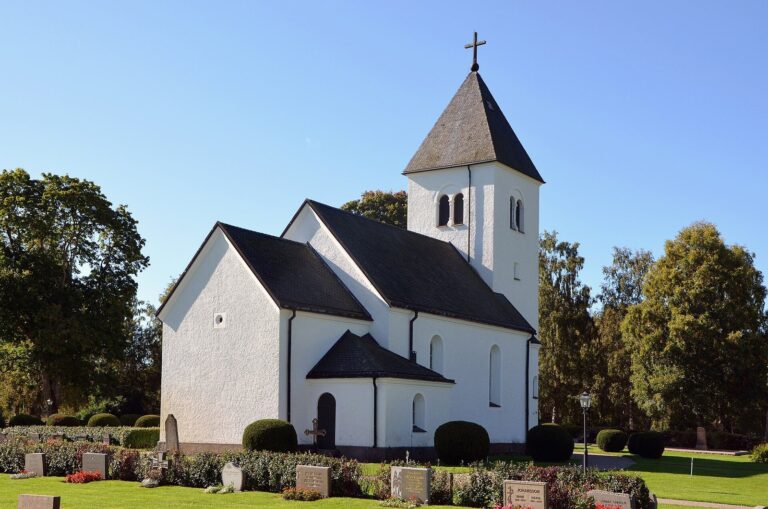
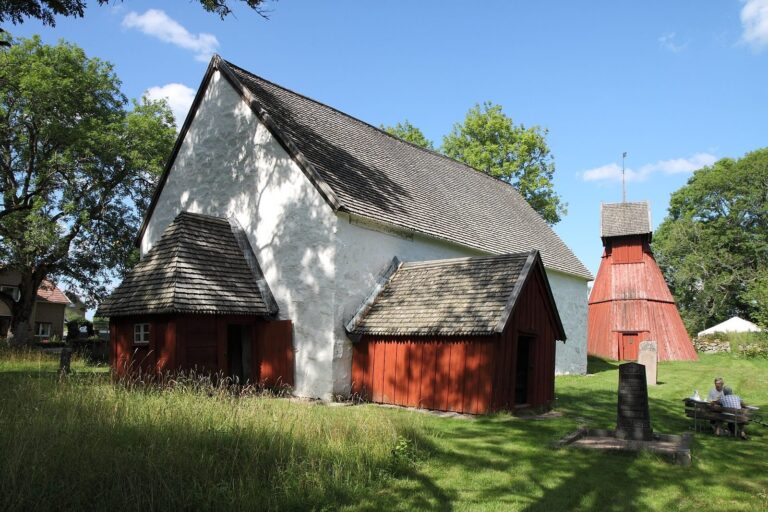
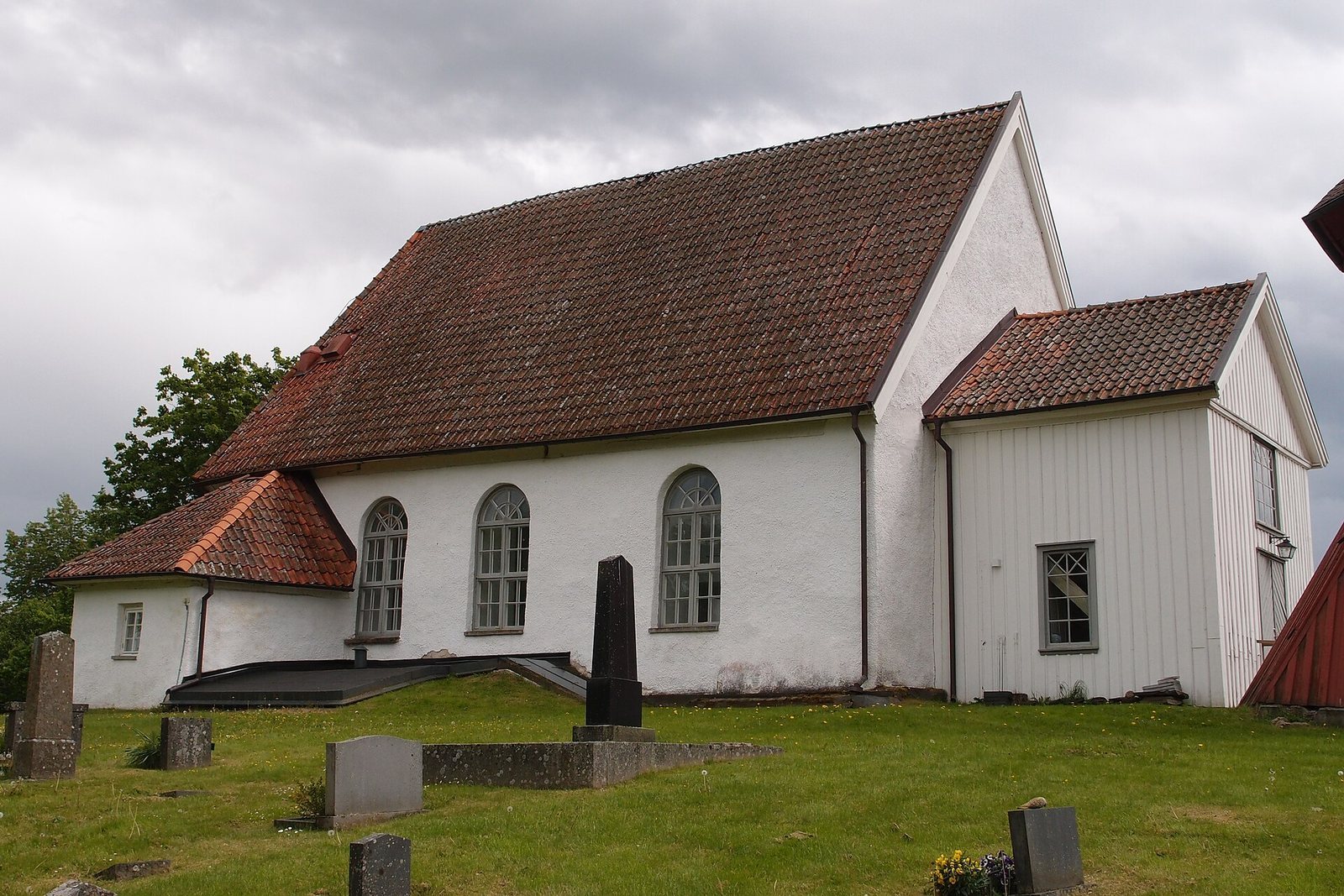
The masonry church stands on a hill 240 metres above sea level, overlooking the Viskan valley. Its plan has a rectangular nave, the main body of the church, and a three-sided chancel, the altar area at the east end. A sacristy, a room for clergy to prepare for services and store religious objects, is attached on the north. Large sections of the earliest stonework survive in the western part of the nave. The church strongly resembles Mjäldrunga Church, another medieval church in Västergötland.
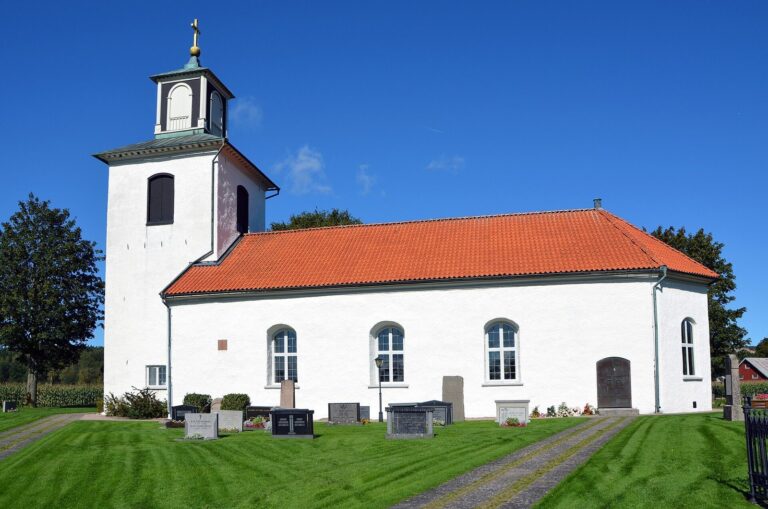
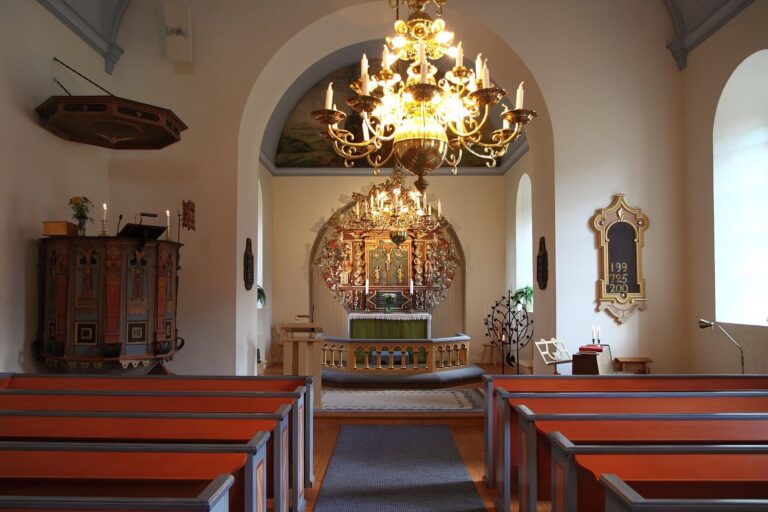
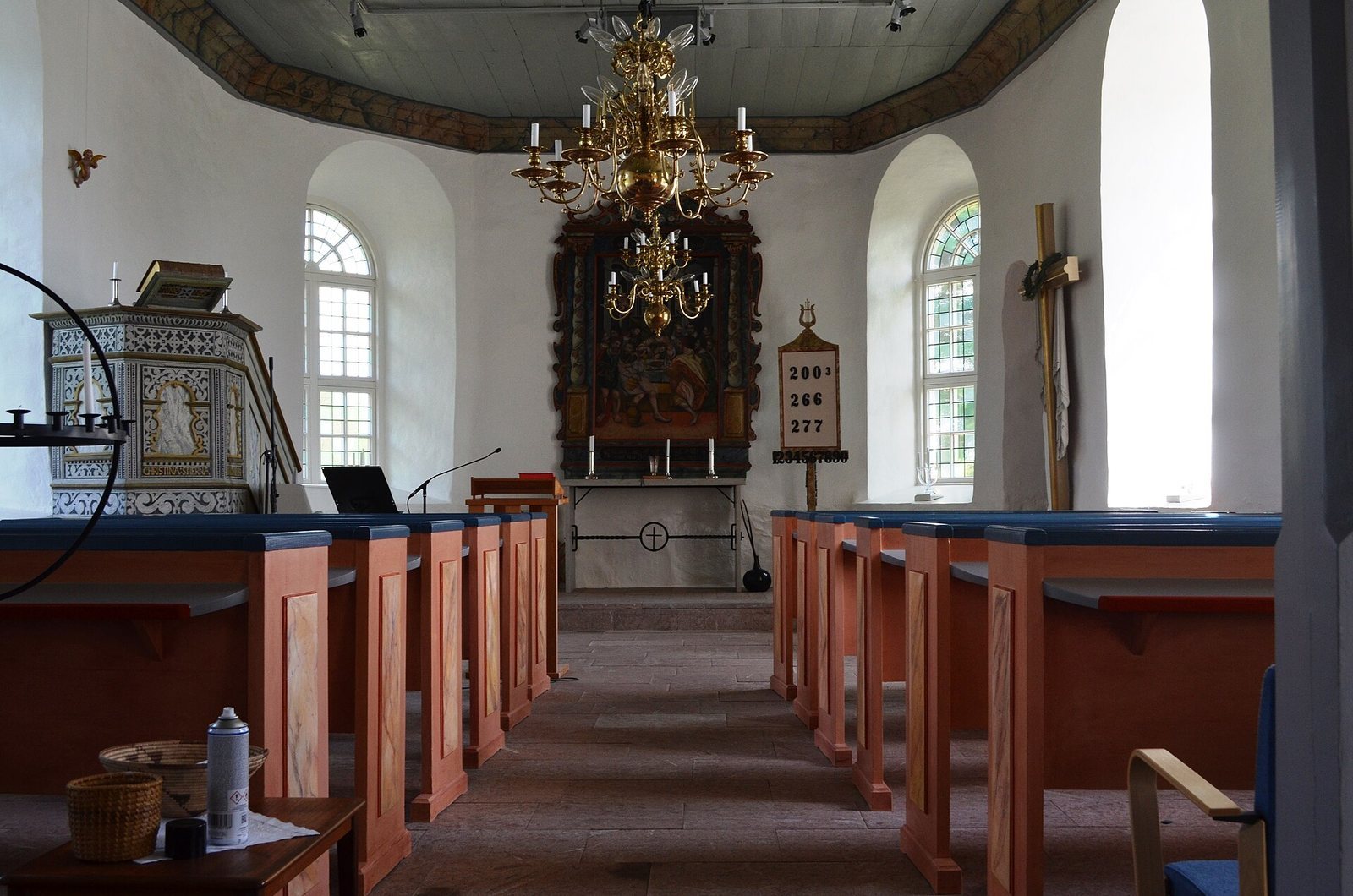
A two-storey wooden porch occupies the west side and contains the main entrance. The walls are plastered white inside and out, with round-arched windows. The steep roof has a gable and slopes over the three-sided eastern end. Inside, a flat ceiling is edged by a shaped decorative cornice. A sundial dated 1728 is fixed to an exterior wall, while the interior’s present colour scheme dates from 1987.
Furnishings and objects
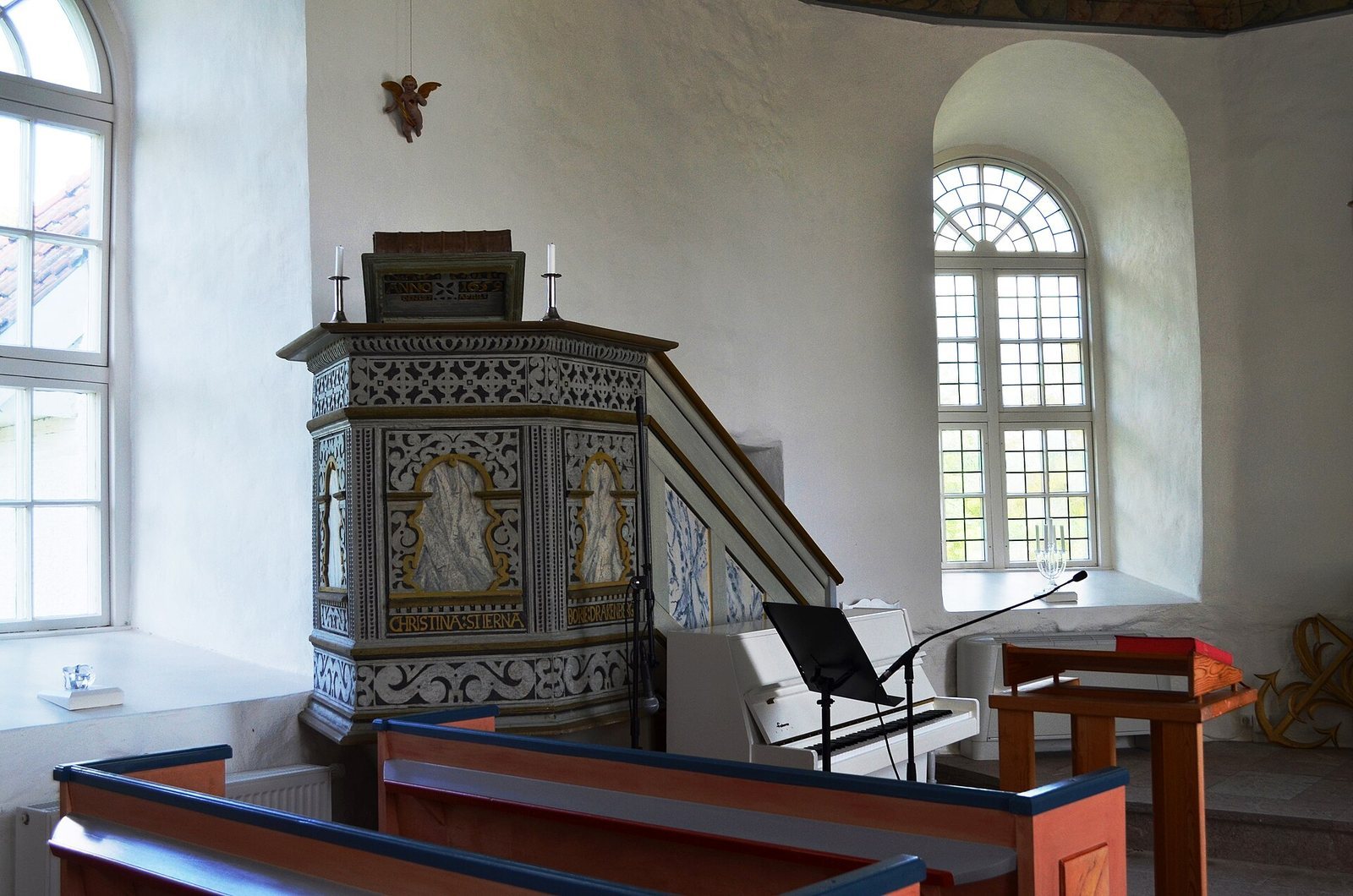
The altarpiece, artwork placed at or behind an altar, and the pulpit are in the late Baroque style, a later phase of a European artistic and architectural style. A 17th-century altar painting depicts the Institution of the Eucharist. Colonel Börje Nilsson Drakenberg gave the painting, pulpit, and a 17th-century chasuble, an outer vestment worn by a priest during the Eucharist.
Baptismal font
The sandstone baptismal font, made around 1200, consists of two pieces and stands 73 centimetres high. Its undecorated bowl is cylindrical, with slightly bulging sides and a fairly flat underside. The base narrows toward the bottom and has gently convex sides, a heavy raised moulding at the top, a rope-like band around its side, and a recessed band near the bottom. The base may once have served as the bowl of a different font. Both pieces have a central drainage hole.
Other interior features
A resurrection cross, a Christian cross symbolizing Christ’s resurrection, stands beside the font. It once belonged to a 19th-century altar ensemble. A three-lock offering chest is also preserved. The church’s 1931 organ was dismantled because of its poor condition, and a digital organ is used instead.
Bell tower and churchyard
Bell tower
The bell tower stands northwest of the church. It was probably built in 1737 and renovated in 1962. It contains two bells: the larger is of a standard late-medieval type, while the smaller was cast in Jönköping in 1845.
Churchyard
The churchyard dates from the early medieval period. A lower section was added in 1961 along the roads to the north and west.