Megalithic Tombs near Freidorf: Neolithic Burial Monuments in Germany
Site at a Glance
- Popularity
- Very Low
- Country
- Germany
- Primary era
- Stone Age
- Eras represented
- Stone Age
- Civilizations
- Unclassified
- Site type
- Burial
- Remains
- Tomb
On this page6 sections
History
The Megalithic Tombs near Freidorf are three Neolithic burial monuments in Möllenhagen, Mecklenburg-Vorpommern, Germany. They date to 3500–2800 BC and belong to the Funnelbeaker culture, a northern European Neolithic culture named for its funnel-shaped pottery. Each is an extended dolmen, a megalithic tomb with an elongated stone chamber. Ernst Sprockhoff assigned the tombs catalogue numbers 437–439.
Remains
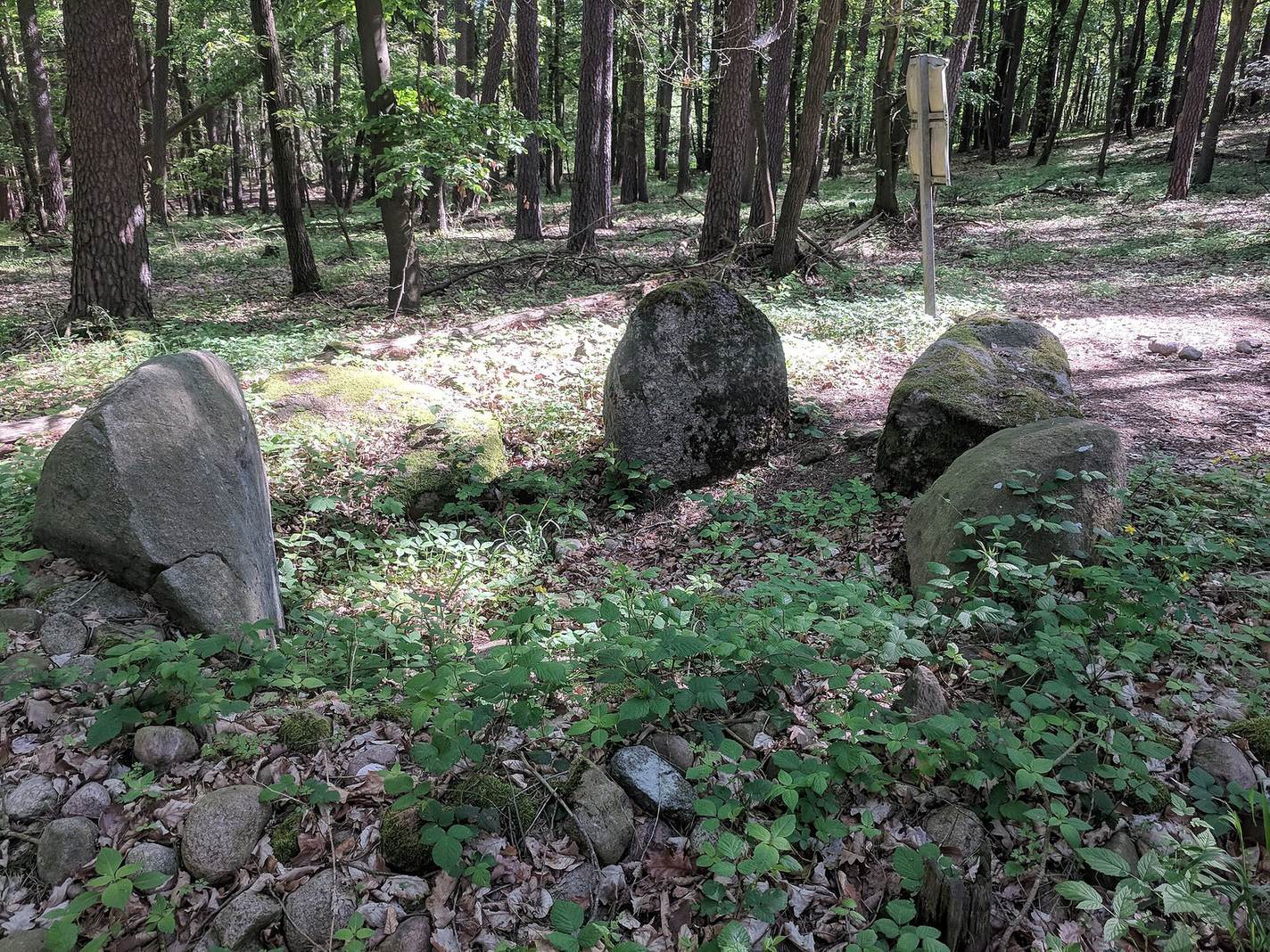
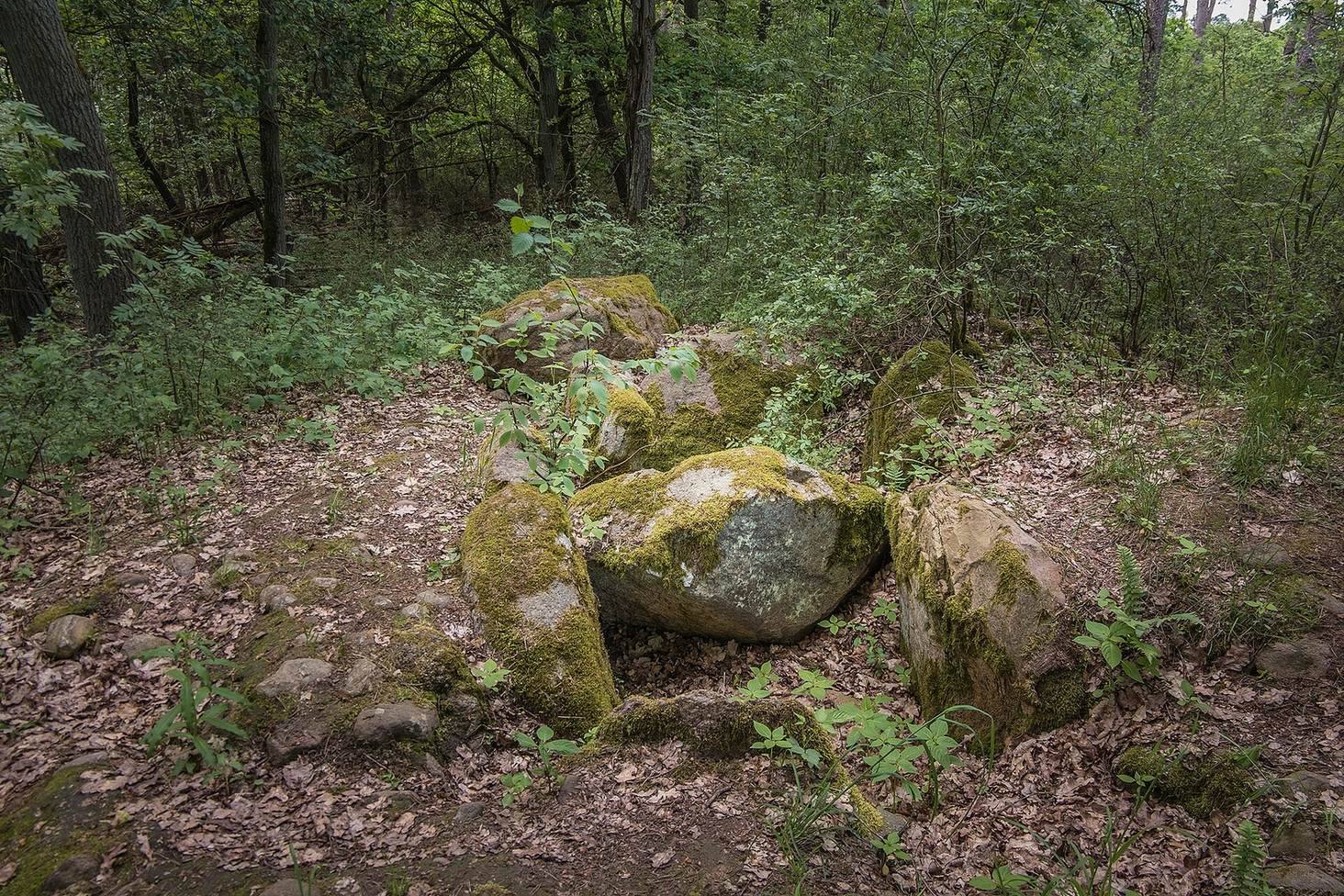
The tombs are spread across the area south of Freidorf. Graves 1 and 2 lie in the southwestern corner of Seeholz woodland, while Grave 3 is in a field. Their chambers are elongated and built from large stones, but their surviving arrangements differ.
Individual tombs
Grave 1
Grave 1 has a chamber aligned northwest–southeast, measuring 2.5 metres long by 1.5 metres wide. Its original arrangement included two pairs of long-side stones, end stones at both ends, and two capstones; the southeastern end stone was smaller. The northwest end stone and the southeastern wall stone on the northeastern side remain in place. The other northeastern wall stone has fallen outward, as have the southeastern end stone and the adjoining southwestern wall stone. The tomb sits just inside the southern edge of Seeholz woodland.
Grave 2
Grave 2 stands beneath a circular mound 14 metres in diameter. Its east–west chamber was originally surrounded by a packing of rounded stones. All the chamber stones remain: the two pairs of long-side stones and the end stones are in place, although the western stone on the south side is slightly twisted. A narrow slab forms the eastern end, leaving an entrance at the northeastern corner. The eastern capstone has fallen into the chamber, while the western one lies outside and carries numerous cup marks. The tomb is 280 metres north of Grave 1, near the northern edge of the woodland.
Grave 3
Grave 3 has a north–south chamber measuring 2.5 by 1.5 metres. It probably stood within a circular mound, although the mound’s form cannot now be reconstructed precisely. In 1935, Ernst Sprockhoff described five wall stones: the northern end stone and the adjoining stone on the eastern side were in place; the southern eastern-side stone was split; and the southern western-side stone and southern end stone had sunk outward. The southern end stone is much smaller than the northern one, leaving an entrance at the southeastern corner. Dense thorn scrub now covers the tomb, making its present condition uncertain. It lies 400 metres northwest of Grave 2, a few metres south of a field track. Großsteingrab Klein Dratow is 2.5 kilometres northwest of it.