Kūkaniloko Birth Site: An Ancient Hawaiian Chiefly Birth Center
Site at a Glance
- Popularity
- Medium
- Country
- United States
- Primary era
- Medieval
- Eras represented
- Medieval
- Civilizations
- Polynesian
- Site type
- Religious
- Remains
- Sanctuary
On this page6 sections
History
Kūkaniloko Birth Site is an ancient Hawaiian chiefly birth and ceremonial complex on the Wahiawā Plateau of Oʻahu, Hawaiʻi, United States. The site dates to before the 13th century and was regarded as an important cultural center, both geographically and symbolically. Its name was associated with the Hawaiian concept of piko, meaning a center or point of origin.
Chiefly birth traditions
Tradition places the births of high chiefs at Kūkaniloko from around 1100 until the mid-17th century. High chiefs belonged to the hereditary ruling class in traditional Hawaiian society. Among the chiefs associated with the site were Kakuhihewa and Maʻilikūkahi, prominent rulers in Oʻahu’s traditional history.
In the birth ceremony, a father and 35 other chiefs were said to witness the event, announced by sacred drums. The newborn was then taken to a nearby temple for purification, the severing of the umbilical cord, and a reading of the child’s genealogy. Children born at Kūkaniloko were expected to learn their ancestors’ traditions and prepare for leadership.
Land use and protection
The fertile plateau supported abundant sweet potato and yam crops. Chiefly families lived on the slopes of the Waiʻanae Range and along the Waialua coast to the north, while battles for control of Oʻahu were fought across the central plains. The nearby Hoʻolonopahu heiau, a Hawaiian temple and ceremonial site, and other temples in the area were later destroyed to make way for sugarcane and pineapple cultivation.
The Daughters of Hawaiʻi, a heritage organization, recognized and protected Kūkaniloko in 1925. The Hawaiian Civic Club of Wahiawā took responsibility for the site in 1960. Kūkaniloko entered the National Register of Historic Places in 1973, and five acres that included the site became a state park in 1992. The registered boundaries were expanded in 1995.
Remains
Stone complex and setting
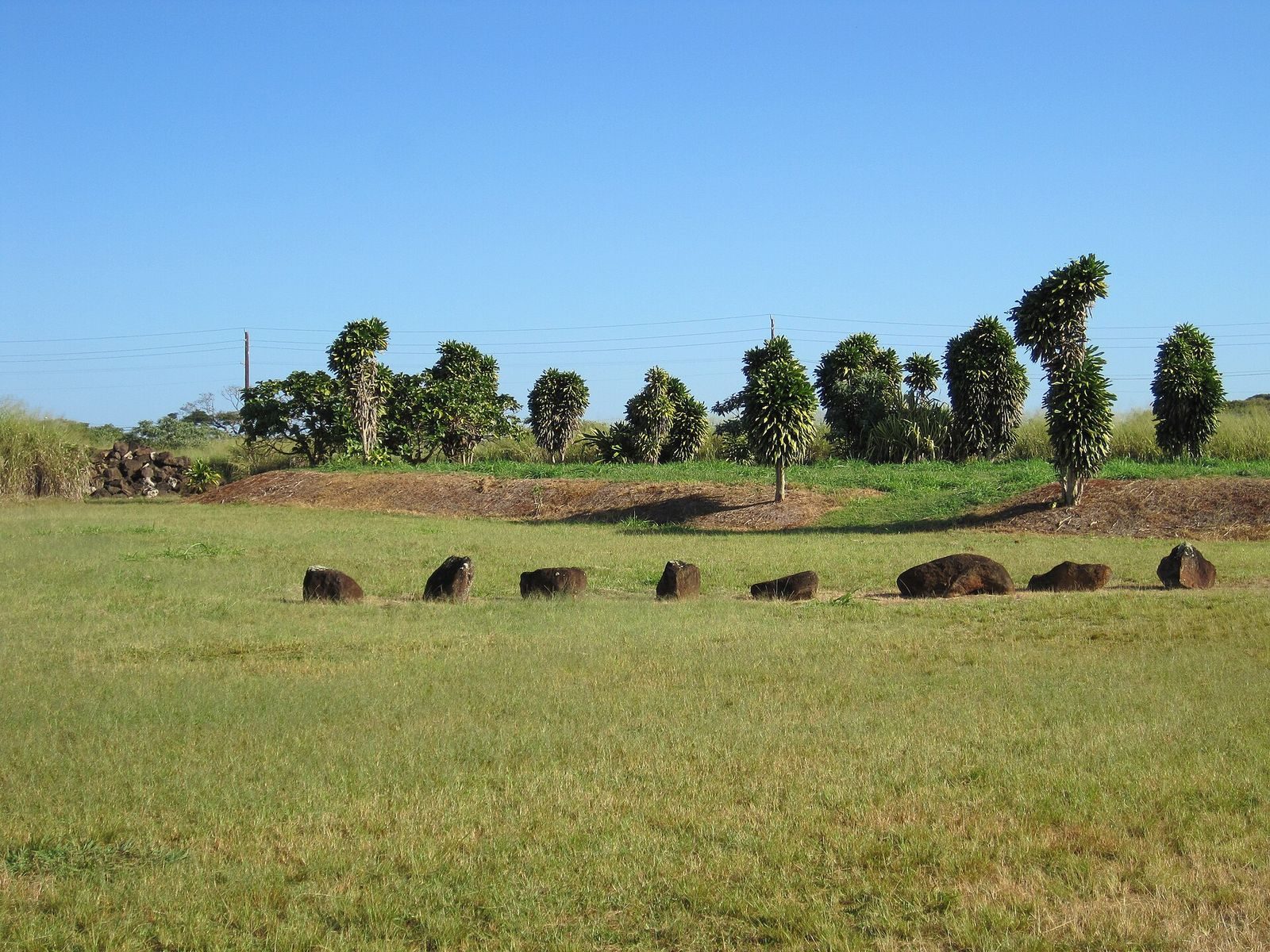
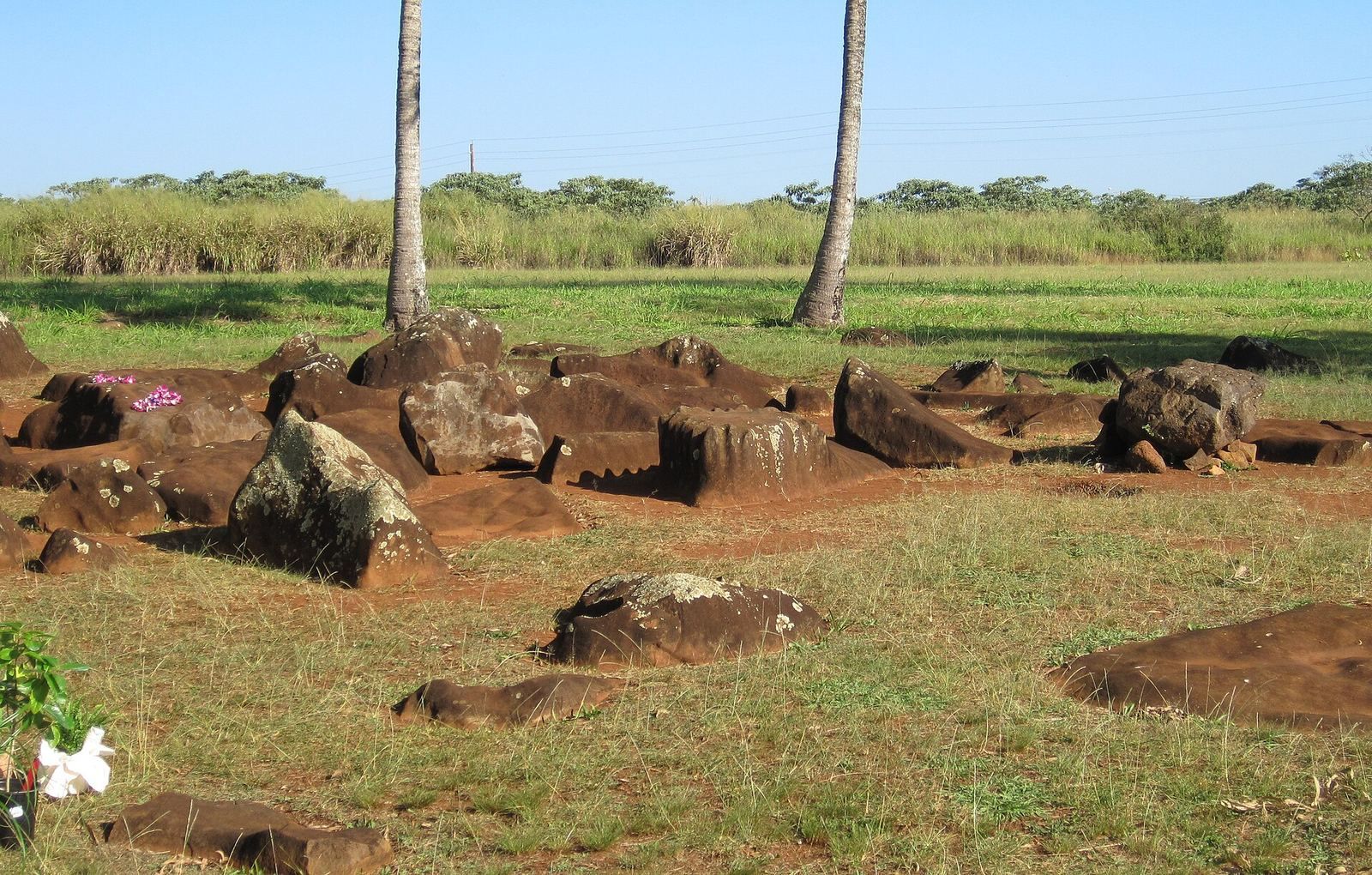
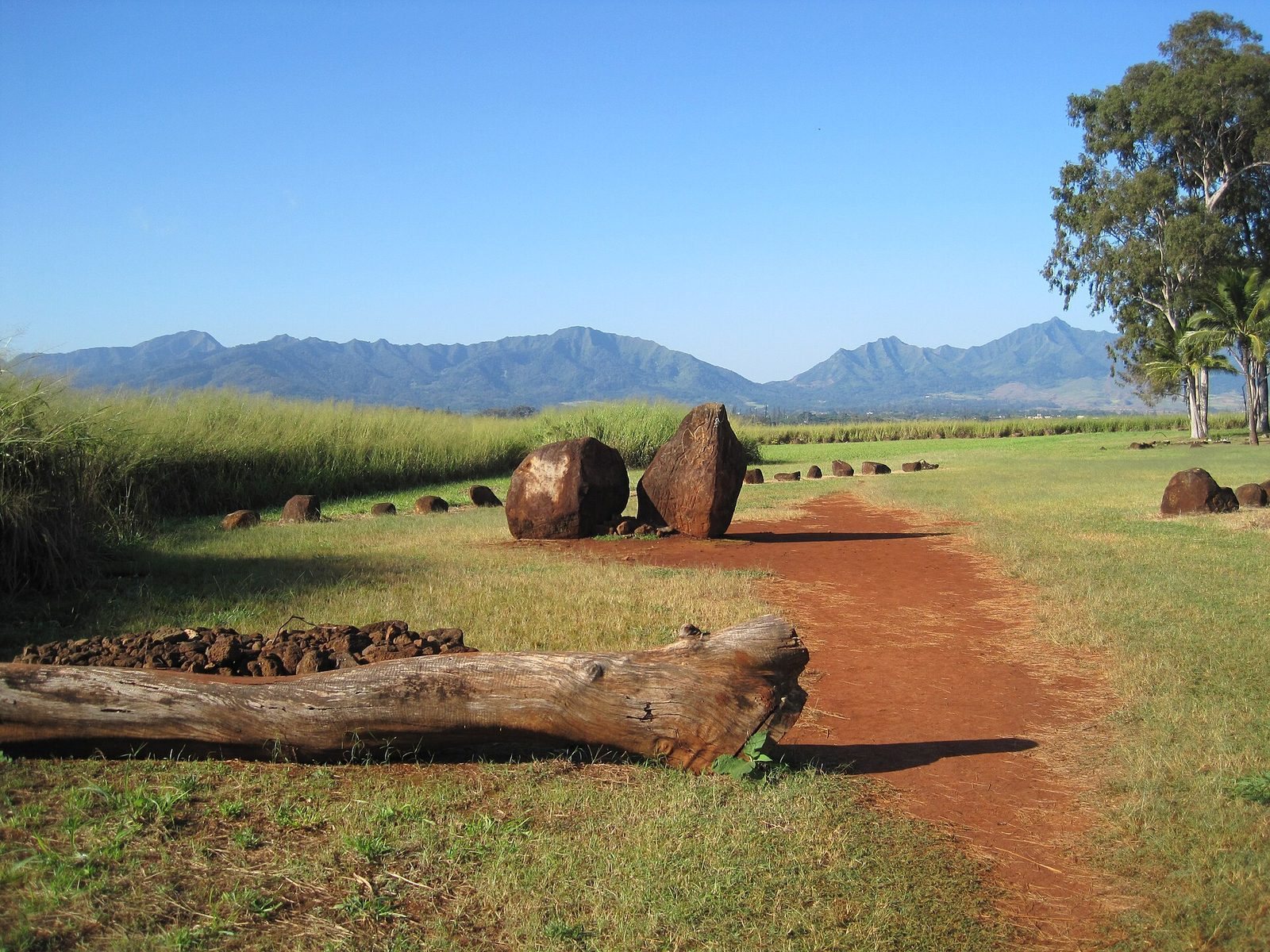
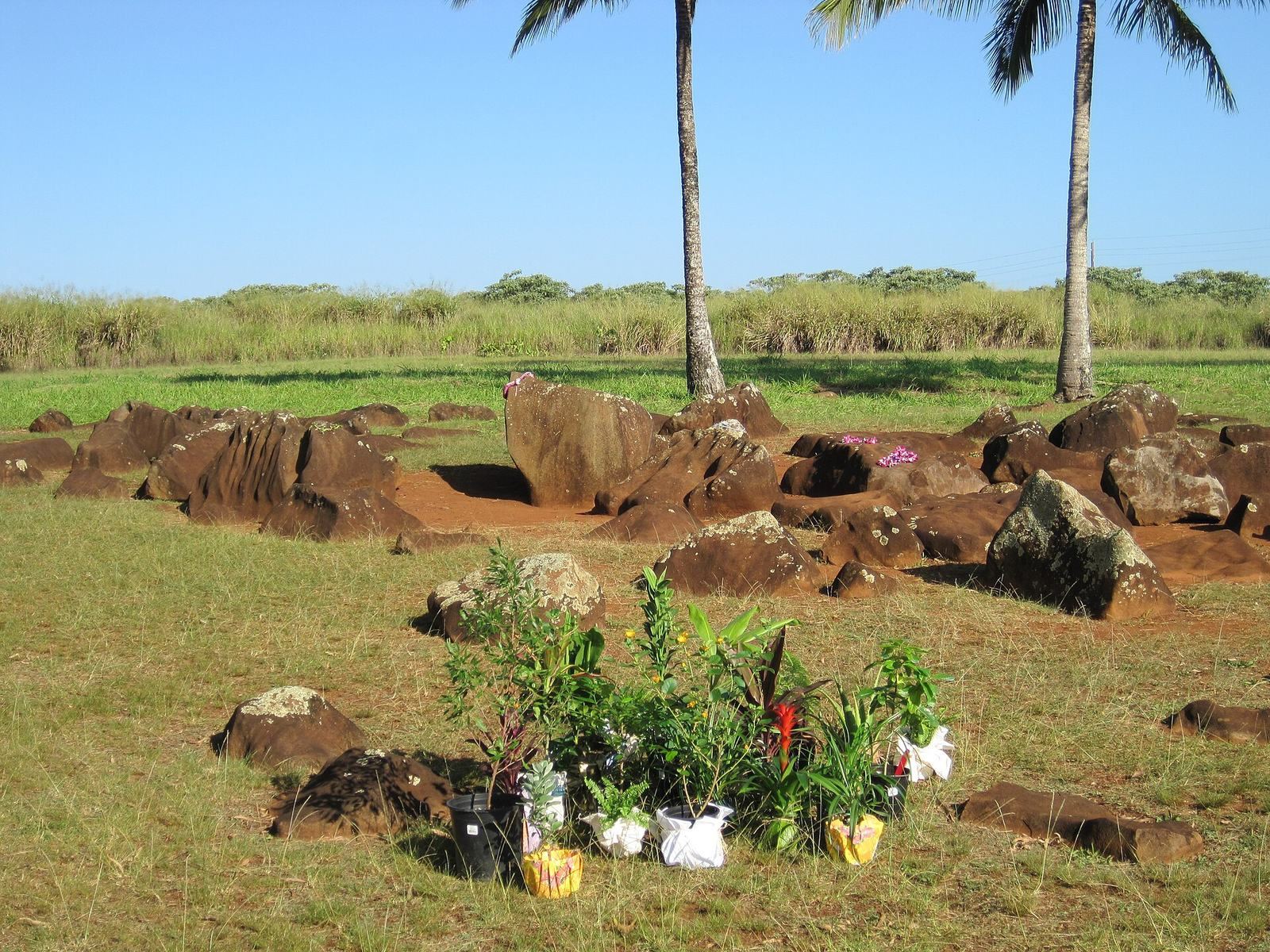
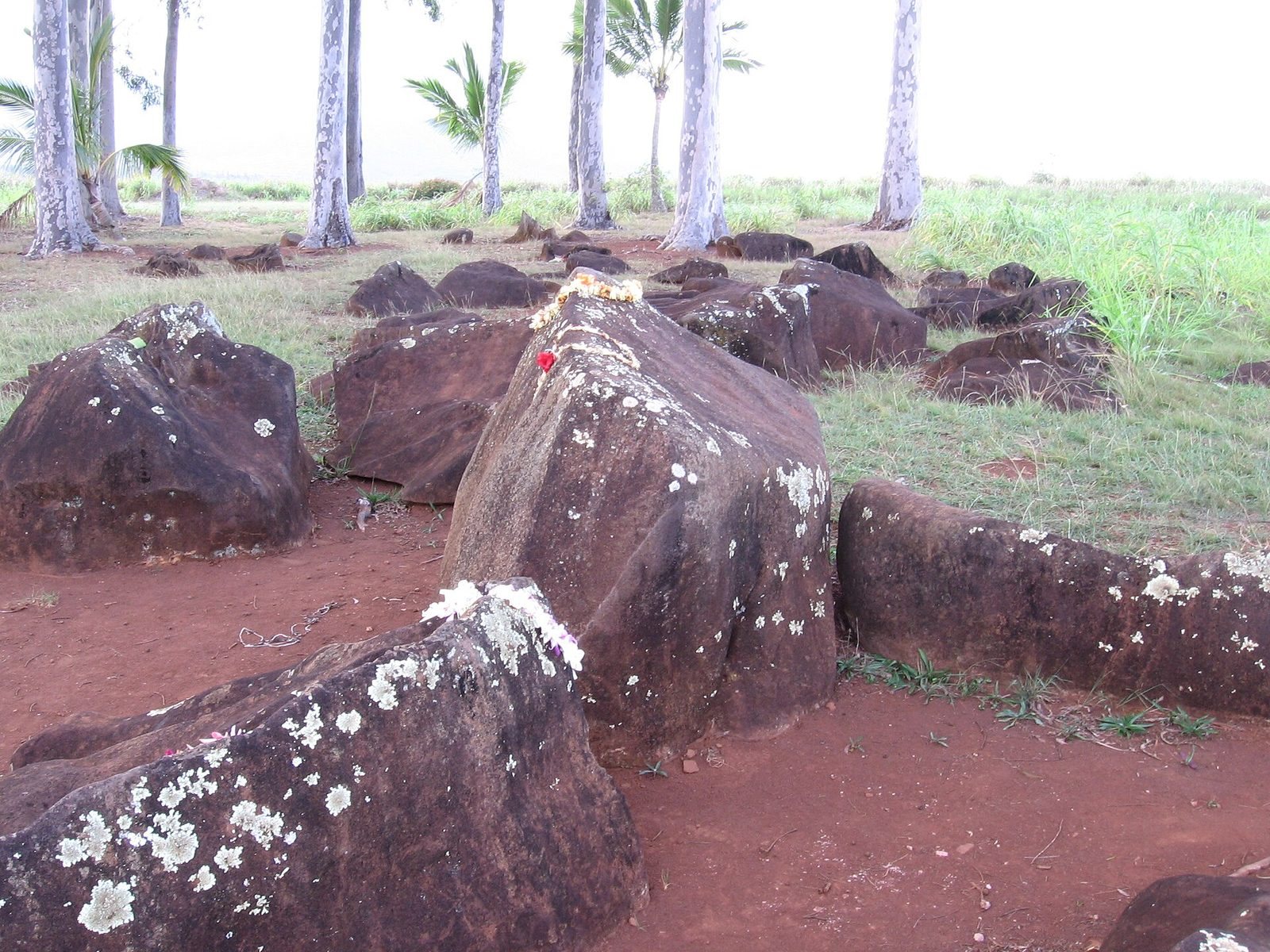
The site occupies the Wahiawā Plateau between the Waiʻanae Range on the leeward side and the Koʻolau Range on the windward side. It lies where the Waialua Trail, running between the North Shore and ʻEwa Beach, meets the Kolekole Trail, which crosses the Waiʻanae Range. The complex contains about 180 stones and is described as an example of ancient Hawaiian architectural practice. Thirty-six stones represent the 36 chiefly witnesses to a birth. The complex includes stones dating back at least to the 14th century.
Stone markings and possible astronomical use
In April 2000, a University of Hawaiʻi Institute for Astronomy team recorded shapes and designs on the stones that may have helped track celestial movements for calendrical purposes. The site’s position across from the Waiʻanae Range may also have allowed the sun’s position to be followed using markers, suggesting a possible astronomical function.